 Art Gallery Near Me: Ginza Graphic Gallery in Tokyo
Free Things to Do
Art Gallery Near Me: Watari Museum of Contemporary Art
Experience the Watari Museum of Contemporary Art in Tokyo's vibrant Shibuya district, featuring Mario Botta's striped architecture, avant-garde installations, and On Sundays bookstore.
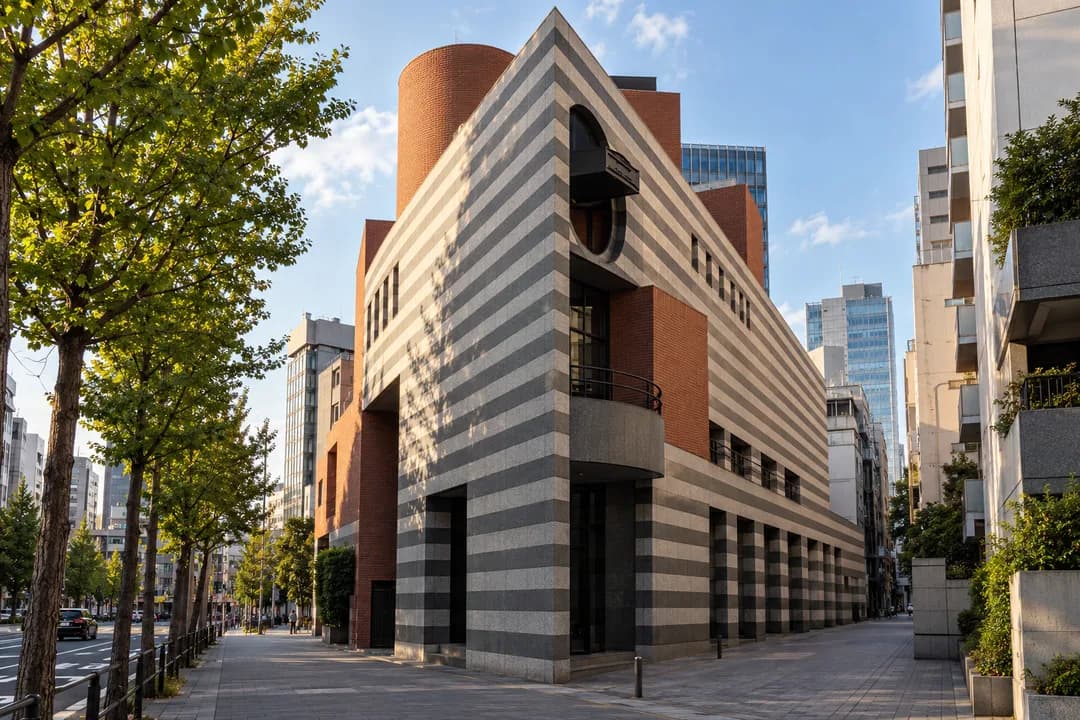
For travelers and creative minds seeking an edgy, intellectually daring contemporary art gallery near me in Tokyo, the Watari Museum of Contemporary Art (affectionately known as Watari-um) at 3-7-6 Jingumae, Shibuya-ku, Tokyo represents an indispensable cultural institution. Founded in September 1990 by visionary art collector and patron Shizuko Watari, this private museum stands as a beacon of progressive international contemporary culture along Gaien-Nishi Dori, the fashionable avenue in Aoyama and Harajuku known historically as Killer Dori.

Mario Botta's Striped Facade and Aoyama Architectural Icon
The building itself is a celebrated architectural landmark, designed by world-renowned Swiss master architect Mario Botta. The striking exterior features a triangular concrete structure faced with alternating horizontal bands of pale gray granite and warm terracotta-toned ceramic brickwork. Narrow vertical glass slits slice down the center of the facade, creating an iconic, fortress-like geometric presence that has captivated architectural photographers and urban walkers for over three decades.
Inside, Botta's ingenious triangular floor plan maximizes vertical space across four exhibition levels. Visitors ascend via a dramatic glass elevator and open staircase into high-ceilinged galleries where angled geometric concrete walls create dynamic, non-standard viewing angles. Skylights and narrow light wells cast shifting patterns of natural illumination across the floors, encouraging artists to conceive site-specific installations that interact directly with the building's sculptural interior volume.
The museum grew out of the pioneering Shibuya contemporary art gallery Galerie Watari, which operated from 1972 and introduced Tokyo audiences to radical European conceptual movements. Today, Watari-um continues that independent, non-conformist legacy, curating exhibitions that fearlessly explore political resistance, urban architecture, ecological crises, and radical graphic design outside the confines of government-run museum boards, maintaining an energetic community of artists, writers, and cultural theorists.
Radical Conceptual Art, Joseph Beuys Archives, and Provocative Installations
Watari-um has built an international reputation for presenting adventurous, challenging exhibitions that spark critical debate. The museum was one of the earliest institutions in Asia to forge close creative partnerships with Fluxus legend Joseph Beuys and video art pioneer Nam June Paik, both of whom created major original works for the Watari family. The museum regularly mounts archival and contemporary retrospectives examining Beuys's concept of social sculpture and Paik's pioneering electronic media experiments, displaying rare sketches, video tapes, and personal correspondence.
The curatorial program also showcases groundbreaking contemporary practitioners across architecture, street art, and photography. Notable past exhibitions have featured site-specific urban paste-ups by French street artist JR, monumental conceptual installations by Barry McGee, architectural retrospectives of Buckminster Fuller, and provocative surveys of Japanese contemporary creators such as Chim↑Pom, Nobuyoshi Araki, and Kengo Kuma. Each presentation is accompanied by in-depth bilingual research publications, panel debates, and artist interviews.
Etiquette at Watari-um balances artistic openness with respectful preservation. Photography rules depend on individual artist agreements; many contemporary installations permit non-flash smartphone photography, while archival loans may restrict cameras to safeguard historic prints. The gallery staff are deeply engaged with the artworks, ready to explain complex conceptual frameworks and guide visitors through multi-level thematic displays with warm, bilingual enthusiasm that makes challenging art accessible to all.
A notable aspect of visiting Watari-um is its intimate scale, which allows viewers to engage closely with every artwork without feeling overwhelmed by cavernous institutional halls. The dialogue between Botta's bold concrete geometry and the experimental works on display creates an unforgettable spatial harmony, inviting visitors to view art from varying elevations as they move between mezzanine floors.
Ticketing Policies, Visiting Hours, and On Sundays Design Store
Admission to Watari-um special exhibitions is ticketed, with standard adult admission priced at ¥1,400. Students under 25 and university students receive discounted admission of ¥1,200, while high school students and senior citizens aged 65 and over pay ¥1,000, and children under twelve enter free of charge. The museum also offers an attractive passbook system for frequent visitors, providing unlimited entry to a single exhibition cycle for study and contemplation across multiple visits.
The museum welcomes visitors from Tuesday through Sunday between 11:00 and 19:00. Watari-um remains closed on Mondays, except when a national public holiday falls on a Monday, in which case the museum opens and closes the following Tuesday. Timed-entry reservations are rarely needed, allowing guests to visit spontaneously while exploring the trendy boutiques of Aoyama and Harajuku.
Physical accessibility is supported throughout the multi-story structure. The museum entrance on Killer Dori is accessible via a street-level ramp, and a passenger elevator connects all four exhibition levels as well as the basement bookstore, providing access for wheelchair users and parents with strollers. Clean public restrooms are located on-site, and registered assistance animals are welcomed throughout the museum.
For direct inquiries regarding current exhibition runs, catalog mail orders, or curator talks, visitors can contact the front reception desk by telephone at 03-3402-3001. All admissions, bookstore sales, and cafe transactions operate on a convenient cashless basis, supporting major credit cards such as Visa, Mastercard, and JCB, along with Japanese IC cards and Apple Pay.
On Sundays Bookstore Treasures, Gaien-Nishi Cafes, and Harajuku Walks
A visit to Watari-um is incomplete without exploring On Sundays, the museum's legendary independent bookstore occupying the ground floor and basement levels. Widely regarded as one of Tokyo's finest specialized art and design bookstores, On Sundays stocks an extraordinary collection of rare international art monographs, architecture journals, vintage exhibition postcards, and limited-edition artist multiples starting from ¥1,500, making it a favorite haunt for Tokyo's creative community.
Adjacent to the bookshop, the museum's intimate cafe corner serves freshly brewed pour-over coffee for approximately ¥600 alongside artisanal herbal teas and seasonal sweets, providing a peaceful spot to leaf through newly acquired art books while watching stylish passersby along Gaien-Nishi Dori. Visitors can also browse collectible design objects, exhibition posters, and original stationery created in collaboration with featured international artists.
Reaching Watari-um is an enjoyable urban walk. The museum is located an eight-minute walk from Gaienmae Station (Exit 3) on the Tokyo Metro Ginza Line, and approximately ten minutes on foot from Omotesando Station (Exit A2) or Meiji-Jingumae Station (Exit 5). Following your gallery visit, stroll down the quiet backstreets of Jingumae to discover independent fashion ateliers, specialty coffee roasters, and natural wine bars along Cat Street and Omotesando. The peaceful wooded grounds of Meiji Jingu Shrine and Yoyogi Park are also just a pleasant fifteen-minute stroll to the west. For curated Harajuku art walks, boutique cafe lists, and Tokyo contemporary museum guides, consult the Karpo APP.
Ask Karpo for more information.
Keep reading
- Art Gallery Near Me: Ginza Graphic Gallery in Tokyo
 Art Gallery Near Me: Tokyo Opera City Art Gallery
 Art Gallery Near Me: SCAI The Bathhouse in Yanaka