 Soap Making Workshop Near Me in Edogawa: Eight Wakuwaku
Weekend Plans
Aquarium Near Me in Kasai: Tokyo Sea Life Park's Tuna Ring and Penguins
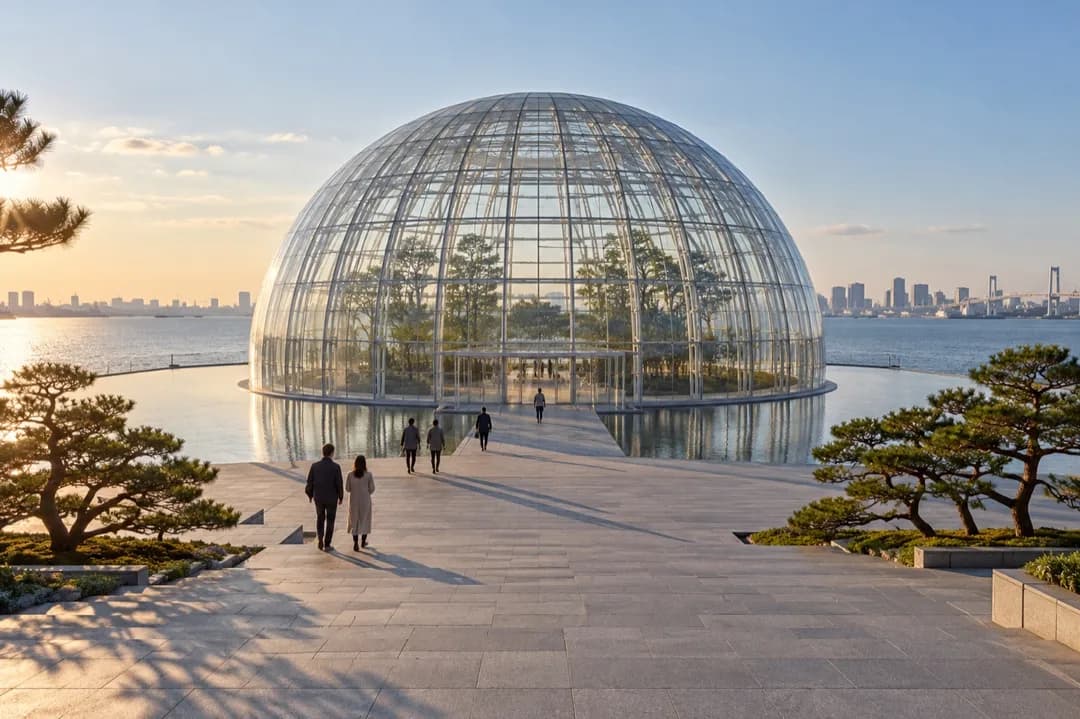
Tokyo Sea Life Park, the Yoshio Taniguchi glass-domed aquarium in Kasai Rinkai Park, has shown schooling bluefin tuna since 1989. Adults pay ¥700, children through elementary school enter free, and the old building stays open while its replacement is built for 2028.
Tokyo Sea Life Park, the glass-domed aquarium at 6-2-3 Rinkaicho, Edogawa-ku, charges adults ¥700 and admits every child up to sixth grade free. It opens 9:30am to 5pm, closes on Wednesdays and stops selling tickets at 4pm. A replacement aquarium is under construction next door for a 2028 reopening, and anyone on Tokyo's eastern bayfront searching aquarium near me can still walk into the 1989 building, which stays open until then.
Ueno's 1882 Fish Room, Reborn Under Taniguchi's Glass Dome
The aquarium traces its line to Uonozoki, the fish-viewing room that opened at Ueno Zoo on September 20, 1882. Planned to mark Ueno Zoo's centenary as part of Tokyo's bayfront redevelopment, Tokyo Sea Life Park opened on October 10, 1989, in a building by architect Yoshio Taniguchi. On May 5, 1991, it set its single-day record of 41,260 visitors, and cumulative attendance passed 60 million in 2023.
Since April 2006, the Tokyo Zoological Park Society, which also runs Ueno Zoo and Tama Zoological Park, has managed it for the metropolitan government. The official count is more than 500 species from oceans worldwide and Tokyo's own waters. The glass dome crowns the third floor of the main building, and the Sky Plaza steps just past the ticket gate, facing the dome, are the aquarium's designated spot for group photos.
The 2,200-Cubic-Metre Ring Where Bluefin Tuna Circle
The signature exhibit is a doughnut-shaped tank holding 2,200 cubic metres, where Pacific bluefin tuna swim laps around a viewing area set in its centre. This was the world's first exhibit of schooling bluefin, and in 1999 the fish spawned in the tank, another world first. Staff spot guides on the tuna run at 12pm and 3:30pm, and the tuna feeding talk is at 2:30pm, moved to 3pm on third Fridays.
An honest caveat: Do not come expecting the dense silver school of older photos. On October 14, 2026, the aquarium said it has stopped adding new bluefin because it has not yet decided how to move large fish into the new building, so the school is gradually shrinking. The ring is still the best seat in the house, but the penguins and seabirds now carry more of the visit.
Four Penguin Species and This Autumn's Rockhopper Pause
The outdoor Penguin Habitat, among the largest penguin exhibits in Japan, holds Humboldt, king, southern rockhopper and little penguins. Little penguins, called fairy penguins here, went on show in 1991 as a first for Japan. King and rockhopper penguins spend the hot months in an air-conditioned breeding room and returned outdoors on October 5, 2026, along with a rockhopper chick raised this year.
Four days later, on October 9, the rockhoppers were taken off display for health management until further notice, so expect Humboldts, kings and little penguins this month. The rockhopper program carries weight: Work with Kaiyukan on artificial breeding earned the 2025 Koga Prize, Japan's top zoo and aquarium award. Penguin feeding talks run at 10:45am and 3pm, and the lower underwater windows are reached by stairs.
Puffins, Giant Kelp and the Ogasawara Tanks
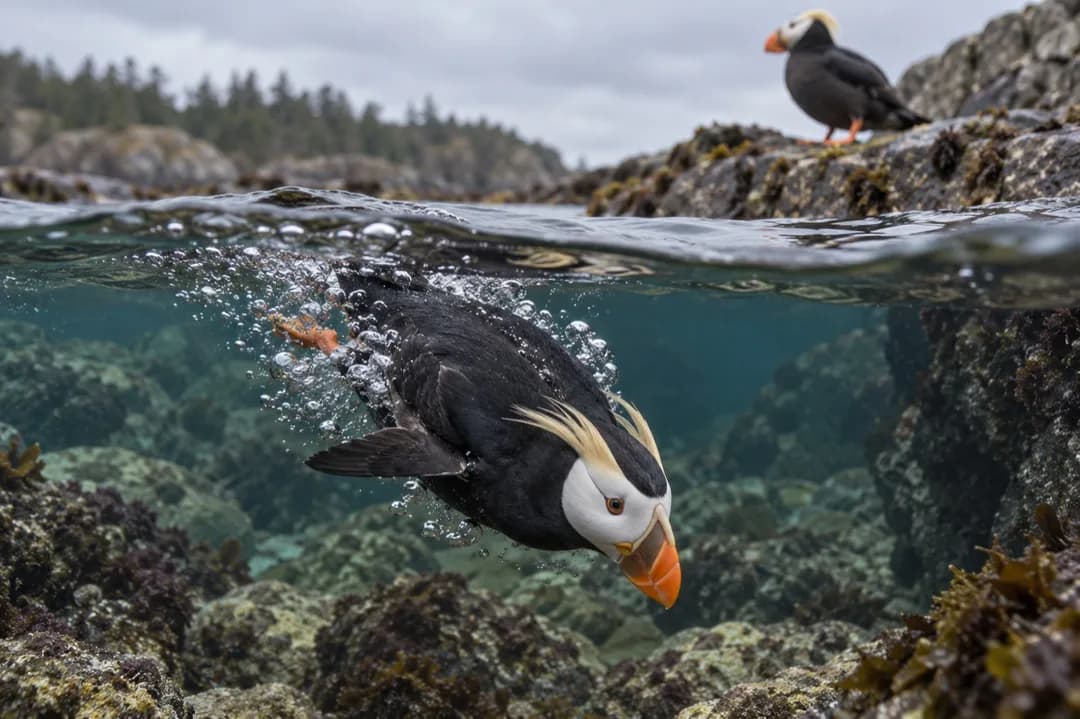
In the Seabird Habitat, common murres and tufted puffins swim underwater in front of the glass, with feeding talks at 11:45am and 4pm. Inside, the Kelp Forest tank grows giant kelp, and the Tokyo Sea zone splits into Tokyo Bay, the Izu Islands and the Ogasawara Islands, all part of the metropolis. The Bioluminescence corner ends the day with a sea firefly spot guide at 4:15pm.
Renewal work is reshaping smaller tanks. The Waterside Nature area closed on May 19, 2024. The Caribbean Sea tank is shut from October 15 to 29 and will reopen with fish from the Nansei Islands, and porkfish and creole fish leave the Brazil Coast tank in late October. During Tokyo Cultural Heritage Week, October 24 to November 3, the Information Room hands out cards on its Ogasawara land snails, a national natural monument.
¥700 Tickets With No Expiry Date and the House Rules
Visitors aged 65 and over pay ¥350 and junior high students ¥250, while junior high students who live or study in Tokyo enter free with ID. Paper tickets have no expiry date, so an unused one works on a later day, and date-specific QR tickets are sold online. An adult annual pass costs ¥2,800 and needs a small photo, and a Diamond and Flower Ferris Wheel ticket earns 20% off admission.
Flash photography and tripods are not allowed inside, and eating in the corridors is off limits. Large carts, whistles and glowing pen lights stay outside because the galleries are dark and the animals startle. There is no stroller rental, and strollers may come in but can be parked only at the ticket area. For re-entry, tell staff at the gate or the information counter. Most visits take 90 minutes to two hours.
Dodging School Groups, Free Days and the Lunch Rush
The official crowd calendar flags days with heavy group bookings and notes that school groups cluster in the morning. Arrive on a weekday around 1:30pm and you can chain the 2:30pm tuna feeding, 3pm penguins, 4pm seabirds and 4:15pm sea fireflies. Skip the free-admission days, May 4, October 1 and October 10, when crowds force some exhibits and programs to close. The next one falls on May 4, 2027.
Sea Wind, the self-service restaurant, is the only place to eat, serving tuna katsu curry and an Ogasawara Bonin Blue soda until a 4:30pm last order, with MSC and ASC certified seafood on the menu. Expect school groups in the morning and families on weekends, when children through sixth grade get in free. If you miss the 4pm ticket cutoff, walk to the park's bird sanctuary Watching Center, open until 4:30pm.
Keiyo Line to the Gate, Then Out to West Nagisa
Take the JR Keiyo Line to Kasai-Rinkai Koen Station, about 20 minutes from Tokyo Station, then walk five minutes. The Musashino Line links in from Nishi-Funabashi, and Toei buses run from Kasai and Nishi-Kasai stations on the Tozai Line. The Tokyo Mizube Line water bus reaches the park pier from Odaiba Seaside Park in about 50 minutes. The aquarium has no car park, so drivers use the Kasai Rinkai Park lot.
Afterwards, walk to Crystal View, the free glass observation rest house that opened in July 1995 and looks over Tokyo Bay and the artificial beaches. From there, cross Kasai Nagisa Bridge onto West Nagisa, the sandy beach that fills with paddlers in summer, while East Nagisa stays closed to people as a bird refuge. On the way back, the Diamond and Flower Ferris Wheel takes 10% off for annual pass holders.
Practical Notes
Tokyo Sea Life Park, 6-2-3 Rinkaicho, Edogawa-ku, Tokyo. Phone 03-3869-5152. Open 9:30am to 5pm, with entry and ticket sales until 4pm. Closed Wednesdays, or the following day when Wednesday is a holiday, and December 29 to January 1. Staffed counters take credit cards, Suica and PayPay. Wheelchairs are lent free at the main gate. Kasai Rinkai Park parking: 03-3877-0725. Ask Karpo in the Karpo APP for more bayfront plans.
Ask Karpo for more information.
Keep reading
- Soap Making Workshop Near Me in Edogawa: Eight Wakuwaku
 Soap Making Workshop Near Me in Nakameguro: Luxum
 Soap Making Workshop Near Me in Ikebukuro: And S