 Soap Making Workshop Near Me in Edogawa: Eight Wakuwaku
Weekend Plans
Aquarium Near Me in Kichijoji: Inokashira's Freshwater Aquatic Life Park
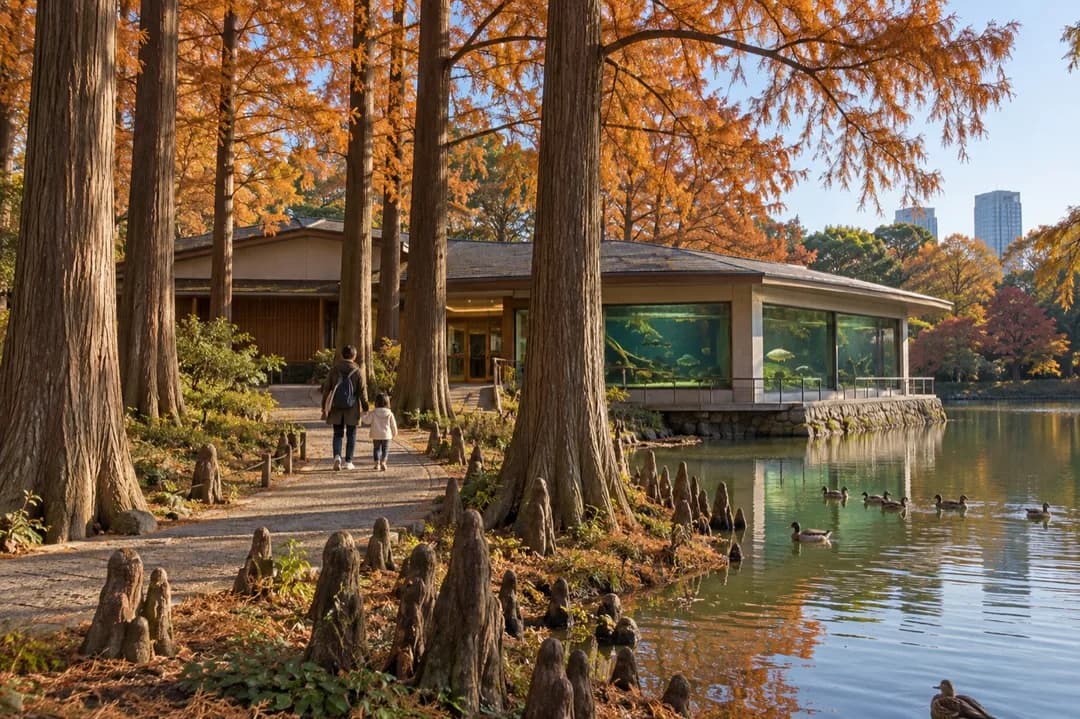
The Aquatic Life Park is the pond-side branch of Inokashira Park Zoo in Mitaka. Its Aquatic Life House, rebuilt in 1975 from a 1936 fish house, shows Japanese giant salamanders, water spiders and the Inokashira stonewort, with cranes and storks outside, all on a ¥400 ticket.
Inokashira Park Zoo's Aquatic Life Park, the pond-side branch at 4-1 Inokashira, Mitaka-shi, charges ¥400 for adults and opens 9:30am to 5pm, Tuesday to Sunday, with tickets sold until 4pm. Its indoor Aquatic Life House, which the Tokyo Zoological Park Society calls Japan's oldest freshwater aquarium, closes at 4:45pm. For a Kichijoji family typing aquarium near me, that same ticket also covers the main zoo, a five-minute walk away.
From a 1936 Island Fish House to the 1975 Pondside Building
The Aquatic Life House began in 1936 as a freshwater-fish aquarium inside a small zoo on Nakanoshima, the island in Inokashira Pond, six years before Inokashira Park Zoo itself opened on May 17, 1942. The present building opened in 1975, was renovated and reopened in 1997, and since 2024 has run rotating topic displays. Of about 160 species kept across both sites, roughly 140 are native to Japan.
Giant Salamanders, Water Spiders and Fish Gone From Tokyo's Wild
Inside, tanks recreate Japanese waterways as they were and as they are. The headliner is the Japanese giant salamander, a special natural monument that grows 50cm to 100cm and up to 150cm, and usually lies motionless among rocks, so look low and slowly. Nearby is the water spider, which lives underwater inside a bubble of air. The house first managed to show it year-round in 2007.
Several species here have vanished or crashed in Tokyo's wild: the Miyako bitterling, a national natural monument, the Musashi stickleback, the gengoro diving beetle and the Japanese fire-bellied newt. The society has protected wild newts in the Tama hills since 2002, and its autumn 2026 magazine reports on that work. Frogs fill out the room, including the Tokyo Daruma pond frog, the Japanese toad and the Japanese tree frog.
The Stonewort That Slept 59 Years Under the Pond
Inokashira stonewort is a charophyte alga described as a new variety from Inokashira Pond in 1957, then lost and presumed extinct there. Between 2014 and 2018 the park drained the pond in a series of kaibori, leaving the bed to dry in the sun, and spores buried in the mud sprouted after 59 years. It now grows wild at only three sites in Japan, and Japan's national Red List ranks it Endangered Class I.
The wild plants are still fragile, set back by summer water temperatures and by invasive animals that eat them, so the Aquatic Life House keeps its own stock and experiments with water temperature and light to learn what the plant needs. Seen next to the past-and-present displays, the small tank tells what the pond lost and what came back.
Cranes, a Phalarope and the Keeper Talk Calendar
Outdoors, aviaries line the Waterside Path, finished in 1995, and the society ranks its waterbird collection among the best in Japan. Look for red-crowned cranes, here since 1981, Oriental storks and black-faced spoonbills, both arrived in 2017, plus whooper swans, mandarin ducks and the Japanese night heron, an endangered forest heron that breeds only in Japan. The call duck house was added in 2010.
The newest face is a red-necked phalarope, a 19cm sea-going shorebird with lobed toes, put on show here in August 2026. It came from a rescue facility in October 2025 with an injured wing that rules out release, the first of its kind kept at a Tokyo metropolitan zoo in about 20 years. Keepers spent the winter adjusting its heater, pool depth and even the position of a mirror.
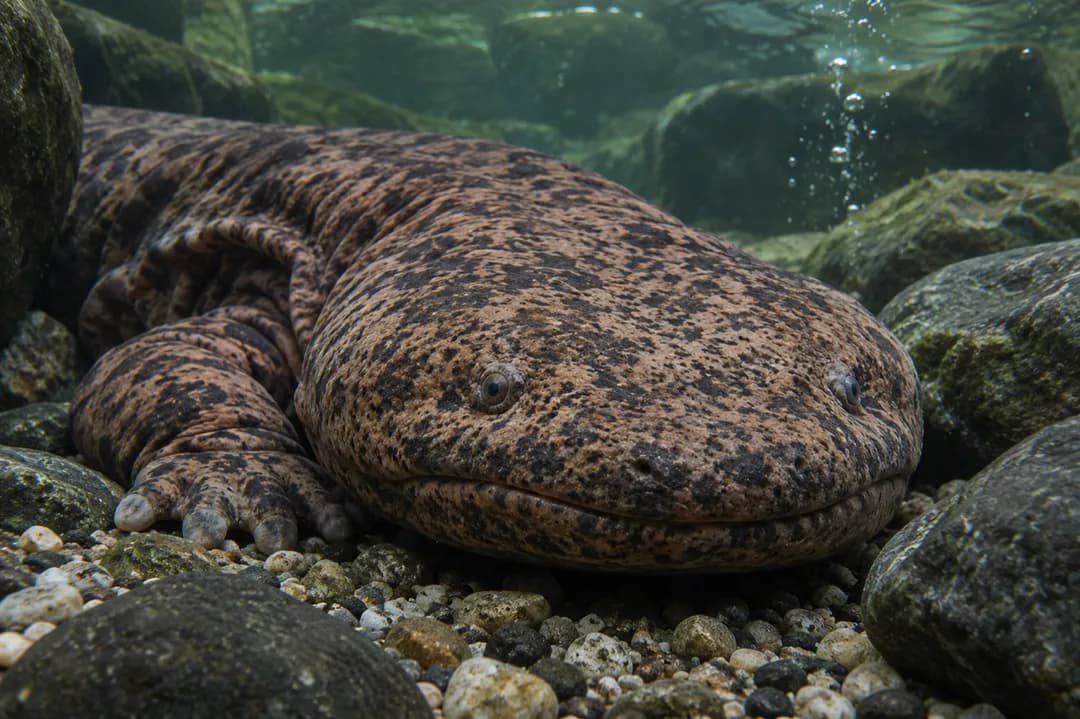
Feedings in this branch are scheduled rather than daily. The October 2026 calendar lists a Japanese toad feeding inside the Aquatic Life House at 11:30am on the 17th and an Oriental stork feeding at 11am on the 18th. A keeper gives a giant salamander talk at its tank at 11:30am on Sunday, October 25, and on November 3 a staff tour of waterside natural monuments gathers outside the house at 1pm, rain or shine.
Two Ticket Stamps, Free Kids and the 4pm Crossing Cutoff
One ¥400 ticket covers both the zoo and the Aquatic Life Park. Visitors 65 and over pay ¥200, junior high students ¥150, and elementary-age children and younger enter free, as do junior high students who live or study in Tokyo. Gate staff stamp a separate box for each site, and window tickets never expire, so an unstamped box works on a later day.
Ticket windows take credit cards, Suica and PayPay, and online tickets are valid only on the date chosen. An annual pass costs ¥1,600. There are no coin lockers and no stroller rental, and bicycles and kick scooters stay outside. Flash aimed at animals is banned, as are strobes, reflectors, insect nets and bug cages. To step out and come back, ask at the ticket window.
Who Comes, Why Not After 4pm and a Rainy-Day Fallback
The zoo calls itself an introductory zoo, built for easy, frequent visits, and the pricing shows who it serves: local parents with young children pay only for themselves. The stamp rally prints 800 sheets a day on weekends and holidays against 150 on weekdays, a fair sign that Saturdays bring the family crowds and that a weekday is the time to stand alone at the salamander tank.
Skip this branch if you are after sea creatures. There are no sharks, rays or jellyfish, only Japanese freshwater life and wetland birds. And do not arrive after 4pm: ticket sales stop, crossing between the zoo and the Aquatic Life Park is no longer allowed, and the house shuts at 4:45pm. It is closed on Mondays, or on Tuesday when Monday is a public holiday.
In rain, the Aquatic Life House is the indoor refuge, and the covered pavilion in this branch is its only sheltered picnic spot, since neither site has a restaurant. If the Monday closure catches you, Inokashira Park itself is free and open at all hours, so the pond loop still shows the water the stonewort returned to. On November 7 and 8 both sites stay open until 8pm, with entry until 7pm.
Benten Gate, Swan Boats and the Benzaiten Temple
Take the JR Chuo or Sobu Line, or the Keio Inokashira Line, to Kichijoji and use the Park Exit; the zoo puts the walk at about ten minutes. The Aquatic Life Park has two gates, Benten Gate on the side nearer the main zoo and Nanai Gate, and you can leave by either. The main zoo is five minutes away on public paths, and there is no zoo parking.
Afterwards, walk to Inokashira Benzaiten, the small temple to the goddess Benzaiten beside the pond, then rent a rowboat or a swan boat from the park's boat house and see the Aquatic Life Park's bald cypresses from the water. For a longer outing, the Ghibli Museum sits at the southwest end of Inokashira Park, so a pond-to-museum walk makes an easy half day in Mitaka.
Practical Notes
Inokashira Park Zoo Aquatic Life Park, 4-1 Inokashira, Mitaka-shi, Tokyo; administrative office at 1-17-6 Gotenyama, Musashino-shi. Phone 0422-46-1100. Open 9:30am to 5pm, with entry and ticket sales until 4pm and the Aquatic Life House until 4:45pm. Closed Mondays and December 29 to January 1. Adults ¥400, with free entry for all on May 4, May 17 and October 1. Ask Karpo in the Karpo APP for more Kichijoji plans.
Ask Karpo for more information.
Keep reading
- Soap Making Workshop Near Me in Edogawa: Eight Wakuwaku
 Soap Making Workshop Near Me in Nakameguro: Luxum
 Soap Making Workshop Near Me in Ikebukuro: And S