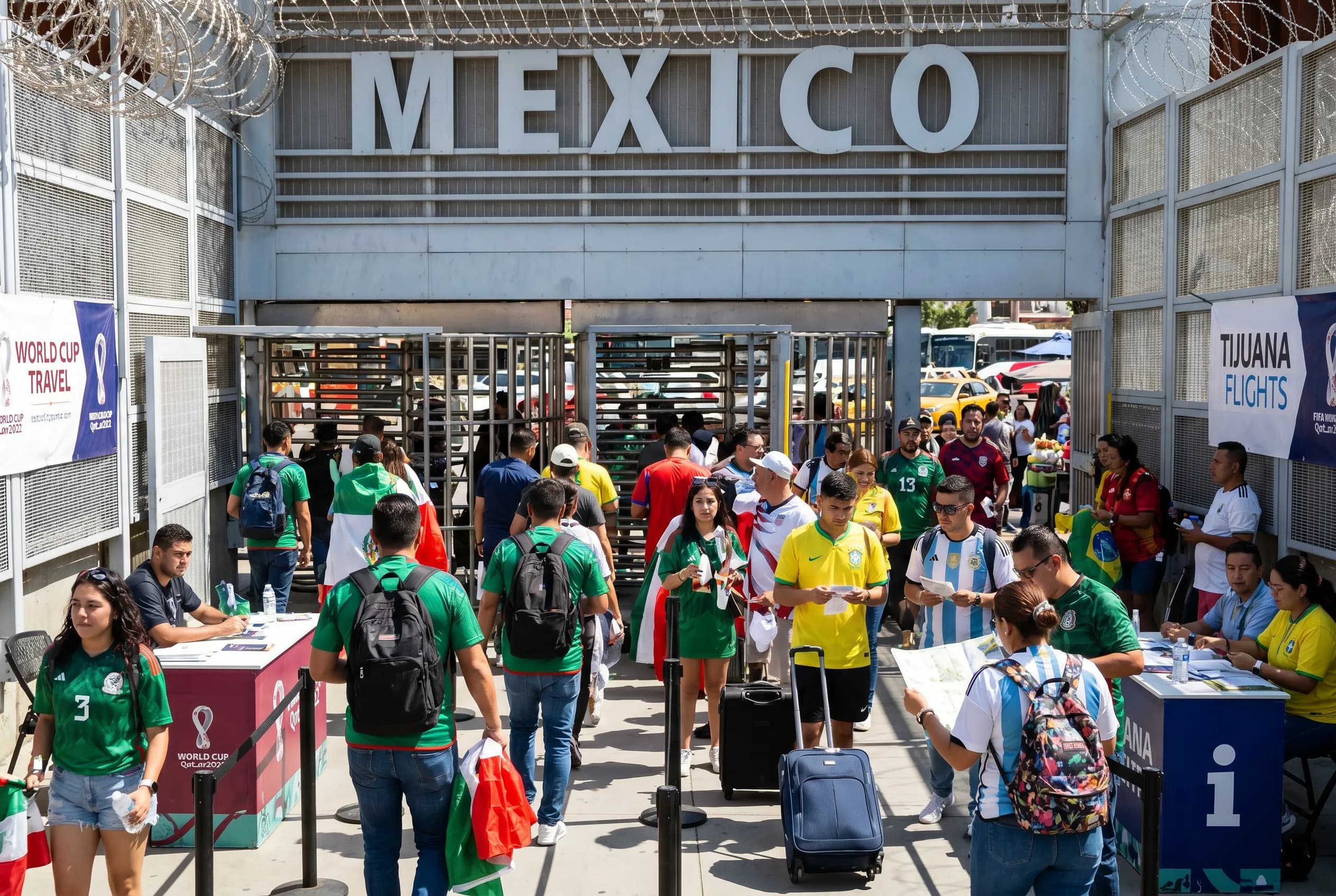
When the World Cup arrives in North America in 2026, Tijuana will sit at the crossroads of one of the tournament's most intriguing travel corridors. While the city itself won't host matches, its position along the U.S.-Mexico border and proximity to potential host venues makes it a natural hub for fans seeking affordable flights, flexible accommodation, and a taste of authentic match culture. The challenge lies not in whether Tijuana works as a base, but in mastering the cross-border choreography that turns geographical advantage into actual convenience on match day.
Planning a cross-border World Cup journey means coordinating time zones, entry requirements, and transportation modes most travelers never juggle in a single trip. Text Karpo for a personalized route that factors your match schedule, preferred border crossing, and whether you're flying into Tijuana or San Diego. We'll map the buffer times, backup options, and neighborhood staging points that keep you ahead of kickoff instead of stuck at inspection.
Why Tijuana Enters the World Cup Conversation
Tijuana's relevance to World Cup 2026 stems from economics and geography rather than official host status. The city's international airport offers competitive fares on routes throughout Mexico and Latin America, often undercutting San Diego prices by significant margins. For fans traveling from Central or South America, Tijuana provides a familiar cultural landing point with Spanish-language services and peso-friendly pricing before crossing into the United States for matches. The metropolitan area's population of over two million ensures robust infrastructure, from hotels to ground transportation, without the price inflation that typically hammers official host cities.
The border itself becomes the defining feature of any Tijuana-based World Cup strategy. Approximately 100,000 people cross between Tijuana and San Diego daily through various ports of entry, creating a well-worn path that nonetheless demands respect and preparation. Fans considering this route need to weigh the financial savings against the time investment and documentation requirements that come with international crossings. The calculation shifts depending on whether you're attending a single match in Southern California or building a multi-city itinerary that leverages Tijuana as a home base between games.
Cross Border Xpress and the Private Bridge Advantage
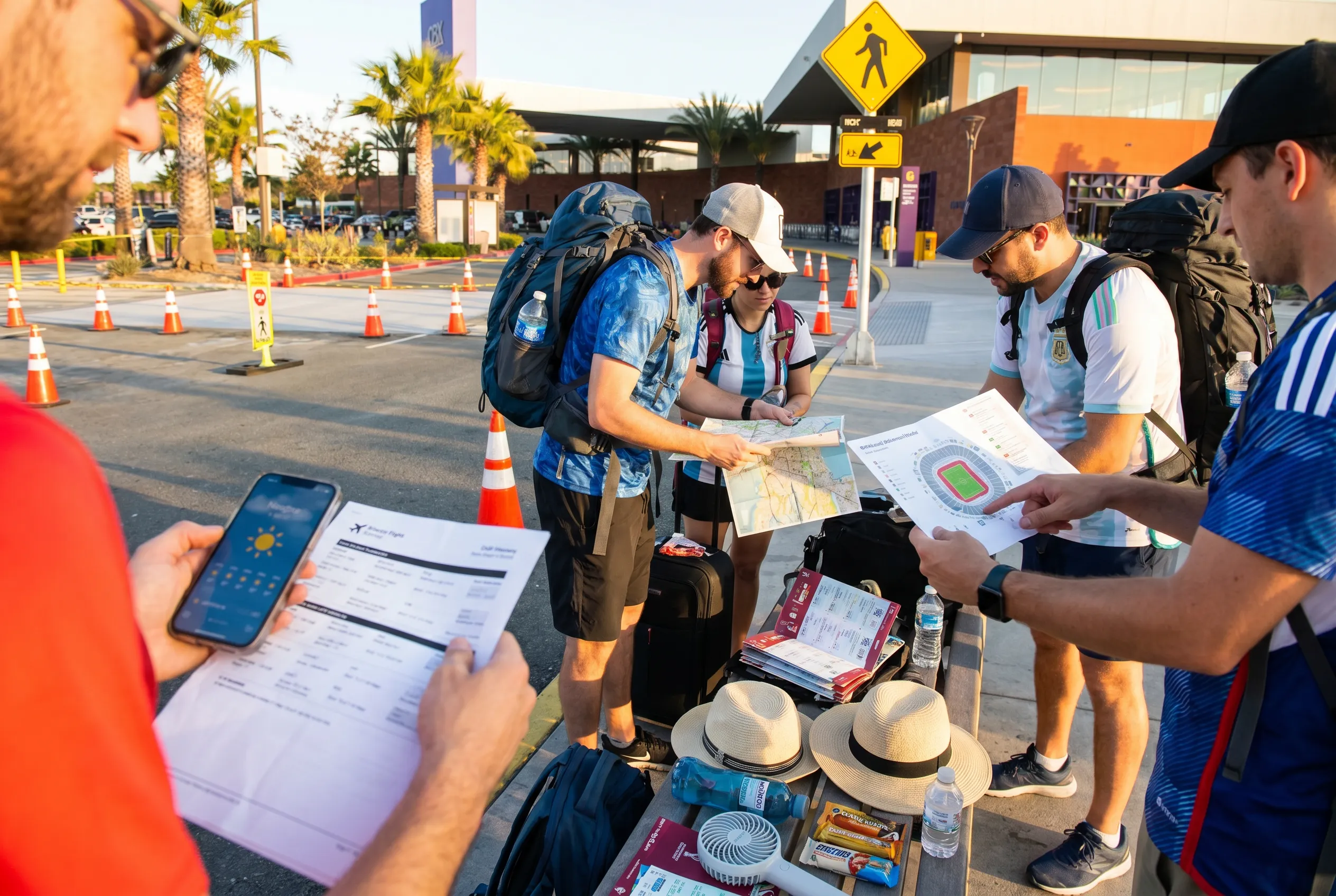
The Cross Border Xpress, known universally as CBX, represents the premium solution to Tijuana-San Diego transit. This privately operated pedestrian bridge connects Tijuana International Airport directly to a terminal on the U.S. side in San Diego's Otay Mesa neighborhood. Travelers with a departing or arriving flight within 24 hours can purchase a bridge crossing fee and walk from Mexican airspace to American soil in roughly five minutes, bypassing traditional border queues entirely. The service operates with its own security screening and immigration checkpoints, creating a controlled environment that removes much of the uncertainty from cross-border movement.
CBX works best for travelers whose itinerary genuinely centers on flights through Tijuana airport. If you're flying into Tijuana and heading to a match in Los Angeles or another California venue, the bridge delivers you to the U.S. side where rental cars or rideshares can continue the journey north. The system breaks down if you're staying in Tijuana proper and trying to use CBX for daily border crossings, since access requires a valid flight reservation. World Cup travelers should view CBX as a bookend strategy—useful for arrival and departure days when your flight schedule aligns with match timing, but not a substitute for understanding traditional border crossing options if you plan to move back and forth during your stay.
Traditional Border Crossings and Buffer Time Reality
Beyond CBX, Tijuana offers several land border crossings that serve different travel patterns. The San Ysidro port of entry handles the highest volume of northbound traffic and connects directly to Interstate 5, making it the default choice for travelers heading to San Diego or points north. The Otay Mesa crossing typically sees lighter passenger vehicle traffic and appeals to travelers who prioritize speed over central routing. Both crossings operate 24 hours, but wait times fluctuate dramatically based on time of day, day of week, and unpredictable factors like staffing levels or security incidents.
The cardinal rule for World Cup match days is to build buffer time that feels excessive by normal standards. A crossing that takes 30 minutes on a Tuesday morning can stretch to three hours on a weekend afternoon. Fans should plan to reach the border at least four hours before kickoff for matches in the San Diego area, and add another 90 minutes if traveling to Los Angeles or other distant venues. This conservative approach accounts not just for the border itself but for the compounding delays that occur when thousands of vehicles funnel through limited inspection lanes. U.S. Customs and Border Protection publishes estimated wait times online, but these represent snapshots rather than predictions and should inform your timing without replacing generous buffers.
Flight Strategy for Tijuana-Based World Cup Travel
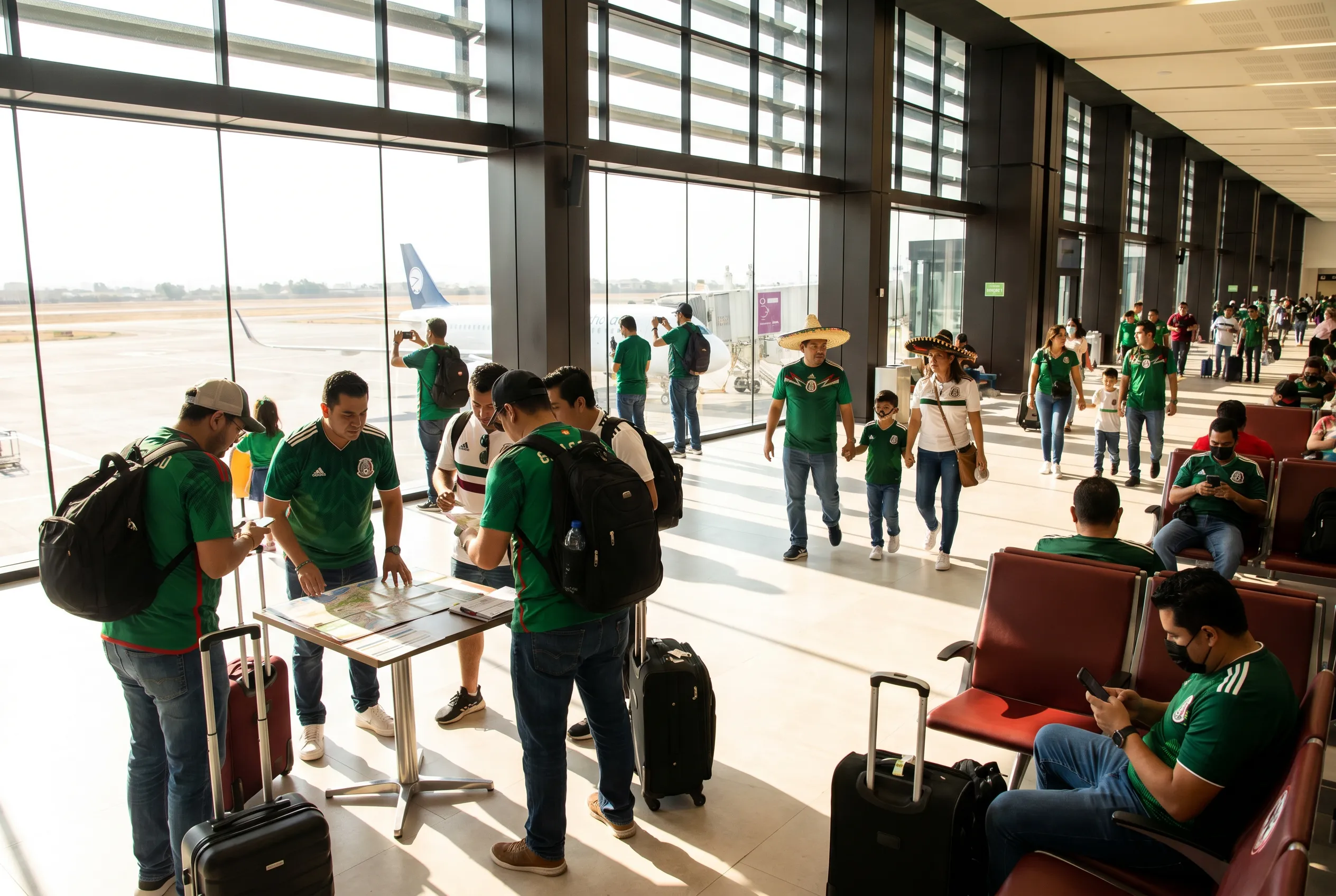
Tijuana International Airport serves as a Volaris hub with extensive connections throughout Mexico, plus service from other carriers linking to destinations across the Americas. For South American fans, routing through Tijuana can offer more direct options and better fares than connecting through U.S. hubs. The airport sits just minutes from the border, making same-day connections between international flights and U.S. match venues theoretically possible, though the risk of missing kickoff due to border delays makes this a strategy only for fans with flexible schedules or high risk tolerance.
A more conservative flight approach treats Tijuana as the arrival point for a multi-day World Cup journey rather than a same-day connection. Fly in at least 36 hours before your first match, allowing a full day to cross the border, settle into U.S. accommodations if that's your plan, and scout your route to the stadium. This buffer absorbs flight delays, border complications, and the simple fatigue of international travel. For departure, book flights no earlier than the day after your final match, giving yourself the freedom to celebrate or commiserate without watching the clock. The money saved on Tijuana airfare evaporates quickly if you miss a match or spend your World Cup experience stressed about border timing.
Documentation and Entry Requirements
Crossing from Mexico into the United States requires specific documentation that varies by citizenship. U.S. and Canadian citizens need a valid passport or passport card, with the book version required if you flew into Tijuana from another country. Mexican citizens with U.S. visitor visas must carry both valid passport and visa documentation. Citizens of countries participating in the Visa Waiver Program should confirm their ESTA authorization remains valid for the dates of travel, since the approval lasts two years but can expire between booking and travel dates.
The World Cup will likely trigger enhanced screening protocols at border crossings, particularly on match days when authorities anticipate higher traffic volumes. Travelers should carry printed or digital copies of match tickets, hotel reservations, and return flight confirmations to demonstrate the temporary nature of their visit. These documents won't be requested in most crossings, but having them readily available speeds processing if secondary inspection becomes necessary. Families traveling with minors should carry birth certificates for children, and any adult crossing with a child who isn't their own should have notarized permission letters from the parents to avoid complications.
Ground Transportation After the Border
Once you clear U.S. immigration, the journey to match venues requires its own planning layer. San Ysidro, the neighborhood immediately north of the border, offers trolley connections into downtown San Diego and beyond through the Metropolitan Transit System. The Blue Line runs from San Ysidro to downtown in roughly 45 minutes, providing an affordable option for fans heading to potential San Diego match venues. For matches in Los Angeles or other cities, rental cars become the practical choice, though booking should happen well in advance since World Cup demand will strain inventory at San Diego locations.
Rideshare services operate on both sides of the border but cannot legally transport passengers across the international boundary. Fans using Uber or Lyft need to arrange separate rides in Mexico and the United States, coordinating the pickup location on the U.S. side after you've walked or driven through the port of entry. Some travelers prefer to arrange private car services that specialize in cross-border transportation, though these command premium prices. The key is deciding your ground transportation strategy before you arrive in Tijuana, since figuring out logistics while standing at the border with luggage and a ticking match clock creates exactly the kind of pressure that leads to expensive mistakes.
Tags: #WorldCup2026 #Tijuana #CrossBorderTravel #CBX #TravelPlanning #SanDiego #LosAngeles #Mexico
Sources consulted: CBX · US Customs border wait times
All trademarks are the property of their respective owners.
Ask Karpo First
Cross-border World Cup travel rewards preparation but punishes improvisation. Text Karpo with your match schedule, arrival city, and budget parameters. We'll build a routing plan that accounts for border buffer times, backup crossing options, and the ground transportation connections that turn Tijuana from a theoretical bargain into a practical base for your 2026 experience.