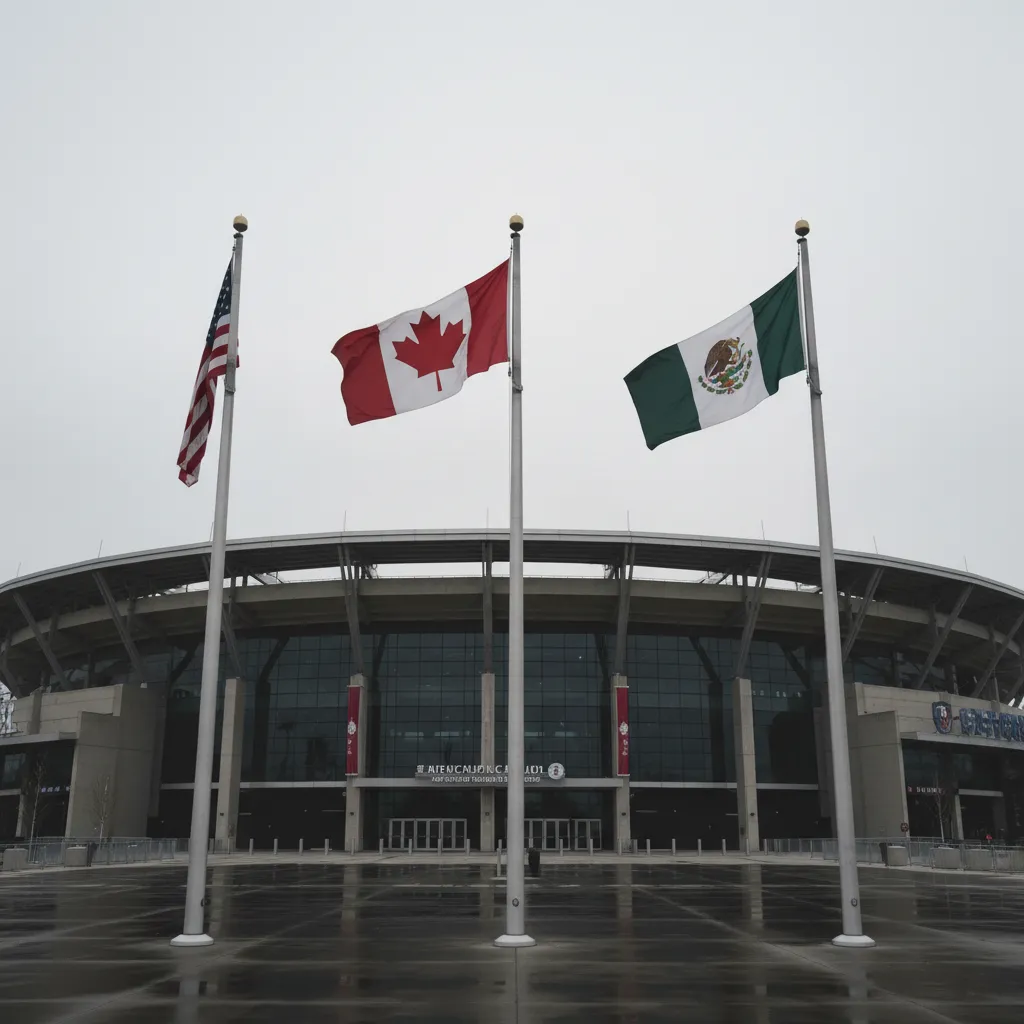
A Historic Triple Failure
Between July 4 and July 7, 2026, the World Cup eliminated its own hosts. Mexico fell to England 3-2 at SoFi Stadium. The United States were demolished 4-1 by Belgium in Seattle. Canada, the tournament's feel-good story, were dismantled 3-0 by Morocco in Kansas City. Three matches across four days produced the same result: co-hosting nations walking off their own pitches for the final time. In 96 years of World Cup history — across 22 tournaments — no multi-host nation arrangement had ever resulted in all hosts being eliminated in the same round. The 2002 World Cup, co-hosted by South Korea and Japan, saw South Korea reach the semifinals while Japan exited in the Round of 16. The 2026 tournament offered no such consolation.
Host nations out - now what? Ask Karpo who to root for and where to watch the rest.
Mexico: The 36-Year Curse Continues
Mexico's Round of 16 exit extends the most painful pattern in international football. Since reaching the quarterfinals as hosts in 1986, Mexico have been eliminated in the Round of 16 at eight consecutive World Cups. The quinto partido — the fifth match, the quarterfinal that always eludes them — has become a national trauma. Against England, Mexico were competitive despite playing against 10 men for 55 minutes. Santiago Gimenez and Hirving Lozano both scored. But Bellingham's early brace and Kane's penalty were enough. Mexico's players stood on the SoFi Stadium pitch after the final whistle and applauded their fans. Many of those fans were crying. Some were throwing objects at the English section.

USA: $6 Billion in Infrastructure, Zero Quarterfinals
The United States invested approximately 6 billion dollars in World Cup infrastructure — stadium renovations, transportation upgrades, training facilities, and security operations. The return on that investment, measured in competitive terms, was identical to 1994: a Round of 16 exit. The 4-1 loss to Belgium was the worst home defeat by a host nation at a World Cup since South Africa lost 3-0 to Uruguay in the 2010 group stage. The USMNT's squad, featuring Pulisic, Balogun, McKennie, and Adams — players with extensive European experience — was supposed to represent a generational leap. Instead, they were outclassed by a Belgian team that treated Lumen Field like their own training ground.
Canada: From Heroes to Passengers in 90 Minutes
Canada's 3-0 defeat to Morocco was the most dispiriting of the three co-host exits. Jesse Marsch's team had captured neutral hearts with their Maplepressing intensity and Alphonso Davies's inspirational performances. Against Morocco, none of it worked. Walid Regragui's tactical discipline suffocated Canada's pressing triggers, turning their high-energy approach into a series of aimless sprints that created space for Morocco to exploit. Azzedine Ounahi scored twice. Achraf Hakimi added a third. Canada's players, who had been the tournament's most enthusiastic celebrants, walked off in silence. Davies, still nursing his hamstring injury, sat on the bench with his head in his hands.

Does Home Advantage Still Exist?
The 2026 World Cup challenges the assumption that hosting guarantees competitive advantage. Historically, host nations have overperformed: 6 of 22 World Cups have been won by the host nation, and hosts have reached the quarterfinals in 17 of 22 tournaments. But the modern game has eroded the factors that traditionally constituted home advantage. Players now compete in global leagues and are accustomed to hostile environments. Tactical systems are studied and neutralized through video analysis. Travel and altitude — once significant factors — are mitigated by weeks of pre-tournament acclimatization. The 2026 co-hosts discovered that 80,000 home fans cannot compensate for tactical inferiority.
The Co-Hosting Model Under Scrutiny
FIFA's decision to award the 2026 World Cup to three nations was driven by commercial logic — more venues, more markets, more revenue. The footballing logic was always secondary. Having three host nations meant that no single nation could build the kind of concentrated support and preparation advantage that South Korea (2002), Germany (2006), and Russia (2018) enjoyed. Matches were spread across three time zones and two languages. Fan bases were fragmented. National team preparations were disrupted by the logistical demands of hosting. The 2030 World Cup, awarded to six nations across three continents, will face even greater challenges.
Tags: USA, Canada, Mexico, co-hosts eliminated, World Cup 2026, Round of 16, home advantage, Belgium, England, Morocco
Sources consulted: ESPN · CBS Sports · Yahoo Sports · FIFA
All trademarks, team names, league names, and player likenesses mentioned in this article are the property of their respective owners and are used here for informational and editorial purposes only.
Ask Karpo First
Curious about the history of host nations at World Cups or want to track what went wrong for USA, Canada, and Mexico? Ask Karpo for a complete co-host performance breakdown, historical host nation results, and what the 2030 six-nation format means for future tournaments.