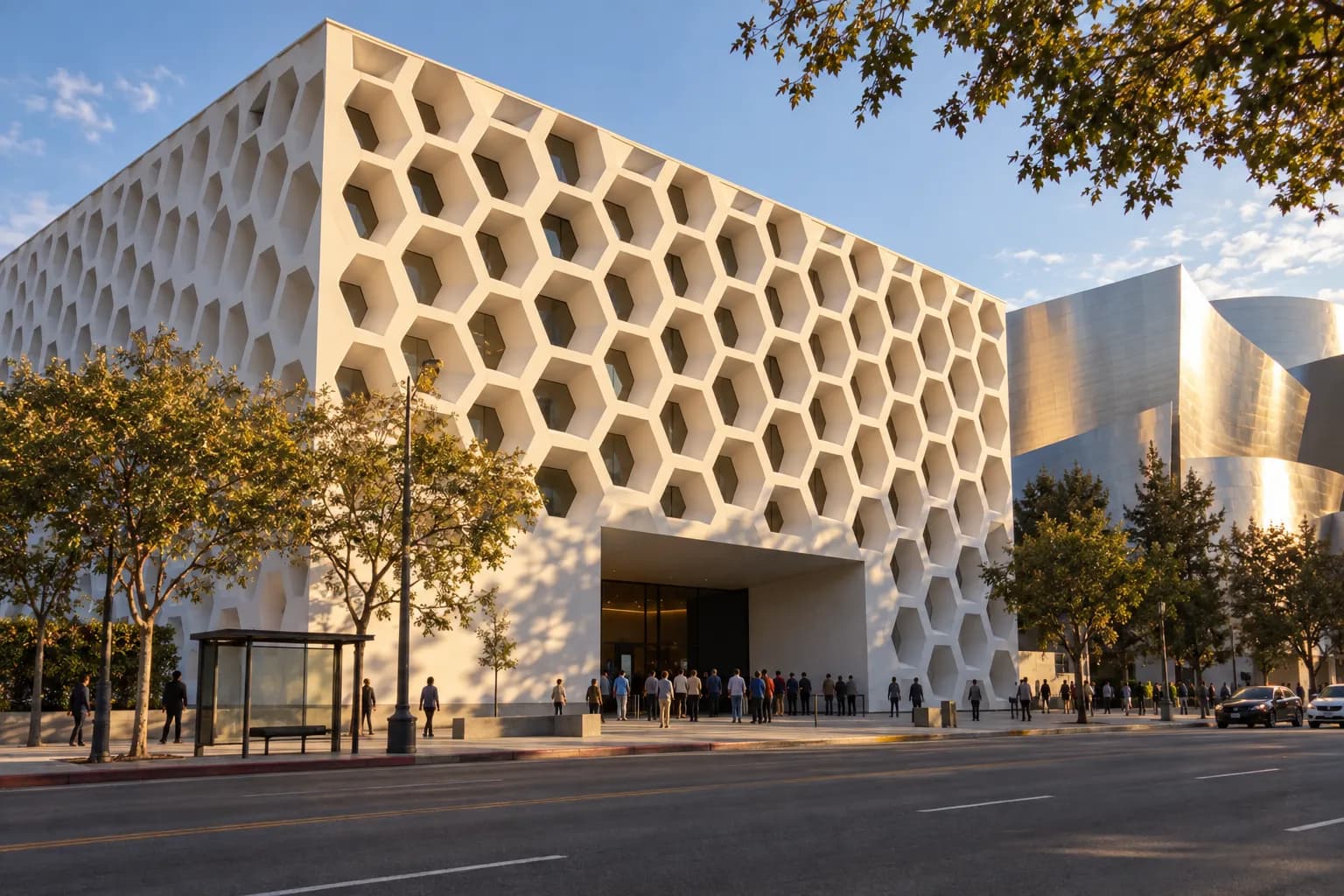
The Broad is a contemporary art museum on Grand Avenue in downtown Los Angeles with roughly two thousand works in it, a building that looks like a perforated white sponge, and no admission charge. That last part is the one people keep failing to believe. General admission has been free since it opened in September 2015, it is still free, and the only thing standing between you and a Basquiat is a timed ticket you can book on your phone.
The Broad's free tickets release in advance and the Kusama room is a separate same-day sign-up that runs out early. Ask Karpo how to line up a downtown afternoon around them.
Free, but ticketed
General admission costs nothing. Tickets are timed and are released online in advance, and popular slots — weekend afternoons especially — go. There is also a standby line at the door for people without a booking, which moves reasonably on a weekday and slowly at the weekend. Special exhibitions occasionally carry a charge; the permanent collection does not.
The practical advice is simply to book. It takes two minutes, it is free, and it converts a potentially long wait on Grand Avenue into walking straight in. If you are improvising, aim for a weekday morning and use standby.
The Kusama room needs its own plan
Yayoi Kusama's Infinity Mirrored Room is the single most requested thing in the building and it does not work like the rest of the museum. Access is managed separately, on the day, with its own sign-up, and the allocation is gone early — often within the first part of the day. You are given a short slot inside, measured in seconds rather than minutes, which is enough.
If it is the reason you are going, arrive at opening and sign up before you look at anything else. If you arrive at three in the afternoon expecting to walk in, you will not. Everything else in the museum is available all day with no additional step.
What is actually in it
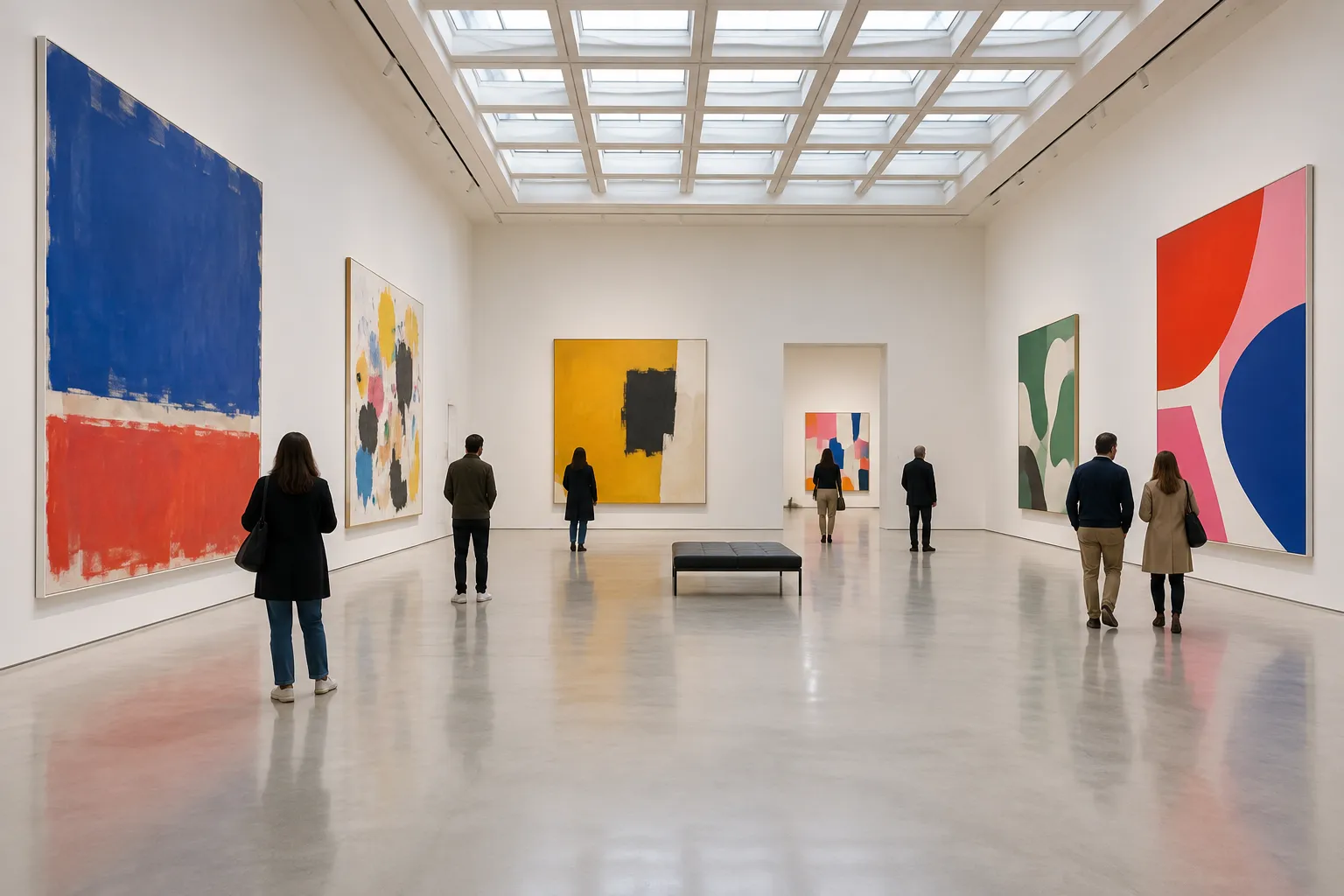
The collection was assembled by Eli and Edythe Broad and is heavily weighted toward American art from the 1950s onward: Warhol, Lichtenstein, Basquiat, Rauschenberg, Koons, Sherman, Ruscha, Kruger. It is not a survey museum and it does not pretend to be — it is one couple's very specific, very concentrated take on postwar and contemporary art, which makes it unusually coherent to walk through.
The third floor holds most of the collection in a single vast column-free gallery lit from above. The first floor takes temporary and rotating shows. In between, the escalator passes through the concrete storage core, and you can see into it — a genuinely good architectural joke about what a museum keeps out of sight.
The building
The exterior is a perforated white honeycomb shell — the architects called it the veil — wrapped around a heavy concrete storage volume, the vault. The veil filters daylight into the top-floor gallery so the art is lit naturally without direct sun, and the vault holds the two thirds of the collection not currently on display. Understanding that the building is two objects, one inside the other, makes it read much better from the street.
Where it puts you
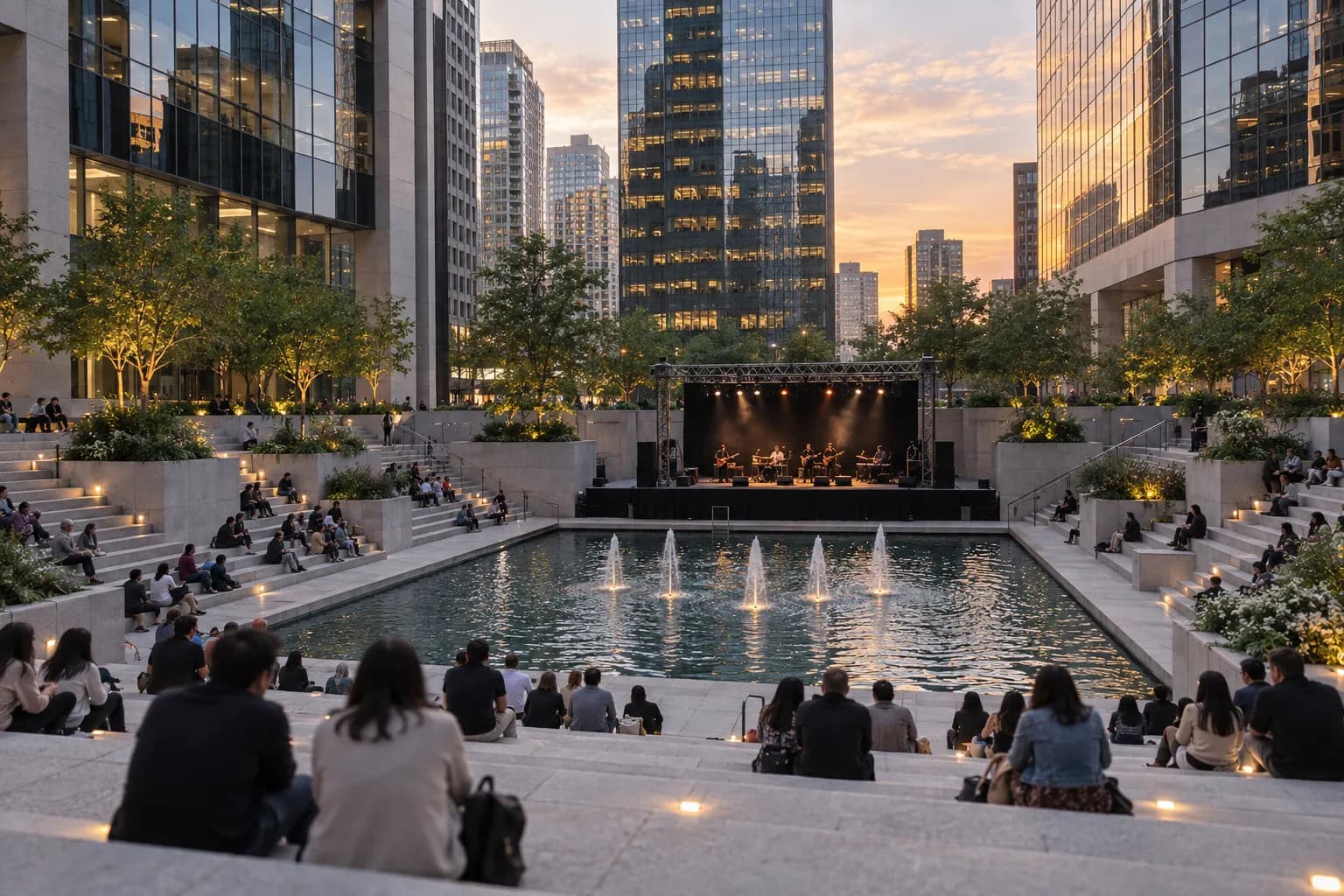
Grand Avenue at this point is the densest concentration of civic architecture in Los Angeles. Walt Disney Concert Hall is directly across the street, MOCA is a minute south, and Grand Park runs downhill toward City Hall. The Music Center plaza and the Grand Avenue steps are all free to walk through, which means a whole afternoon here can cost nothing but transport.
Downtown is well served by Metro, and driving to Grand Avenue means paying for a garage. The museum's own parking is charged; the nearby garages are not obviously cheaper. Take the train if you can.
How long it takes
Ninety minutes to two hours covers the museum properly. It is a single collection in a compact building rather than an encyclopedic institution, and it does not require the stamina that a large museum does. That is a feature: it fits inside an afternoon that also includes something else, which is unusual for a museum of this profile.
If you have children with you, the third floor works better than most contemporary galleries — the work is large, colourful and immediate, and there is enough space to move. The one thing to prepare them for is that a lot of it cannot be touched and the guards are attentive.
Why free admission is the whole point
A collection of this quality with no ticket price is a deliberate act rather than an accident of funding. It removes the calculation people make about whether a museum is worth thirty dollars, and it changes who walks in — students, people on a break, people who came for one thing and stayed for an hour, people who would never have paid to find out whether they liked Basquiat.
The practical implication for a visitor is that you are allowed to treat it casually. You do not need to extract full value from a ticket. Go in, see the third floor, leave when you have had enough, and come back another day for the rest. That is how the building was designed to be used and almost nobody uses it that way.
Practical notes
The Broad is on Grand Avenue in downtown Los Angeles and general admission is free. Book a timed ticket in advance online, or use the standby line at the door — easier on weekdays. Yayoi Kusama's Infinity Mirrored Room requires a separate same-day sign-up that runs out early, so arrive at opening if it is your priority. The collection is postwar and contemporary American art, mostly on the third floor under natural light. The museum closes one day a week, traditionally Monday. Walt Disney Concert Hall, MOCA and Grand Park are all within a few minutes on foot. Parking is charged; Metro is the better approach.
Tags: #LosAngeles #TheBroad #ThingsToDoNearMe #FreeThingsToDo #DowntownLA #ContemporaryArt #GrandAvenue #FreeLA #KusamaInfinityRoom #LAMuseums #LAWeekend #BasquiatLA #LAArt #GrandPark
All trademarks are the property of their respective owners.
Ask Karpo first
Want to know whether free tickets are still open for today, whether the Kusama sign-up has closed and how long the standby line is? Ask Karpo for a live read on Grand Avenue, the best entry time, and a downtown route that fills the rest of the afternoon for nothing.