 El Sereno Urban Staircase Walk Planner for a Study Break
Free Things to Do
Mount Washington Urban Staircase Walk Planner: Hike Prep
Training for a big mountain hike? This Mount Washington urban staircase walk planner turns hillside stairs, steep lanes and a canyon trail into a free circuit.
Mount Washington is one of the steepest neighbourhoods in Los Angeles, which makes it a free training ground for anyone preparing for a big mountain hike. Its narrow lanes switch back up the hillside, and public stairways cut straight through the gaps between homes. Use this urban staircase walk planner to build a weekly circuit with loaded packs, a dirt canyon trail and a recovery meal in Highland Park.
Why Mount Washington Works as a Training Hill
In the early twentieth century a small incline railway hauled visitors up Mount Washington to a hilltop resort hotel, because the slope was too steep for an easy carriage road. The railway closed long ago and the hotel grounds later became a spiritual retreat, but the gradient has not changed. Streets here climb and twist like mountain switchbacks, and public stairways link the curves with direct, lung-busting lines.
That mix is exactly what a trekker needs. The switchback streets mimic the steady grind of a long trail, while the stairways mimic the short, steep steps of a rocky pass. Add a dirt path through a native canyon and you have a city circuit that rehearses most of the conditions of a Sierra summit day. Better still, it costs nothing and sits a short drive from downtown.
Building a Weekly Climb Circuit
Start by choosing three stairways that are a short walk apart, then link them with the steepest streets in between. Your first sessions should be about an hour, climbing at a pace where you can still speak in short sentences. Each week, add one more stairway or a second lap rather than speeding up. Gradual increases protect knees and ankles, which take longer to adapt than lungs.
Track the circuit in a fitness app or simply note how long each climb takes. Over a month you should see the same stairway feel shorter and your breathing settle faster at the top. Many trekking coaches suggest the final few weeks before a big trip should include back-to-back days, so plan one Saturday circuit and a shorter Sunday repeat to mimic consecutive trail days.
Training With a Loaded Pack
Start empty, then add weight once the circuit feels comfortable. Many hikers fill their daypack with water bottles, which offers a useful trick: if the load feels too heavy halfway through, pour some water onto a garden verge and carry on lighter. Build up slowly toward the weight you will carry on the trail, adding a little each week rather than jumping straight to a full pack.
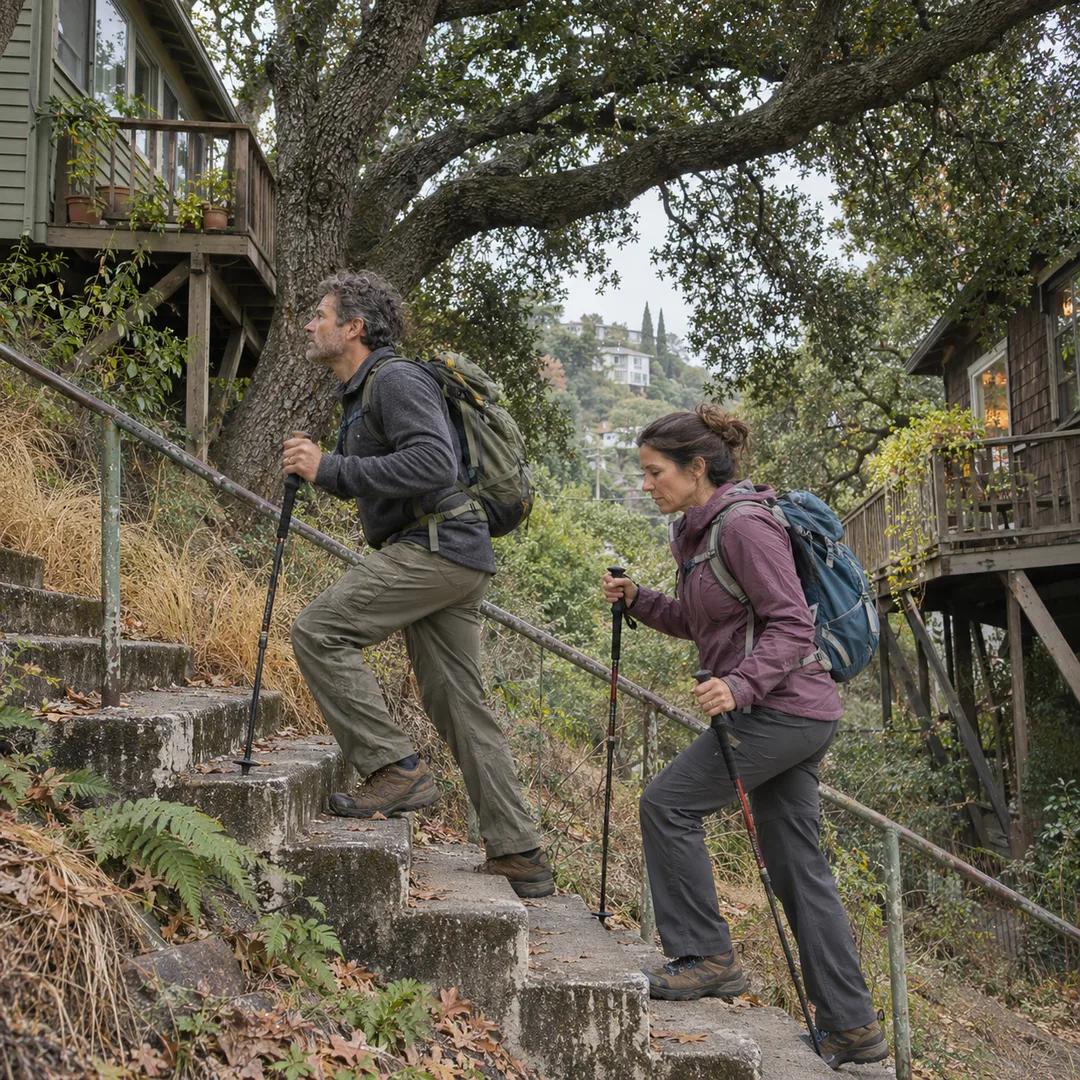
Practise with the boots and poles you plan to use in the mountains. Stairs are a good place to test whether your boots rub on the descent, and poles help you learn a steady rhythm on steep sections. On narrow stairways, collapse the poles and clip them to your pack so you do not jab other walkers or residents. Save the poles for the open streets and dirt trail.
Adding Elyria Canyon's Dirt Trail
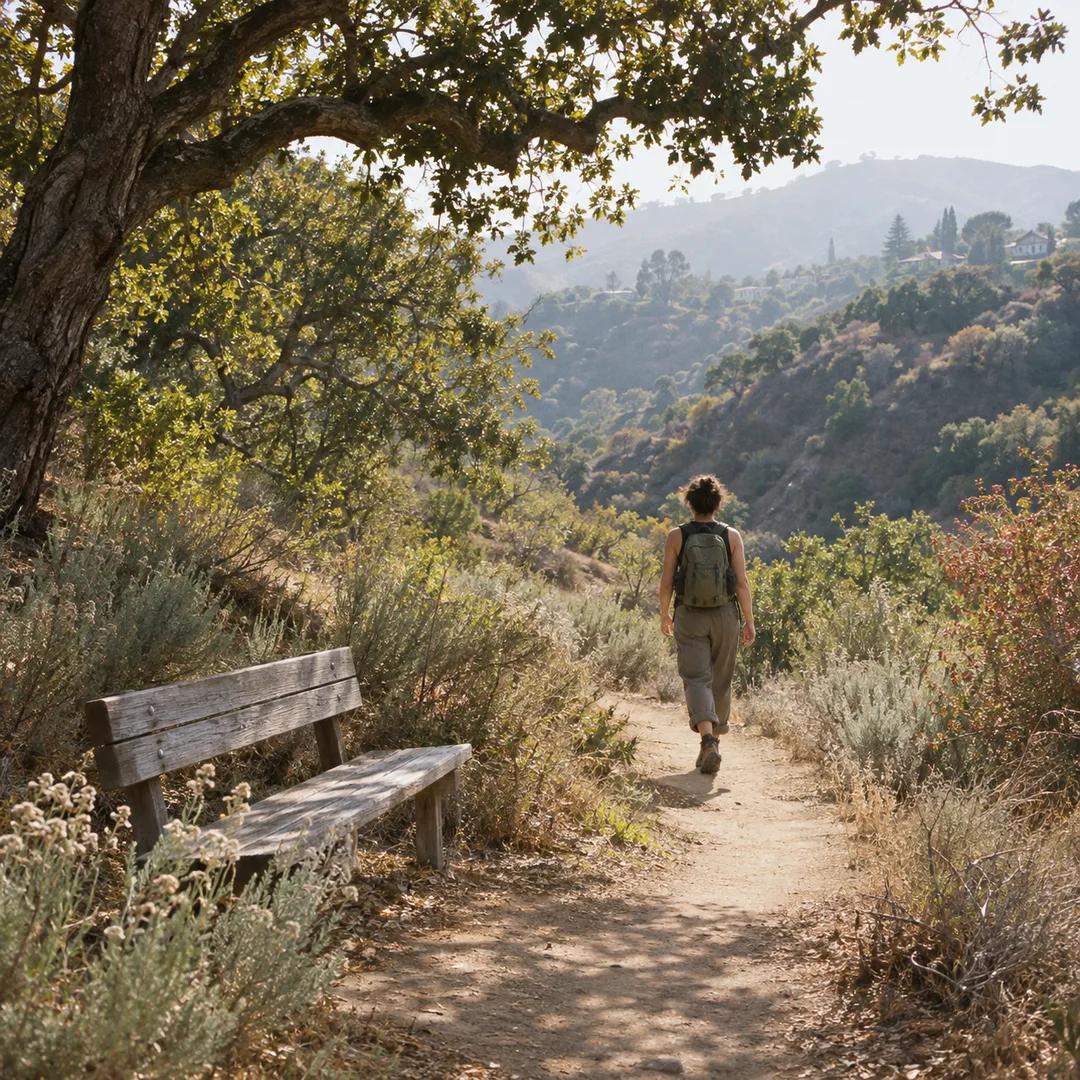
Between the stair climbs, drop into Elyria Canyon Park, a small wild pocket of native oaks, sage and chaparral tucked into the hillside. Its dirt paths climb toward ridgetop views over the city and the San Gabriel Mountains, which on clear winter days carry a dusting of snow. The uneven ground trains your balance in a way concrete steps cannot, and the scent of sage is a welcome reward.
Keep an eye on the trail surface. Loose gravel on steep sections can roll underfoot, and after rain the clay gets slick. Wildlife is part of the experience, from red-tailed hawks to the occasional coyote at dawn, so keep dogs leashed and give animals room. If the canyon is crowded on a weekend morning, reverse the order of your circuit to find quieter paths.
Pacing, Breathing and Recovery
Steep stair climbs push your heart rate up faster than a trail, so learn to pace yourself the way you would at altitude. Take shorter steps, breathe in rhythm and pause briefly at landings rather than stopping completely. A slow but steady climber usually overtakes the fast starter by the third stairway. If you feel dizzy or your chest tightens, stop, sit down and turn back.
Descending is where many hikers get hurt, so treat the downhill stairs as part of the workout. Keep a hand on the rail, step lightly and avoid running down. After each session, stretch your calves, hamstrings and quads, drink plenty of water and eat something with protein. If your knees ache the next day, swap one stair session for a flat walk or a swim.
What Not to Do on the Hill
Skip the midday heat, even in late autumn. South-facing slopes in Mount Washington have little shade, and the reflected heat from concrete makes stair climbs far tougher than the thermometer suggests. Early mornings and late afternoons are cooler and quieter, and the light over the city is softer for photos from the ridgetop.
Also skip parking on the narrowest lanes. Many streets in Mount Washington are barely wide enough for two cars, and residents rely on every turnout. Park on a wider street lower down, or take the Metro A Line to the Southwest Museum or Highland Park stations and walk up, which adds a free warm-up. Keep the noise down near homes, particularly early on weekend mornings.
Refuelling in Highland Park
After the circuit, walk or drive down to Highland Park, where Figueroa Street and York Boulevard are lined with taco stands, bakeries and cafes. It is a good place to refuel with a hearty breakfast burrito or a big bowl of something warm, and to compare split times with your training partner. Many of the storefronts sit in older brick buildings that survived from the neighbourhood's streetcar era.
If you have time, take a slow stroll past the craftsman homes and the arroyo that runs along the edge of the neighbourhood. Easy walking helps flush tired legs, and the shady streets make a gentle cool-down after the hills. Treat the meal as part of the routine, a small reward that makes it easier to get up early and climb again next week.
Planning Your Prep Weeks With Karpo
Write down your trip date and work backward to set a training plan, with longer circuits early and a lighter final week so your legs arrive fresh. The Karpo APP can help you search for cafes, outdoor gear shops and breakfast spots near Mount Washington and Highland Park, and save a list to share with your hiking partners as you plan each session.
On the morning of the climb, keep it simple: water, snacks, layers and a clear idea of your turnaround time. Mount Washington's stairways reward patience and consistency far more than heroic efforts. By the time you reach the trailhead in the mountains, those city steps will have made the first long climb feel familiar, and that confidence is worth as much as any piece of gear.
Ask Karpo for more information.
Keep reading
- El Sereno Urban Staircase Walk Planner for a Study Break
 Santa Monica Urban Staircase Walk Planner Before Meetings
 Echo Park Urban Staircase Walk Planner for Dog Owners