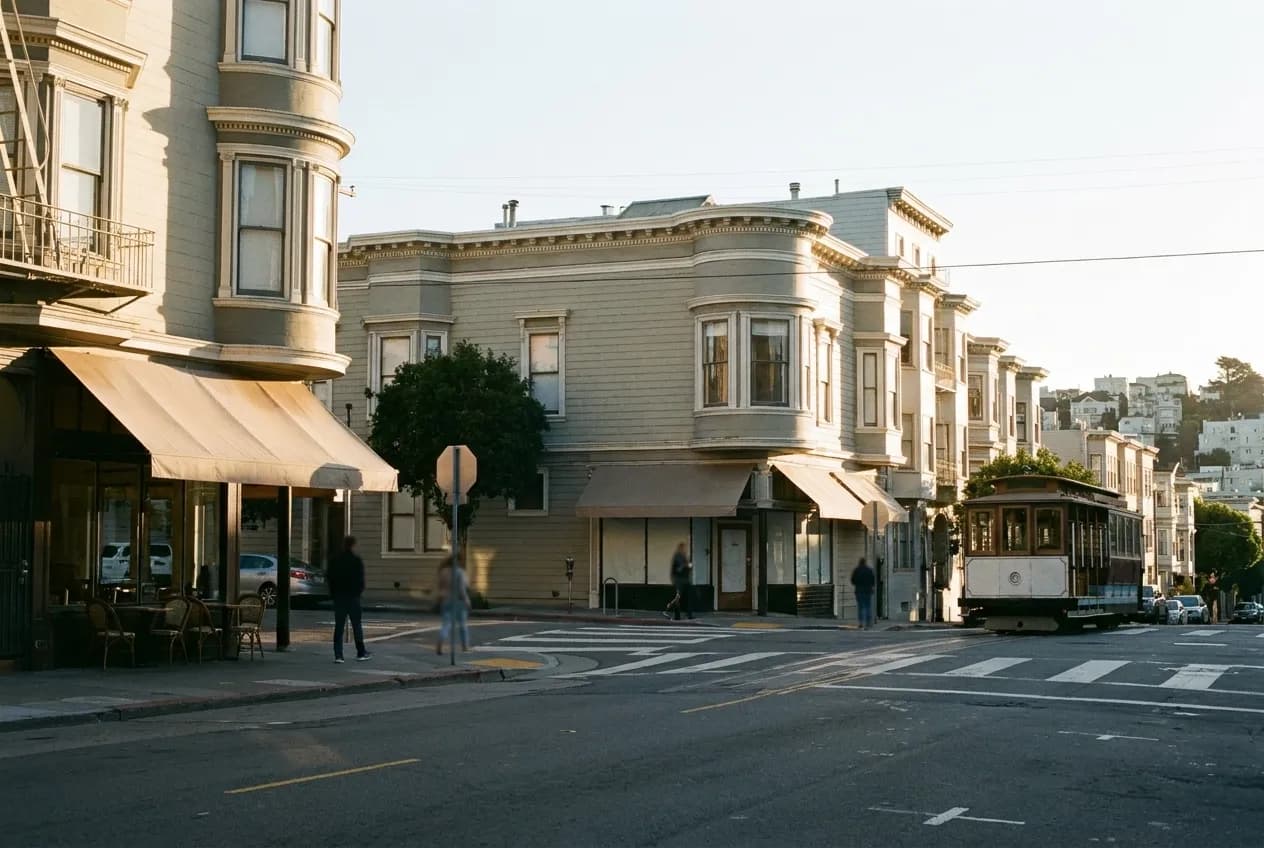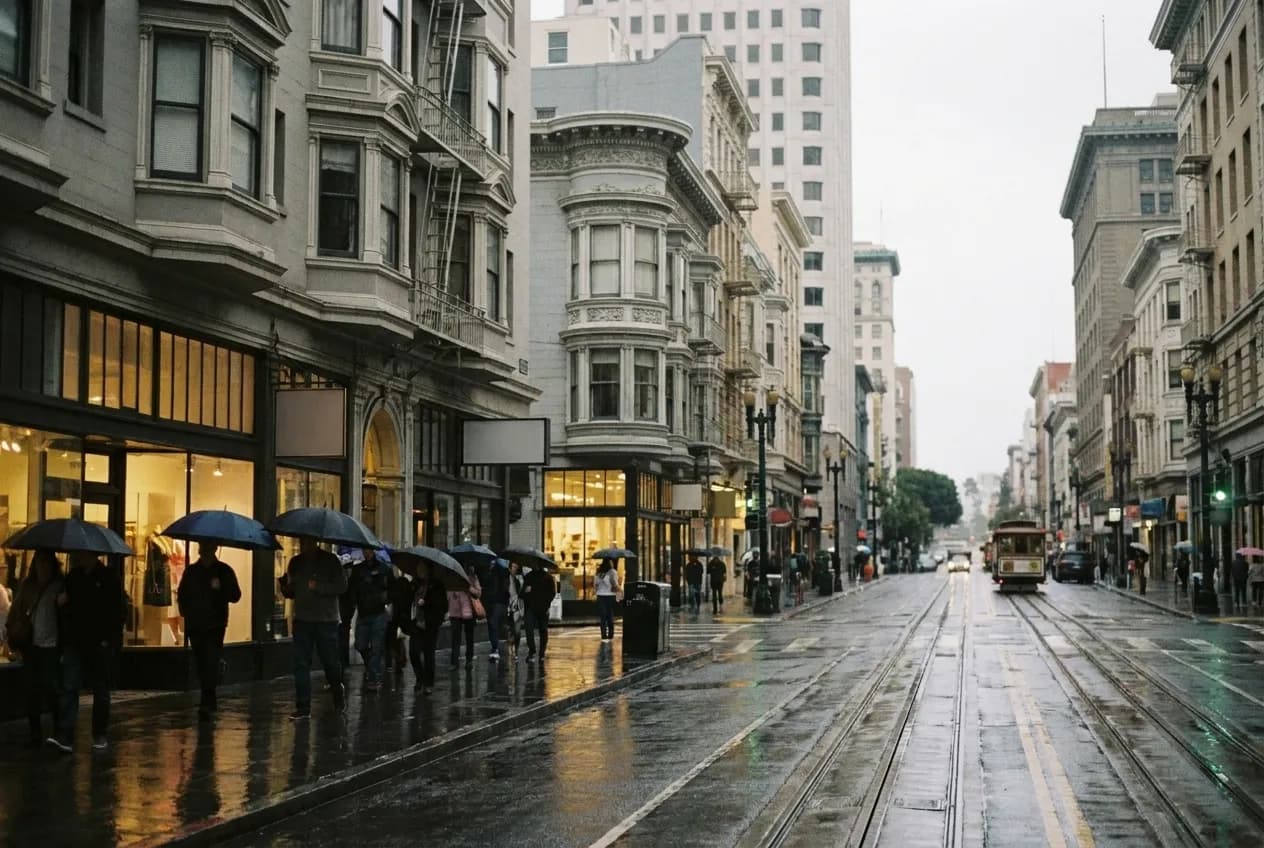
San Francisco rain does not work like rain in most of America. There is essentially no summer rain at all - the dry season runs from roughly May to October and can pass without a drop. Then between November and March, Pacific frontal systems arrive and it rains properly: steady, grey, all-day rain that can last two or three days at a stretch, sometimes with serious wind behind it. This is not a shower to shelter from for twenty minutes. The correct response is to build a day that never needs to be outdoors for more than the walk between two doors.
A wet day here is a clustering problem - you want several indoor things within a few minutes of each other, not a list spread across the city. Tell Karpo where you are and get a cluster you can walk between.
The Golden Gate Park cluster, which is the strongest
The single best wet-day plan in San Francisco is the Music Concourse in Golden Gate Park, because three major institutions sit around one open space about ninety seconds' walk apart. The de Young Museum covers American art, textiles and art from Africa, Oceania and the Americas, and its observation tower is free to enter even without a museum ticket - worth knowing on a clear day and irrelevant on a wet one.
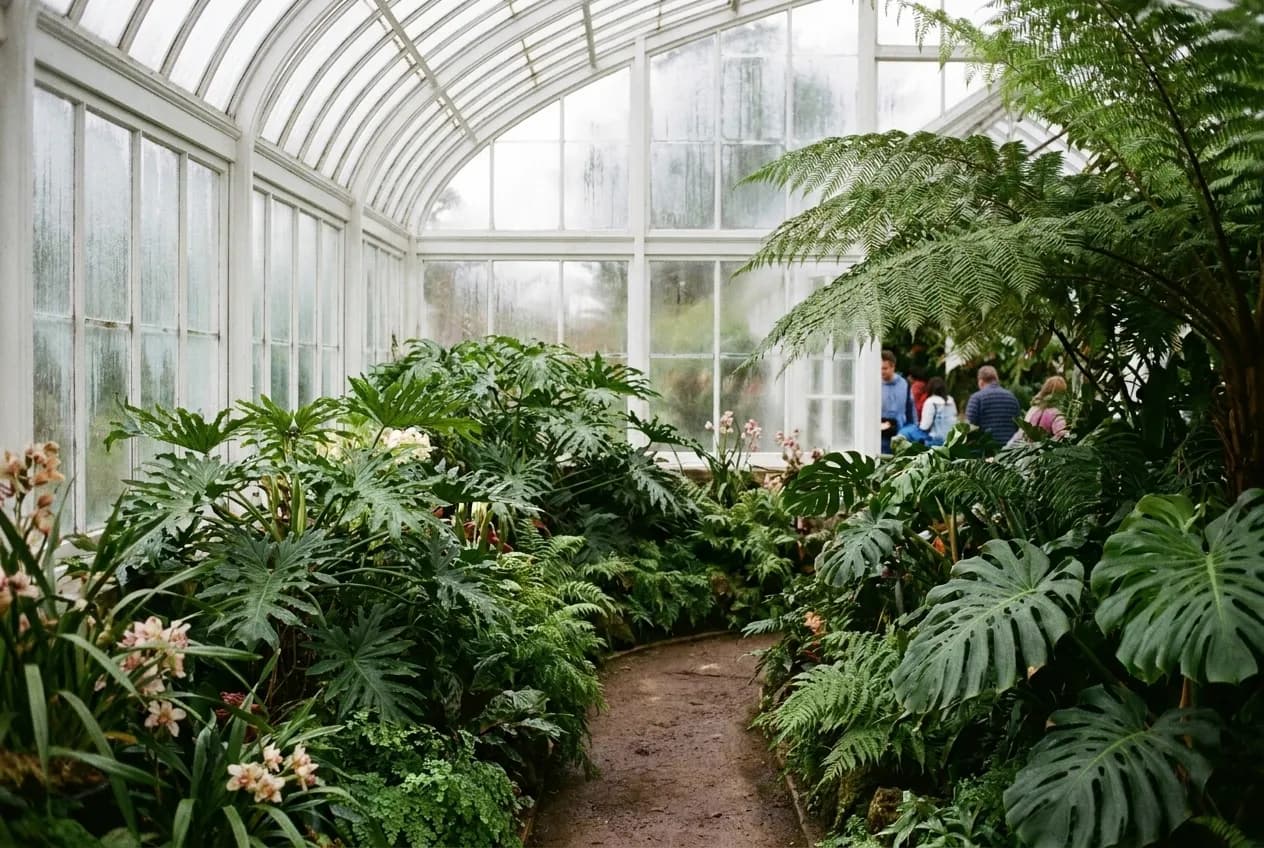
Directly opposite, the California Academy of Sciences contains an aquarium, a planetarium, a natural history museum and a four-storey rainforest dome under one roof, which is close to an ideal wet-day building - warm, humid and genuinely absorbing for several hours. A short walk west, the Conservatory of Flowers is a Victorian glasshouse full of tropical planting and is the most pleasant place in the city to be when it is raining, precisely because being inside a warm wet glasshouse while it is cold and wet outside is a very specific pleasure.
The downtown and SoMa cluster
The second cluster is around Third Street in SoMa, where SFMOMA anchors a group of institutions within a few blocks. The museum is large enough to absorb most of a day on its own, and its ground-floor and stair-level galleries are free to enter without a ticket, which is a genuinely useful fact on a wet afternoon when you have an hour rather than four.
Nearby, Yerba Buena Gardens' surrounding institutions, the Contemporary Jewish Museum and the Museum of the African Diaspora fill out the cluster. The Ferry Building, ten minutes north along Market, is a covered arcade of food shops and stalls that works as both lunch and shelter, and it connects to the Embarcadero station so you can arrive and leave without getting wet.
Chinatown, which is built for this
Chinatown is an underrated wet-day neighbourhood because its blocks are dense, its awnings are continuous, and almost everything is indoors and a few metres from the next thing. The bakeries, tea shops, herbalists and produce markets are all short-visit, warm and interesting, and you can spend two hours moving between them covering perhaps three hundred metres.
The specific wet-day order is dim sum from a counter, eaten indoors rather than in Portsmouth Square, followed by tea somewhere with seats. The Golden Gate Fortune Cookie Factory in Ross Alley is a narrow working room where cookies are folded by hand - a five-minute stop, essentially free, and exactly the right scale for a rainy afternoon. North Beach is a four-minute walk north when you want espresso and a bookshop.
The small, warm, cheap options
Not every wet day needs a museum ticket. City Lights in North Beach is free to browse and has been a working bookshop since 1953. The old caffès around it are rooms where sitting for two hours with one espresso is normal and expected, which is exactly what a rainy afternoon wants. Green Apple Books on Clement Street in the Richmond is the western equivalent and is enormous.
The other reliable category is a long lunch. Wet weather is the right conditions for the meals this city does that take time - dim sum with a trolley, a proper Burmese lunch on Clement Street, a bowl of noodles in the Sunset. San Francisco kitchens close early in the evening, but the middle of the day is theirs, and a two-hour lunch on a wet Saturday is a better plan than three museums in a rush.
Understanding the season
A few things make winter here easier to plan for. The rain is concentrated between November and March, and December through February are the wettest months. Storms usually come in sequence - a wet day is more likely to be followed by another wet day than by a clear one - so if you have several days here, do not save the indoor plan for later. It is also warmer than people expect: winter days sit around eleven to fifteen degrees, so it is wet rather than cold.
The compensations are real. Winter is Dungeness crab season, roughly from November, which is when cioppino - the tomato and wine seafood stew invented in this city - is actually worth ordering. It is also the clearest air of the year between storms, and the low winter light on the hills after a front passes through is the best light San Francisco gets.
Practical notes
Bring a waterproof with a hood rather than an umbrella - the wind off the Pacific destroys umbrellas and this is a windy city in a storm. Waterproof shoes matter more than a heavy coat; it is mild and wet, not cold. Cluster your plans: Golden Gate Park's Music Concourse, SoMa around Third Street, or Chinatown into North Beach, and walk between things rather than crossing the city. Muni and BART are your friends and both are covered at the station end. SFMOMA's ground floor and the de Young's tower are free. Check museum closing days - several close on Mondays or Tuesdays. And treat a wet day as the excuse for the long lunch you would not otherwise sit down for.
Tags: #ThingsToDoNearMe #SanFrancisco #RainyDay #DeYoungMuseum #CaliforniaAcademyOfSciences #ConservatoryOfFlowers #SFMOMA #FerryBuilding #Chinatown #CityLights #GoldenGatePark #WeekendPlans #SFWinter #Cioppino
All trademarks are the property of their respective owners.
Ask Karpo first
The difference between a wasted wet day and a good one here is picking a cluster instead of a list. Ask Karpo which indoor things near you are open today, whether the front is passing through this afternoon or settling in for two days, and where the nearest long lunch is worth sitting down for.