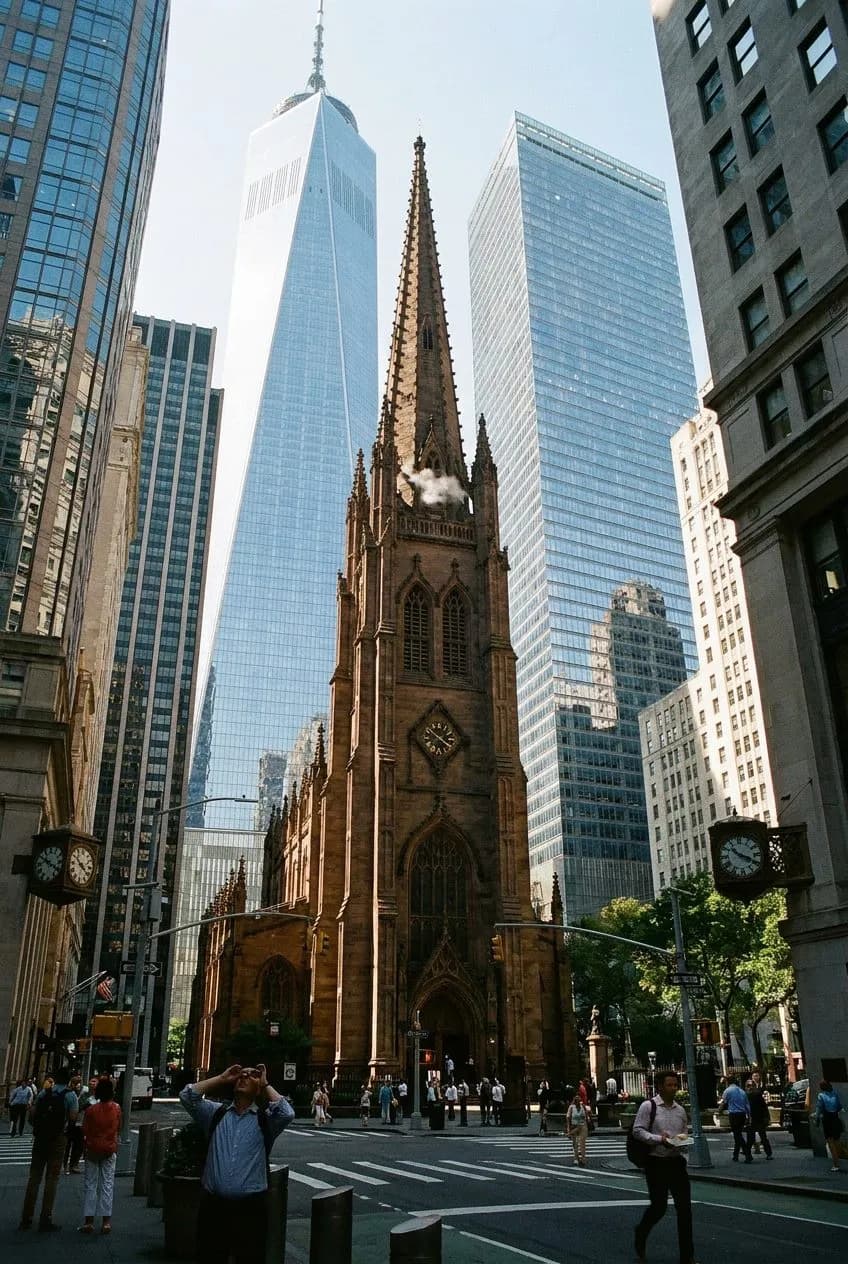
The lunch rush on Broadway moves in a single direction: away from desks, toward salad counters, back again before the next meeting loads. But every Tuesday at five past noon, something older and slower unfolds above the sidewalk—a cascade of bronze overtones spilling from Trinity Church's bell chamber, played live on an instrument most passersby assume died with the Victorian era. The tourists thin out. The northwest corner of the churchyard goes quiet. And for twenty minutes, the Financial District gets a soundtrack it doesn't quite know what to do with.
Twenty-three bells and one climb
The carillon at Trinity isn't a recording or a mechanized chime. It's a keyboard of wooden batons and foot pedals connected by wire to 23 bronze bells, the oldest cast in the Netherlands in 1797. The carillonneur—Trinity employs one of fewer than fifty certified players in North America—climbs a narrow spiral stair into the bell chamber every Tuesday and strikes each bell by hand, coaxing rhythm and harmony from two tons of tuned metal suspended in open air.
The instrument itself is a marvel of mechanical precision and acoustic engineering. Each baton connects to a clapper that strikes the interior of its corresponding bell, requiring both strength and delicate control. The largest bells demand forceful strikes; the smallest respond to the lightest touch. Playing a carillon is as much athletic endeavor as musical performance, a full-body engagement with an instrument that weighs more than a small car and produces sound that carries for blocks.
The performance runs from 12:05 to 12:25pm sharp, a narrow window that makes punctuality worth practicing. Arrive by noon if you want the northwest bench in the churchyard—the one that catches full sun in summer and delivers the clearest bell resonance, unfiltered by scaffold or stone. It's first-come seating in the oldest sense: carved granite, no reservation system, no app.
What the bells play
The repertoire isn't static. Tuesdays rotate through Bach chorales, hymn arrangements tweaked for carillon's peculiar voice, and contemporary commissions that sound like nothing else in the city's lunchtime soundscape. Some weeks you'll catch a fugue bouncing cleanly off Goldman Sachs' glass facade. Other weeks, a new piece so dissonant it feels like the bells are arguing with the traffic.
The carillon's tonal character sits somewhere between organ and percussion—sustained but metallic, melodic but with an edge that cuts through urban noise. Composers who write for the instrument must account for its peculiarities: the way overtones linger and blur together in humid air, the physical limitations of what a human player can reach and strike in rapid succession, the acoustic reality of performing outdoors in a canyon of reflective surfaces. The result is music that sounds both ancient and startlingly present, as if the eighteenth century is interrupting your lunch break with something urgent to say.
The schedule isn't published online, but it is available—you just have to ask. Stop by the welcome desk inside the narthex and request the repertoire schedule. The staff keep printed copies behind the counter, updated monthly, listing composer and title for each Tuesday through the season. It's a small act of curation that rewards the slightly curious.
The one performance nobody doubles
Trinity hosts plenty of concerts—evening recitals, Sunday services with full choir, the occasional organ showcase—but the Tuesday midday slot stands alone. It's the only weekday carillon performance in lower Manhattan, a detail that matters more than it should. The 1:00pm concert-goers, the ones who plan their calendars around live music, miss it entirely. By the time they arrive, the carillonneur is back on the ground and the bells are silent until the following week.
That narrow Tuesday window creates an odd kind of exclusivity—not by design, but by scheduling friction. You can't catch it after a late morning meeting. You can't double back from Tribeca in time. You either build your Tuesday around 12:05pm, or you let it pass for another week, which most of the city does without noticing.
A carillon ritual in a neighborhood of pings
There's something stubborn about live bells in a district governed by push notifications and earnings calls. The carillon doesn't adapt to your calendar; it doesn't stream or clip well on a phone. It happens once, at a fixed time, whether you're there or not—a carillon ritual in a place that's optimized ritual out of most of its routines.
Sitting in the churchyard while the bells ring overhead is less about music appreciation and more about agreeing to twenty minutes that refuse to multitask. No lyrics to follow, no performers to watch, just overtones layering into the June heat or the cool clarity of a September noon. It's a midday reset by virtue of what it doesn't ask of you.
The acoustic geography of lower Broadway
The bells don't stop at the churchyard gates. Their sound radiates outward in concentric waves, shaped and redirected by the architecture that surrounds them. Stand at the corner of Wall and William Streets, two blocks east, and you'll catch fragments of melody ricocheting off the Federal Reserve building—disjointed, ghostly, but unmistakably present. Walk south toward Bowling Green and the sound thins to almost nothing, swallowed by distance and the rumble of the 4 train beneath your feet.
The best secondary listening position is inside the Stone Street Historic District, particularly the narrow pedestrian section between Hanover Square and Coenties Alley. The colonial-era street layout and low-rise buildings create an acoustic pocket where the bells arrive softer but more coherent than in the canyons of Broadway. On warm Tuesdays, the outdoor tables at the wine bars fill with lunchers who may not know exactly where the music is coming from, but who sense that something unusual is happening just out of sight.
The Financial District's soundscape is typically flat and modern—ventilation hum, electronic crosswalk signals, the pneumatic hiss of bus brakes. The carillon introduces verticality and history, a reminder that sound can arrive from above and carry weight that has nothing to do with volume. It's a weekly recalibration of what this neighborhood can contain, if only for twenty minutes.
The churchyard after the bells
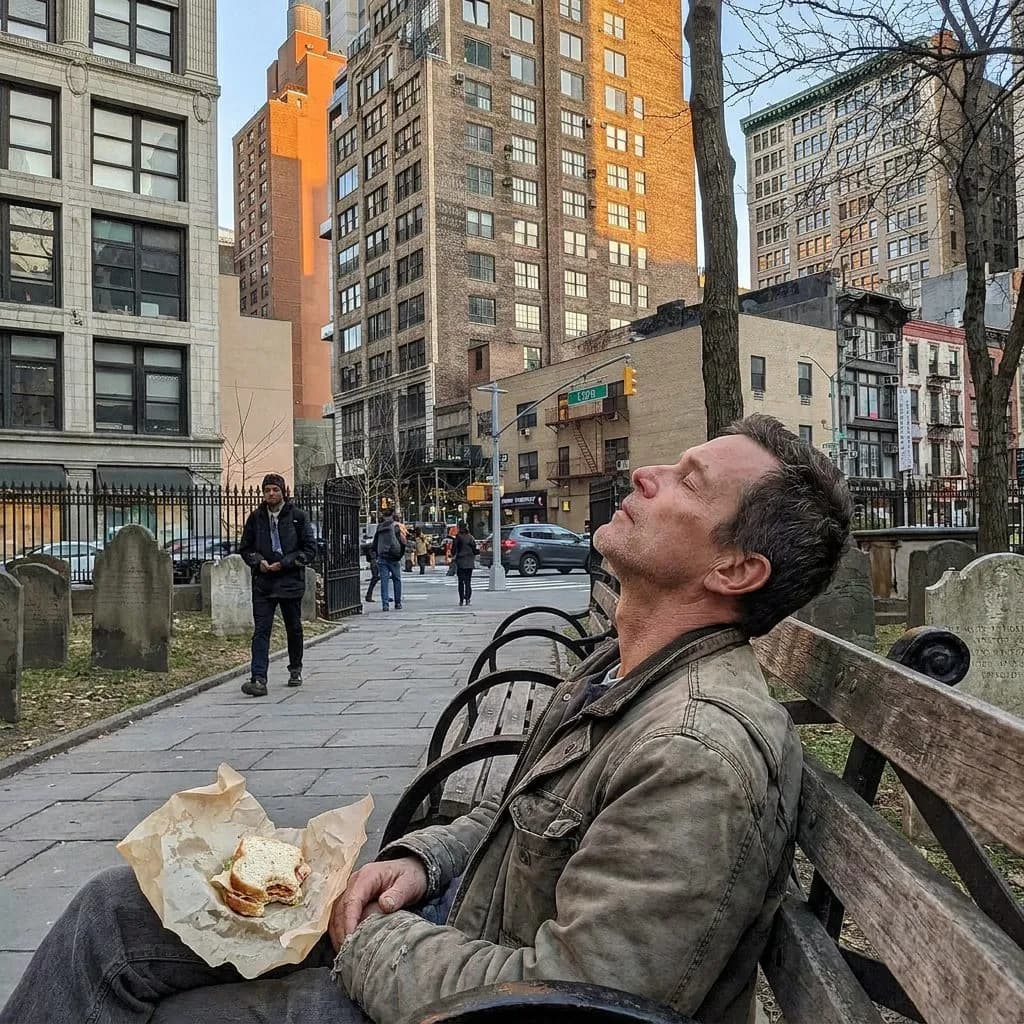
When the final chord fades—always slightly longer than you expect—the churchyard doesn't empty immediately. A few people stay on the benches, scrolling or finishing a sandwich. Others wander the old headstones, reading names worn nearly smooth by three centuries of weather. Alexander Hamilton's monument still draws a crowd most days, but Tuesday at 12:30pm it's just stone and shadow, the tour groups cycled through an hour earlier.
The light in late summer slants through the sycamores in a way that makes Broadway feel farther than one block. You can hear the subway grates hiss, delivery trucks beep in reverse, the distant thrum of construction. But the overtones linger in your ear just long enough to make the transition back feel slightly off-tempo, like stepping from one soundtrack into another mid-scene.
Practical notes
Trinity Church Wall Street is located at 89 Broadway, at the corner of Wall Street. The churchyard is open to the public; no ticket or reservation is required for the outdoor carillon performance. Nearby subway stations include Wall Street (2/3, 4/5), Rector Street (R/W), and Cortlandt Street (R/W/1). Street parking is scarce; public garages on Greenwich Street are the practical choice. The church is open daily, though hours vary by season—verify directly before planning around interior access. The churchyard is wheelchair accessible via the Broadway gate. Bring sunscreen for the benches in direct sun, and consider a hat; the stone seating is shaded only along the eastern wall.
Tags: #TrinityChurchWallStreet #CarillonConcert #LowerManhattan #FinancialDistrict #NYCHiddenGems #RightOnTime #MusicInTheCity #TuesdayTradition #WallStreet #MiddayReset #SummerInNYC #LiveMusic #UrbanRitual #NYCSummer2026 #KarposFinds
Please drink responsibly. Must be of legal drinking age.
Sources consulted: Trinity Church, Manhattan · Trinity Church Wall Street · Carillon · Time Out New York · NY Times: New York
All trademarks are the property of their respective owners.