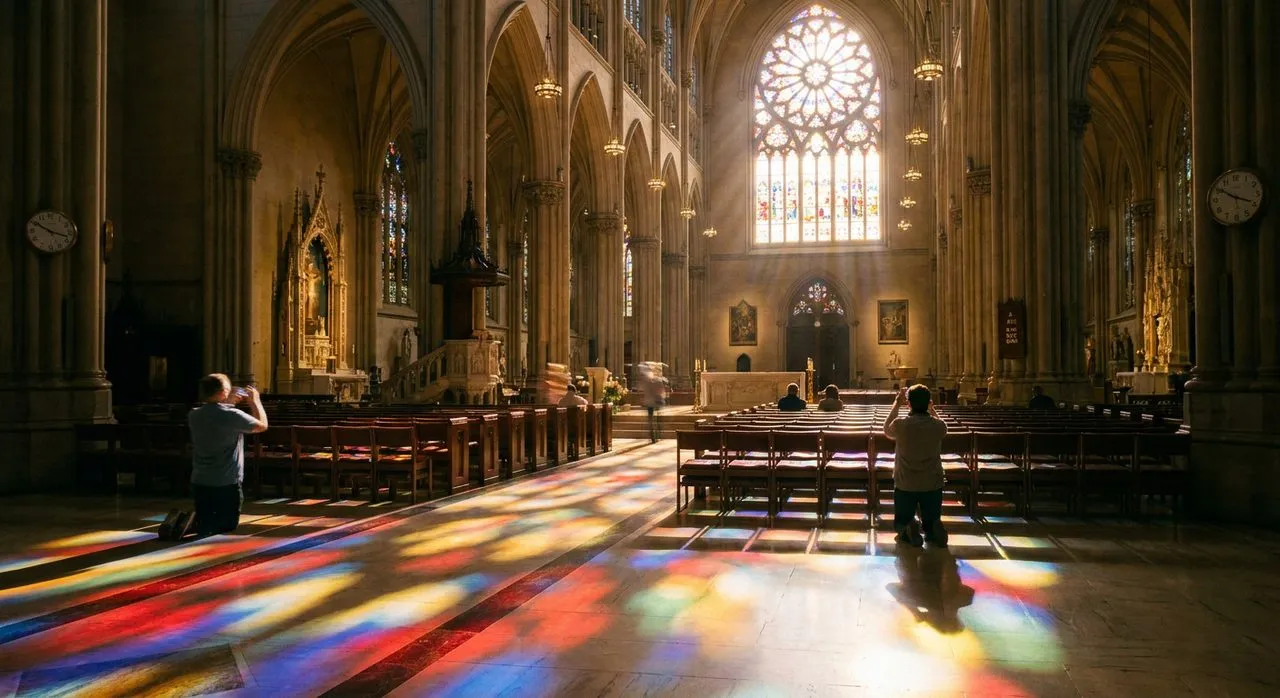
Most New Yorkers walk past St. Patrick's Cathedral a thousand times and see it once: scaffolding, tourist bottleneck, backdrop for a meeting they're late to. But every Thursday between 3:50pm and 4:10pm in the coldest stretch of winter, something happens that has nothing to do with Mass schedules or feast days. Low-angle sun ignites the 26-foot rose window above Fifth Avenue, and for exactly twenty minutes the nave floor becomes a kaleidoscope of crimson, cobalt, and gold. The marble glows. The geometry breathes. Then it's gone.
A narrow calendar
The window only performs between mid-December and late January, when the sun's trajectory drops low enough to thread the needle between midtown towers and strike the rose window at full force. Outside that span, the angle's wrong. The light glances off or doesn't arrive at all. Even within the sweet spot—December 15 to January 20, give or take—cloud cover kills the effect entirely. You can't force it. You can't reschedule. It either happens or it doesn't.
This is golden-hour urbanism at its most unforgiving. The city offers the stage, the architecture holds the lens, and the weather decides whether anyone gets a show. On clear Thursdays, the reward is total. On overcast ones, you get marble and tourists and the faint scent of votive wax, same as any afternoon. The unpredictability is part of the appeal—there's no guarantee, no rain check, no makeup date. Either the city aligns with the cosmos that particular Thursday or it doesn't, and you adjust accordingly.
The Bronx kaleidoscope
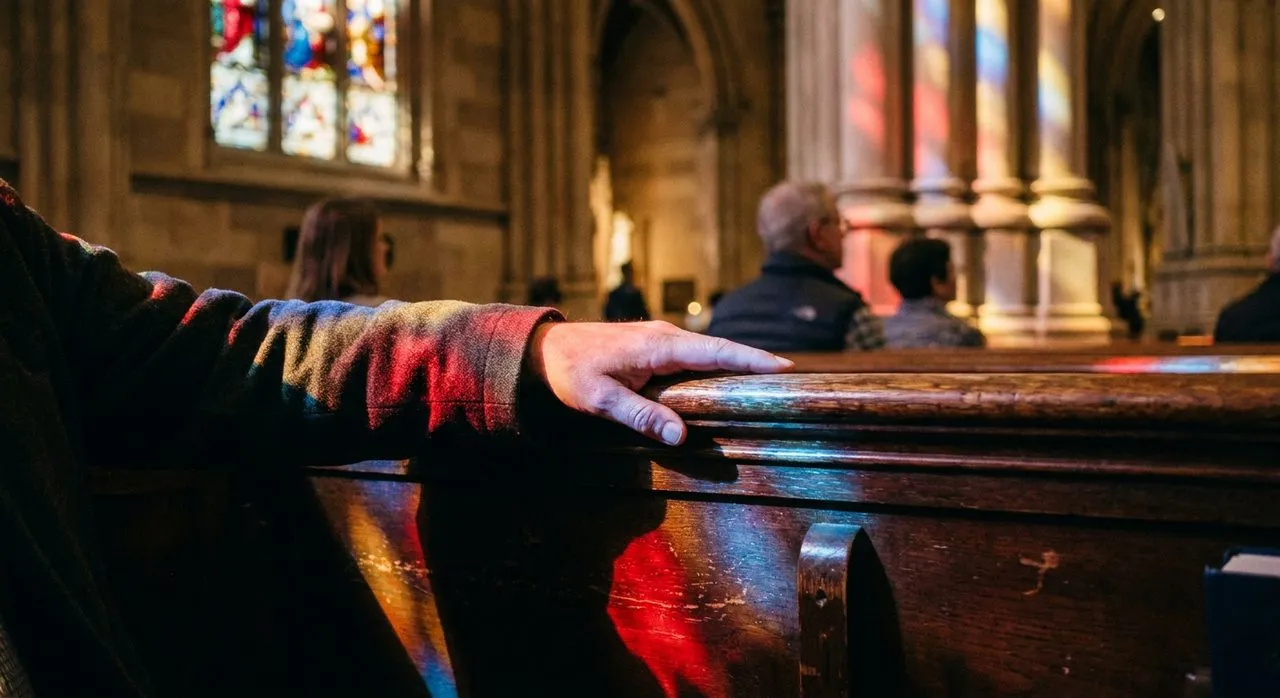
The sacristy staff have a nickname for the phenomenon, and it's more accurate than poetic: the Bronx kaleidoscope. The rose window faces north, an unusual orientation for a major cathedral portal, and the light that sets it ablaze isn't direct sunlight at all. It bounces off the façades of buildings across 51st Street, ricochets south, and slams into the stained glass with a second-hand intensity that somehow feels richer than the real thing. Reflected light, reflected city. The whole effect depends on geometry most visitors never consider.
It's a reminder that liturgical timing and urban accident don't always align, but when they do, the results outlast intention. Nobody designed this. The architects placed the window in 1879. The skyscrapers came later. The light found its own route.
The architecture that made it possible
St. Patrick's was built in an era when Fifth Avenue was still finding its identity, when the surrounding blocks held brownstones and modest commercial buildings rather than steel towers. The cathedral's Gothic Revival design, modeled after Cologne Cathedral, prioritized verticality and light, with James Renwick Jr.'s plans calling for expansive rose windows at both the north and south transepts. The north-facing window was always an architectural oddity—most cathedrals reserve their grandest rose windows for western façades to catch the setting sun during evening services.
But Renwick's design was constrained by the urban grid and the lot dimensions, and the north transept window became a feature of necessity rather than symbolism. For decades it remained a beautiful but relatively dim element of the interior, casting only pale winter light onto the marble below. Then midtown built up around it. The Rockefeller Center complex rose in the 1930s. The Olympic Tower went up in the 1970s. And somewhere in that accumulation of glass and limestone, the angle of reflection shifted just enough to create something unintended: a seasonal light show powered by the city's own skyline.
Where to sit
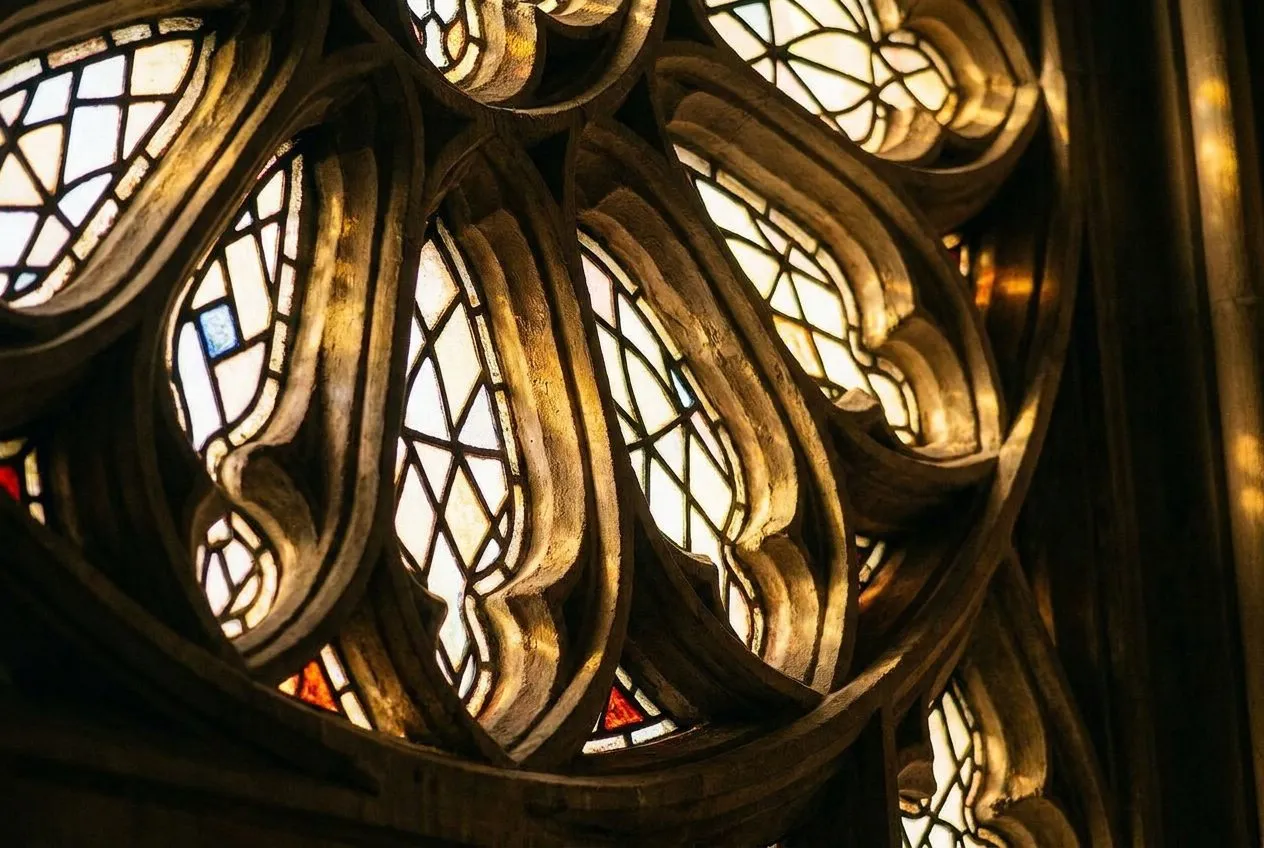
If you want the full chromatic wash, skip the center aisle. The best vantage is in the south transept pews nearest the baptistery chapel, where the projection hits hardest and foot traffic thins out. Tourists cluster near the main doors or drift toward the altar. The side pews stay quiet. You can sit without craning, without elbows, and watch the floor turn into something between a Byzantine mosaic and a Rothko chapel.
The colors shift as the light intensifies—rose to garnet, sky blue to lapis, amber deepening into burnt orange. The effect peaks around 4:02pm, holds for eight minutes, then fades as the sun drops another degree and the angle breaks. By 4:12pm it's over. The marble returns to gray. The geometry collapses back into stone.
What it sounds like
The cathedral's acoustics change during the light show, or at least they seem to. The vast nave amplifies every footstep, every whispered conversation, every rustle of a coat being adjusted. But in the south transept, especially during the phenomenon's peak minutes, the ambient noise softens into something almost liturgical. Tour groups move through the main aisles with their guide's amplified commentary echoing off the vaulted ceiling, but back near the baptistery the sound dampens, absorbed by side chapels and stone columns.
What you hear instead is the small stuff: the creak of wooden pew backs, the distant hiss of the HVAC system working overtime against January cold, the occasional cough or cleared throat. Sometimes there's organ practice bleeding in from the choir loft, random chords and scales that feel like accidental scoring for the light's slow fade. Outside, Fifth Avenue roars with taxis and crosswalk signals and the low-frequency rumble of the subway two levels below street level, but inside, during those twenty minutes, the city feels held at arm's length. The light does that—it creates a temporary pocket of attention that dampens everything else.
What it isn't
This isn't a service. There's no program, no docent, no suggested donation beyond what you'd offer walking into any cathedral. Some Thursdays a handful of people know to look up at the right moment. Most weeks, nobody does. The effect plays out whether or not anyone's watching, which might be the best part. It's not curated. It's not ticketed. It just is.
That makes it easy to romanticize and just as easy to miss. Arrive at 4:15pm and you've missed it. Arrive on a cloudy afternoon and the window sits dark. But if you time it right and the weather cooperates, you get twenty minutes of accidental beauty in a building that was never supposed to be accidental about anything.
The regulars
A few people have built the light show into their weekly rhythm. They're not pilgrims. They're not influencers scouting content. They're the kind of New Yorkers who've learned to recognize the city's barely-there rhythms and treat them like appointments. Thursday 4pm, south transept, December through January. They sit. They watch. They leave.
There's something quietly radical about showing up for something that won't show up for you half the time. No app can predict it. No algorithm can surface it. You have to be there, in the cold, in the right twenty-minute window, on the right kind of clear afternoon, or you get nothing. In a city that monetizes every moment and optimizes every errand, that feels like the last free thing left.
Practical notes
St. Patrick's Cathedral is at 5th Avenue between 50th and 51st Streets, but verify the exact entrance/access wording. Nearest subway: B/D/F/M to 47–50 Sts–Rockefeller Center, or E/M to Fifth Ave/53 St. Verify current hours directly with the cathedral; opening times and closings can vary by day and season. Entrance is free. Verify accessibility details directly with the cathedral; this access point may not be the correct public entrance for wheelchair users. Bring nothing but time and low expectations for cloud cover. If it's overcast, it won't happen. If it's clear, arrive by 3:50pm and claim a south transept pew near the baptistery for the best view. No photography restrictions during non-service hours, but keep your phone on silent and your flash off. Late 2026 should follow the same solar calendar as every winter prior; plan for mid-December through mid-January.
Tags: #StPatricksCathedral #NYCsecrets #RightOnTime #winterlight #FifthAvenue #Midtown #goldenhoururban #liturgicaltiming #NYChiddengems #thursdayritual #urbanlightshow #stainedglass #ManhattanMoments #cityrhythms #freenyc
Sources consulted: St. Patrick's Cathedral · Official Cathedral Website · Stained Glass · Time Out New York · NY Times: New York
All trademarks are the property of their respective owners.