There's a particular satisfaction in sliding open a three-ring binder and finding a black-and-white photograph of your apartment building taken eighty years ago, back when the ground floor sold coal instead of oat-milk lattes. The New York City Municipal Archives reading room, tucked into the fifth floor of a Civic Center tower, is the city's most quietly generous cultural resource—a walk-in repository where retired street signs lean against climate-controlled walls and eight million death certificates wait in temperature-regulated silence. No ticket, no app, no timed entry. Just a clipboard, a call slip, and the willingness to wait while a staffer disappears into a vault shared with pension files and fire department paperwork.
The reading room itself
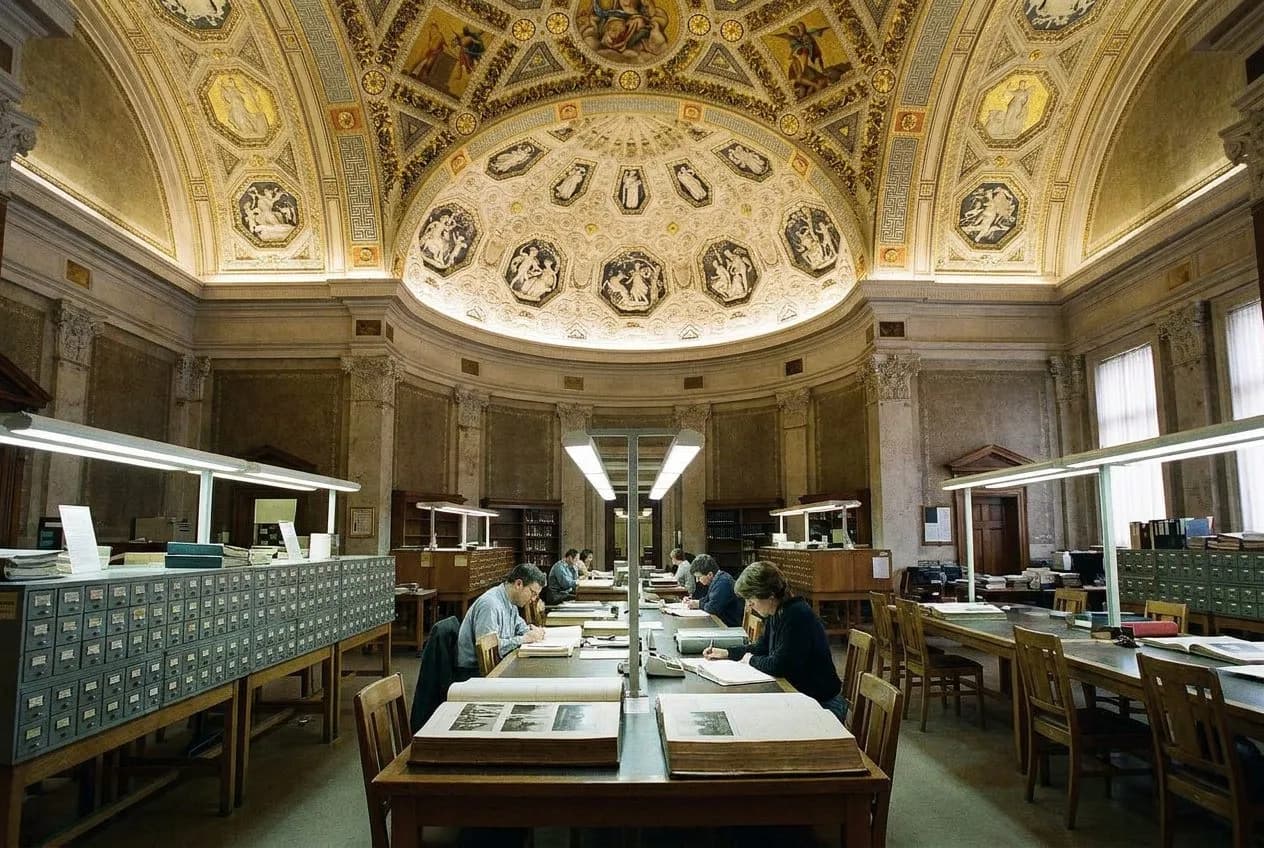
The space feels like a university library stripped of any pretense: fluorescent light, beige carpet, a few long tables, metal shelving along the perimeter. But the materials are New York incarnate. Ledgers bound in cracked leather. Microfilm carousels. Boxes labeled with block numbers and years. The room hums quietly—scanning machines, the shuffle of paper, the occasional phone trill from the reference desk.
It's open weekdays from 9 a.m. to 4:30 p.m., and vault pull deadlines may require arriving earlier in the afternoon. Staff need time to retrieve items from the basement, and the last pull of the day happens earlier than you'd think. Plan to be through the door by mid-afternoon if you want to hold an actual street sign in your hands before closing.
This is archive tourism at its most democratic—no credentials required, no research proposal to submit. You're as welcome as the genealogist tracing a 1902 birth record or the filmmaker hunting location stills. The city simply asks that you sign in, store your bag in a cubby, and keep your voice low.
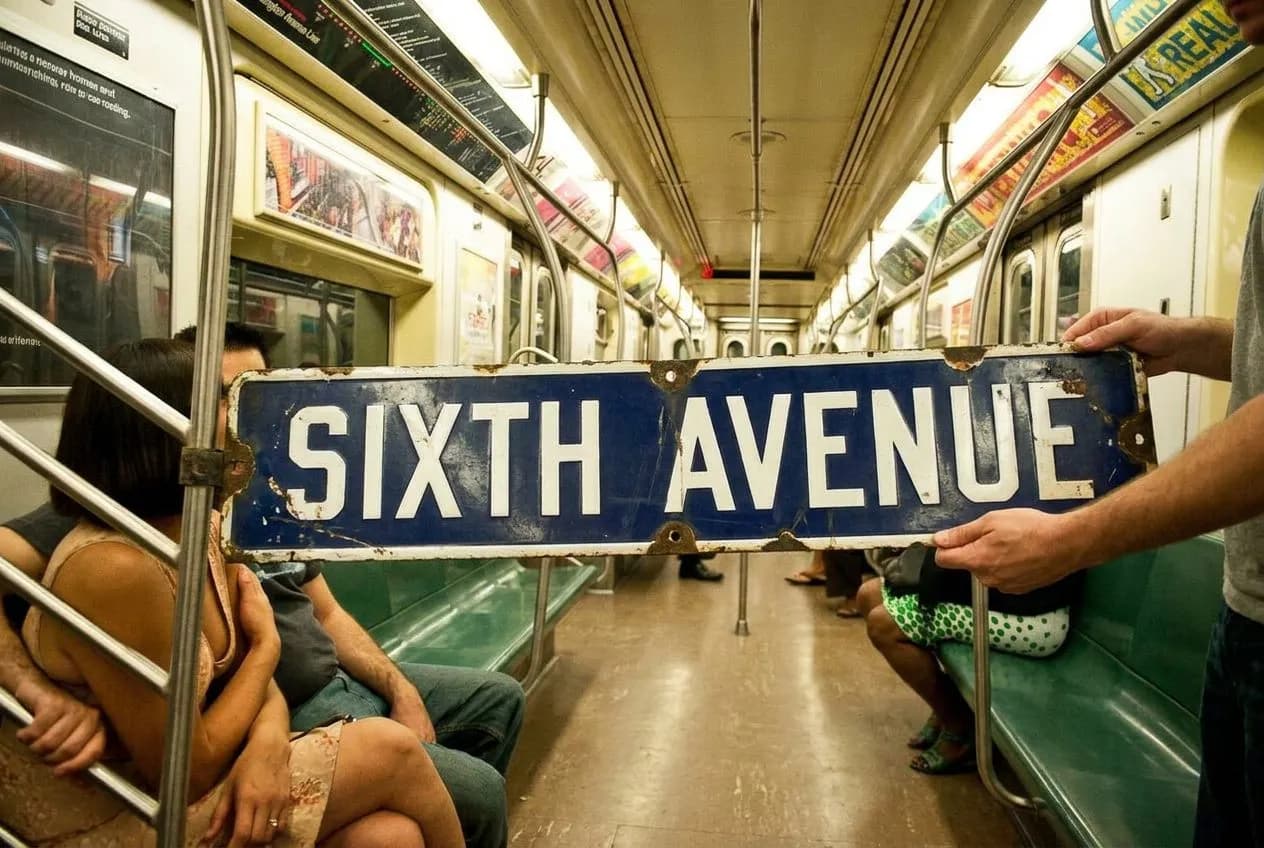
Ordering a street sign from the vault
The street sign collection draws the most civilian interest, and the process is straightforward. You fill out a call slip at the desk—location, cross streets if you know them—and a staff member descends into a climate-controlled basement that also houses the fire department's pension records. The signs arrive ten or twenty minutes later, often still dusty, some bent at the corners, many bearing the telltale pockmarks of decades under weather and pigeons.
You can't take them home, but you can photograph them. The request is free. There's no limit, though decorum and the clock will impose their own. On a slow Tuesday you might examine five or six; on a summer afternoon when the room is crowded, two feels generous. The tactile thrill is real: running a finger over embossed metal, feeling the heft of something that once hung at the corner of Mulberry and Grand.
The 1940s tax photo binders
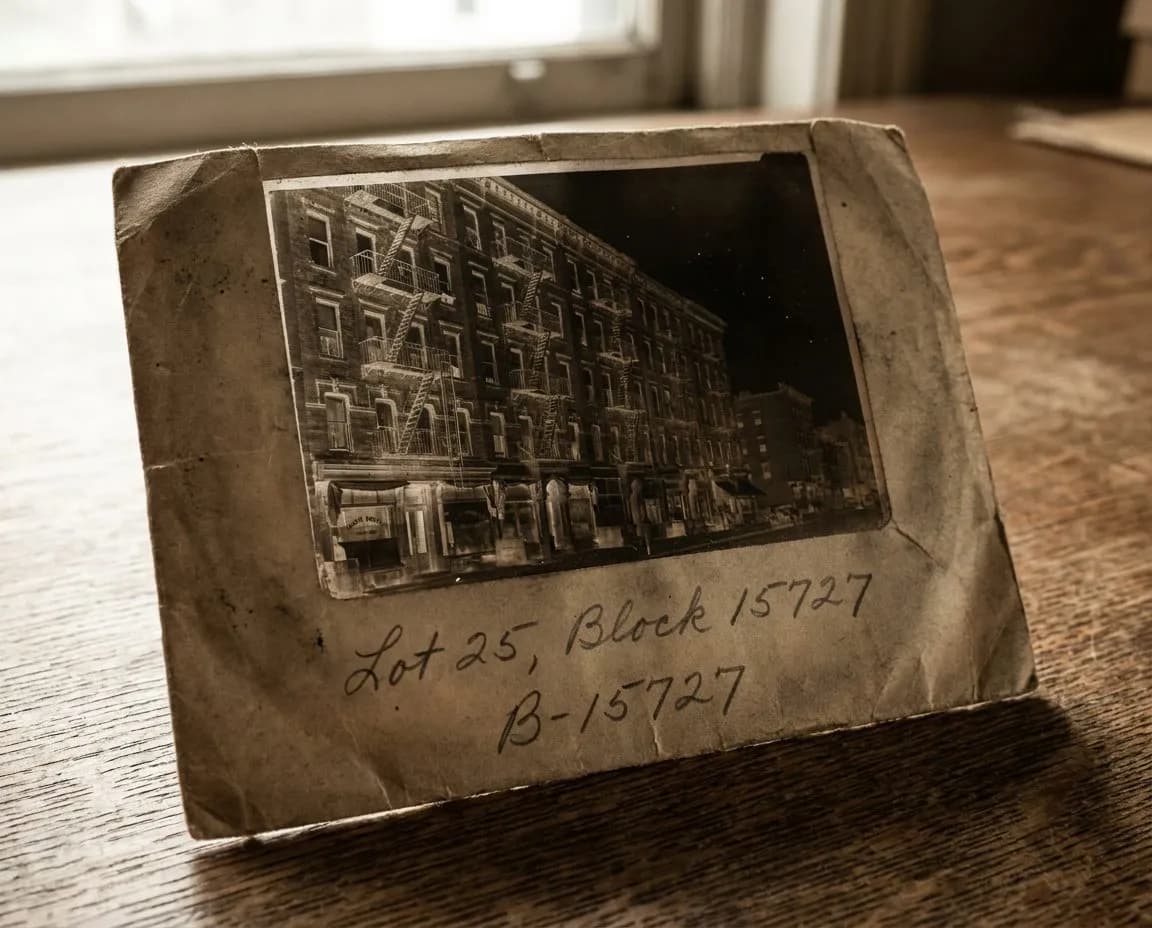
The jewel of the open-access collection is a set of three-ring binders—one for nearly every block in all five boroughs—containing black-and-white photographs taken in the early nineteen-forties for tax assessment purposes. Each image is annotated with an address and block number. You page through them without gloves, which feels both illicit and entirely ordinary.
The photos are compulsively watchable. A Flatbush tenement with laundry lines sagging between fire escapes. A Greenwich Village townhouse, stoop pristine, before the neighborhood became a synonym for expensive. You can spend an hour on a single binder, cross-referencing street views on your phone, marveling at the storefront that became a bank that became a Sweetgreen. It's civic transparency rendered in silver gelatin—proof that the city has always been in motion, always replacing itself.
The binders sit on open shelves. No call slip required. Just find your block number and pull.
Birth, marriage, and death records
The genealogy contingent arrives early and stays late. Birth records generally begin in 1866, and death records go back earlier than that in some boroughs. Marriage certificates, naturalization papers, coroner's reports—together they form a mirror of the city's human churn. The search process requires patience: ledger volumes on microfilm, handwritten indices, occasional dead ends when a surname was misspelled or a date misremembered.
Staff at the reference desk are practiced guides. They'll walk you through the filing system, suggest alternate spellings, point you toward supplementary collections. Digitization efforts have expanded, though many records remain analog-only. That's part of the appeal—you're doing detective work, not just Googling.
What you won't find (and why that matters)
The Municipal Archives is not the city's attic. It doesn't keep subway ephemera, restaurant menus, or Broadway playbills. Its mandate is civic: records generated by government functions. Tax photos, yes. Snapshots of a bodega's grand opening, no. That narrow scope is what makes the collection navigable. You're not drowning in nostalgia; you're tracing infrastructure.
There's also no café, no gift shop, no postcard rack. The austerity is almost a luxury—proof that a public resource doesn't need to monetize your visit to justify its existence. You come, you look, you leave. The transaction is information, not merchandise.
Who else will be there
On any given weekday you'll share the room with a cross-section of the city's curiosity economy: a documentarian pulling stills for a film about Robert Moses, a retiree hunting a great-grandfather's naturalization papers, an architecture student mapping prewar storefronts, a random copywriter (hi) procrastinating on deadline. The vibe is library-quiet but not precious. People chat at the reference desk, compare notes, swap tips on which binders are worth the deep dive.
By summer's end, when the heat makes outdoor tourism less appealing, the reading room fills with locals—proof that the best free attractions are often the ones that don't advertise.
Practical notes
The Municipal Archives reading room is located at 31 Chambers Street, fifth floor, in lower Manhattan. Nearest subway: Brooklyn Bridge–City Hall (4, 5, 6), Chambers Street (J, Z, A, C). Street parking is scarce; municipal lots nearby. Hours are Monday through Friday, nine a.m. to four-thirty p.m.; arrive by three if you plan to request vault materials. The room is wheelchair accessible. Bring a library card or government-issued ID for sign-in. Laptops and cameras are welcome; bags must be stored. No appointment necessary. Verify holiday closures directly before visiting.
Tags: #MunicipalArchives #NYChistory #FreeAndFine #CivicTransparency #ArchiveTourism #LowerManhattan #StreetSigns #1940sTaxPhotos #Genealogy #CivicCenter #NYCarchives #FreeNYC #UrbanHistory #Summer2026 #HiddenNYC
Sources consulted: NYC Municipal Archives · Municipal Archives - Wikipedia · Historical Collections · Street Signs - Wikipedia · NY Times Metro
All trademarks are the property of their respective owners.