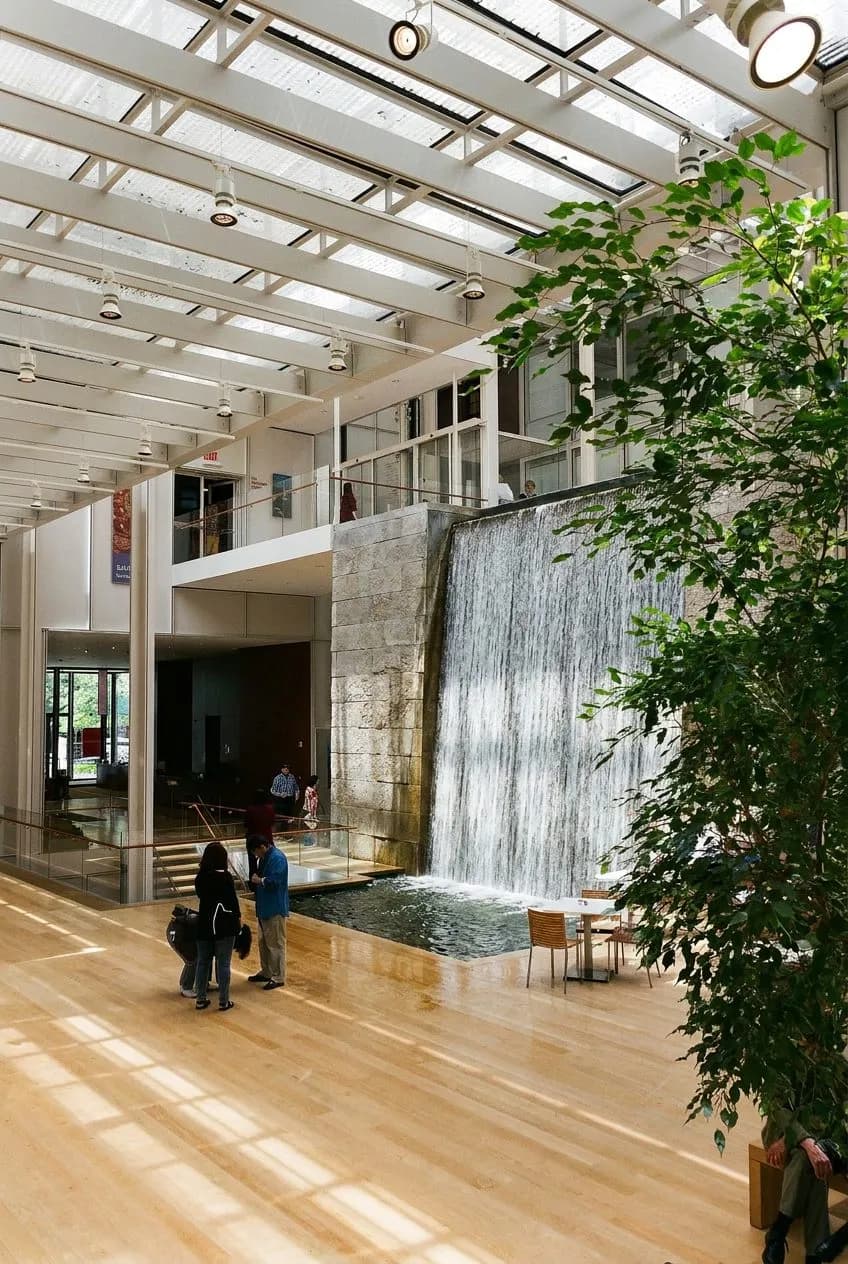
There's a specific kind of magic in finding silence in the loudest city on earth—except at Greenacre Park, the magic is finding the right kind of noise. Wedged between brownstones on East 51st Street, one block from the crush of Grand Central, this sliver of green measures barely a tenth of an acre. But what it lacks in square footage it makes up for in decibels: a 25-foot waterfall cascades down a granite wall, generating a roar so complete it erases the honking, the sirens, the ambient anxiety of Midtown Manhattan. The entrance is easy to miss—a narrow passage between buildings—which is exactly why the people who need it most keep coming back.
A 1971 experiment in pocket parks that still works
Greenacre opened in 1971, a gift from Abby Rockefeller Mauzé and the Greenacre Foundation, at a time when New York was testing a new urban hypothesis: that tiny parks could do what grand plazas couldn't. The term "vest-pocket park" entered the lexicon—small interventions tucked into the leftover spaces of the grid. Greenacre is one of three such parks the foundation built in the 1970s, but it's the only one with a waterfall this tall. Paley Park, a few blocks west, has a 20-foot cascade. The difference matters. Five feet translates to significantly more water, more sound, more of the acoustic blanketing that makes this place feel like a secret even when it's full.
The design, by Sasaki, Dawson & DeMay, is deceptively simple: a long, narrow lot with the waterfall anchoring the back wall, movable chairs scattered under honey locust trees, and a few tables on different levels to create the illusion of privacy. By late 2026, the trees have matured into a proper canopy, dappling the slate floor with shifting light. The effect is less "park" and more "outdoor room," the kind of space where sound urbanism principles quietly do their work without anyone needing to know the term.
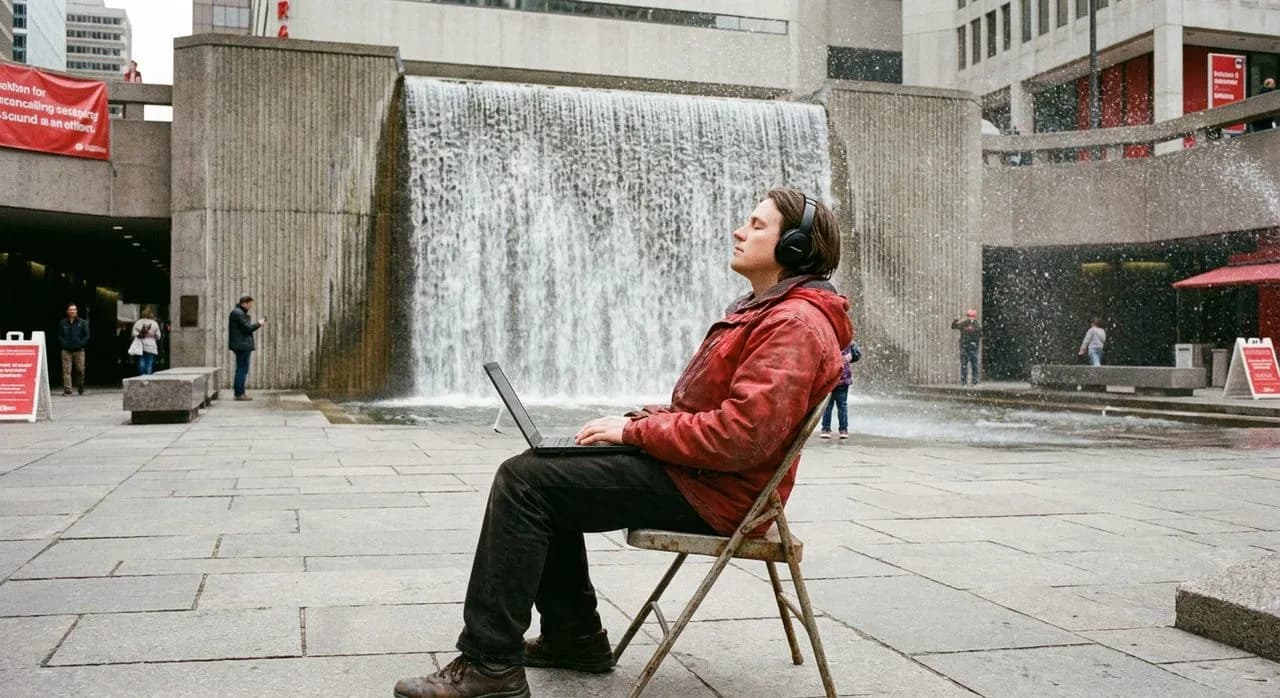
The loudest quiet place in Midtown
The waterfall pumps 1,000 gallons per minute—a volume engineered not for spectacle but for acoustic masking. Stand anywhere in the park and the white noise is enveloping, a low roar that swallows the rumble of garbage trucks and the blare of taxi horns. But the real trick happens at the back tables. Conversations there stay private even when the park is full, the water noise creating a sonic buffer that lets you speak at normal volume without the tourist couple three feet away catching a word. It's the kind of design decision that looks accidental but wasn't.
The effect shifts with the seasons. In summer, the mist off the waterfall cools the air by a few precious degrees, and the sound of rushing water reads as almost aggressively refreshing. By autumn, the honey locusts drop their small, oval leaves onto the slate, and the waterfall's roar plays differently—less relief, more insulation. Even in winter, when the park sees fewer visitors, the water keeps running, steam rising off the granite in the cold.
The elevated terrace and the 12:30 rule
The park has movable seating throughout, but the real prize is the two tables on the elevated rear terrace. These are the only seats where you can see the whole park and the waterfall at once—a vantage that turns you from participant to observer, watching the flow of visitors discover the space for the first time. Locals know this. They arrive before 12:30pm to claim them, especially on warm days when the lunch rush from surrounding office towers begins in earnest.
Sitting there, you notice patterns. The tourists who walk past the entrance twice, unsure if they're allowed in. The Midtown office workers who eat lunch in silence, heads tipped back, eyes closed. The occasional couple who've clearly planned this as a destination, arriving with coffees from elsewhere and the body language of people who've been here before. The tables themselves are small, wrought iron, sized for two. If you're solo, you might share. If you're looking for a place to read or sketch or simply sit without performing productivity, you'll be in good company.
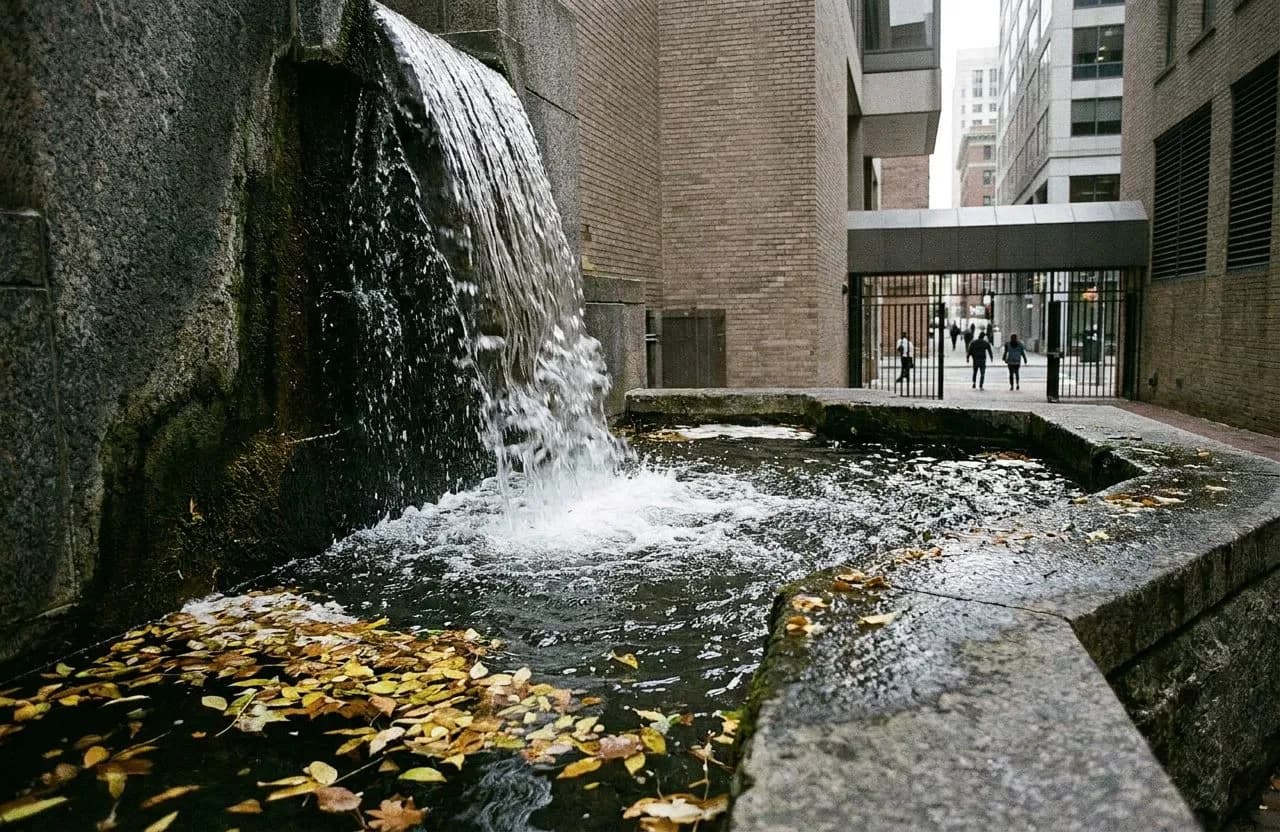
What grows in a tenth of an acre
The planting scheme is restrained: honey locusts for height and shade, ivy climbing the side walls, seasonal flowers in raised beds that get swapped out as the year turns. By summer 2026, the beds hold impatiens and begonias, old-fashioned choices that read as deliberate—this is not a park trying to impress with exotic species. The honey locusts are the workhorses here. Their small leaflets create filtered light without total shade, and they're tough enough to handle the reflected heat from surrounding buildings and the constant foot traffic below.
Who you'll find there (and who you won't)
Greenacre draws a quieter crowd than Bryant Park or the High Line. There are no food vendors, no programmed events, no yoga classes or summer film series. The park has seating and a waterfall; remove the claim about a seasonal snack bar unless independently verified. The lack of activation is the point. People come here to decompress, not to see and be seen. You'll spot Midtown office workers on break, the occasional tourist who stumbled in by accident and decided to stay, and a rotating cast of regulars who treat the park like an extension of their living room.
What you won't find: teenagers on school trips, influencers staging photo shoots, or the kind of performative leisure that defines some of Manhattan's more famous green spaces. Greenacre selects for a certain temperament—people who value acoustic refuge over visual spectacle, who'd rather sit under a tree than pose in front of a mural. It's a small filter, but an effective one.
Practical notes
Greenacre Park is located at 217 East 51st Street, between Second and Third Avenues, across from 3rd Avenue Nearest subway: 6 train to 51st Street, or E/M to Lexington/53rd Street Street parking is scarce; if you're driving, use a nearby garage. The park is typically open daily from 8am to 8pm, though hours may vary seasonally—verify directly if visiting outside summer months. The park is accessible, with level entry from the street and paved pathways throughout. Bring a book, a friend, or nothing at all. The movable chairs and tables are first-come, first-served. The seasonal snack bar offers basic coffee and pastries when open. No alcohol is permitted. Restrooms are not available on-site; plan accordingly.
Tags: #GreenAcrePark #MidtownManhattan #HiddenNYC #PocketParks #FreeAndFine #NYCParks #SecretGardens #UrbanOasis #SummerInTheCity #ManhattanFinds #CityEscape #GrandCentralArea #NewYorkSummer2026 #QuietSpaces #SoundUrbanism
Please drink responsibly. Must be of legal drinking age.
Sources consulted: Greenacre Park - Wikipedia · NYC Parks - Greenacre Park · Vest-pocket Parks - Wikipedia · Time Out New York - Parks · New York Times - NY Region
All trademarks are the property of their respective owners.