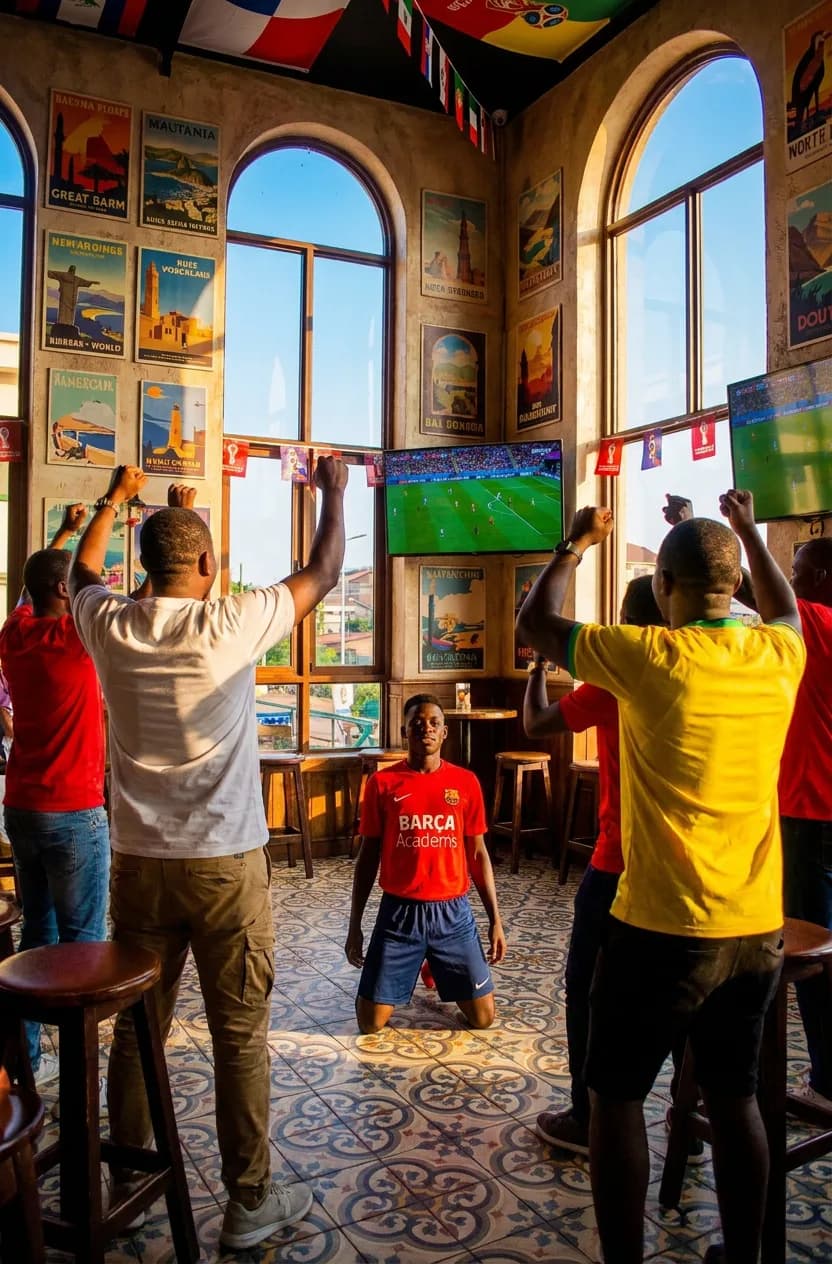
The mint tea arrives in small glasses, steam curling upward as Morocco's striker approaches the penalty spot. Every hand in Café Atlas freezes mid-reach—sugar cubes suspended over rims, pastries halted inches from lips. The narrow diaspora bar on Avenida Amsterdam holds its collective breath, three generations of Moroccan families packed shoulder-to-shoulder in a space no wider than a hallway, their eyes locked on the flickering screen above the espresso machine where Arabic commentary crackles through an old speaker.
Looking for the Moroccan crowd? Ask Karpo where generations gather to watch together.
The Corner Table Dynasty
In the back corner, beneath a framed photograph of the Hassan II Mosque, sits the Benali family's unofficial throne—the same four-top they've claimed for every Morocco match since Café Atlas opened its doors in 1998. Grandmother Fatima, draped in a floral headscarf, anchors the table while her son Omar and granddaughter Yasmin flank her sides. Between them sits a feast that transforms with each match: honey-soaked chebakia during group stages, savory bastilla for knockout rounds, and today's spread of lamb tagine whose cinnamon and ginger aromatics compete with the cigarette smoke drifting from the narrow patio.
Omar slides a plate of msemen toward his daughter, the flaky pancakes still warm from the kitchen. "Your grandmother made these at 5 AM," he whispers, never taking his eyes off the screen. The ritual remains unchanged—arriving two hours early to secure their corner, ordering the same dishes, sitting in the same configuration. When Morocco scores, they embrace in the exact same order: Fatima kisses Omar's forehead, Omar lifts Yasmin, Yasmin high-fives the stranger at the neighboring table.
The Soundtrack of Solidarity
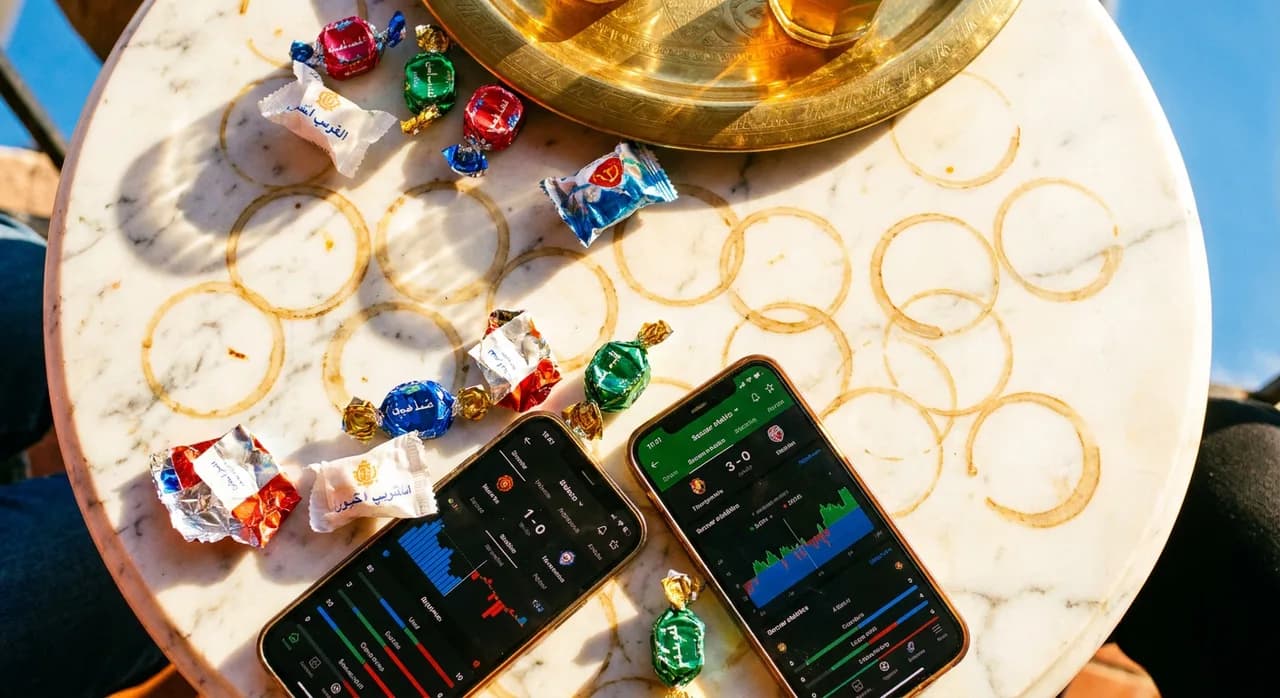
Owner Rachid Hassan learned years ago that Spanish commentary doesn't capture the soul of Moroccan football. While Mexico City's sports bars blast local announcers, this diaspora bar pipes in Radio Morocco International through speakers that should have been replaced a decade ago. The crackling audio adds texture to every call, turning routine passes into urgent poetry and transforming goal celebrations into symphonic chaos.
The kitchen operates on match rhythms rather than meal times. During tense defensive sequences, the tagine simmers forgotten on back burners while chef Aicha peers around the pass-through window. When Morocco launches counterattacks, she abandons her prep work entirely, wooden spoon still in hand as she joins the crowd's synchronized lean toward the television. The harira soup—thick with lentils, tomatoes, and lamb—stays perpetually warm, served whenever nerves require comfort food between halves.
Penalty Silence and Pastry Prayers
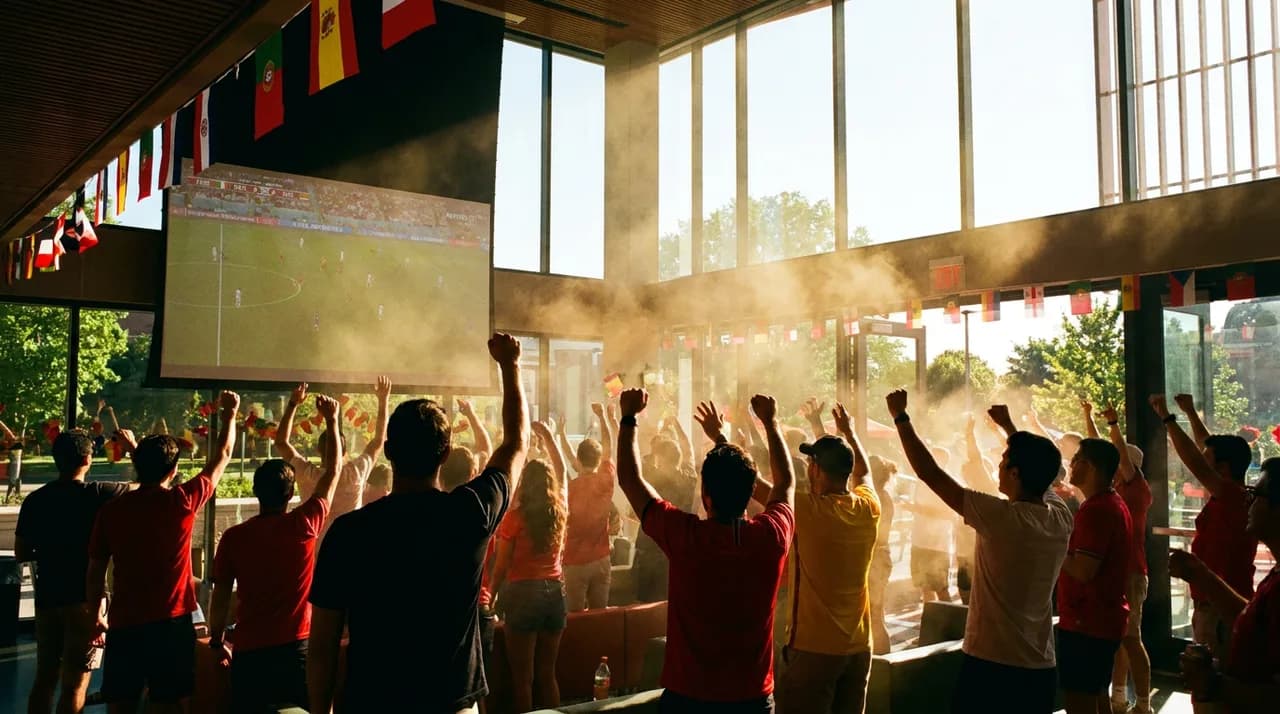
Nothing in football compares to penalty kick theater, and nothing in Café Atlas compares to penalty silence. The phenomenon begins the moment Morocco's shooter places the ball on the spot—conversations halt mid-sentence, tea glasses freeze in mid-air, even the espresso machine seems to pause its hissing. Grandmother Fatima clutches her prayer beads, lips moving in silent recitation while her granddaughter grips a half-eaten piece of baklava, honey dripping onto the table.
The goalkeeper bounces on his line. The striker takes his steps. In this narrow slice of Condesa, sixty people become a single organism, breathing together, hoping together, suffering together. When the ball finds the net, the explosion threatens to crack the ancient tile floors. When it doesn't, the collective sigh could power the neighborhood for weeks. Either way, Aicha emerges from the kitchen with fresh mint tea, understanding that penalties demand immediate hydration and extended recovery time.
The Menu of Memory
Every dish at Café Atlas carries emotional weight beyond flavor. The chicken pastilla—layers of phyllo wrapped around spiced meat and almonds—appears exclusively during Morocco's biggest matches, a tradition that began during their memorable 1998 World Cup run. Fatima insists the recipe brings luck, though she's never revealed whether the luck lies in the preparation ritual or the communal consumption.
During halftime, regulars migrate toward the narrow counter where Rachid arranges small plates of olives, aged cheese, and preserved lemons. The informal buffet operates on honor system—grab what you need, settle up after the final whistle. Conversations flow in Arabic, Spanish, and French, sometimes within the same sentence, creating a linguistic tapestry that mirrors the neighborhood's evolution around the café.
The signature couscous emerges only for elimination matches, served family-style with everyone grabbing handfuls from communal plates. Vegetables and lamb disappear in direct correlation to Morocco's performance—the better they play, the more aggressively the crowd attacks the serving bowls.
Victory Smoke and Defeat Sweetness
Post-match rituals depend entirely on results. Victory triggers an immediate exodus to the narrow patio where Rachid produces a seemingly endless supply of celebratory cigarettes and small glasses of sweet mint tea. Strangers become family, phone numbers get exchanged, promises get made about meeting for the next match. The lamb tagine gets devoured with renewed enthusiasm, as if good fortune might be absorbed through slow-cooked meat.
Defeat requires different medicine. Aicha disappears into the kitchen and returns with plates of honey-drenched treats—chebakia, makroud, gazelle horns—understanding that disappointed fans need immediate sugar therapy. The crowd lingers longer after losses, reluctant to return to Mexico City reality, preferring the comfort of communal disappointment and shared pastries.
Practical Notes
Café Atlas operates without reservations—arrive at least ninety minutes before kickoff to secure seating for major matches. The kitchen serves full meals until halftime, then switches to snacks and pastries for the second half. Mint tea flows continuously regardless of match time or result. Cash only, and don't expect itemized bills during penalty shootouts. The patio accommodates overflow crowds but lacks television coverage—audio-only experience through the crackling speakers. Parking is nonexistent; take the Metro to Patriotismo station and walk three blocks south.
Tags: #WorldCup2026 #FIFA2026 #MexicoCity #Condesa #DiasporaBar #MoroccanFood #WorldCupViewing #FoodAndFootball #TagineAndGoals #MintTea #Football Culture #SoccerBars #Mexico2026 #WorldCupCulture #FanCulture
Sources consulted: fifa.com · espn.com
All trademarks are the property of their respective owners.
Ask Karpo first
Want the best spot near you to catch every World Cup 2026 match, plus live scores and a matchday plan? Ask Karpo for personalized viewing recommendations, the nearest fan-friendly bars, and real-time bracket updates wherever you are.