 Where to Eat Near Penn Station That Isn't a Chain
US Open 2026

The Challenge Season 42 Style Obstacle Gyms Near US Open
How to weave functional fitness, obstacle training, and active recovery into your 2026 US Open week along the 7 train corridor.
Fans searching for *the challenge season 42* are often drawn to obstacle courses, endurance tests, and functional fitness—the same qualities that make a US Open visit surprisingly physical. Between navigating Flushing Meadows Corona Park, standing courtside, and walking the grounds, your body craves movement that feels restorative rather than punishing. Queens has quietly become home to obstacle gyms, functional fitness studios, and training spaces that welcome drop-ins and day passes, making it easy to weave active recovery into your 2026 US Open week without adding a long commute or rigid class schedule.
Text Karpo with your US Open session time and Queens starting point, and we’ll turn this Indoor obstacle course and functional fitness studios in Queens for active recovery between tennis sessions into a practical local plan.
Why Obstacle Training and Functional Fitness Fit a US Open Visit
The US Open is a walking event. You'll cover miles between Arthur Ashe Stadium, the practice courts, food vendors, and the 7 train at Mets–Willets Point. Your legs, core, and shoulders do more work than you expect, especially if you're carrying a bag, standing in lines, or climbing bleachers. Obstacle gyms and functional fitness studios offer a way to keep your body moving without the impact of a long run or the stiffness of sitting still. Many studios along the 7 train corridor—from Long Island City through Jackson Heights to Flushing—offer day passes, beginner-friendly classes, and open gym hours that let you drop in before or after your session at the Billie Jean King National Tennis Center.
The appeal of *the challenge season 42* style training is that it's modular: you can scale walls, swing from bars, balance on beams, or work through bodyweight circuits at your own pace. That same flexibility makes these gyms ideal for visitors who want to stay active without committing to a full training program or navigating unfamiliar neighborhood routes.
Where to Look for Obstacle and Functional Fitness Studios in Queens
Queens doesn't have the density of boutique fitness studios you'll find in Manhattan, but the borough's industrial corridors and mixed-use neighborhoods have made room for obstacle gyms, CrossFit boxes, and functional training spaces. Long Island City, with its warehouse conversions and proximity to the 7 train, is a natural hub. Studios here often occupy ground-floor spaces with high ceilings, open floor plans, and equipment like rigs, ropes, and plyo boxes. Jackson Heights and Astoria also host smaller functional fitness studios that emphasize bodyweight movement, mobility work, and community classes.
Flushing itself has fewer dedicated obstacle gyms, but you'll find martial arts studios, yoga spaces, and training centers that incorporate functional movement. If you're staying near the US Open or planning a morning visit, it's worth checking studio websites or calling ahead to confirm drop-in policies, day-pass availability, and beginner class times. Many studios post schedules and pricing on Instagram or Google Maps, but details can shift week to week.
Timing Your Workout Around US Open Sessions
The US Open runs daily sessions, typically starting late morning and extending into the evening. If you're attending an afternoon or night session, a morning workout gives you time to move, shower, and travel to Flushing Meadows without rushing. Studios in Long Island City are a short 7 train ride from Mets–Willets Point, making it easy to drop in for a 9 or 10 a.m. class, then head to the tournament by noon. If you're attending a day session, consider an evening class after you leave the grounds—many studios offer 6 or 7 p.m. slots that align well with post-tennis energy.
Active recovery doesn't mean going hard. A 45-minute functional fitness class with mobility drills, light plyometrics, and stretching can help you feel looser and more energized than sitting in a hotel room or lingering over brunch. The key is to treat the workout as part of your visit rhythm, not an obligation.
What to Expect at an Obstacle or Functional Fitness Drop-In
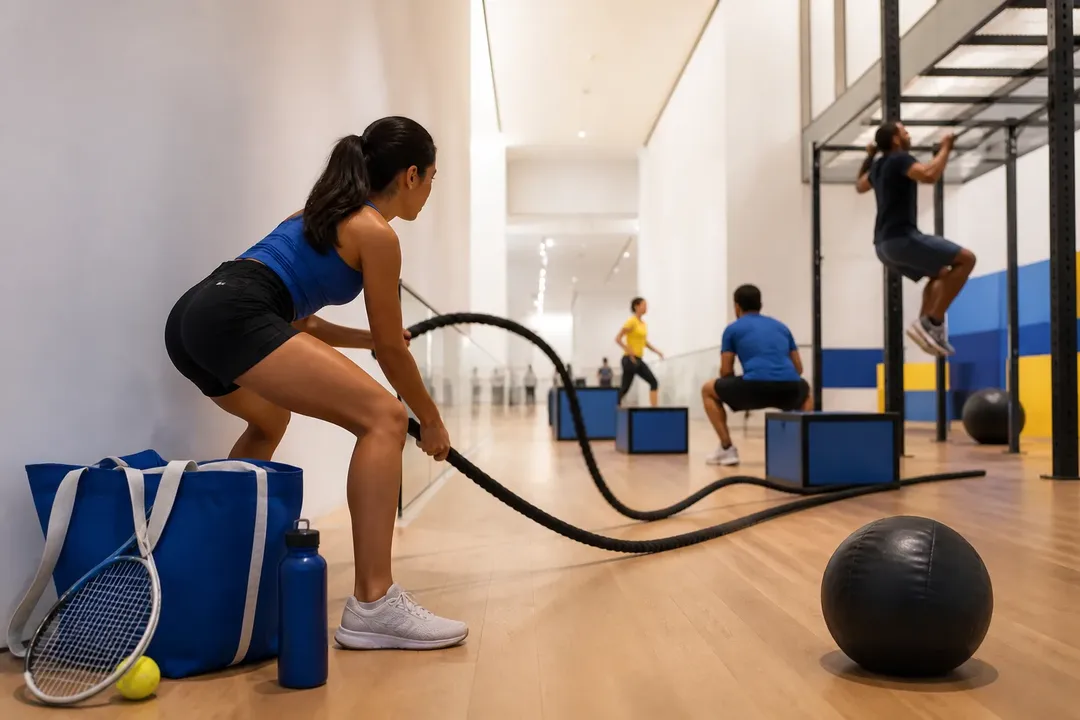
Most obstacle gyms and functional fitness studios welcome beginners and offer scaled options for every movement. You'll typically start with a warm-up that includes dynamic stretching, joint mobility, and light cardio. The main workout might involve circuits of pull-ups, box jumps, wall climbs, rope work, or bodyweight holds, with coaches demonstrating modifications. Some studios emphasize competition-style obstacle courses inspired by shows like *the challenge season 42*, while others focus on strength, endurance, and injury prevention.
Expect to bring your own water bottle, towel, and athletic shoes with good grip. Some studios provide loaner gear or sell basics at the front desk, but it's easier to pack your own. If you're new to obstacle training, let the coach know—you'll get guidance on grip technique, landing mechanics, and pacing. The culture tends to be supportive rather than intimidating, with regulars cheering on first-timers and offering tips between sets.
Pairing Fitness with Food and Transit Along the 7 Train
After a morning workout in Long Island City, you're a short walk from cafes, bagel shops, and juice bars that cater to the neighborhood's mix of artists, office workers, and gym-goers. Jackson Heights offers Colombian bakeries, Tibetan momos, and Indian dosas—all easy to grab before heading to the US Open. If you're working out in the evening, Astoria's tavernas, pizza spots, and beer gardens make for a satisfying post-session meal.
The 7 train is your connective thread. It runs express and local service between Manhattan, Long Island City, Jackson Heights, and Flushing, with Mets–Willets Point as the direct stop for the US Open. Check the MTA's official US Open transit guide for service updates, especially during tournament weeks when ridership spikes. The train can be crowded after evening matches, so plan for extra time if you're heading back to a studio or hotel.
Other Active Recovery Options Near Flushing Meadows
If you prefer outdoor movement, Flushing Meadows Corona Park offers miles of paved paths, open fields, and waterfront views around Meadow Lake. You can jog, walk, or stretch near the Unisphere, explore the Queens Museum, or visit the New York Hall of Science. The park is large enough to feel spacious even during tournament weeks, and it's a natural complement to indoor training.
Some visitors also explore the Museum of the Moving Image in Astoria, which pairs well with a morning workout and a walk through the neighborhood. The museum's exhibits on film, television, and digital media offer a quieter counterpoint to the physical intensity of obstacle training and the sensory overload of the US Open.
Practical Notes for Planning Your Fitness and US Open Week
- Check studio websites or call ahead to confirm drop-in policies, day-pass pricing, and beginner class availability.
- Pack athletic shoes, a water bottle, a towel, and a change of clothes if you're heading directly to the US Open.
- Review the US Open's official prohibited-items guide before packing your gym bag—large backpacks and certain containers may not be allowed on the grounds.
- Use the MTA's official US Open transit guide to plan your 7 train route and check for service changes during tournament weeks.
- Consider morning workouts before day sessions or evening classes after night matches to avoid midday heat and crowds.
- Explore the US Open's official visitor A-Z guide and event schedule to coordinate your fitness routine with match times and on-site activities.
- If you're staying near Flushing, ask your hotel front desk for recommendations on nearby gyms, yoga studios, or training centers that welcome short-term visitors.
Tags: #USOpen2026 #Queens #FlushingMeadows #KarpoFinds #Karpo #thechallengeseason42 #NewYorkLocal #TennisTravel #NYCLocalLife #TennisTravel
Sources consulted: usopen.org — Official event schedule · usopen.org — Official visitor A-Z guide · usopen.org — Official transportation directions · usopen.org — Official prohibited-items guide · MTA — Official US Open transit guide · NYC Parks — Flushing Meadows Corona Park · Queens Museum · New York Hall of Science · Museum of the Moving Image
All trademarks are the property of their respective owners.
Ask Karpo first
Want to know what is actually open, how to time the trip, and where to pause around Queens? Ask Karpo for the latest public US Open context, a respectful visitor plan, and a live route around Flushing Meadows before you head out.
Ask Karpo for more information.
Keep reading
- Where to Eat Near Penn Station That Isn't a Chain
 Andytown Coffee in the Outer Sunset: The Snowy Plover Explained
- Best Things to Do in Chicago: What the City Gives Away