The Astoria Garage Bar Pouring Japanese Highballs After Midnight
Where Grease and Grace Converge
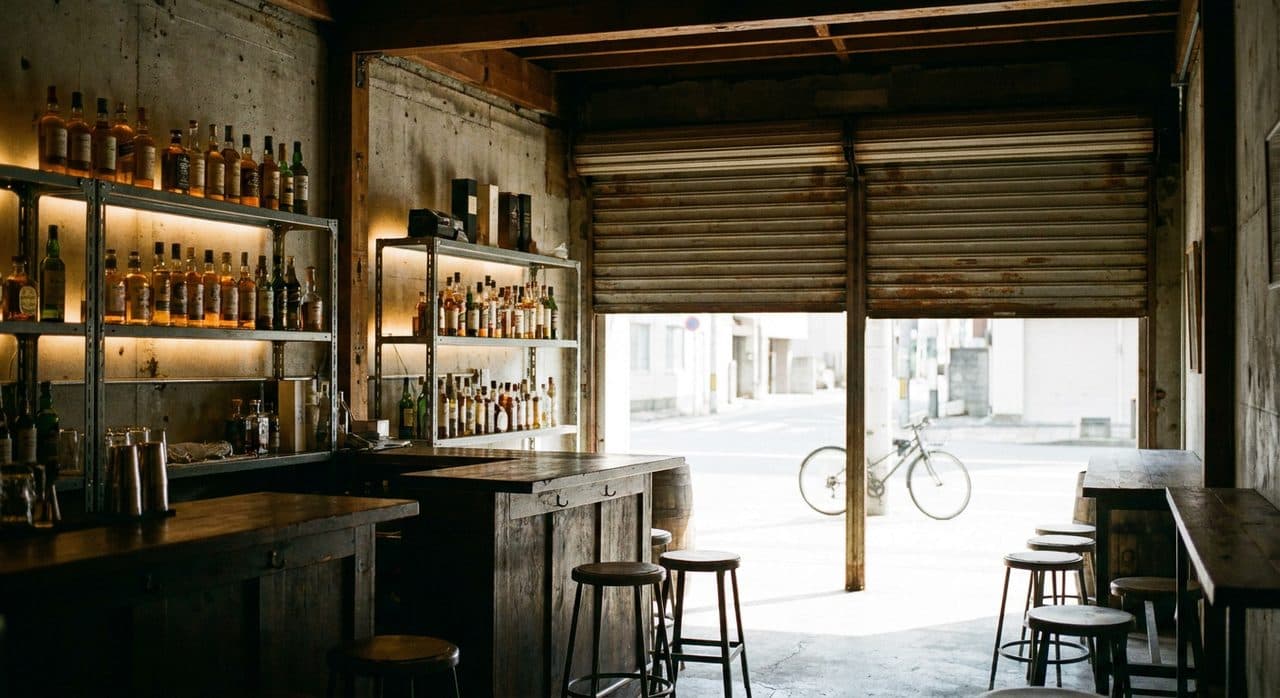
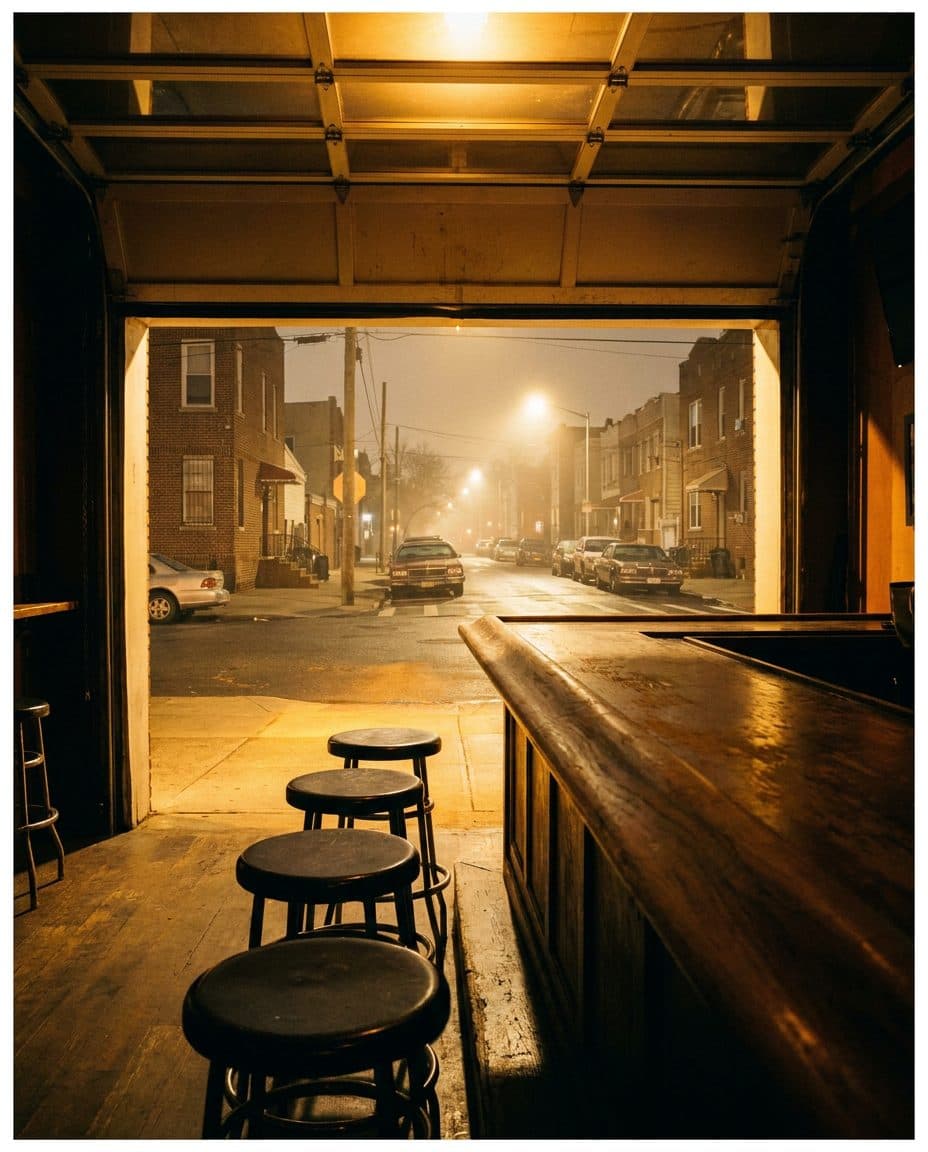
The roll-up steel door is already halfway open when you turn onto the quiet stretch of 31st Street, and the amber glow spilling onto the sidewalk is the only indication that something is happening inside. There's no neon sign, no velvet rope, no cluster of smokers marking the entrance. Just a small chalkboard propped against the corrugated metal, bearing two words in English and their Japanese equivalent: highball and ハイボール.
Step inside and the first thing you notice is the floor—poured concrete still bearing the faint oil stains of its previous life. The second thing is the smell: not motor oil, but the clean, mineral scent of ice and the warm undertone of aged wood. This former auto-repair garage in Astoria, Queens, has been quietly operating as a Japanese whisky and highball bar on Friday and Saturday nights since last winter, and it remains one of the city's most compelling secrets.
The space feels both industrial and intimate, a contradiction that somehow resolves itself after your first sip. Exposed brick walls meet corrugated steel panels. A long wooden bar, clearly hand-built, runs along one side. And in the back corner, bolted to the floor where it has stood for decades, the original hydraulic lift rises toward the ceiling—no longer hoisting transmissions, but now serving as an unexpectedly elegant shelf for glassware, mixing tins, and a small collection of vintage Japanese bar tools.
A Mechanic's Hands, A Bartender's Heart
The man behind the bar moves with the quiet efficiency of someone who has learned to work in tight spaces. Before he was measuring jiggers and timing carbonation, he spent fifteen years underneath cars in this very building, diagnosing engine troubles and replacing brake lines. The transition from mechanic to bartender might seem unlikely, but watch him work for a few minutes and the connection becomes obvious: the same precision, the same attention to small details that determine whether something runs smoothly or falls apart.
His journey to bartending took him to Tokyo, where he spent two years training at a traditional standing bar in Shibuya. He learned the Japanese approach to the highball—not as a casual mixed drink, but as a craft requiring the same respect given to a proper cocktail. The ice must be dense and clear. The pour must be exact. The carbonation must be preserved through careful stirring, never shaking. He returned to Queens with a new skill set and a clear vision: to bring that same reverence to the neighborhood where he'd spent most of his adult life.
The garage had been sitting empty for nearly a year when he decided to convert it. He kept the bones of the space intact—the lift, the steel doors, the industrial lighting—and added only what was necessary. The result is a bar that feels both accidental and inevitable, as if the building had always been waiting to become this.
The Highball as Philosophy
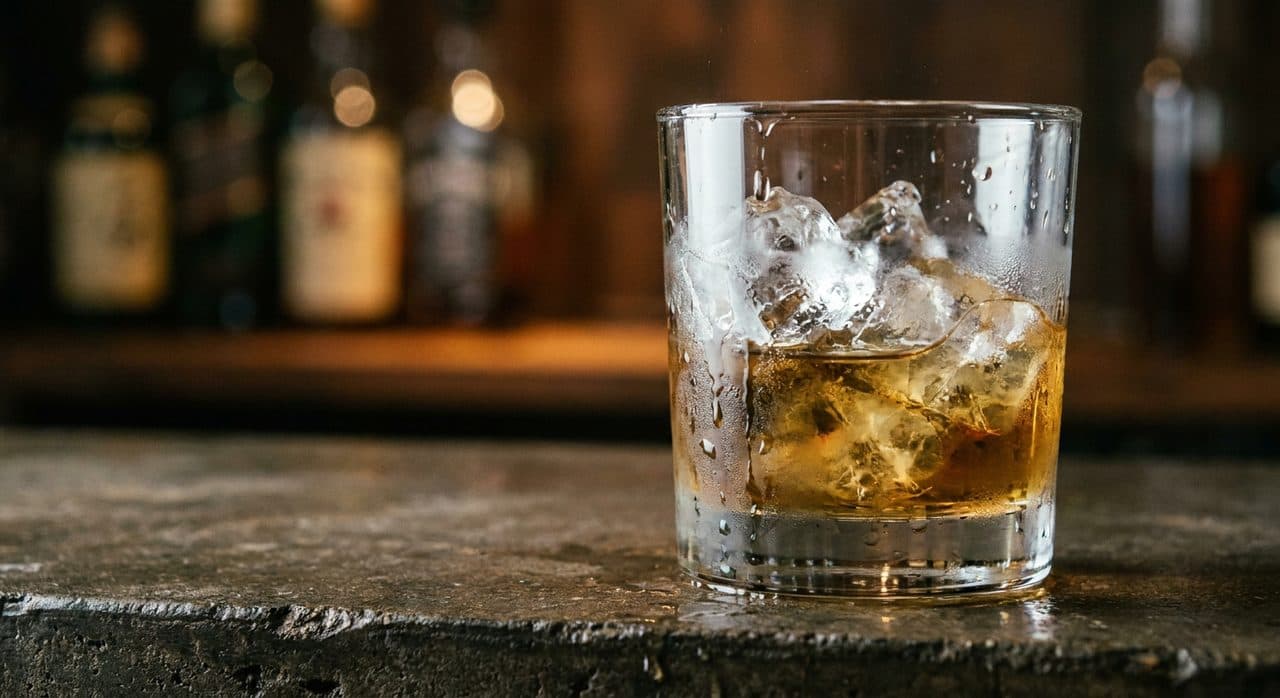
Order the house highball and you'll understand why people make the trip from Manhattan, from Brooklyn, from the far reaches of the Bronx. It arrives in a tall, thin glass, the ice perfectly clear, the amber liquid catching the low light. The first sip is a revelation: clean, bright, and remarkably soft on the palate.
That softness is no accident. Rather than using standard carbonated water, the bar imports a specific spring water from the Tochigi region of Japan, known for its low mineral content and silky texture. The water is carbonated in-house using a process the owner learned in Tokyo, resulting in bubbles that are fine and persistent rather than aggressive. It's a detail most drinkers won't consciously notice, but it transforms the highball from a simple mixed drink into something approaching transcendence.
The back wall tells its own story: rows of Suntory and Nikka bottles arranged with museum-like care. There's Yamazaki 12 and Hakushu, Nikka From the Barrel and Yoichi Single Malt. The selection isn't exhaustive—this isn't a whisky library trying to impress collectors—but every bottle has been chosen with intention. The owner will happily guide you through the options, matching your preferences to the right pour, but he'll never push you toward the expensive stuff unless you ask.
When the Heat Breaks and the Doors Stay Open
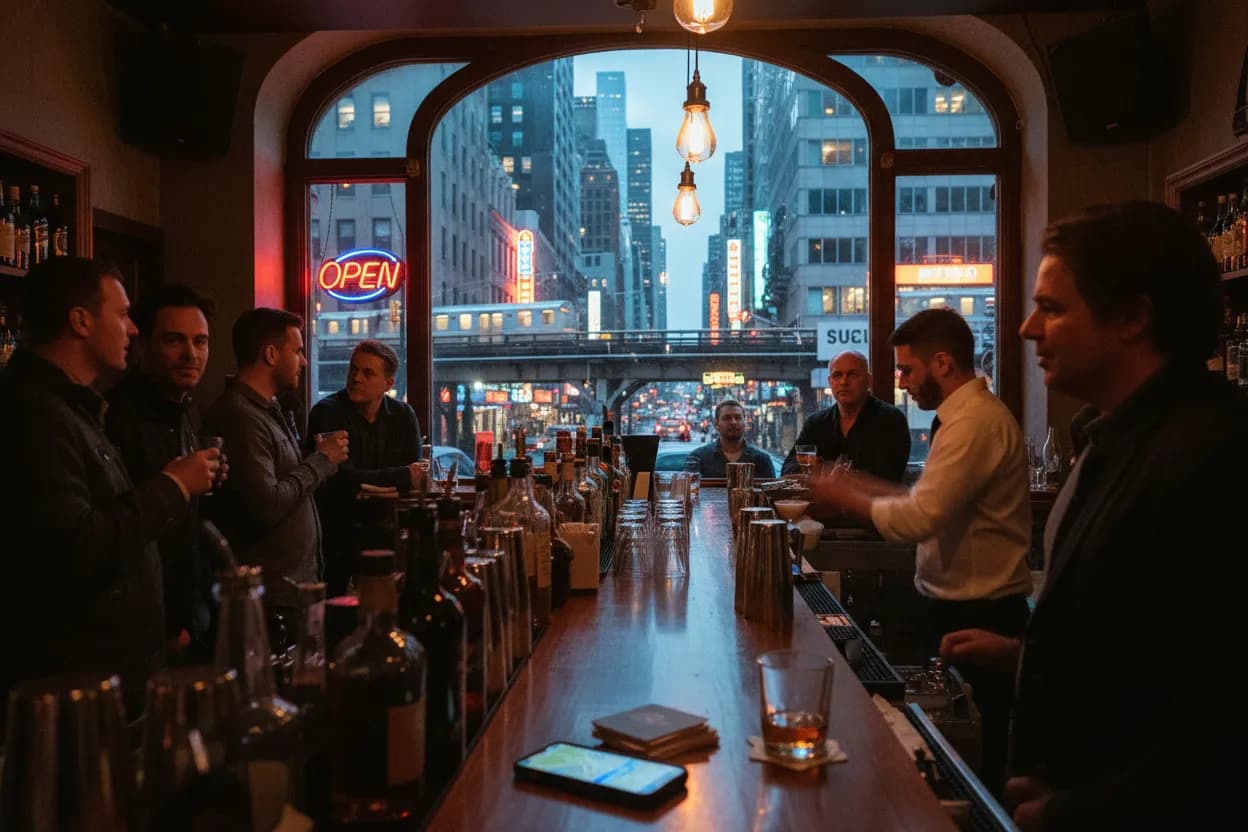
There's something particular about drinking here during a New York summer. The recent heat wave sent temperatures soaring past 95 degrees, and on those sweltering Friday nights, the garage becomes a refuge of a specific kind. The roll-up doors stay open until 2am, letting the night air circulate through the space, and the cold highballs become less a luxury than a necessity.
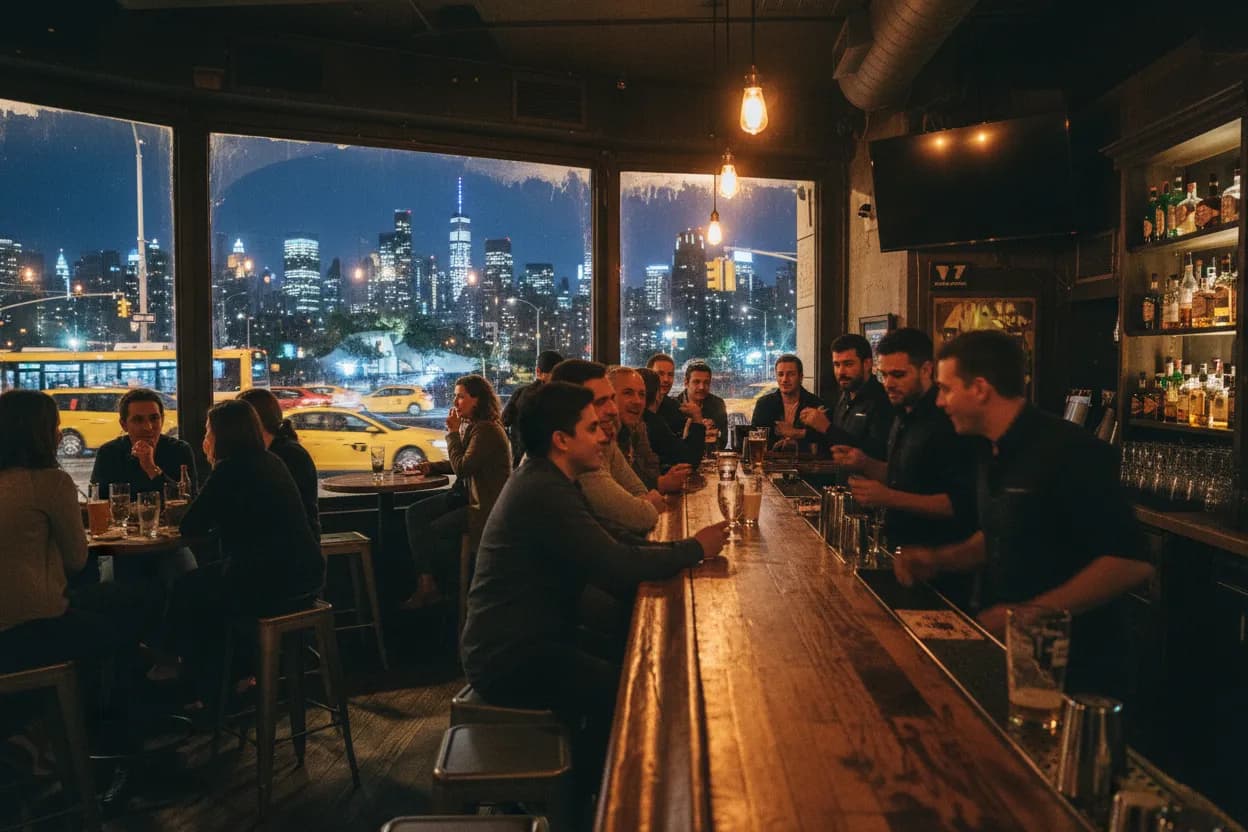
The crowd on these nights is eclectic in the best sense: off-duty restaurant workers unwinding after their own shifts, young couples on adventurous dates, older regulars who remember when the space was still fixing their cars. Conversations happen easily here, perhaps because the unusual setting creates an instant common ground. Everyone is slightly surprised to be here, and that shared surprise becomes a kind of bond.
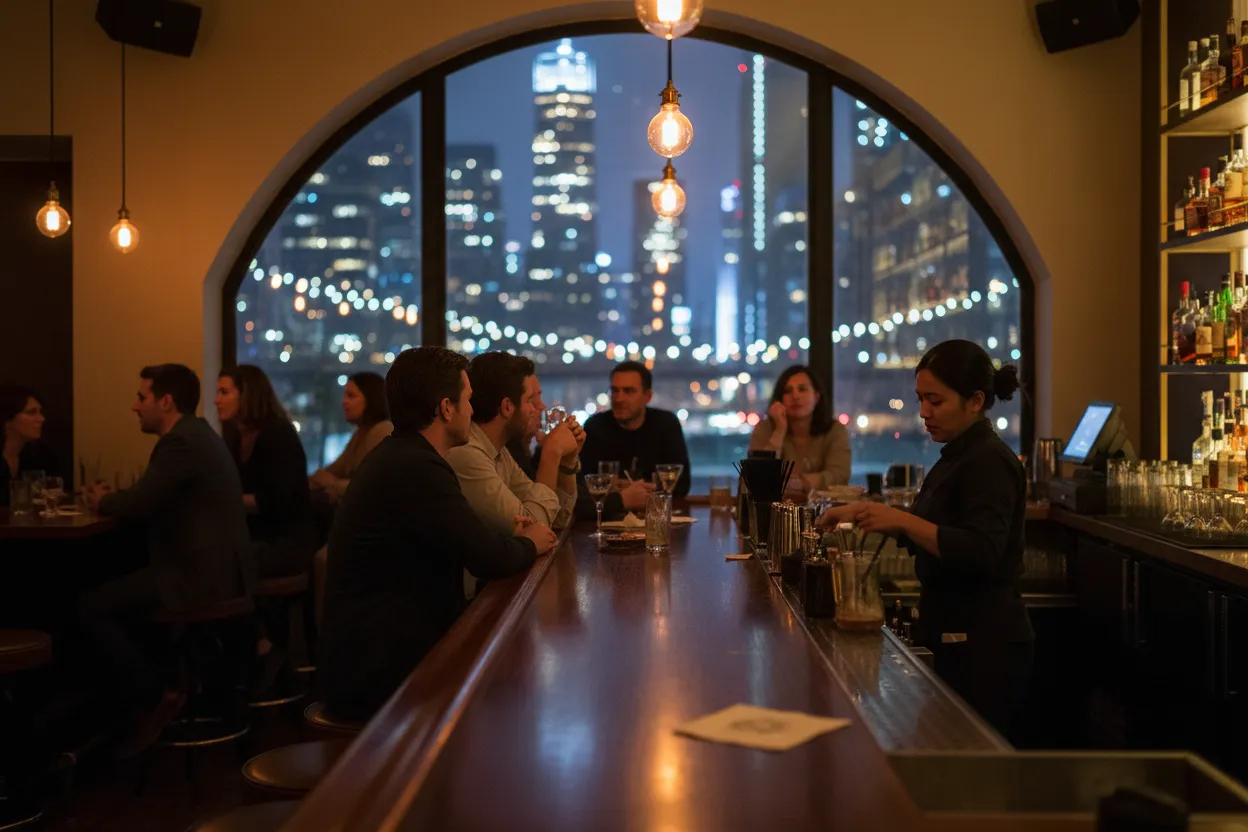
The owner works the bar alone most nights, occasionally joined by a friend who helps with ice and glassware during busy stretches. The pace is unhurried but never slow. He'll remember your order from last week, ask about your job, recommend a whisky based on something you mentioned in passing. It's the kind of hospitality that feels increasingly rare in a city obsessed with efficiency and scale.
First Fridays and the Smell of Frying Chicken
Mark your calendar for the first Friday of each month, when the bar transforms slightly. A rotating Japanese snack menu appears, usually featuring karaage—that impossibly crispy, ginger-soy marinated fried chicken—or onigiri, the rice balls wrapped in nori that are a staple of Japanese convenience stores and home kitchens alike. The food is prepared in the garage's back kitchen, a small space that once stored spare parts and now houses a commercial fryer and a rice cooker.
The karaage is exceptional: juicy thighs cut into bite-sized pieces, double-fried for maximum crunch, served with a wedge of lemon and a small dish of Kewpie mayo. It's the perfect companion to a highball, the richness of the fried chicken cutting through the brightness of the drink. The onigiri, when available, are simpler but no less satisfying—warm rice with umeboshi or salmon, the nori still crisp from being wrapped to order.
These first Friday nights draw a larger crowd, and the energy shifts accordingly. The space fills earlier, the conversations grow louder, and there's a sense of occasion that the regular weekend nights don't quite have. If you're planning to visit on one of these evenings, arrive before 10pm or be prepared to wait.
The Regulars and Their Rituals
By midnight, the crowd has settled into its rhythms. There's the couple in the corner who come every Saturday, always ordering Hibiki highballs and sharing a single plate of whatever snack is available. There's the solo drinker at the end of the bar, working through a flight of Nikka expressions with the focus of a graduate student. There's the group of friends who discovered the place by accident three months ago and now consider it their unofficial headquarters.
What unites them is a certain appreciation for the unexpected. This is not a bar you stumble into while bar-hopping; it requires intention, a willingness to venture into a part of Astoria that most Manhattanites have never considered. The reward for that effort is a space that feels genuinely discovered, a secret that remains a secret even as word slowly spreads.
The owner seems to prefer it this way. He's made no effort to court press coverage or social media attention. The Instagram account, if it exists, is impossible to find. The only marketing is that small chalkboard on the sidewalk, which he sets out around 9pm and brings inside when the doors finally roll down at 2am.
Practical Notes
The bar operates Friday and Saturday nights only, opening around 9pm and serving until 2am. There's no sign beyond the chalkboard, but the address is on 31st Street between 34th and 35th Avenues—look for the open roll-up door. Cash is preferred, though cards are accepted. Highballs range from $14 to $22 depending on the whisky; neat pours are priced accordingly. The space accommodates roughly 25 people comfortably, with standing room along the walls. There's no formal reservation system, but the owner has been known to hold spots for regulars who text ahead. First Friday snack menus typically run $8-12 per item and are available while supplies last. The N/W trains stop at 30th Avenue, a seven-minute walk away. Street parking is surprisingly easy after 9pm.
Tags: #AstoriaBar #JapaneseWhisky #HighballBar #NYCNightlife #QueensNY #HiddenBar #SuntoryWhisky #NikkaWhisky #TokyoStyle #LateNightNYC #AsториаQueens #JapaneseFood #WeekendVibes #DrinkingCulture #NYCSecrets
Sources consulted: timeout.com · nymag.com · thrillist.com · eater.com
Please drink responsibly. Must be of legal drinking age.
All trademarks are the property of their respective owners.
Ask Karpo first
Want to know if the doors are open tonight, which whisky is on special, and whether the snack menu is running? Ask Karpo for the latest Astoria update before you head out.