Most Manhattanites hurry past 286 Madison Avenue without a second glance, mistaking the columned facade for just another government fortress off-limits to civilians. But the Appellate Division courthouse guards no velvet rope. Weekdays between nine and five, the bronze doors swing open to anyone curious enough to climb the steps. Inside, a marble rotunda waits—vaulted ceiling swimming with allegorical figures, stained glass filtering amber light onto Siena marble walls—and not a single security checkpoint to break the spell. You slip in, circle the space, tilt your head back until your neck protests, then step back onto 25th Street before your lunch reservation. It is civic architecture at its most unexpectedly generous.
The threshold gambit
The hardest part is believing you are allowed. The Madison Avenue entrance feels too grand, too official, its Corinthian columns and broad stone steps suggesting exclusivity rather than invitation. But there is no guard station, no metal detector, no clipboard. Weekdays from nine in the morning until five, you simply walk in—no appointment, no ID check, just forward motion and a modicum of confidence. The marble floor announces your arrival with a polite echo.
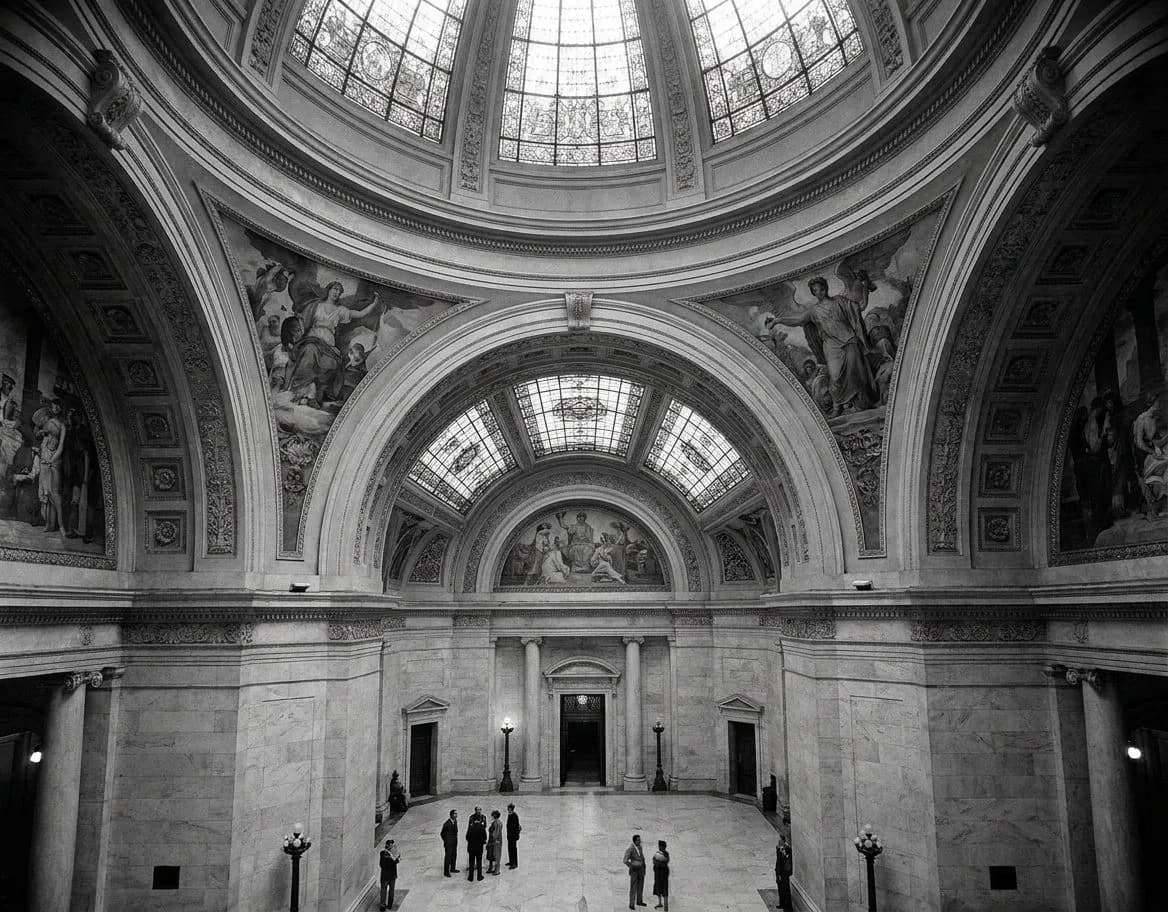
Once inside, the rotunda unfolds in three dimensions. Corinthian columns frame the space; a coffered dome arcs overhead, each panel carved with geometric precision. The light is warmer than you expect, filtered through stained glass panels depicting allegories of justice, law, and wisdom. Shadows shift across the marble in slow motion as clouds pass over Madison Avenue. It is the kind of room that silences conversation without asking, where even the rustle of a jacket sleeve feels like an intrusion.
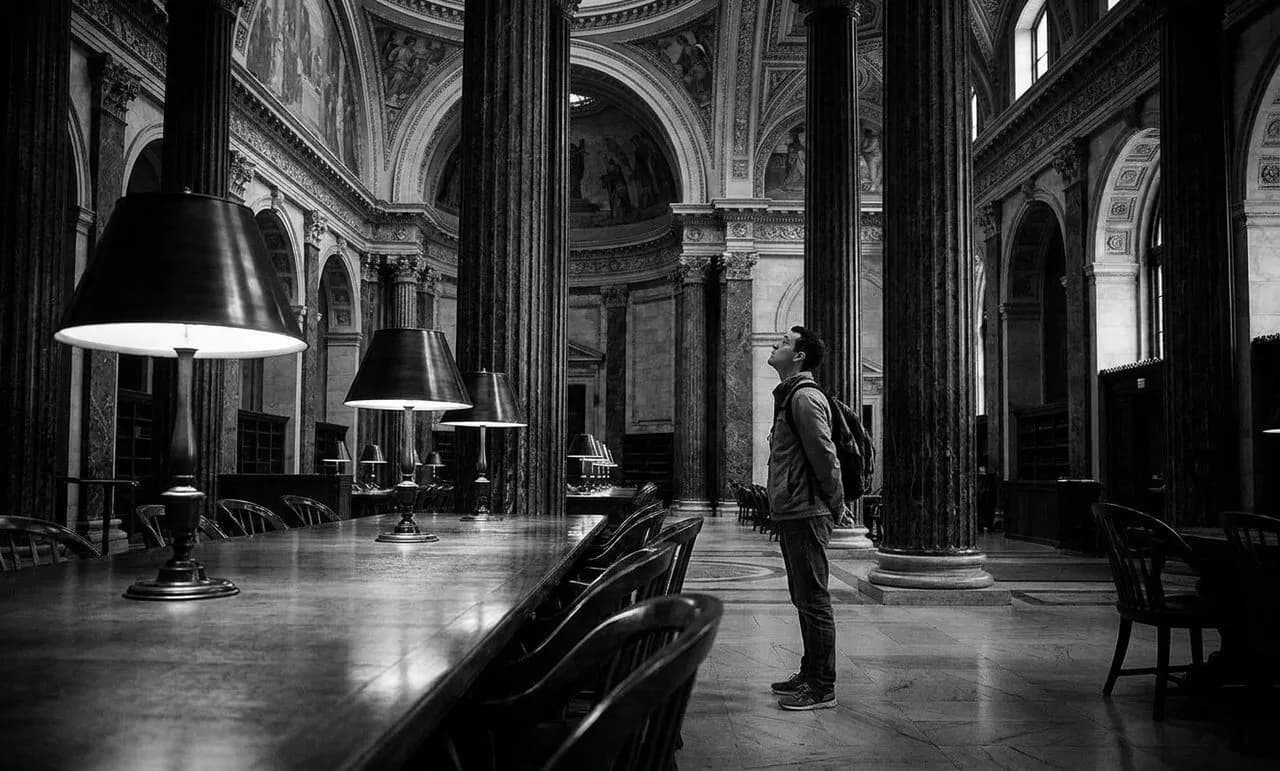
A ceiling worth the crick in your neck
Look up. The murals crowning the dome were completed in 1900 by a team that included the same artisans who worked on the Library of Congress—a detail that explains the technical precision and the faint echo of Washington grandeur. Figures representing Peace, Justice, and Power drift across plaster clouds, their robes painted in saturated jewel tones that have survived more than a century of Manhattan soot and indifference.
The iconography leans heavy on allegory: a woman with a sword, another with scales, classical profiles gazing toward some unseen horizon. It is earnest in the way only Beaux-Arts civic projects dared to be, before irony became the default register of public art. You half-expect a docent to materialize and lecture you on symbolism, but the rotunda stays quiet. The only sound is the faint shuffle of attorneys crossing the hall, their footsteps muffled by the marble's surprising acoustic generosity.
The architecture of light and stone
The rotunda's marble is not uniform. Look closely and you will see three distinct varieties: cream-veined Siena on the lower walls, warmer Numidian marble on the columns, and Vermont marble underfoot. Each was chosen not just for beauty but for how it would hold and reflect light. The architects—James Brown Lord led the project—understood that a room dedicated to appellate law needed to feel both weighty and aspirational, grounded but reaching.
The stained glass operates on a similar logic. Each panel represents an abstract virtue—Wisdom, Justice, Peace, Power, Courage—rendered in deep blues and ambers that glow when backlit by afternoon sun. The glass is original, somehow escaping both wartime metal drives and the careless renovations that gutted so many turn-of-the-century interiors. Stand near the eastern wall around three in the afternoon and the light turns honey-thick, pooling on the marble in shapes that shift as you move.
What strikes you, after the initial visual overwhelm, is the restraint. This is opulence in service of function, decoration that never tips into excess. Every carved detail, every gilded accent serves the room's central purpose: to remind those who enter—attorneys, judges, defendants, visitors—that the law is meant to be larger than any individual. It is propaganda, certainly, but propaganda rendered with such craft that you forgive the message.
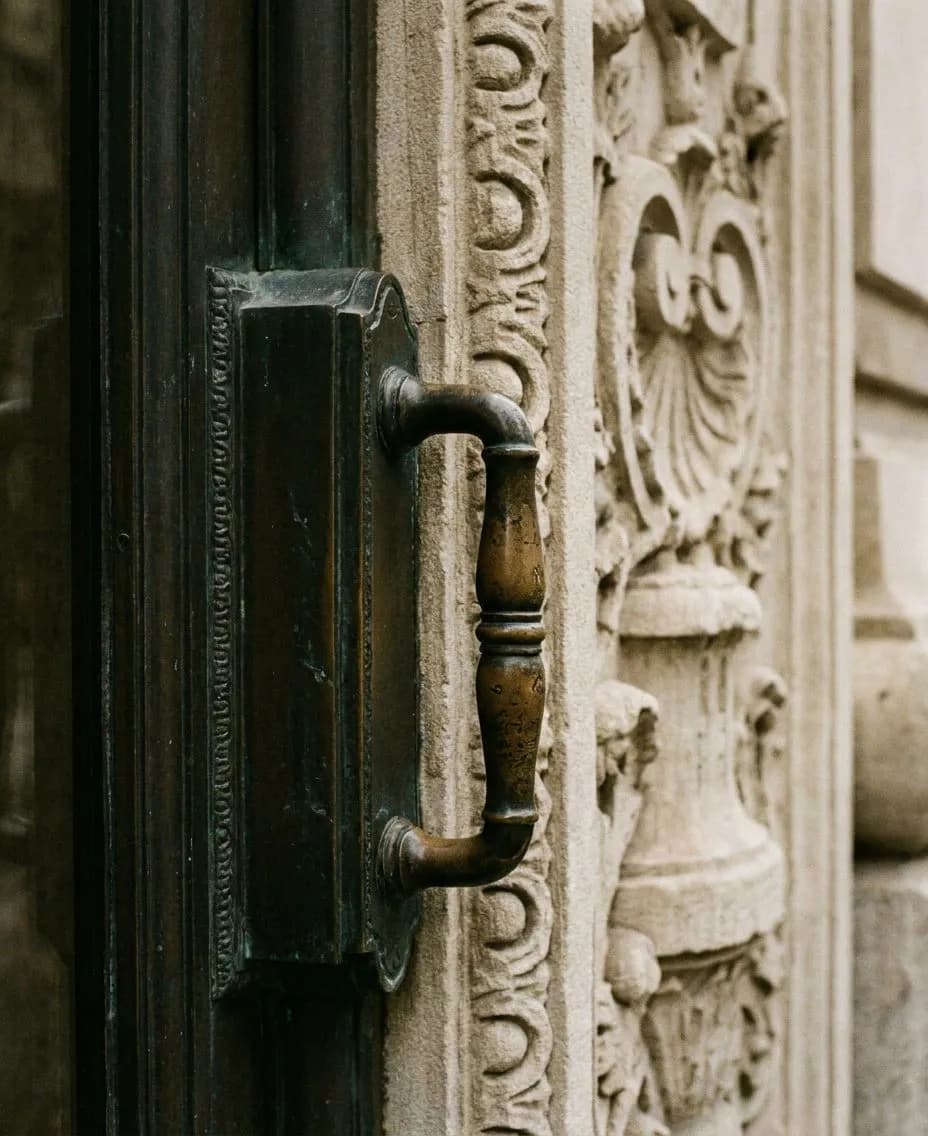
The two-o'clock secret
Timing matters. Mornings draw a trickle of legal clerks and the occasional architecture student. Late afternoon sees a small rush as court adjourns. But the quietest window is two to three in the afternoon, when court sessions resume and foot traffic drops to near zero. The rotunda becomes almost private, the marble absorbing your footsteps, the stained glass casting slow-moving patterns as the sun shifts west.
This is when you can stand in the center of the space, directly beneath the apex of the dome, and experience the acoustics. Whisper and the sound curls up the walls, dissipating somewhere in the coffers. It is a small, ridiculous pleasure, the kind that reminds you why legal tourism—if we are brave enough to call it that—deserves a place in the city-curious traveler's rotation.
What the rotunda is not
This is not a museum. There are no wall texts, no velvet benches, no gift shop selling tote bags printed with Justice's blindfold. You will not find a cafe or a restroom open to the public. The space exists in service of the court, and your visit is a byproduct of that function—a generous byproduct, but a byproduct nonetheless.
Nor is it a gallery where lingering is encouraged. Ten minutes feels right; fifteen pushes it. Beyond that, you risk overstaying the unspoken welcome. The rotunda rewards the quick study, the traveler who can absorb beauty in concentrated doses and leave satisfied.
The surrounding choreography
Madison Square Park sits two blocks south, useful for post-rotunda decompression or a late-summer sandwich on a bench. The neighborhood—Flatiron's northern edge, NoMad's southern hem—offers enough cafes and bookstores to justify the trip even if the courthouse were closed. But it is the courthouse that provides the narrative anchor, the unexpected grace note in a district otherwise defined by commerce and co-working spaces.
If you are lucky, you will exit into slanted afternoon light, the kind that turns the Flatiron Building's terracotta skin bronze. The courthouse recedes behind you, still doing its daily work, indifferent to whether you noticed its ceilings or not. That indifference is part of the appeal.
Why now, why summer 2026
The rotunda has been open to the public for years, but it remains stubbornly under-visited. Summer 2026 finds New York leaning into what we might call heritage micro-tourism—short, free, off-the-beaten-path detours that satisfy the urge to see something beautiful without committing to a three-hour museum marathon. The Appellate Division fits that bill perfectly. It asks almost nothing of you: no ticket, no timed entry, no crowd-strategy calculus. Just ten minutes and a willingness to look up.
Practical notes
The Appellate Division Courthouse stands at 286 Madison Avenue at East 25th Street. Nearest subway: N, R, W, Q, or 6 to 23rd Street—each a short walk. Street parking is metered and scarce; if driving, try a garage on 26th or 27th. The rotunda is open weekdays, generally 9 a.m. to 5 p.m., but hours can shift for court holidays or special sessions—verify directly if planning around a tight itinerary. The ground floor is accessible; bring nothing but a phone or small notebook. No bags larger than a purse are permitted beyond the entrance.
Tags: #AppellateDivision #MadisonSquareNYC #BeauxArts #FreeAndFine #CivicArchitecture #LegalTourism #HiddenNYC #ManhattanSecrets #NYCRotunda #FlatironDistrict #ArchitectureWalk #SummerInTheCity #NYCTravel #CourthouseTour #KarposFinds
Sources consulted: Wikipedia – Appellate Division Courthouse · Wikipedia – Beaux-Arts Architecture · Appellate Division, First Department · Time Out New York · New York Times – NY Region
All trademarks are the property of their respective owners.