 Where to Eat Near Penn Station That Isn't a Chain
US Open 2026
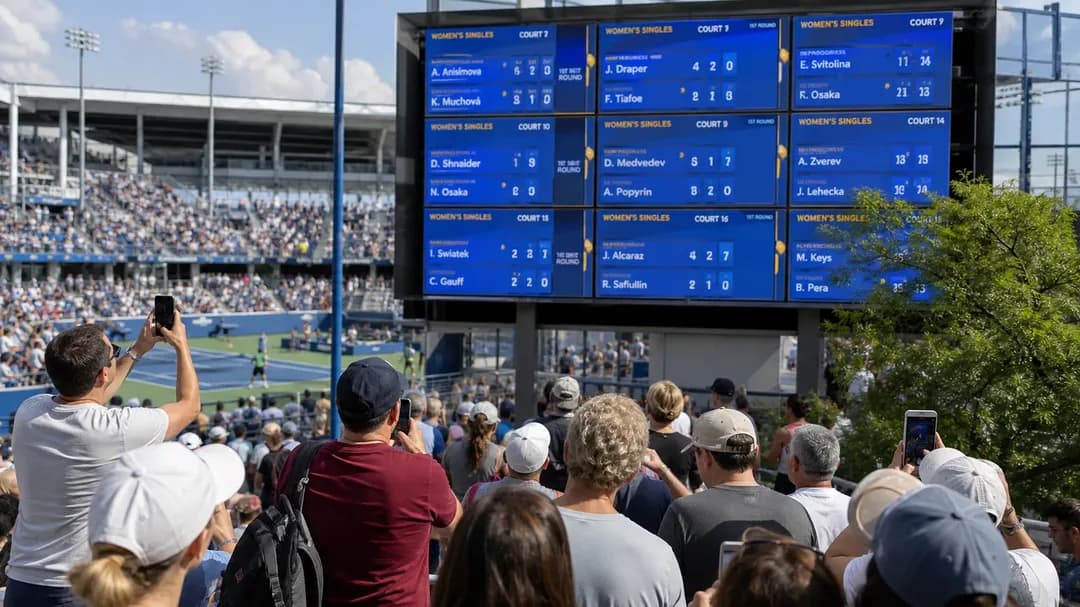
Tennis Scores Today: How to Follow Every US Open Court
Use the official US Open scores, schedule, draw, and player pages to track live matches, switch courts intelligently, and avoid outdated results.
Following the US Open live is different from checking one final score after dinner. On a busy tournament day, several singles, doubles, junior, wheelchair, or qualifying matches can move at the same time, and a court that looked quiet ten minutes ago can suddenly become the most important place on the grounds. The cleanest way to keep up is to treat the official US Open scores page as your live command center, then support it with the official schedule, draws, order of play, and player pages. Search results, social posts, and old previews can be useful background, but they can also lag behind rain delays, retirements, walkovers, court moves, and completed matches. A reliable live routine starts with confirmed match status, not assumptions about who should be playing or when a court should be free.
Text Karpo Now: Tell us what matters most for Tennis Scores Today How to Follow, and Karpo can turn current US Open updates into a practical plan before you go.
Start With Official Scores
The official scores page should be the first tab you open when you want tennis scores today at the US Open. It is built for live match status, so it is more reliable than a general search that may still be showing yesterday’s headline, an automated snippet, or a scheduled start that has already shifted. Use it to see whether a match is in progress, completed, not yet started, suspended, or otherwise changed. The key habit is simple: refresh from the official scoreboard before making any assumption about who is on court.
When several courts are active, do not only scan for names. Read the status line, set score, game score, and court label together. A player may be listed on the schedule but not yet playing because an earlier match is still in progress. Another match may be deep in a deciding set and worth watching immediately. Confirmed live status matters more than pre-match expectation.
- Keep the official scores page open in one browser tab and use it as the final check before switching streams or walking to a court.
- Use the official schedule and order of play to understand the sequence of matches, not as a guarantee that a court is running exactly on time.
- Check the official draws when you need tournament context, such as the next possible opponent or where a result fits in the bracket.
- Use the official player pages for identification and profile context, rather than relying on old search snippets.
Read Court Status Carefully
A good live-following routine depends on knowing what each match label means in practical terms. “In progress” tells you the match is active now, but the score still needs context. A straight-set lead may look secure and still turn quickly. A match listed as not started may be next on, but it can only begin after the prior match ends and the court is prepared. If play is suspended, do not assume the resumption time unless the official site posts one.
Court switching is where many fans lose the thread. At home, it is tempting to jump between every close set. On site, walking time, crowds, and security patterns matter. Before leaving one court, check whether the match you are chasing has actually begun. If it is still listed as not started, you may be better off finishing the set in front of you and checking again. If the players are already warming up or the match is live, the decision changes.

Build Smart Alerts
Alerts work best when they are specific. Instead of relying on one broad notification for the entire tournament, organize your attention around players, courts, and match moments. A fan following several players may want player-specific notifications, while a visitor with a reserved seat or grounds plan may care more about court-by-court movement. The official pages provide the confirmed information you should check before acting on any alert from another app or feed.
Be careful with alerts that use scheduled times as if they are exact starts. Tennis is not run like a clocked league schedule. A match can be first on, second on, or after another match, and that distinction is crucial. If an alert says a match is starting soon, verify the court status. If the previous match is still in a second set, you have time. If players are already warming up, you do not.
- Set player alerts only after checking the official draw or player page for the relevant event.
- Set court alerts if you are moving around the grounds and need to know what is actually live nearby.
- Treat close-set alerts as invitations to verify, not proof that a match is at a decisive point.
- Turn off duplicate app notifications if they cause you to react to stale or repeated updates.
Avoid Stale Search Results
Search engines are useful for finding the US Open site, but they are not always the best live scoreboard. A result page can surface an old preview, a cached schedule, a completed match card, or a news story that no longer reflects the live situation. This is especially risky on days with weather interruptions, long five-set matches, withdrawals, or late-night finishes. If the question is what is happening right now, go to the official scores page before trusting a generic result.

The same caution applies to social media. A clip of a tiebreak, a post about a player walking onto court, or a fan photo from a stadium can be real and still not be current. Time stamps matter, but even they can be confusing across reposts. Use outside updates for color, atmosphere, and discussion. Use the official scoreboard, schedule, draws, and order of play for confirmed live tracking.
Practical Notes
If you are visiting the US Open, check the official event schedule before you leave, then check the live scores again when you arrive. Bring a charged phone and consider a small battery pack, because court-hopping depends on repeated refreshes. Do not promise your group that a specific player will appear on a specific court until the official order of play confirms it. Build a flexible plan around areas of the grounds rather than a single perfect route. If you are watching from home, keep one screen on the official scores page and use broadcasts or streams as the viewing layer. When a match ends, immediately recheck that court; the next match may move from theoretical to imminent faster than expected.
Tags: #USOpen2026 #Tennis #GrandSlam #NewYorkTennis #ArthurAsheStadium #FlushingMeadows #USOpenGuide #TennisFans #SportsTravel #HardCourt #NewYork #KarpoFinds
Sources consulted: usopen.org — Official reference · usopen.org — Official reference · usopen.org — Official reference
All trademarks are the property of their respective owners.
Ask Karpo first
Want to know what is confirmed, when to show up, and how to make tennis scores today how to follow work for your day? Ask Karpo for current US Open updates, a respectful fan plan, and a live route around Flushing Meadows.
Ask Karpo for more information.
Keep reading
- Where to Eat Near Penn Station That Isn't a Chain
 Andytown Coffee in the Outer Sunset: The Snowy Plover Explained
- Best Things to Do in Chicago: What the City Gives Away