A broadcast search is a room search
When fans search “Telemundo World Cup,” they may be looking for a channel, but they are also choosing a kind of room. Spanish-language commentary changes who feels included, who explains the match to whom, and whether the event feels like background television or a shared cultural moment. That makes the search more social than it first appears.
A useful watch guide should not treat language as a small setting inside the television. It should treat language as part of the atmosphere. If the room has the right broadcast but muted audio, the plan may still fail. If a venue has Spanish commentary only on one screen in the corner, the fan experience is different from a room built around that feed.
The practical question becomes: where can the reader hear the match the way they want to experience it? That answer depends on the venue, the crowd, the audio policy, and whether the group includes people who need the Spanish feed to follow the match fully.
Audio is not a detail
Many sports venues show several games at once. A television may carry the correct broadcast while the speakers carry another match, music, or general crowd noise. For a Spanish-first watch plan, audio is the main event. Call ahead, check venue posts, or ask directly whether the Spanish-language feed will be on speakers for the match you care about.
This matters most for mixed-generation groups. A younger fan may be comfortable following live stats on a phone. A parent or grandparent may want commentary, rhythm, and familiar phrasing. If the audio is wrong, the room can feel disconnected even when the screen is right. A good article should make that need visible rather than treating it as a preference too minor to mention.
Choose the right Spanish-first setting
There are at least four versions of a Spanish-first watch plan. The family setting prioritizes food, seating, and comfort. The supporter setting prioritizes chants, flags, and volume. The football setting prioritizes commentary and tactical attention. The flexible setting prioritizes access, public screens, and a backup if the first room fills.
The best choice depends on the match and the group. A high-stakes Mexico match may need supporter energy. A neutral fixture may work better in a quieter football bar. A weekend match with children may need food timing and seating more than maximum noise. Language is the starting point, but crowd fit completes the plan.
The right broadcast is not just the channel you find. It is the room that lets people understand the match together.

Keep the second screen useful
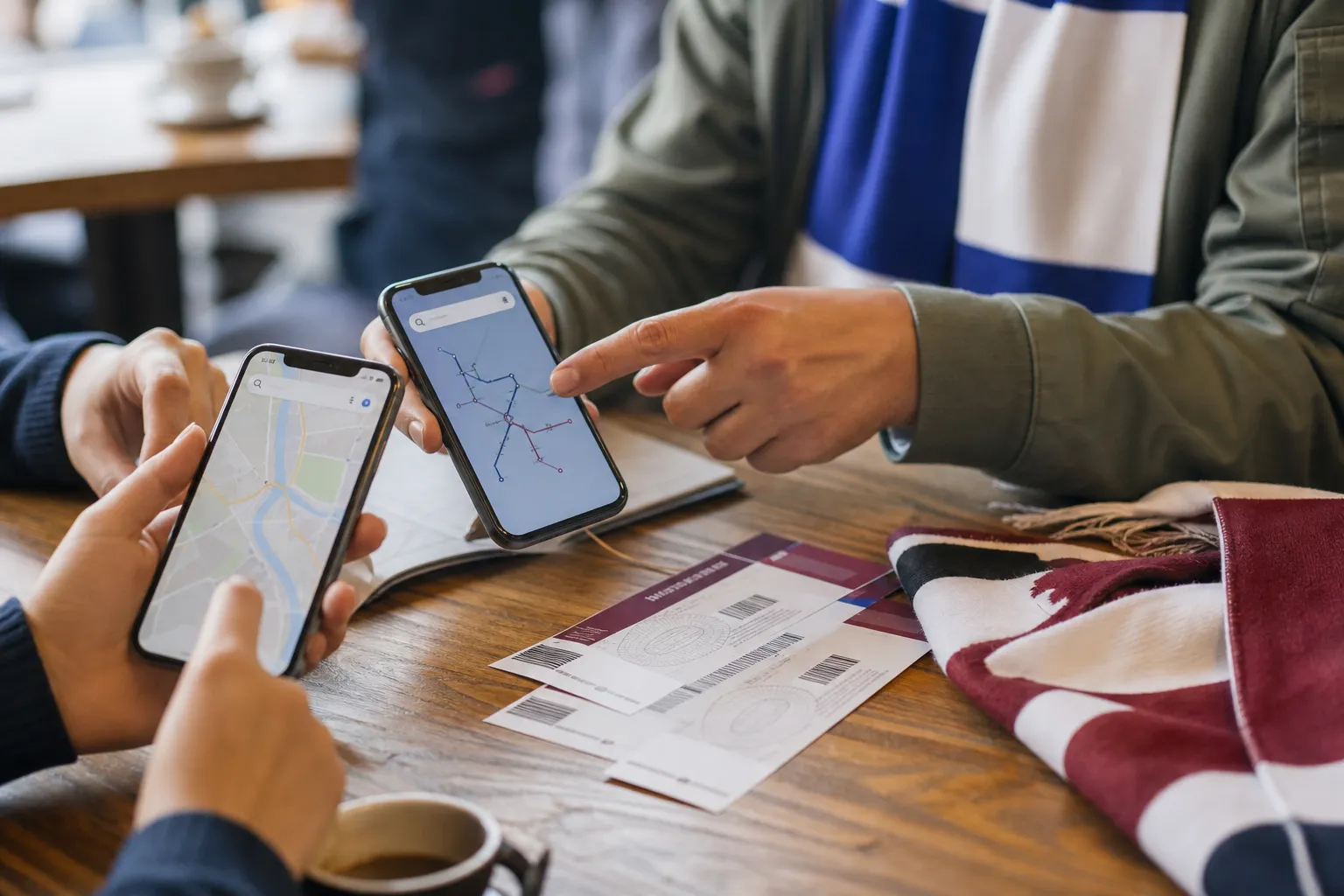
Even with the correct broadcast, fans still use phones. They check lineups, scores from other matches, referee decisions, transit, and group messages. The second screen should support the watch experience, not replace it. Assign it a job: one person checks fixture updates, one checks route issues, one checks the other match if necessary.
This is especially important in a language-specific room. If half the group is looking down for translations, stats, or route information, the shared experience weakens. A clean plan keeps the main attention on the broadcast and uses the phone only when it changes what the group does next.
A Spanish-first checklist
- Confirm the broadcast source and whether it is live in your market.
- Ask whether the Spanish-language audio will be on speakers.
- Check if the venue requires reservations, tickets, or early arrival.
- Choose a backup room with the same language fit.
- Save the route home before the match starts.
This checklist is deliberately practical because the failure points are practical. The article does not need to debate the value of Spanish-language commentary. The readers already know why they want it. The article should help them find the setting where it actually works.
Practical notes
Before committing to a Telemundo World Cup watch plan, verify broadcast availability, audio, seating, and public access. If the group is large, name one person to confirm venue details and one person to send the final time card. Keep the plan respectful of staff and other fans: ask early, arrive with patience, and have a backup if the room is already full.
Home viewing and public viewing solve different language problems
At home, the Spanish-first plan is mostly about control. The group can choose the feed, set the volume, pause around food, and make space for relatives who want to talk through the match. In public, the plan is about negotiation. The venue may control audio, staff may be balancing multiple games, and the crowd may include fans who came for a different broadcast. The same search term leads to two very different planning jobs.
That distinction should shape the article. A home guide should remind readers to test the feed before guests arrive, check device logins, and confirm whether the broadcast starts with pregame or kickoff. A public guide should focus on calling ahead, arriving early, and asking whether Spanish audio is on the main speakers. Both are Spanish-first plans, but their failure points are not the same.
Subtitles and second screens should not become the main event
Some groups use subtitles, live blogs, or stat apps to support the Spanish broadcast. That can help, especially in mixed-language households. But the second screen should be assigned a narrow job. If everyone is reading different feeds, the shared experience breaks into small private feeds. The point of choosing the broadcast is to bring the room together.
A practical rule is to keep one official score source, one route checker, and one person watching for venue updates if the group is out. Everyone else can stay with the match. This is less about phone discipline and more about protecting the reason the Spanish-first room was chosen in the first place: shared understanding, shared rhythm, and shared reaction.
Tags: #WorldCup2026 #FIFA2026 #WorldCupBuzz #MatchdayPlan #FanGuide #FootballFans #SoccerSearch #LiveSports #KarpoBuzz #AskKarpoFirst #WorldCupTravel #TeamNews
Sources consulted: Google Trends: telemundo world cup · FIFA World Cup 2026 · FIFA fixtures
All trademarks are the property of their respective owners.
Ask Karpo first: Need the match time, the crowd fit, and a route that still works after full time? Ask Karpo for fresh World Cup updates, public-access notes, and a respectful plan before you head out.