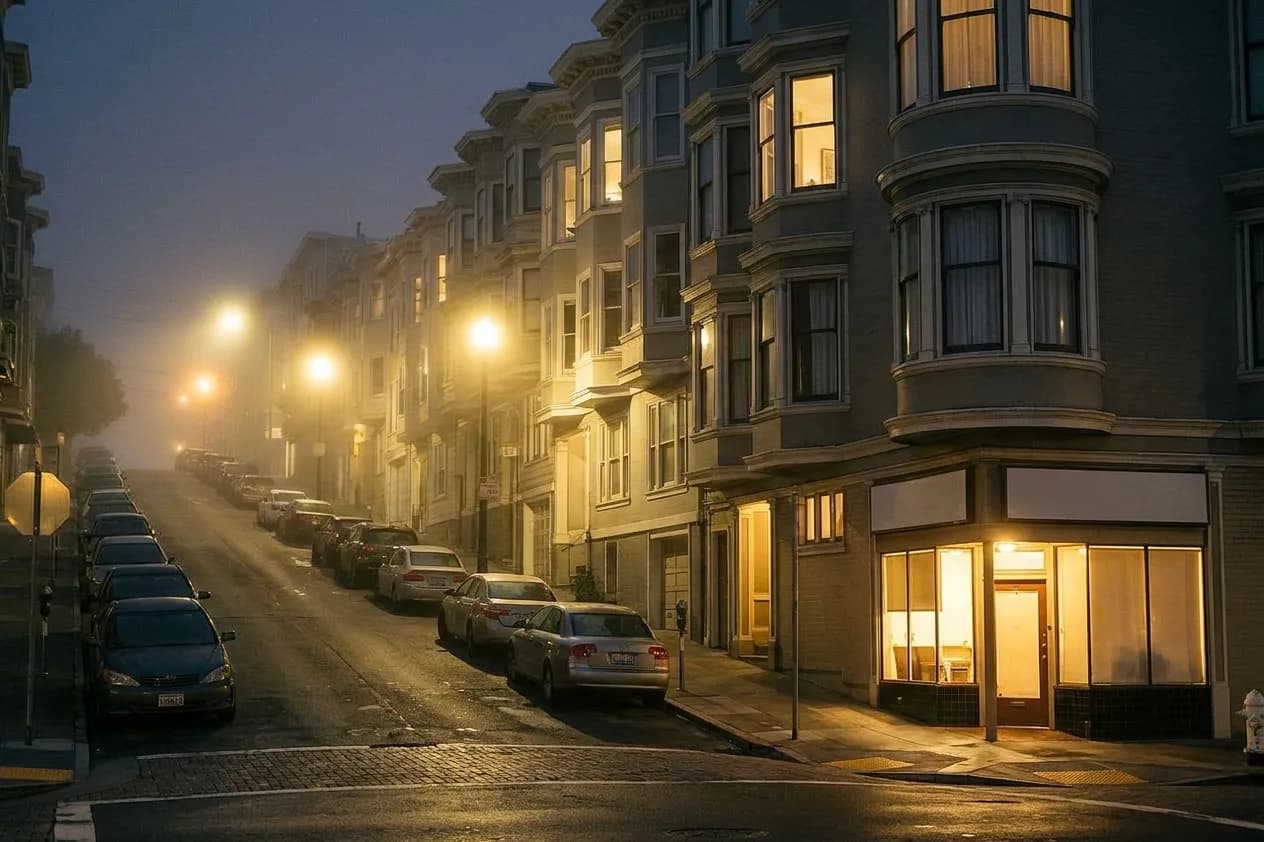
Japantown occupies six square blocks around Post and Buchanan and contains a density of Japanese seafood you will not find elsewhere in San Francisco. It also operates on a set of conventions that are almost never spelled out, and that quietly defeat people who turn up expecting a normal restaurant experience. The counters are small — often single figures. Many of the better ones serve one menu at one price and nothing else when you sit at the bar. And the neighbourhood's centre of gravity is a shopping mall complex with its own hours that do not always match the restaurants inside it. Understanding those three things is the difference between a great evening and standing in a corridor at 8pm with nowhere to eat.
Karpo can check which Japantown counters have a seat tonight, which ones are omakase-only at the bar, and what the walk-in odds look like at this hour.
Seat counts are the constraint, not popularity
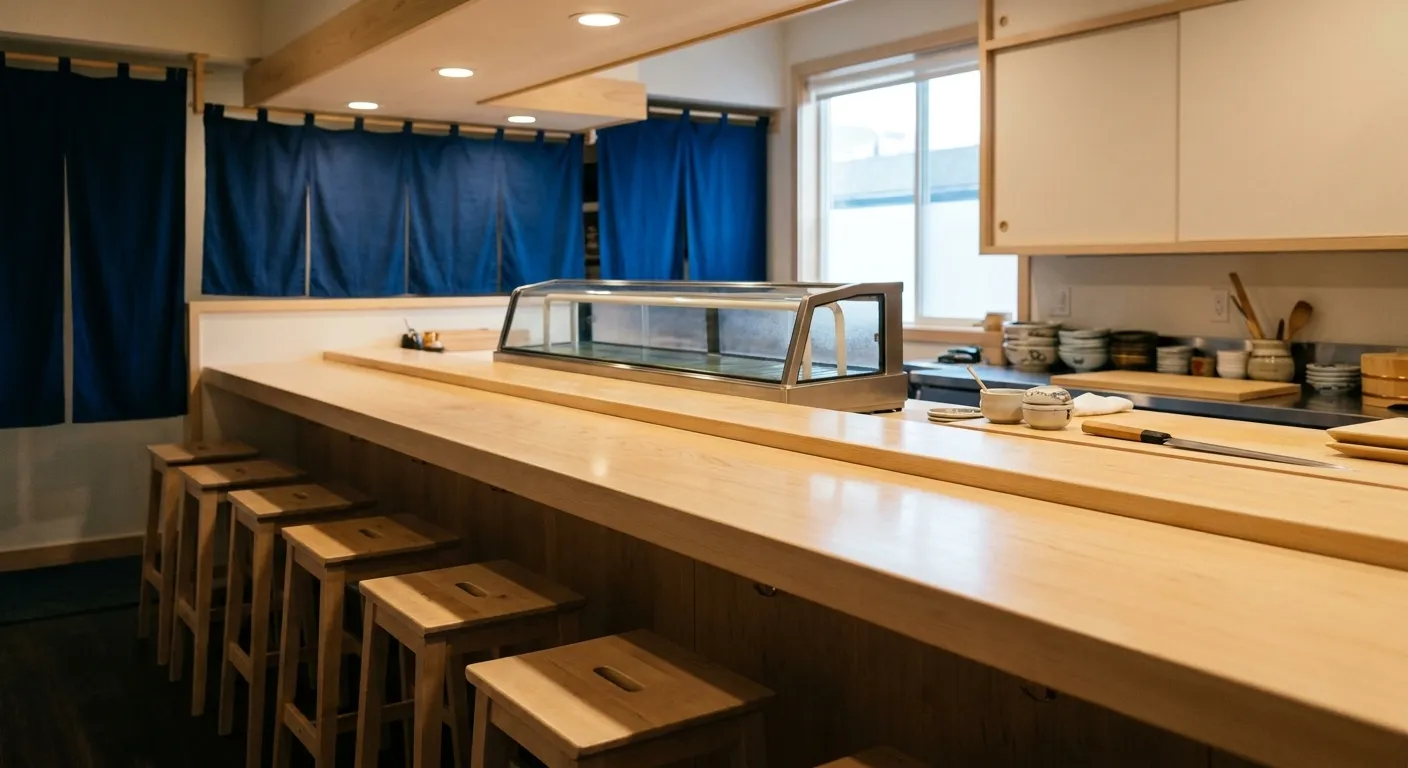
The defining fact about high-end sushi in Japantown is how few seats exist. Oma San Francisco Station, on the second floor of the Japan Center East Mall at 22 Peace Plaza, runs an eight-seat counter. Eight. That is not a soft limit that expands on a busy night; it is the room. When a counter of that size posts a seating, it is offering eight covers, and there is no bar area to wait in.
The consequence is that these rooms book out on a rhythm rather than at random. Reservations tend to release on a schedule, they go quickly, and cancellations reappear in ones and twos rather than in blocks. If you want a specific counter on a specific night, you are planning weeks out. If you are flexible about which counter, you can often eat well the same week.
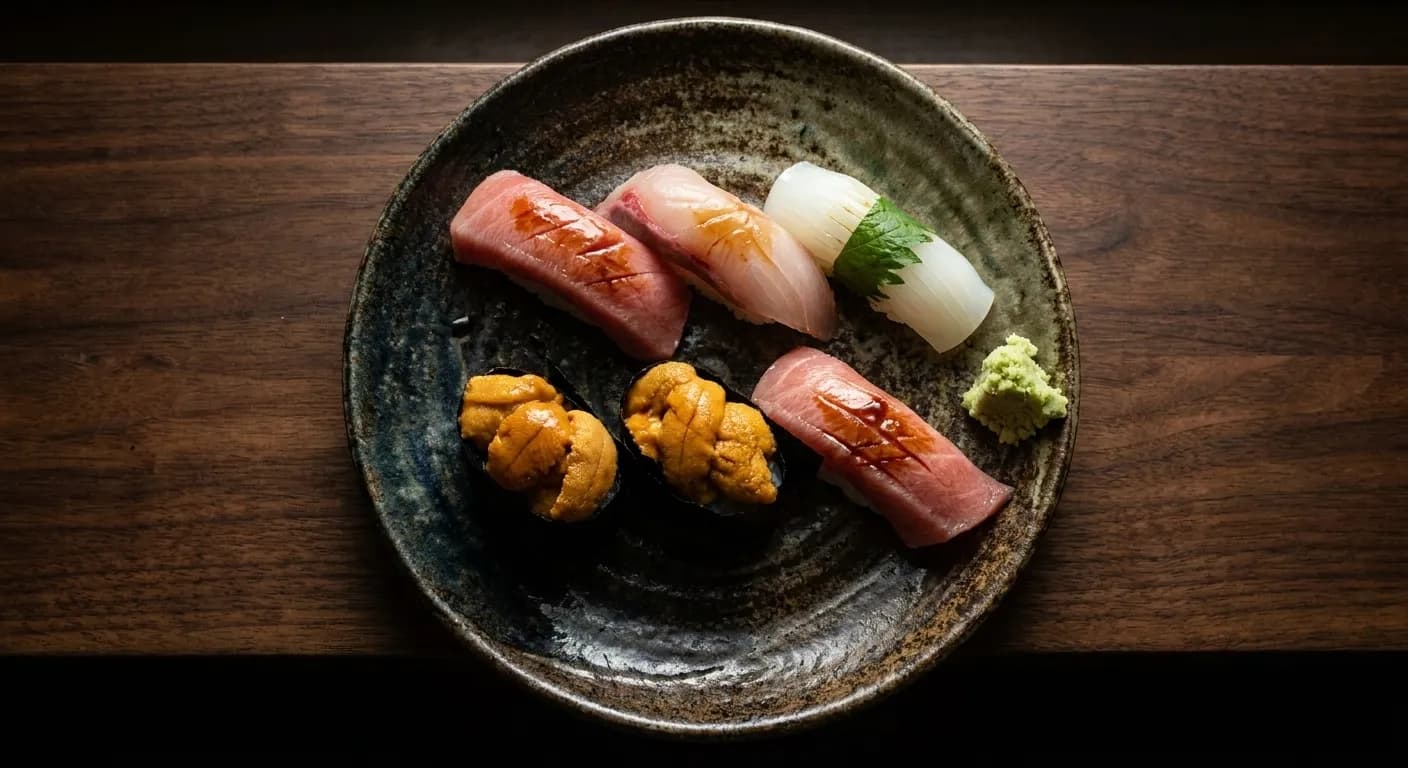
Omakase-only means what it says
Several of the serious counters run omakase-only when you dine in: one sequence, chosen by the chef, at one price, with no à la carte ordering at the bar. Oma follows this pattern, offering a few pressed-sushi platters on the takeout menu but running the counter as a set experience. This surprises people who arrive expecting to order three pieces and a beer.
There is usually a second reason for the format beyond the chef's preference. A counter with eight seats and one chef cannot run à la carte service at speed without either the food or the pacing suffering, and a set sequence lets the kitchen buy exactly what it needs for exactly the number of covers it has. That is why omakase counters take deposits, enforce cancellation windows, and start on time — the whole economic model depends on eight people arriving when they said they would.
It also changes the arithmetic. An omakase counter is a fixed cost you commit to on arrival, and the value question is not whether the price is high but whether the sequence is long and the fish is good. Ask how many pieces are in the standard course before you book. The same headline price can mean twelve pieces or twenty.
The Japan Center malls have their own clock
Most of the neighbourhood's food is inside or immediately around the Japan Center complex, and the malls run 8:30am to 10pm daily. Individual merchants keep their own hours inside that window, and many close well before the building does. The gap between mall hours and restaurant hours is the single most common way an evening goes wrong here.
The corridors themselves are worth arriving early for. The complex holds a bookshop, confectioners, small grocery counters and a stationery shop, and the correct way to use Japantown is to browse for an hour before a booking rather than arriving thirty seconds before your seating. It is also entirely indoors, which is a real advantage in a foggy city.
Counter etiquette that actually matters
Very little of the ceremony people worry about is enforced, but three habits do make a difference. Eat each piece when it is placed rather than letting several accumulate — the rice is at its correct temperature for about a minute. Do not add soy sauce to a piece that has already been brushed with nikiri, which at any serious counter is most of them. And say something to the chef about what you liked; at an eight-seat bar the feedback loop is direct, and it visibly changes what comes next.
The one hard rule is punctuality. A small counter running a set sequence starts when it starts. Arriving fifteen minutes late to a twenty-piece omakase means you have missed pieces that will not be remade.
Where the value sits
The counters get the attention, but Japantown's better value is often one step down from omakase: the neighbourhood's sit-down Japanese restaurants doing chirashi, donburi and set lunches, where a good bowl of seafood over rice costs a fraction of a tasting sequence and uses much of the same fish. A lunchtime chirashi is the cheapest way to judge whether a kitchen's sourcing is any good.
Ramen and izakaya rooms fill the same blocks and are the correct answer when a counter is full. They take walk-ins, they run later, and they are what the neighbourhood eats when it is not celebrating something.
The walk-in strategy that still works
If you want sushi in Japantown tonight without a booking, do three things. Go early — 5:30pm rather than 7:30pm, because the first seating is the one with gaps. Go on a Tuesday or Wednesday. And walk the corridors rather than calling, because small counters do not always answer the phone during service and a cancelled seat is often given to whoever is standing there.
Have a fallback chosen before you start. The neighbourhood is compact enough that you can check three counters in ten minutes, and the person who has already decided where they are going when all three are full has a much better evening than the person who has not.
Tags: #Japantown #SFSushi #Omakase #JapanCenter #SushiCounter #SeafoodNearMe #SanFranciscoFood #Nigiri #Chirashi #SFEats #PeacePlaza #Izakaya #BayAreaFood #HiddenGemsSF
Please drink responsibly. Must be of legal drinking age.
All trademarks are the property of their respective owners.
Ask Karpo first
Want to know which Japantown counters have a seat left tonight, which are omakase-only, and where to go when all eight stools are taken? Ask Karpo before you walk over.