 Scenic Walking Trail Near Me: Greynolds Park Mound and Oleta River Path
Free Things to Do
Summer Concerts in Miami: Tickets, Lineups and Best Seats
Miami's outdoor summer concerts mean heat, storms, and causeway traffic—here's how to plan around all three.
You buy tickets in April when the lineup drops and the evening sounds perfect. Then July arrives and you remember that standing in an amphitheater at eight p.m. in Miami means sweat running into your eyes before the opener finishes their second song. Summer concerts here are a trade: you get better touring acts and lower ticket prices than winter, but you're also gambling on weather, dealing with heat that doesn't break until ten, and navigating causeway traffic when half the city has the same plan.
Text Karpo before you commit to tickets. It'll check which venues have covered seating, when the next storm cell is forecast to roll through, and whether rideshare pickup points are actually staffed that night.
What summer concerts in Miami actually feel like
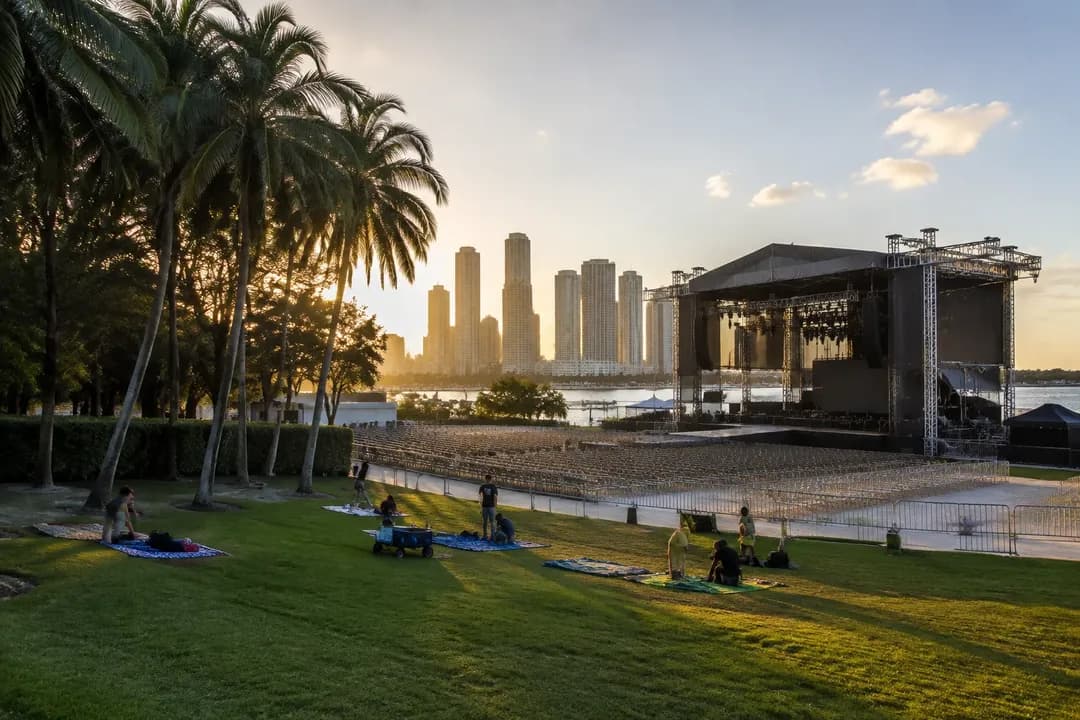
The big outdoor venues—Bayfront Park, the amphitheater at Bayfront Park Amphitheater, and Maurice A. Ferré Park—book national tours all summer because the season is cheap to insure and artists skip the snowbird crowds. But none of those stages have full cover, and afternoon storms roll in from the west with about twenty minutes' warning. If you're coming from Coconut Grove or Coral Gables, you'll hit bridge traffic on the way to downtown, and rideshare pickup after a show can stretch to forty minutes when everyone floods the lot at once. The friction is real, but it's manageable if you know what you're walking into.
Covered seats versus lawn, and what that means in August
Most Miami summer concerts offer two ticket tiers: reserved seats closer to the stage, often under a partial roof or canopy, and general-admission lawn or standing areas that are fully exposed. The price gap is usually thirty to fifty dollars, and in winter that feels like a luxury charge. In summer it's insurance. If a storm blows through—and they do, most evenings between five and seven—lawn ticket holders either get soaked or spend half the show pressed under the beer tent. Reserved seats at venues like the Adrienne Arsht Center's outdoor Carnival Studio Theater or the covered sections at Bayfront Park Amphitheater keep you dry and give you a chair when the humidity makes standing unbearable.
Lawn tickets make sense if you're going with a group that wants to move around, or if the artist is someone you'd rather hear than see up close. But check the venue map before you buy: some lawn sections at Maurice A. Ferré Park sit far enough back that you're watching screens instead of the stage, and the sound mix can get muddy when the wind picks up off the bay. If you're buying day-of or looking for resale deals, lawn tickets often drop in price as showtime approaches, especially if the forecast turns ugly.
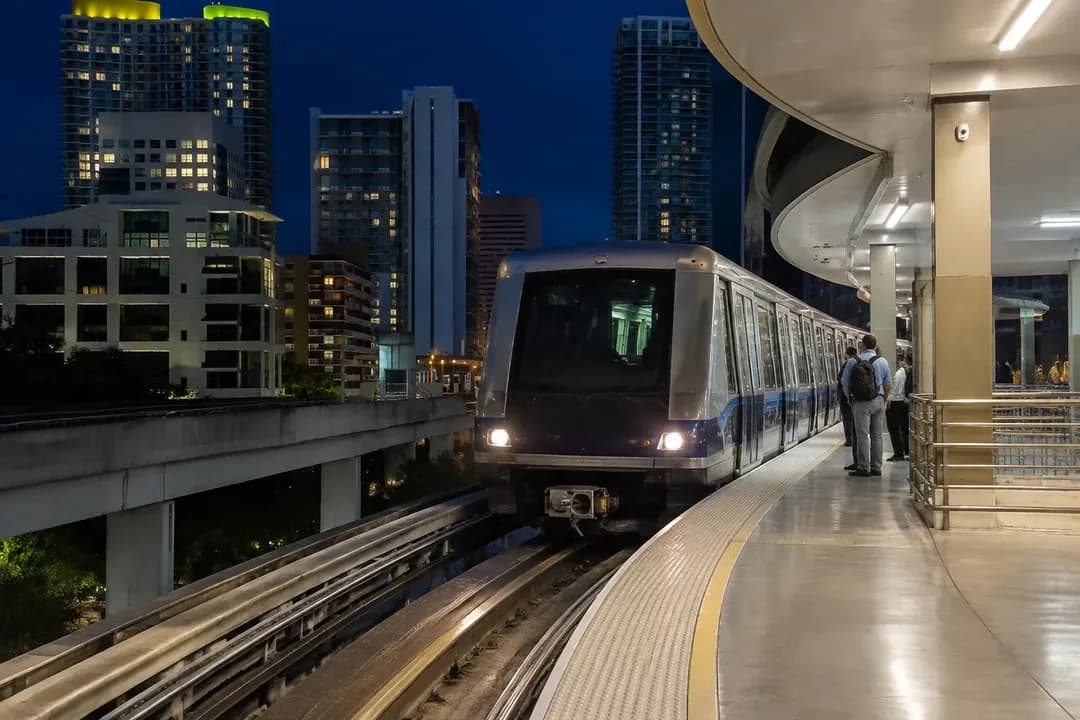
The other variable is parking. Bayfront Park and Maurice A. Ferré Park both rely on downtown garages and metered street spots that fill by seven p.m. on concert nights. The garages along Biscayne Boulevard between NE 5th and NE 15th Streets are your best bet, but they charge event rates—fifteen to twenty-five dollars—and exits get clogged for thirty minutes after the encore. If you're coming from Coconut Grove, consider taking the Metromover from Brickell; it's free, runs until midnight, and drops you two blocks from Bayfront Park. Rideshare pickup zones are marked, but drivers often can't reach them when streets close for load-out, so you end up walking four blocks east to find your car.
What tickets actually cost, and where the fees hide
Face-value tickets for summer concerts in Miami range from thirty-five dollars for lawn access at a mid-tier indie act to a hundred and twenty for reserved seats at a legacy rock or pop show. But the sticker price is never the final number. Ticketing platforms add service fees that run eighteen to twenty-five percent of the base price, plus a per-ticket facility charge that venues tack on—usually another four to six dollars. A sixty-dollar lawn ticket ends up closer to seventy-five after fees, and if you're buying for a group of four, that's an extra sixty dollars you didn't budget.
Resale markets—StubHub, SeatGeek, the venue's own exchange—sometimes offer better deals the week of the show, especially if weather looks bad or if the artist isn't selling as well as expected. But resale tickets come with their own fees, and you won't know if the price is actually lower until you reach checkout. For smaller shows at venues like Gramps in Wynwood or Churchill's Pub, you can often buy tickets at the door for less than online, though you risk a sellout if the act has a following.
If you're planning to see multiple concerts over the summer, check whether the venue offers a season pass or multi-show package. The Arsht Center and some of the smaller clubs in Wynwood run discount series that bring per-show cost down by twenty or thirty percent. Those packages usually require buying in April or May, before lineups are fully announced, so you're gambling on the calendar. But if you're the kind of person who goes to live music twice a month anyway, the math works.
The hour before doors, and what to have ready
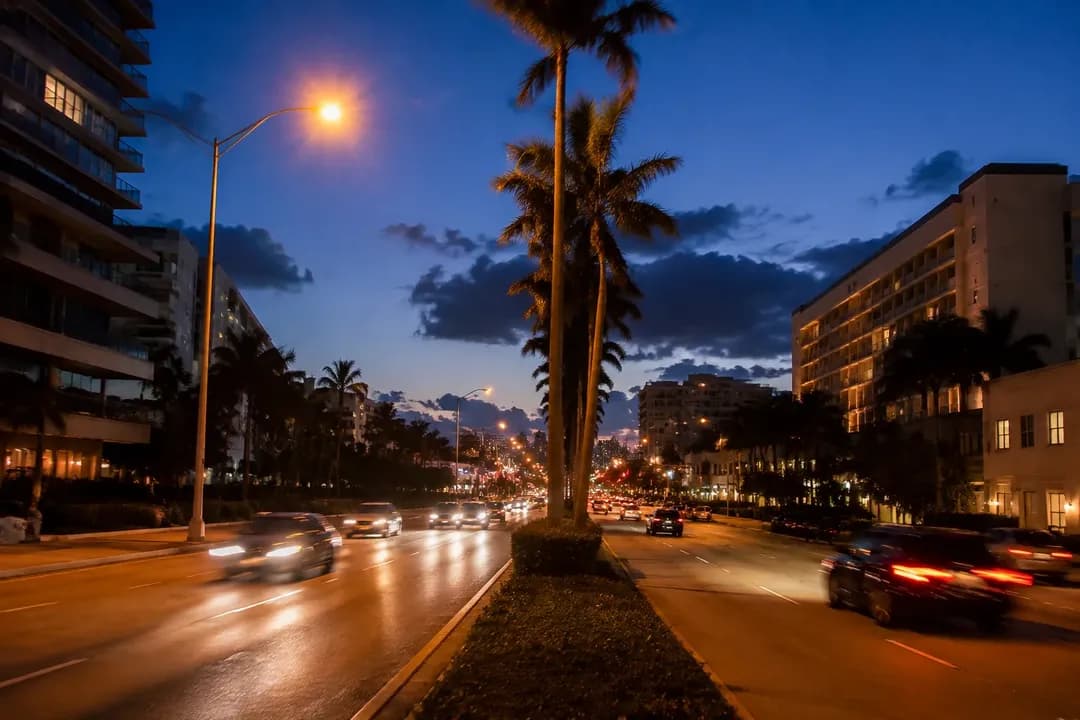
Doors for most summer concerts in Miami open before the first act, but the smart move is to arrive early if you want a lawn spot with a sightline, or if you're parking downtown. Garages fill fast, and street parking near Bayfront Park disappears by six-thirty on weeknights. If you're taking rideshare, get dropped on the east side of Biscayne Boulevard—drivers hate the clogged turnaround at the venue entrance, and you'll wait longer if you set your pin at the front gate.
Bring a water bottle; most venues allow one sealed plastic bottle per person, and refill stations are available inside, though lines get long once the opener starts. Sunscreen matters even for an eight p.m. show—the sun doesn't set until after eight in July, and you'll be standing in direct light during load-in. If rain is in the forecast, a light poncho folds small and keeps you drier than trying to buy a garbage-bag substitute from a vendor at four times the price.
Check the venue's bag policy the morning of the show. Bayfront Park and Maurice A. Ferré Park allow small backpacks and totes, but they must be clear or under a certain size, and security lines slow down when people get turned away. If you're carrying anything valuable, plan for where you'll stash it—coat check isn't common at outdoor venues, and leaving a bag on the lawn while you move closer to the stage is a risk. For seated shows, you'll have space under your chair, but lawn seating is open territory.
Finally, have a backup plan for getting home. Rideshare pickup points are marked, but they're also where three thousand people converge at ten-thirty p.m., and wait times spike to forty minutes or more. Walking east toward the Metromover or north toward the residential blocks of Edgewater can get you out of the scrum and into a car faster. If you drove, accept that you're sitting in the garage exit line for twenty minutes and plan your night accordingly. The encore is great, but the last song isn't worth an extra half hour in traffic if you're trying to get back across the causeway before eleven.
Practical notes
- Afternoon storms are common between May and September; check radar an hour before you leave.
- Downtown garage parking runs $15–25 on concert nights; Metromover from Brickell is free and drops you close.
- Lawn tickets are cheaper but fully exposed; reserved seats often have partial cover.
- Ticketing fees add 20–30% to the base price; resale can be cheaper the week of the show if weather looks bad.
- Rideshare pickup waits stretch to 40+ minutes after big shows; walk a few blocks east or north to find a car faster.
- Bring a sealed water bottle and a poncho if rain is forecast; refill stations are inside but lines get long.
Tags: #karpo #miami #miamimusic #concerts #livemusicmiami #bayfrontpark #summerconcerts #miamibeach #coconutgrove #downtownmiami #wynwood #miamievents #thingstodomiami #metromover #miaminights
Sources consulted: Bayfront Park · Adrienne Arsht Center · Miami-Dade Transit Metromover
All trademarks are the property of their respective owners.
Ask Karpo first
Text Karpo the name of the venue and the date of your show. It'll tell you which parking garages have space, when the next storm cell is expected, and whether the Metromover is running late that night. It'll also give you a live route from Coconut Grove or wherever you're starting, with real-time traffic on the causeways and alternate rideshare pickup points if the main lot is jammed.
Ask Karpo for more information.
Keep reading
- Scenic Walking Trail Near Me: Greynolds Park Mound and Oleta River Path
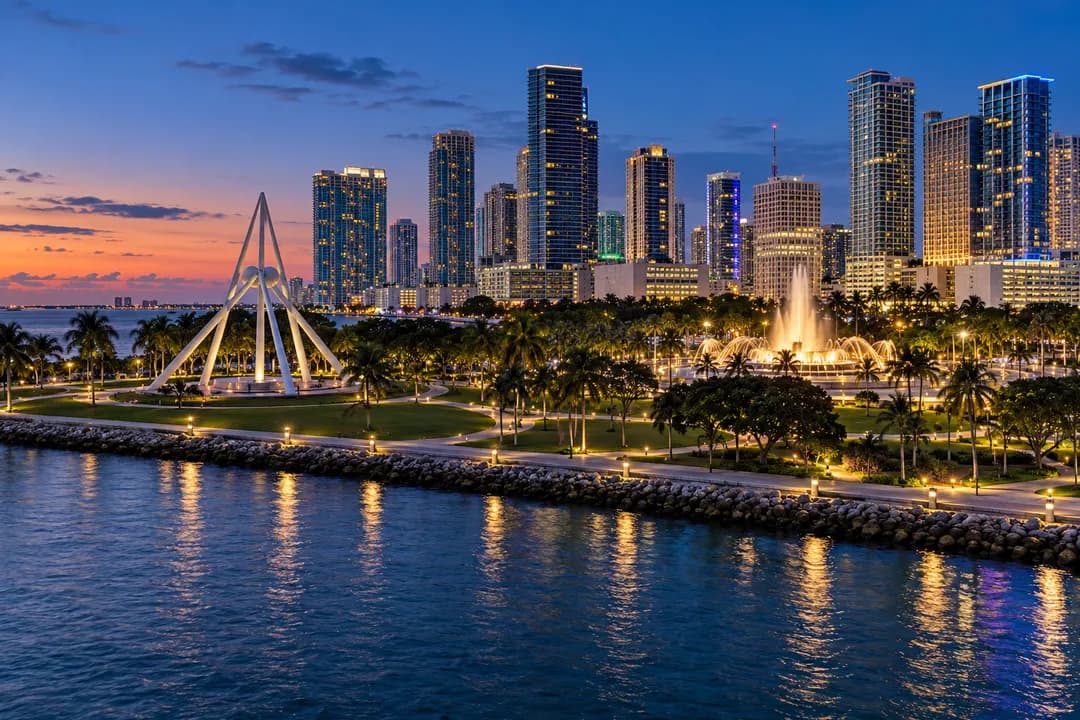 Waterfront Park Near Me: Noguchi Sculptures and Seawall Sunsets at Bayfront Park
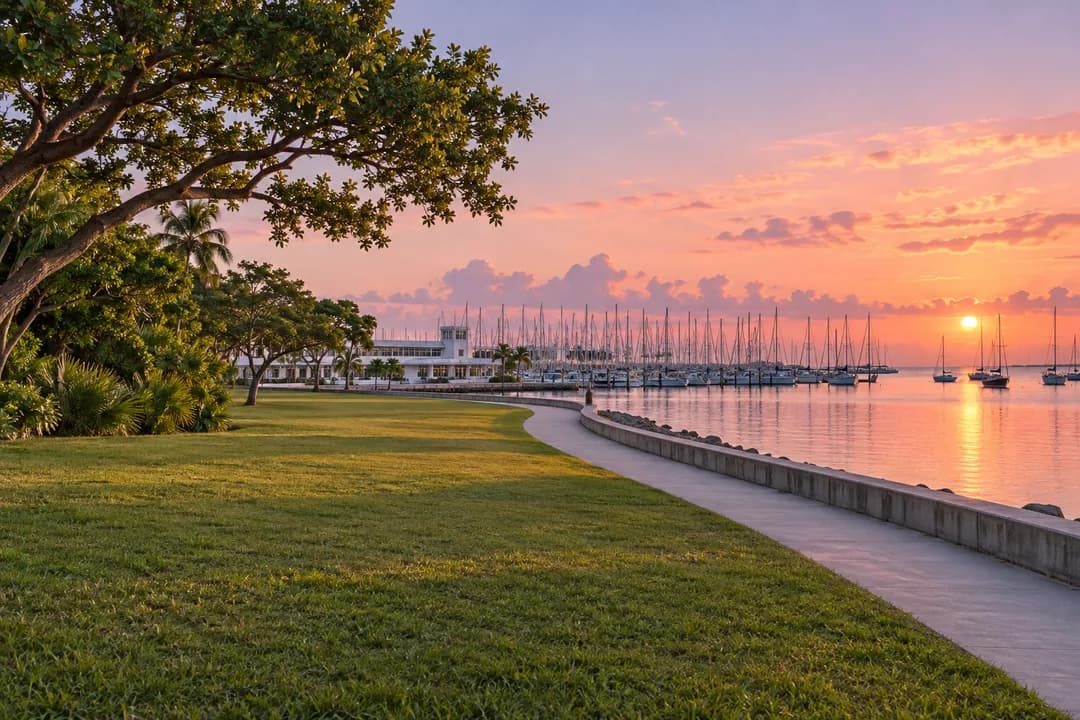 Waterfront Park Near Me: Mast Views and Bay Lawns at Regatta Park