 Waterfront Park Near Me: Noguchi Sculptures and Seawall Sunsets at Bayfront Park
Free Things to Do
Scenic Walking Trail Near Me: Greynolds Park Mound and Oleta River Path
Greynolds Park at 17530 West Dixie Hwy in North Miami Beach is a 249-acre former quarry with river trails, a 46-foot mound and free weekday parking, open sunrise to sunset.
Greynolds Park at 17530 West Dixie Hwy in North Miami Beach is open from sunrise to sunset, and parking is free Monday through Thursday, rising to $10 per vehicle from Friday to Sunday. Miami-Dade Parks calls the 249 acres an urban oasis that was once a rock quarry, with walking paths, trails and bird-watching along the Oleta River. For a scenic walking trail near me in northeast Miami-Dade, it is the one with a hill, a stone boathouse and a 90-year story.
From Rock Quarry to County Park
The land came from industry. Most of the park was donated by A.O. Greynolds, owner of the Ojus Rock Company, who gave 110 acres of his property in exchange for having the park named after him. The quarry left behind pits, rock piles and old machinery, and the county turned that landscape into a park that was officially dedicated in 1936. Walking it today, the lagoons and ridges are the shapes the miners left behind, softened by 90 years of growth.
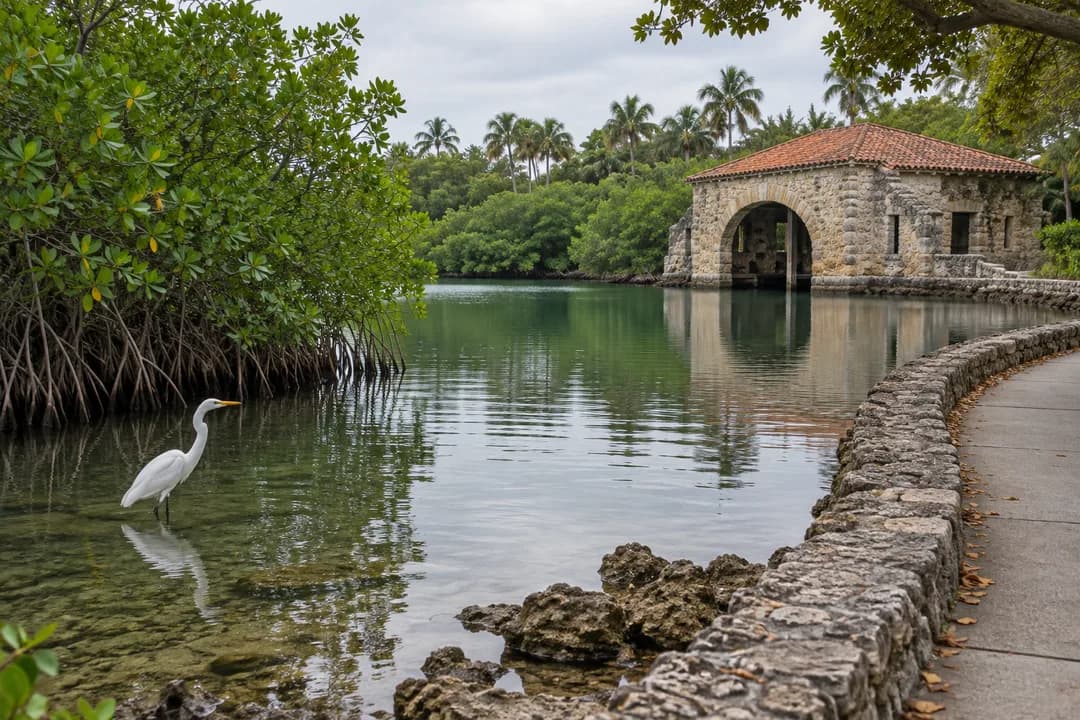
The Civilian Conservation Corps did the building. According to the county's park history, CCC crews used stone from the Oleta River and the adjacent quarries to build many of the park's structures, which is why so much of Greynolds is made of rough, honey-grey oolitic limestone. The new boathouse went up in 1939, and the park was later listed as a historic site in 1983, a recognition that the Depression-era stonework is as much the attraction as the trees.
Climbing the Mound, Once the County's High Point
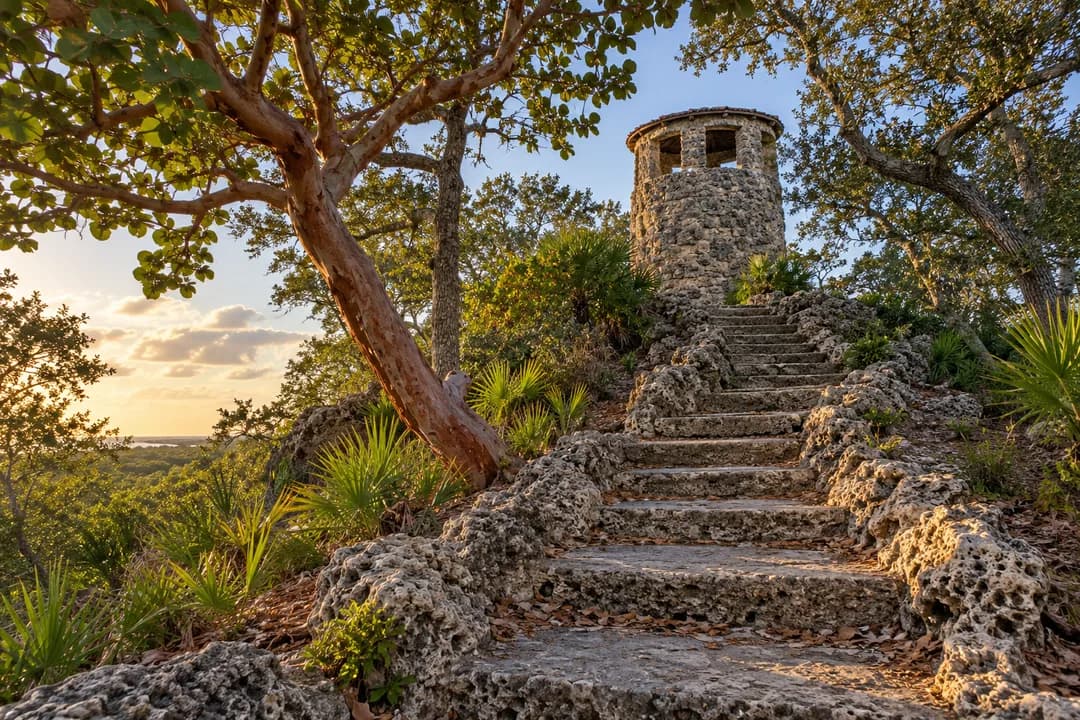
The signature walk ends at the top of the mound. The county history says it stands 46 feet above sea level and was once the highest land point in Dade County, a big claim in a place where most of the ground sits barely above the tide. It is not natural, though. The mound is mostly a pile of abandoned rock-crushing machinery, railroad ties and leftover limestone from the Greynolds quarry, covered over with soil and trees.
A walled look-out platform was eventually built on the summit, and the climb up the rough stone steps is short but steep enough to feel like real effort in the Miami heat. At the top, the view opens over the canopy toward the river and the surrounding neighborhoods. Take your time on the way down, because the steps are uneven and can be slippery after rain, and skip the climb with a stroller, which will not manage the stairs.
Walking the Oleta River Side
Below the mound, the paths follow the lagoons and the edge of the Oleta River through mangroves and hardwood trees. This is the bird-watching side of the park, and the county singles out the scenic river views. Herons and egrets work the shallows, and the quiet coves are where to slow down with binoculars. A loop that links the boathouse, the lagoon edge and the mound fills an unhurried hour without any need to retrace your steps.
Do not get in the water. Miami-Dade Parks notes that the river is not patrolled and swimming is not permitted, and the lagoons are no better. If you want to be on the water rather than beside it, East Greynolds Park at 16700 Biscayne Blvd, a separate county park a short drive east, has a kayak launch and a dog park.
The Boathouse and Other Stonework to Find
The 1939 boathouse is the photograph everyone takes, a stone building sitting right at the lagoon edge. It is the clearest example of the CCC style in the park, and it makes a natural meeting point at the start or end of the walk. Look closely at the stone and you can see the fossil texture of the quarry rock, the same material that made the Greynolds company its money.
As you walk, look for the other limestone structures that the county credits to the Civilian Conservation Corps: walls, steps and small shelters built from the same stone. They give the park a feel unlike any other in Miami-Dade, closer to a 1930s national park than a city playground. The stonework is the reason to choose Greynolds over a newer park, and it rewards a slow walk with your eyes on the edges of the path.
When to Go and How to Save on Parking
Timing is easy to get right. The gates follow sunrise and sunset, and the park office keeps hours of 9:00 am to 5:00 pm every day. Come on a Monday through Thursday and parking is free, which makes a weekday morning the best value and the quietest time on the trails. From Friday to Sunday the fee is $10 per vehicle, so weekend visitors should expect more company on the paths.
There is one weekend exception worth planning around. Greynolds hosts bluegrass on the first Sunday of every month from 12:30 to 5:30 pm, free to attend, though the usual parking fee still applies. If you want quiet, avoid that afternoon. If you want a soundtrack for your walk, time a loop of the mound and lagoon for early afternoon and finish on a blanket near the music.
Nearby: An 800-Year-Old Monastery Down the Road
A short way south, the Ancient Spanish Monastery at 16711 West Dixie Hwy is the most surprising neighbor any Miami park has. The cloister was built in Spain in the 12th century, bought by William Randolph Hearst, shipped to the United States in pieces and reassembled in North Miami Beach. It is still a working Episcopal church as well as a visitor site, so services and private events take priority over sightseeing on some days.
Between the two, the stonework tells a neat story about Miami: an 800-year-old Spanish cloister on one side of the road and a 1930s quarry park built by Depression-era workers on the other. For lunch, the restaurants along Biscayne Boulevard are a short drive east, and the drive passes East Greynolds Park if you want to add the waterfront kayak launch to the day.
Practical Notes
Name: Greynolds Park, Miami-Dade Parks. Address: 17530 West Dixie Hwy, North Miami Beach, FL 33160. Phone: (305) 945-3425. Golf course: (305) 949-1741. Park hours: sunrise to sunset. Office hours: Monday to Sunday, 9:00 am to 5:00 pm. Parking: free Monday through Thursday, $10 per vehicle Friday through Sunday. Size: 249 acres. Highlights: the 46-foot mound, the 1939 boathouse, CCC stonework and Oleta River views. Swimming: not permitted.
Ask Karpo for more information.
Keep reading
- Waterfront Park Near Me: Noguchi Sculptures and Seawall Sunsets at Bayfront Park
 Waterfront Park Near Me: Mast Views and Bay Lawns at Regatta Park
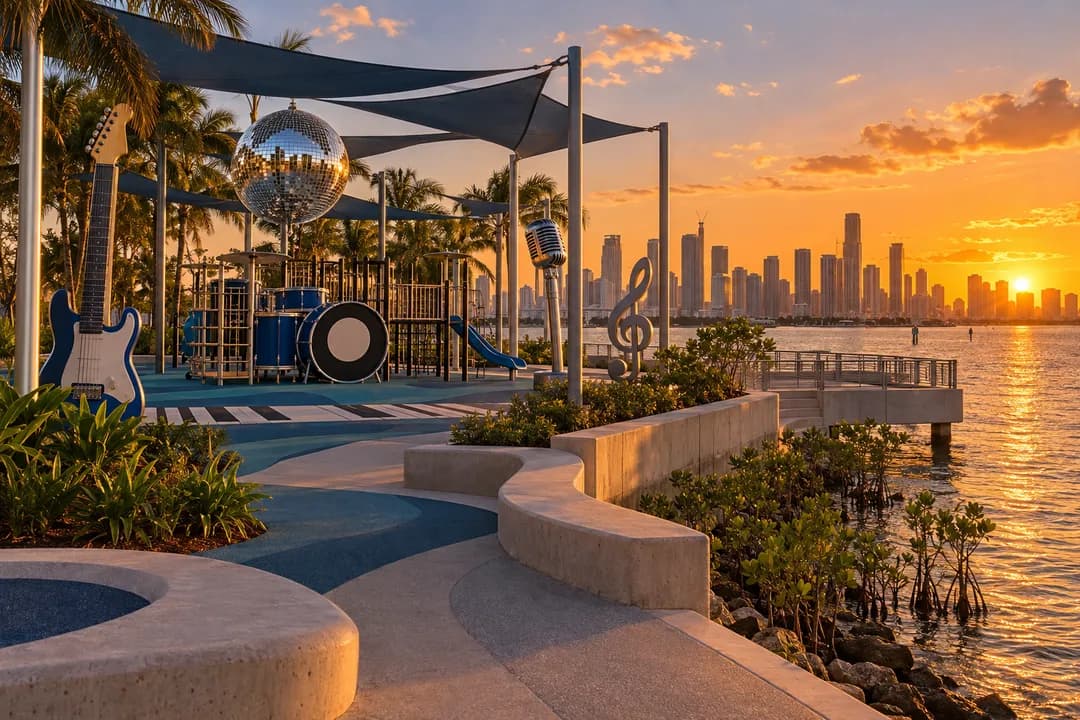 Waterfront Park Near Me: Disco Ball Sunsets at Maurice Gibb Memorial Park