 Where to Eat Near Penn Station That Isn't a Chain
US Open 2026

Storm Launch Plan For US Open 2026 Transit Plan
A practical guide to navigating Queens transit, timing your arrival, and building a respectful fan plan during US Open Qualifying Week 2026.
The 2026 US Open runs August 23 through September 13, with Fan Week kicking off August 23–29 and the main draw beginning August 30. Qualifying Week—the stretch before the main tournament—brings a quieter, more exploratory energy to Flushing Meadows Corona Park, and it is one of the best windows to experience professional tennis without the crush of peak crowds. But getting there smoothly requires a transit plan that accounts for Queens geography, 7 train rhythm, and the realities of a multi-week event in a working neighborhood. This guide walks through practical arrival timing, backup routes, neighborhood context, and the kind of respectful visitor habits that make a long day at the Open feel less like a logistical puzzle and more like a confident New York outing.
Text Karpo your match session, neighborhood start point, and appetite, and we will turn this Qualifying Week transit plan into a live Queens plan.
Why Qualifying Week changes your transit strategy
Qualifying Week typically draws smaller crowds than the main draw, but that does not mean transit is empty or that timing is irrelevant. The 7 train—the primary subway line serving the Mets–Willets Point station adjacent to the Billie Jean King National Tennis Center—runs on a schedule that can tighten during off-peak hours and swell during evening rush. Morning sessions often start around 11:00 AM, and if you are traveling from Manhattan or Brooklyn, leaving by 9:30 or 10:00 AM gives you buffer time for delays, a coffee stop in Jackson Heights or Corona, and a calm walk through the park. Evening sessions may overlap with commuter traffic, so plan to arrive before 5:00 PM if you want to avoid platform crowding and secure a seat on the train.
The 7 train: your primary line and what to expect
The 7 runs from Manhattan's Far West Side through Times Square, Grand Central, and into Queens, terminating at Flushing–Main Street. Mets–Willets Point is the stop for the US Open, and it sits just one stop before the end of the line. During Qualifying Week, expect moderate crowding but not the sardine-can conditions of a weekend finals match. The MTA typically increases service frequency during the tournament, but always check the MTA's official US Open transit guide and live service status before you leave. If the 7 is delayed or rerouted, the E, F, M, and R trains offer alternative access points deeper in Queens, though they require a bus transfer or a longer walk. The Q48 bus connects the E/F/M/R lines at Roosevelt Avenue–Jackson Heights to the tennis center, and it is a reliable backup if subway service is disrupted.
Timing your arrival and departure around match sessions
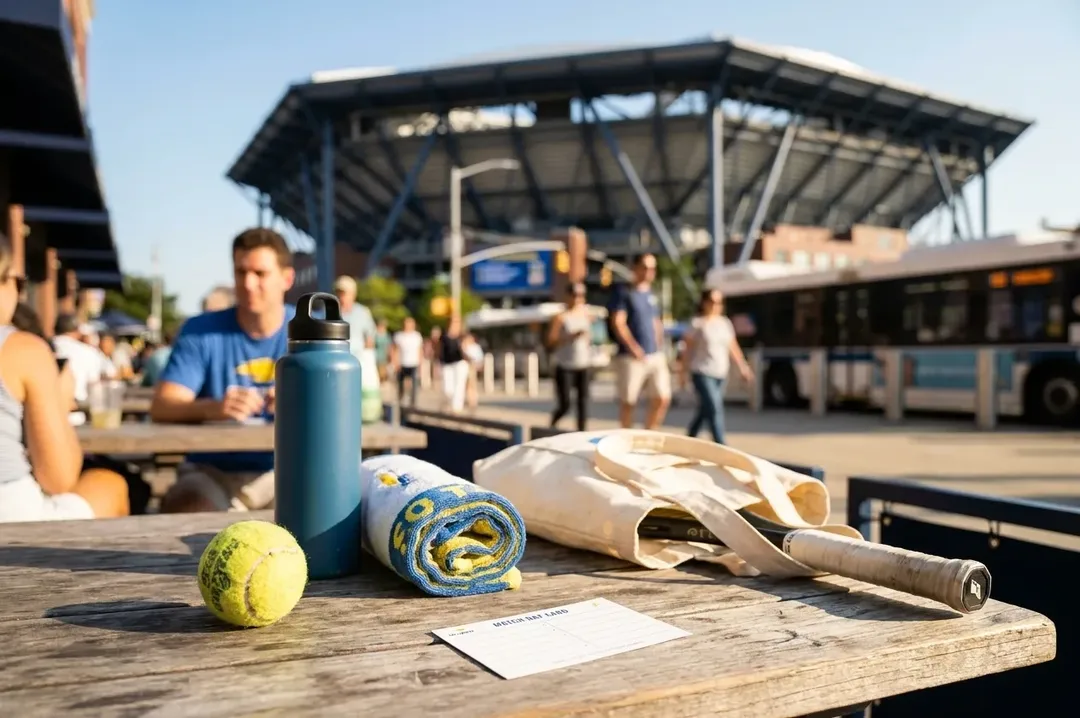
Qualifying matches are scheduled in day and evening sessions, and your transit timing should reflect which session you are attending. Day sessions generally begin around 11:00 AM, so aim to arrive by 10:30 AM to clear security, pick up credentials if needed, and settle in without rushing. Evening sessions often start around 6:00 or 7:00 PM, and arriving by 5:30 PM gives you time to grab food, explore the grounds, and find your seat before play begins. Departures are less predictable—matches can run long, and if you stay for a full evening session, expect to leave around 10:00 or 11:00 PM. The 7 train runs late, but service frequency drops after 9:00 PM, so budget extra time for platform waits and consider a rideshare or taxi if you are traveling with kids, heavy bags, or mobility concerns.
Backup routes and alternative access points
- E, F, M, or R to Roosevelt Avenue–Jackson Heights, then Q48 bus to Mets–Willets Point
- 7 train to 61st Street–Woodside, then Q48 bus if the main line is disrupted past that point
- Long Island Rail Road (LIRR) to Mets–Willets Point from Penn Station or Atlantic Terminal—faster but requires a separate fare
- Citi Bike or personal bike to the park, with bike racks available near the tennis center entrance
- Rideshare drop-off at the main entrance on 111th Street, though expect surge pricing during peak hours
Neighborhood stops worth building into your route
Queens is not just a transit corridor—it is a constellation of neighborhoods with deep food culture, public parks, and street life that rewards a slower pace. If you are arriving early or leaving with time to spare, consider stopping in Jackson Heights for South Asian and Latin American food along 37th Avenue and 74th Street, or in Corona for Mexican bakeries and taquerias near Roosevelt Avenue. Long Island City offers waterfront parks with Manhattan skyline views, and Flushing's Main Street is one of the city's most vibrant Chinatown districts, with dim sum, hot pot, and sprawling food courts. These stops are not detours—they are part of the texture of a full Queens day, and they give you a reason to leave the tennis center without feeling like you are rushing straight home.

Weather, shade, and practical comfort during Qualifying Week
Late August in New York can be hot, humid, and unpredictable. Flushing Meadows Corona Park offers some tree cover, but the tennis center grounds are largely exposed, and the walk from the subway to the main entrance takes about ten minutes in full sun. Bring a hat, sunscreen, and a refillable water bottle—hydration stations are available on-site. If rain is in the forecast, pack a lightweight poncho or umbrella, and know that qualifying matches on outer courts may be delayed or moved. The Arthur Ashe Stadium has a retractable roof, but smaller courts do not, so check the day's schedule and weather conditions before you commit to a long session. If you need a break from the heat, the Queens Museum and the New York Hall of Science are both within walking distance in the park and offer air-conditioned refuge.
Respectful fan behavior and check-before-you-go habits
Qualifying Week is a chance to see rising players and early-round drama without the intensity of the main draw, but it still requires the same courtside etiquette: silence during points, applause between points, and no flash photography. Arrive early enough that you are not climbing to your seat mid-game, and if you need to leave, wait for a changeover. Outside the courts, respect the park's public spaces—Flushing Meadows is a working park used by local families, runners, and picnickers, and the US Open is a temporary guest. Before you travel, confirm your session time, check MTA service alerts, verify gate and security policies on the official US Open site, and save the MTA's live subway map to your phone. These small habits turn a complicated day into a manageable one.
Karpo® is a registered trademark of Karpo Inc. All rights reserved. This guide is for informational purposes only and is not affiliated with or endorsed by the United States Tennis Association, the US Open, the MTA, or NYC Parks. Always confirm transit schedules, event policies, and safety conditions through official sources before traveling.
Tags: #USOpen2026 #Queens #FlushingMeadows #KarpoFinds #Karpo #TennisTravel #NYCLocalLife #FanWeek #USTennis #NewYorkGuide #storm #Buzz
All trademarks are the property of their respective owners.
Ask Karpo first
Want to know what is actually open, how to time the trip, and where to pause around Queens? Ask Karpo for the latest public US Open context, a respectful visitor plan, and a live route around Flushing Meadows before you head out.
Ask Karpo for more information.
Keep reading
- Where to Eat Near Penn Station That Isn't a Chain
 Andytown Coffee in the Outer Sunset: The Snowy Plover Explained
- Best Things to Do in Chicago: What the City Gives Away