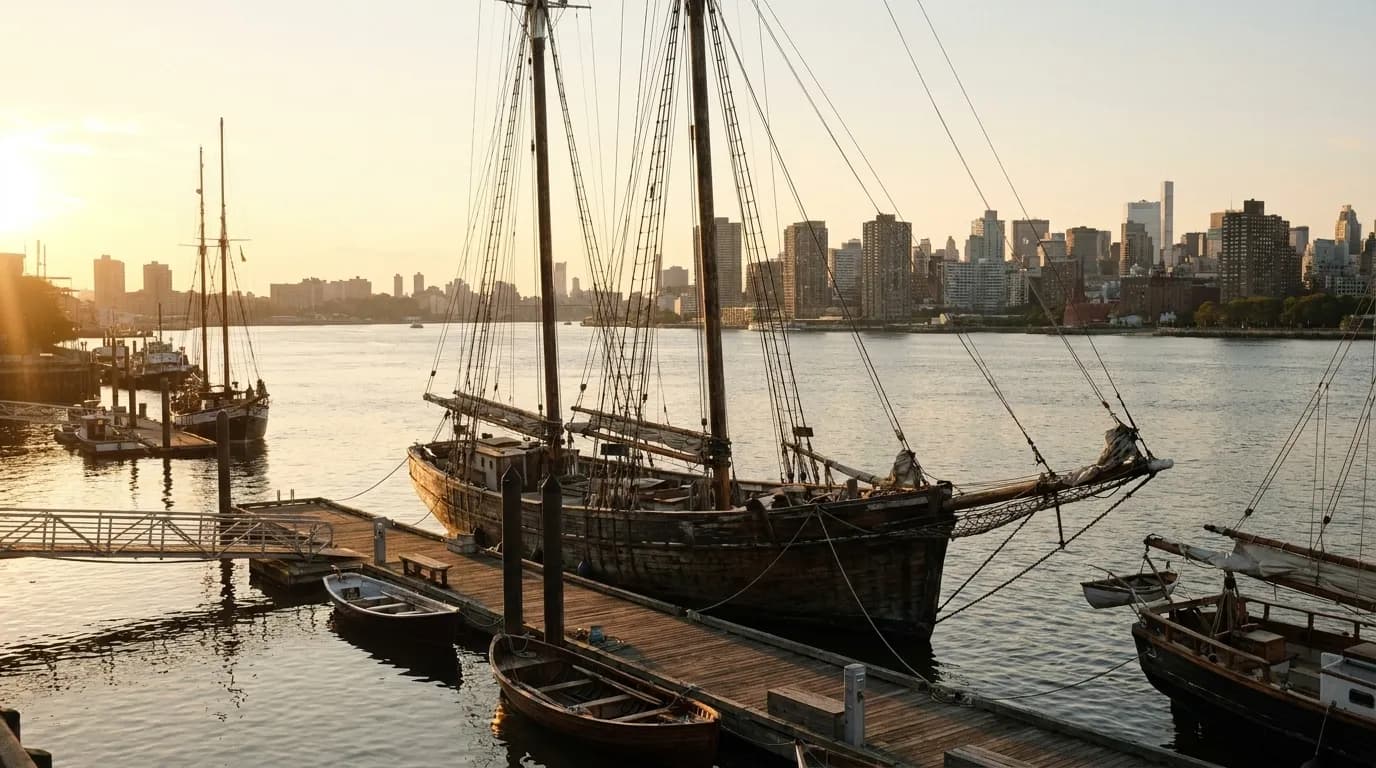
For Manhattan or Brooklyn readers who like the idea of Staten Island but get nervous about the transfer math, Snug Harbor is the rare cross-borough plan that still feels practical in uncertain weather. The Staten Island Ferry is free, runs between Whitehall and St. George, and NYC DOT lists the ride at about 25 minutes each way, with weekend departures generally every 30 minutes. From St. George, Snug Harbor’s own directions point visitors to the S40 or S44 bus from Ramp D for the final leg. The payoff is a cultural campus where free outdoor grounds can be paired with ticketed attractions, galleries, gardens, and restrooms if rain or humidity changes the day.
Want a ferry-first plan without checking five tabs at the terminal? Text Karpo before you leave and ask for the current Snug Harbor route, weather backup, and return timing.
Start With The Ferry, Not The Destination
The most useful framing is to treat the Staten Island Ferry as the anchor, then let Snug Harbor become the destination. NYC DOT says the ferry is free, runs every day year-round, and takes about 25 minutes between Whitehall Terminal and St. George. On weekends, the published schedule shows half-hourly departures from both terminals. That makes the plan low-cost, but not frictionless: missing one boat can shift the whole afternoon by 30 minutes.
For an early afternoon weekend window, aim to be inside Whitehall Terminal before the departure you actually want, not walking toward it. The ferry is part of the outing, especially for a date or solo museum-garden visitor, but it is still public transit. DOT also warns schedules can change without notice and may be adjusted in severe weather or reduced visibility, so check service alerts before committing to the crossing.
Use Ramp D As The Decision Point
Once the ferry lands at St. George, the route becomes more local. Snug Harbor’s official directions say to take buses from Ramp D for the ride to the campus, listing the S40 and S44 as the practical options. The S40 serves Richmond Terrace stops by the Sailor’s Snug Harbor Gate and Snug Harbor Road gates. The S44 serves Lafayette Avenue and Henderson Avenue approaches, useful if a specific gate or closure changes the best entrance.
This is where route anxiety usually appears, because the ferry feels simple and the bus leg feels less familiar. Build in a pause at St. George to confirm the next bus, the gate you are targeting, and whether you would rather wait under cover than walk in humid rain. Snug Harbor describes the bus ride from St. George as about 10 minutes, but real-world timing depends on arrivals, crowding, and service conditions.

Why This Works When Rain Is Possible
Snug Harbor is not a single-room rainy-day fix; it is an indoor-outdoor campus. Its official hours page says outdoor grounds and gardens are free to the public, open seven days a week from dawn to dusk, and do not require advance registration or ticketing. That gives you a no-ticket baseline if clouds hold. If rain arrives, the campus directory includes museums, galleries, and other attractions whose current hours and admission rules should be checked before entry.
The weather-flexible logic is simple: use dry spells for paths, gardens, and the approach across campus, then pivot indoors if showers get serious. This works best when both people accept that the day is exploratory, not optimized minute by minute. It works less well for anyone who needs guaranteed indoor programming at a fixed time, because individual attractions can have separate schedules, ticketing, closures, or event rules that change by date.
Keep Costs Low, But Do Not Assume Free Everything
The low-cost part is real, but it needs careful wording. NYC DOT and the ferry site both state the Staten Island Ferry is free, and Snug Harbor says its outdoor grounds and gardens are free to enter. That covers the backbone of the trip: subway or bus to Whitehall, free harbor crossing, local bus fare, and free campus wandering. It does not mean every museum, garden attraction, event, class, or exhibition is free.
Before leaving, decide whether this is a free-grounds outing or a paid-attraction outing. The distinction matters on a date, because nothing sours a low-cost plan faster than arriving at a ticket desk with different expectations. Check Snug Harbor’s hours and admissions page for the specific attraction you want, especially the Chinese Scholar’s Garden, Newhouse Center, Staten Island Museum, Staten Island Children’s Museum, Noble Maritime Collection, or any special event.

The Campus Rewards A Slower Pace
Snug Harbor is better for people who enjoy looking around than people who need a single headline attraction. The campus sits at 1000 Richmond Terrace and includes gardens, museums, galleries, historic buildings, lawns, and paths spread across a large site. That makes it strong for a solo visitor with headphones and curiosity, or a couple who wants movement without committing to a full hike. It is less ideal for a tight two-hour round trip.
A realistic afternoon leaves room for the ferry ride, the bus connection, one primary indoor stop, and a weather-dependent garden loop. Avoid stacking too many attractions unless you have verified hours and admissions. If humidity is high, the campus can feel bigger than it looks on a map, and rain can slow movement between buildings. Bring the mindset of a neighborhood field trip, not a checklist. The return ferry is frequent, but still clock-based.
Accessibility Needs Change The Best Gate
Accessibility is the one part of this plan where entrance choice matters. Snug Harbor’s accessibility page says visitors using wheelchairs or mobility devices can enter all campus areas, but it also warns that the North Gate at Richmond Terrace does not include an accessible ramp and may not be suitable for wheelchair users. The venue recommends the East or West Gate for visitors using wheelchairs, and advises caution because many garden paths are narrow, rough, uneven, or steep.
The Chinese Scholar’s Garden needs special attention. Snug Harbor says its entrance through Cottage E lacks wheelchair access, and visitors with accessibility needs should call the Rangers upon arrival for assistance. The venue also notes that some garden surfaces can be bumpy, slanted, curved, and slippery in less desirable weather. For visitors using mobility devices, the better plan is to verify the preferred gate, restroom access, and any attraction-specific route before boarding the ferry.
Verify These Before You Leave
Check four things before stepping onto the subway: Staten Island Ferry service alerts, current ferry departure times, Snug Harbor attraction hours, and the bus route from St. George. DOT says ferry schedules are subject to change without notice, and Snug Harbor currently notes campus access issues including a Henderson Avenue Gate pedestrian closure due to a fallen tree and weekday Chapel Road partial closures through mid-2027. Those details may change, so verify them on official pages.
The final go-or-no-go checklist is practical: confirm the forecast window, choose S40 or S44, decide whether you need an accessible gate, and agree on whether paid attractions are part of the plan. If rain intensifies before you reach St. George, use the ferry as the outing and turn back without forcing it. If the weather holds, Snug Harbor gives you a real Staten Island destination instead of a round-trip ride.
Tags: #StatenIslandFerry #SnugHarbor #NYCWeekendPlans #RainyDayNYC #StatenIsland #NYCDateIdea #SoloNYC #NYCMuseums #NYCGardens #LowCostNYC #TransitTips #AskKarpo #BeforeYouGo #WeekendPlans
Sources consulted: Source 1: siferry.com · Source 2: nyc.gov · Source 3: helpnewyork.com · Source 4: siferry.com
All trademarks are the property of their respective owners.
Ask Karpo first
Tell Karpo your date, group size, budget, and starting neighborhood. We’ll check current access, timing, transit, and the cleanest plan for Snug Harbor Cultural Center & Botanical Garden before you head out.