Most people board the Staten Island Ferry out of necessity—commute, errand, transfer. But the 6:40am weekday departure from Whitehall Terminal during fall months belongs to a different category entirely: it's a timed performance of light and water that costs nothing and requires only the willingness to wake early. Between late September and November, sunrise occurs mid-crossing, transforming the journey into something closer to a moving observation deck than public transit. This is one of the city's most reliable free things to do that rewards precision over spontaneity—show up at the right hour, stand in the right spot, and the harbor opens up in ways the daytime crossings never reveal.
The 6:40am Window and Mid-Harbor Timing
The magic of this crossing lies in its synchronization with the seasonal sunrise schedule. The 6:40am weekday departure from Whitehall reaches the optimal sunrise-viewing position—mid-harbor between Governors Island and Liberty Island—approximately 6:52 to 7:08am in late October. That sixteen-minute window captures the full transition from pre-dawn blue to burnished gold, with the Manhattan skyline backlit and the Statue of Liberty catching side-light that renders her copper surface almost molten.
Earlier in September, sunrise arrives a few minutes sooner; by mid-November, it shifts later, sometimes cresting just as the ferry approaches St. George Terminal. The variability is part of the charm—each week adjusts the choreography slightly. Check the sunrise tables before you go, but trust that the 6:40am departure will deliver some version of the show throughout autumn.
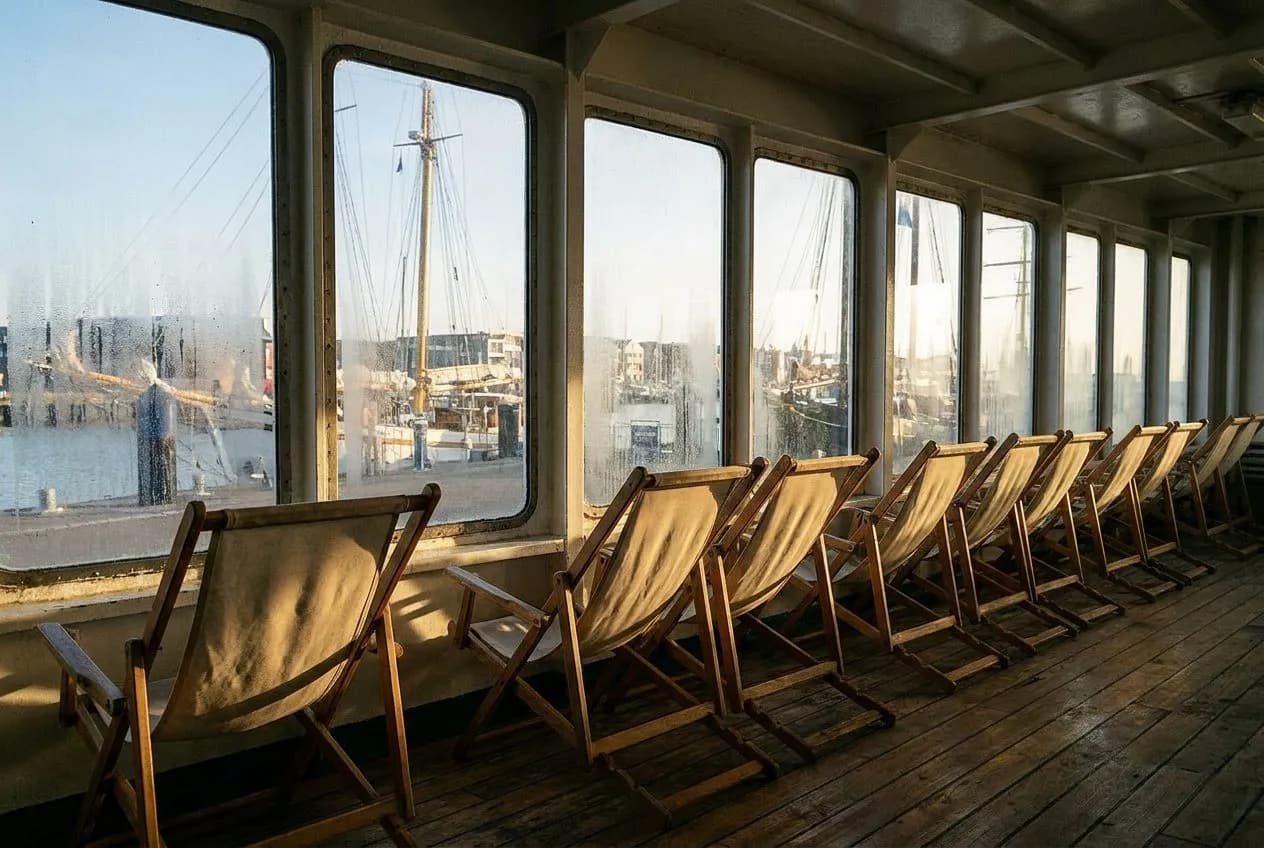
The ferry itself is utilitarian: wide, stable, built for volume. But at this hour, ridership is sparse—early commuters claim window seats inside, leaving the outdoor decks nearly empty. The engines thrum low and steady. The air smells of diesel and salt, cut by the occasional whiff of coffee from a fellow passenger's thermos.
Starboard Strategy for the Outbound Crossing
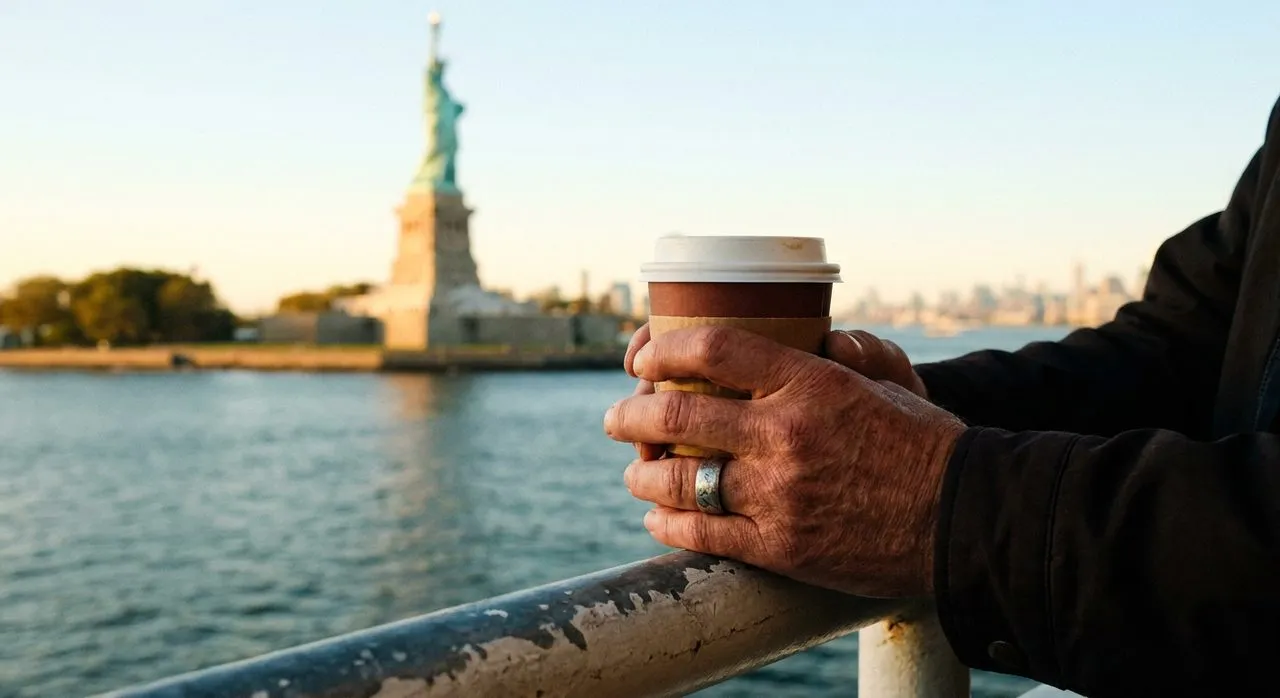
Positioning matters. The starboard—right-side—outdoor deck offers unobstructed eastern views during the outbound crossing, which is exactly where you want to be as the sun lifts over Brooklyn and the Rockaways. The port side provides better Statue of Liberty angles during the return, so save that shift for the way back. This isn't about Instagram geometry; it's about not spending twenty minutes craning around deckhouse walls and life-preserver racks.
Dress for wind. Even on still mornings, the ferry's forward motion generates a persistent breeze, and the temperature on the water runs five to ten degrees cooler than street level. Layering is non-negotiable in October and November—fleece under a windbreaker, gloves if you're prone to cold hands, a hat that won't blow off. The outdoor decks have minimal shelter, and once you claim your spot, you'll want to stay put.
The light shifts faster than you expect. What begins as a pale wash along the horizon intensifies within minutes, throwing long shadows across the water and illuminating the wake in ribbons of amber and pewter. Governors Island slides past to starboard, low and green. Liberty Island emerges to port, the statue's torch catching the first direct rays. The harbor feels enormous and intimate at once.
The Turnaround Problem and Coffee Logistics
The St. George Terminal has waiting areas and amenities available before 7:30am, a fact that catches many first-timers off guard. Passengers planning a turnaround should bring provisions or check the current Staten Island Ferry schedule for the next return departure, which means either standing in the terminal's functional but cheerless waiting area or heading straight back onto the ferry if it's the same vessel making the return trip.
This is where a good thermos earns its keep. Pack coffee or tea before you leave Manhattan—something hot, something you actually want to drink. A pastry or breakfast sandwich helps, too, though the goal is fuel, not ceremony. The return crossing offers its own rewards (that port-side Statue of Liberty angle, softer light on the Manhattan skyline), but you'll appreciate them more if you're not shivering and undercaffeinated.
Some regulars treat the ferry as a mobile breakfast nook, spreading out a napkin on the outdoor bench seating and settling in for the round trip. It's a reasonable approach—the entire experience, dock to dock and back, runs about fifty minutes, and there are worse ways to spend an early autumn morning than watching the city wake up from the water.
What the Light Does to the Architecture
Sunrise from the harbor reveals the Manhattan skyline as a study in angles and glass. The financial district's towers catch the light first, their facades shifting from gray to gold in the span of a few minutes. One World Trade Center stands tallest, its spire glowing like a beacon. The older buildings—stone and brick survivors from another century—take on a warmer cast, their details suddenly legible in the low, raking light.
This is not the postcard view from Brooklyn Bridge Park or the tourist vantage from the Empire State Building. It's a working waterway at the hour when the city is still rubbing sleep from its eyes. Tugboats churn past, container ships inch toward port, gulls wheel and cry overhead. The ferry is just one more piece of infrastructure doing its job, which is precisely what makes the beauty feel earned rather than staged.
Why Fall, Why Now
Autumn offers the ideal conditions: sunrise times that align with the ferry schedule, cooler temperatures that keep the decks from crowding, and air clarity that sharpens every sightline. Summer's haze and winter's bitter wind both diminish the experience. Spring comes close, but the sunrise arrives too early for the same synchronization.
The 2026 fall season will follow the usual patterns—daylight saving time ends in early November, which shifts the sunrise window but doesn't eliminate it. The ferry runs year-round, 24 hours a day, every day, which means this experience is always available to those willing to set an alarm. But there's something about October and early November that makes the effort feel less like discipline and more like ritual.
It's also worth noting that this remains one of the city's most democratic experiences. No reservations, no tickets, no velvet rope. Just the ferry schedule, your willingness to wake early, and a decent sense of where to stand. In a city guide increasingly dominated by paywalled access and insider tips that require insider budgets, the 6:40am Staten Island Ferry crossing feels like a stubborn holdout—a reminder that some of the best views still cost nothing.
Practical Notes
The Whitehall Terminal is located at 4 Whitehall Street in Lower Manhattan, accessible via the 1 train to South Ferry, the R/W to Whitehall Street, or the 4/5 to Bowling Green area. The ferry runs 24/7 with frequent departures; confirm the current weekday schedule online, as weekend and holiday timing may vary. The crossing is free, wheelchair-accessible, and takes approximately 25 minutes each way. Bring layers, a thermos, and a charged phone if you plan to photograph. Bathrooms are available on board. No reservations required—just show up and board.
Tags: #StatenIslandFerry #RightOnTime #NYCCityGuide #SunriseCrossing #NewYorkHarbor #FreeThingsToDo #AutumnInNYC #WhitehallTerminal #LowerManhattan #NYCTransit #FallTravel #GoldenHour #CityExploration #NYCInsider #HarborViews
Sources consulted: Staten Island Ferry · Official Staten Island Ferry Schedule · New York Times: Staten Island Ferry · Whitehall Terminal · NYC DOT: Staten Island Ferry
All trademarks are the property of their respective owners.