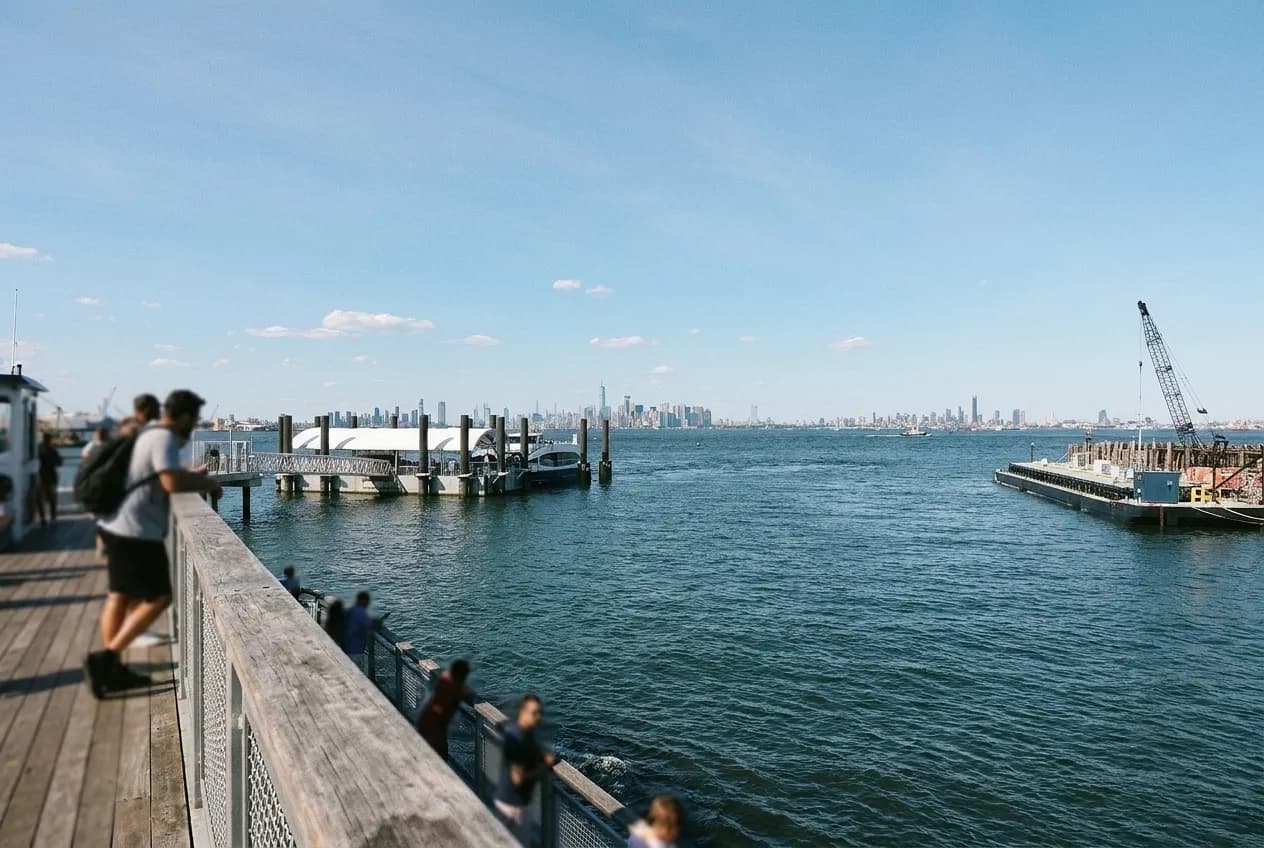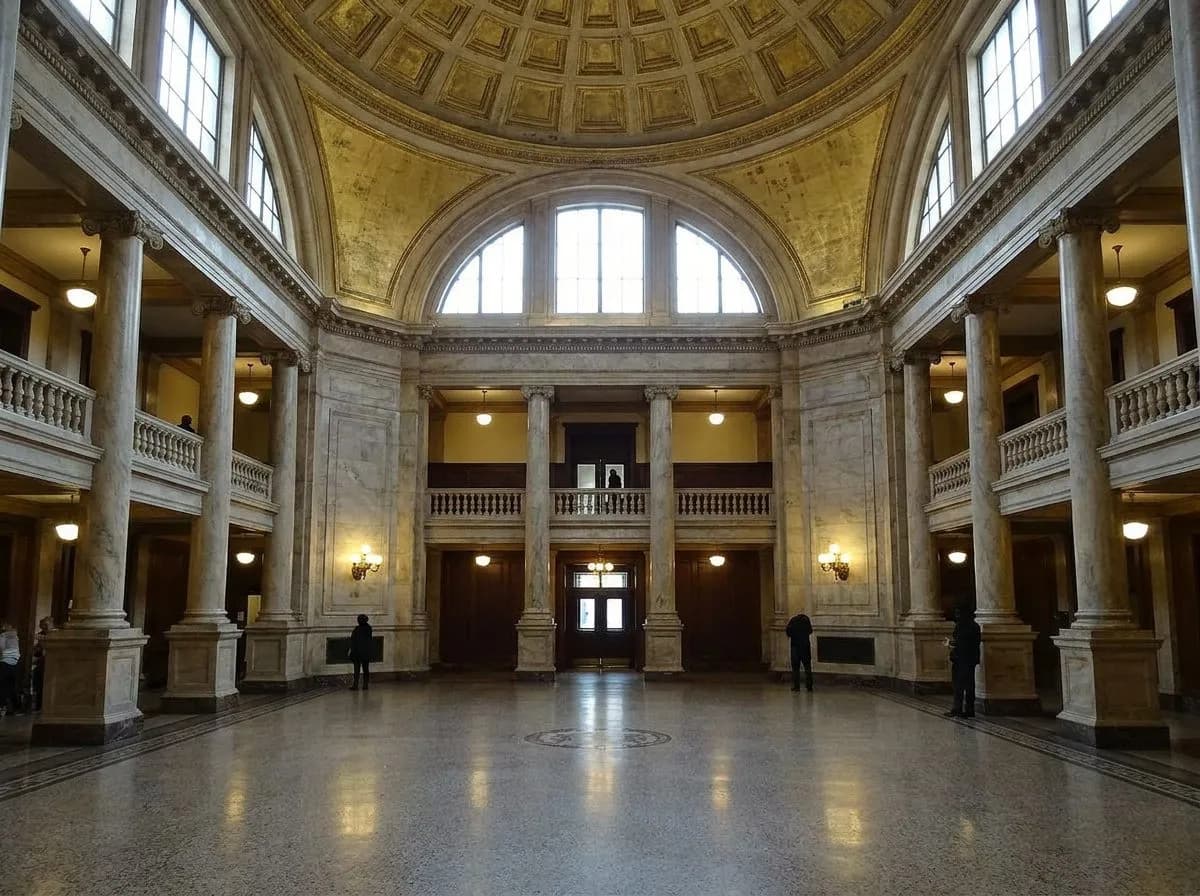
Most people exit the Staten Island ferry, glance at the skyline, and board the return boat within twenty minutes. A small fraction walk the waterfront. Almost no one pushes through the doors at 10 Richmond Terrace—four hundred feet from the terminal—to stand beneath one of New York's most serene civic spaces. The Staten Island Borough Hall rotunda, completed in 1909, is a two-story volume of Tuckahoe marble columns, coffered ceilings touched with gold leaf, and silence so complete you can hear your own footsteps echo. It is free, open to the public on weekdays, and magnificently undervisited.
French Renaissance on the North Shore
The building was designed by John Carrère and Thomas Hastings, the firm behind the New York Public Library's main branch. The exterior is Beaux-Arts restraint: red brick, limestone trim, a central clock tower. But the rotunda unfolds with theatrical confidence. Twin staircases curve upward. Marble pilasters frame each bay. Light pours through tall arched windows, softening against cream-colored walls.
A 2007 restoration brought back the original palette and repaired the plasterwork, but the space retains an analog grandeur untouched by renovation fatigue. There are no velvet ropes, no docents, no audio guides. You simply walk in. This is civic architecture tourism at its most elemental: a public building, open during business hours, asking nothing but a few minutes of attention. The restoration team worked carefully to preserve original details while addressing decades of deferred maintenance, revealing paint layers and architectural flourishes that had been obscured by time.
The Lunchtime Window
The building is open weekdays from nine in the morning until five, and the rotunda is accessible without a security check—you walk straight through the main doors into the marble hall. The quietest window is between twelve-thirty and one-thirty in the afternoon, when municipal staff step out for lunch. The usual shuffle of permit-seekers and meeting attendees thins. The echo becomes your own.
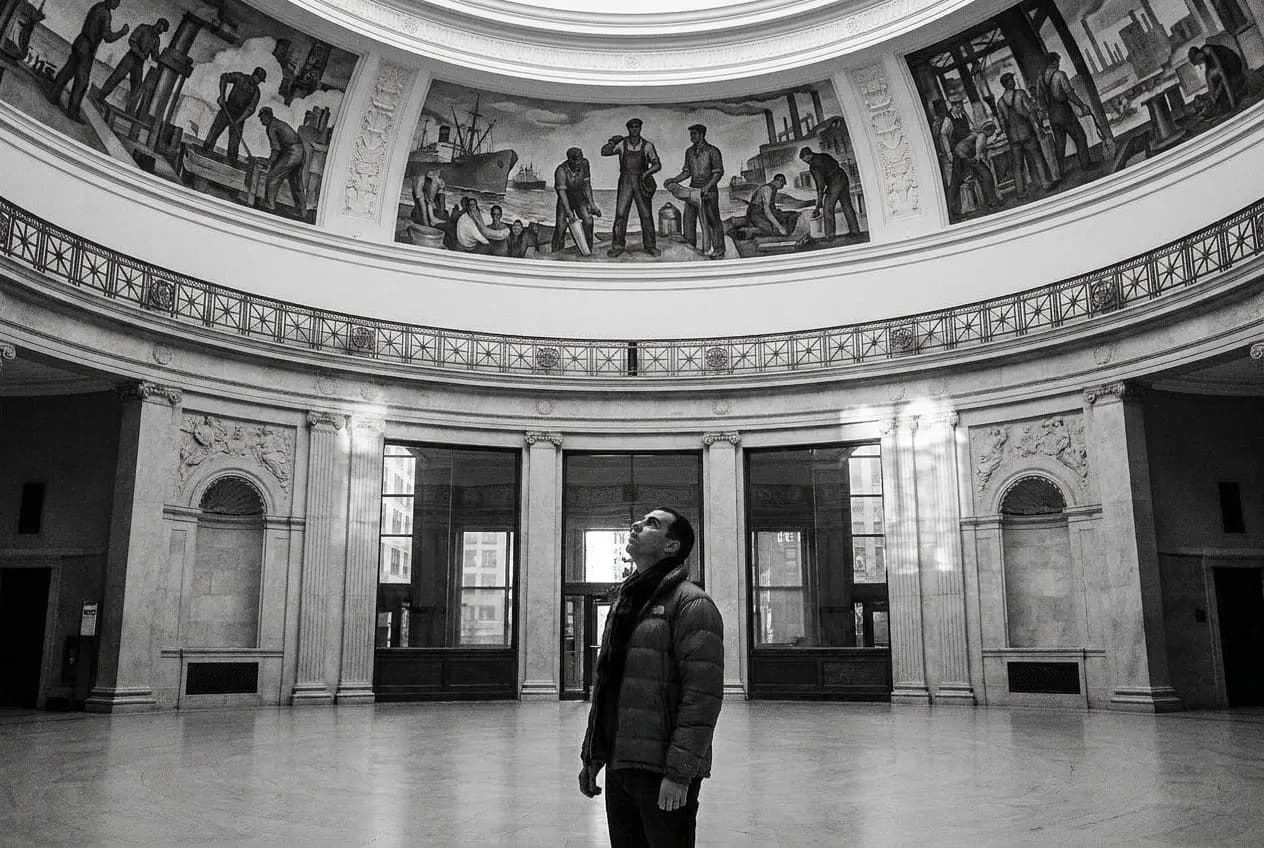
On a warm afternoon in late summer 2026, the silence is almost liturgical. Sunlight cuts across the upper mezzanine. A single visitor stands at the center of the rotunda, head tilted back, counting coffers. No one hurries you. No closing bell rings. This is the opposite of the ferry's controlled chaos—a pocket of stillness so rare in New York that it feels almost contraband. The occasional clerk crosses the hall with a folder, footsteps briefly interrupting the quiet before fading into a side corridor, leaving you alone again with the marble and the light.
The WPA Murals Upstairs
Climb the curved staircase to the second-floor mezzanine and look up. The murals were completed in the 1930s by Frederick Charles Stahr, a Works Progress Administration artist whose palette leaned toward muscular realism. The panels depict Staten Island's industrial past: oyster harvesters bent over tidal flats, shipyard workers riveting steel hulls, the maritime trades that once defined the island's economy.
The colors have softened over nine decades, but the compositions remain sharp. Stahr painted with a sense of civic duty—the murals were commissioned to dignify labor and connect the borough's government to its working-class roots. Today, in an era when free municipal buildings often feel anonymous or neglected, the murals anchor the rotunda with narrative weight. They remind you that this is not just a pretty room. It is a repository of local identity, rendered in egg tempera and plaster.
What You'll Hear (and Smell)
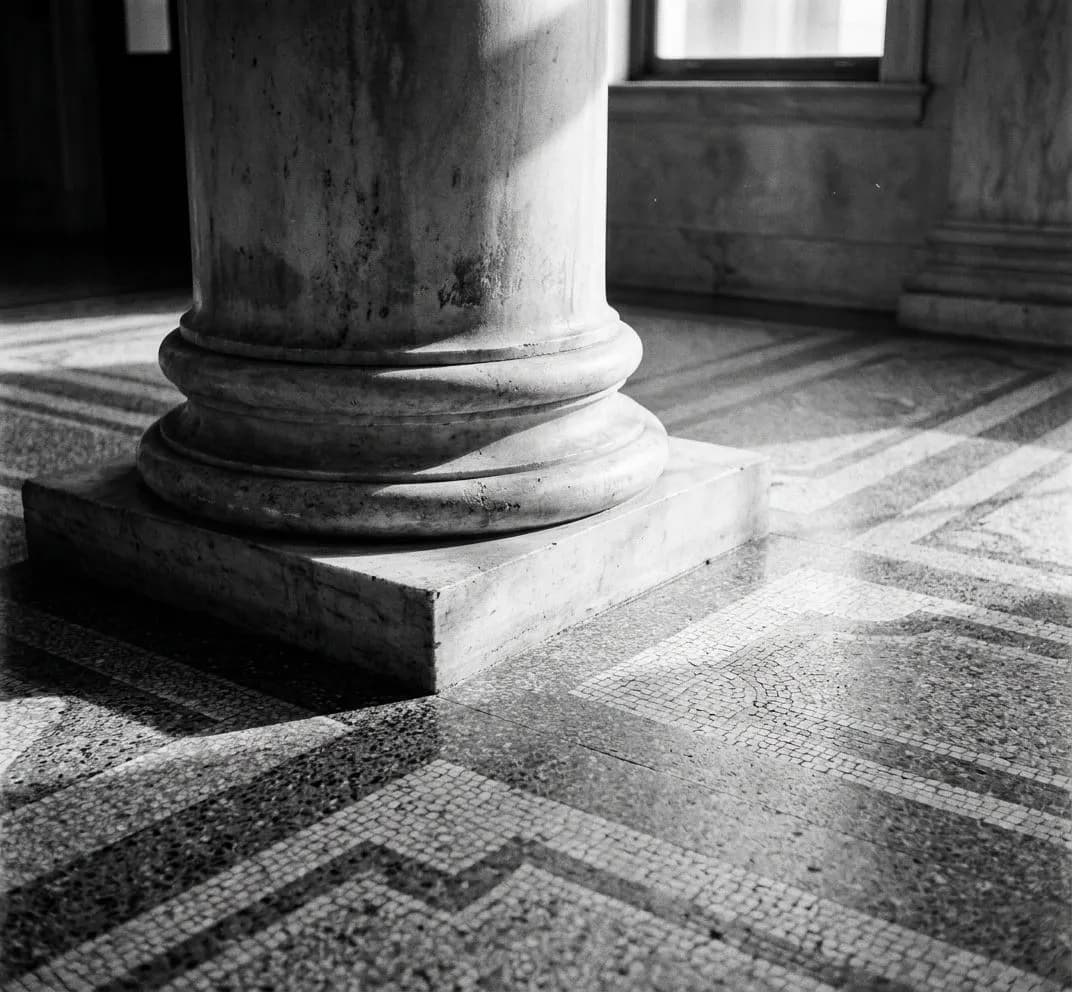
The dominant sense is auditory. Your footsteps tap against marble. A distant phone rings in an office corridor. The air is cool, faintly institutional—no lavender diffusers here—but clean. In summer, the contrast between the rotunda's stone chill and the humid harbor air outside is immediate and clarifying.
Stand still long enough and you begin to notice the layering: the hum of ventilation, the creak of a staircase tread, the soft rumble of the ferry horn drifting through an open window. It is not silence, exactly, but the absence of crowd noise. For a building this close to a major transit hub, that absence feels like a curatorial choice.
The Neighborhood Context: St. George as Civic Center
Borough Hall anchors St. George, Staten Island's administrative and transportation hub. The neighborhood clusters around the ferry terminal with a functional density uncommon elsewhere on the island: courthouses, municipal offices, the Richmond County Bank Ballpark where the minor-league FerryHawks play. It's a weekday neighborhood, busiest during business hours, quieter on weekends when the government buildings close and commuters stay home.
Walk west from Borough Hall along Richmond Terrace and the streetscape toggles between civic grandeur and shoreline pragmatism. You'll pass the 120-year-old Richmond County Courthouse, another Carrère and Hastings commission with similar Beaux-Arts detailing, then a bus depot, then patches of green where the waterfront opens up. The neighborhood lacks the residential polish of brownstone Brooklyn or the commercial shimmer of downtown Manhattan, but that workday plainness is part of its appeal. St. George operates without pretense, a place built for function that happens to contain pockets of surprising beauty. Borough Hall is one of those pockets—a French Renaissance jewel set in a landscape of pragmatic municipal infrastructure.
The South Exit to the Waterfront
Most visitors enter through the front doors facing Richmond Terrace. Few discover the south exit. Push through those doors and you step onto a walkway that leads directly to the Postcards 9/11 Memorial on the waterfront—a two-minute walk that almost no ferry riders take. The memorial, designed by Masayuki Sono, consists of two steel wings that frame the lower Manhattan skyline. On a clear day, the sight line is unobstructed.
The sequence—rotunda, exit, memorial, harbor view—creates a tight loop of civic reflection. You can complete the entire arc in under fifteen minutes, or linger on a bench and watch the ferries shuttle back and forth. Either way, the south exit transforms the visit from a building tour into a small urban pilgrimage.
Why It Stays Empty
Staten Island has long been New York's most overlooked borough, and Borough Hall shares that invisibility. It does not appear on most tourist maps. It lacks the High Line's branding or the Oculus's Instagram magnetism. The ferry itself—free, iconic—cannibalizes attention; most riders treat the round trip as the entire experience.
But that neglect is also the rotunda's advantage. You will never wait in line. You will never jostle for a photograph. The space retains the unhurried dignity of a building that serves a function beyond spectacle. If you are curious about civic architecture and unbothered by a short detour, this is one of the most generous exchanges in the city: five minutes, zero dollars, a room full of marble and light.
Practical notes
Staten Island Borough Hall is at 10 Richmond Terrace, a short walk west from the Staten Island Ferry terminal. The rotunda is open weekdays, typically 9 a.m. to 5 p.m., but confirm hours before traveling. No admission fee. The space is accessible; elevators serve the upper mezzanine. Bring a phone or camera for the murals and coffered ceilings. The south exit leads directly to the Postcards 9/11 Memorial. Allow fifteen to thirty minutes for a relaxed visit. Nearest return transit: Staten Island Ferry.
Tags: #StatenIsland #BoroughHall #CivicArchitecture #FreeAndFine #NYCHiddenGems #RotundaArchitecture #WPAMurals #FerryDetour #QuietNYC #BeauxArts #MunicipalBuildings #NYCInteriors #UrbanExploration #SummerInTheCity #UndiscoveredNYC
Sources consulted: Staten Island Borough Hall - Wikipedia · NYC Landmarks Preservation · Staten Island Ferry Official Site · French Renaissance Architecture - Wikipedia · Time Out New York
All trademarks are the property of their respective owners.