When spectrum outages disrupt your home internet in Los Angeles, the immediate question shifts from "when will service return?" to "where can I stream right now?" For residents who rely on cable connectivity for work calls, live sports, or evening entertainment, an outage transforms your smartphone into a critical navigation tool. Los Angeles maintains an extensive network of free public WiFi across libraries, parks, recreation centers, and transit hubs, but these access points vary dramatically in bandwidth capacity, device limits, seating availability, and whether you can simply walk in or need advance registration. This guide prioritizes the decision factors that matter during an active outage: which locations support video streaming rather than just email, which stay open past typical work hours, and how to verify signal strength before you arrive.
Text Karpo your starting point, timing, group size, and priorities for a Los Angeles plan tailored to this exact situation, with one realistic backup before you leave.

Library WiFi Networks: Bandwidth Capacity Versus Device Competition
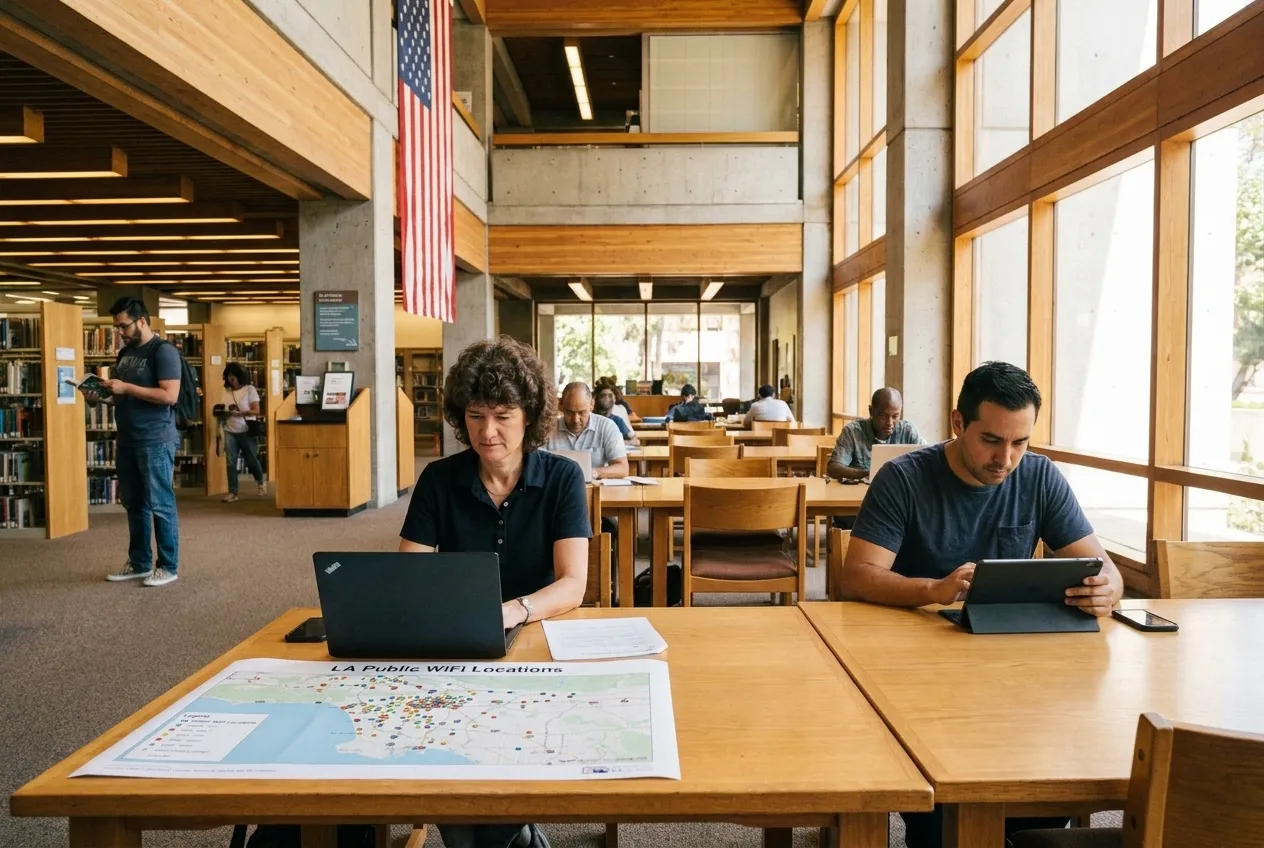
Los Angeles Public Library branches offer free WiFi without library card requirements, making them the most accessible first option during an outage. However, bandwidth performance depends heavily on time of day and branch size—a Central Library connection during midday may support HD streaming across dozens of simultaneous users, while a neighborhood branch at 4 PM when students arrive may struggle with basic web browsing. Most branches do not enforce session time limits on WiFi-only visitors, but seating policies vary; some locations require you to vacate tables after two hours if others are waiting, while others permit all-day stays as long as you remain quiet.
The tradeoff for library connectivity centers on predictability versus convenience. Branches near residential areas fill quickly after school and during weekend afternoons, creating competition for both electrical outlets and stable signal zones (typically strongest near circulation desks and weakest in back study rooms). If your outage occurs during morning hours on weekdays, libraries offer the most reliable streaming experience. Evening options narrow significantly, as most branches close by 8 PM on weekdays and 6 PM on Saturdays, with many closed entirely on Sundays. Verify specific branch hours before traveling, as schedules shift seasonally and some locations maintain reduced service days.
Metro Station WiFi: Transit-Dependent Streaming With Movement Constraints
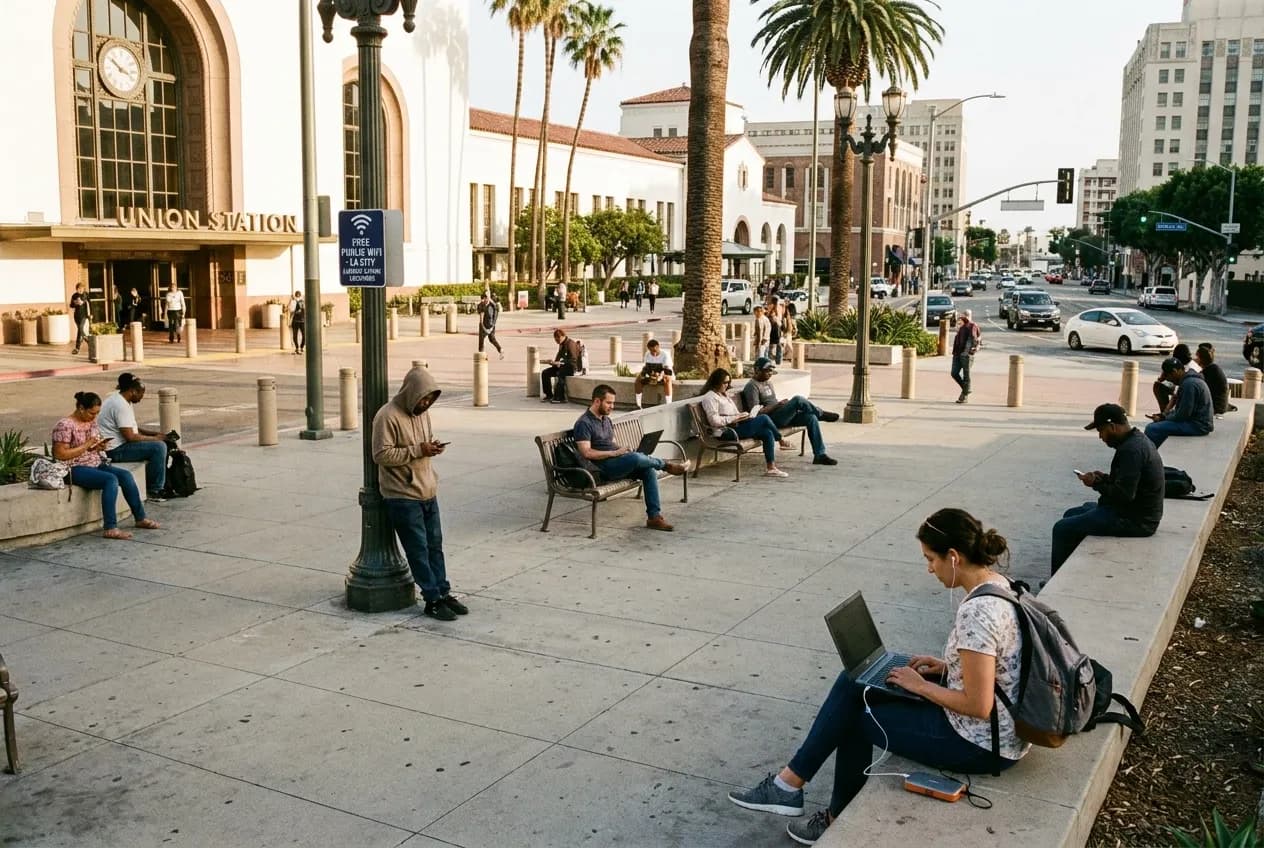
LA Metro provides free WiFi at all rail stations and on many bus lines, creating a mobile backup option for residents willing to ride while streaming. According to Metro's official guidance, the network supports real-time trip planning and mobile app usage, though bandwidth allocation prioritizes transit information over entertainment streaming. Station WiFi performs best on outdoor platforms where fewer physical barriers interfere with signal distribution, while underground Red and Purple Line stations experience more variable connectivity as trains arrive and depart. The system does not require registration or personal information—simply select the "Metro Free WiFi" network and accept terms of service.
The primary limitation involves movement and environment. If you board a bus or train to maintain connectivity, you'll need earbuds or headphones to comply with courtesy policies, and you cannot expect uninterrupted streaming through tunnels or between coverage zones. Metro stations themselves offer limited seating designed for short waiting periods rather than extended stays, and security personnel may ask non-traveling visitors to move along during peak commute hours. This option works best for residents who already planned to travel or who live near major transit hubs like Union Station, where indoor waiting areas provide climate-controlled seating and consistent signal strength. Check real-time service alerts before relying on a specific station, as maintenance work occasionally disables WiFi access.
Recreation Center Access: Reservation Systems and Operating Hour Gaps
Los Angeles Department of Recreation and Parks operates community centers across the city, many equipped with public WiFi intended for program participants but generally available to walk-in visitors during open hours. Unlike libraries, recreation centers prioritize scheduled activities—youth sports leagues, senior fitness classes, after-school programs—which means WiFi access depends on facility calendars and staff discretion. Some centers welcome quiet visitors to sit in lobbies or outdoor covered areas while using WiFi, while others restrict access to enrolled program participants only. Calling ahead to confirm guest WiFi policies saves wasted travel time.
Operating hours present the biggest obstacle for outage response. Many recreation centers close entirely on Sundays and Mondays, operate limited morning-only or afternoon-only schedules on other weekdays, and may shut down for private rentals without advance public notice. The facilities that do offer evening hours typically close by 9 PM, and outdoor WiFi coverage rarely extends beyond building perimeters into adjacent park spaces. For residents experiencing overnight or early-morning outages, recreation centers provide no solution. The advantage emerges for daytime outages when you need a quieter, less crowded alternative to libraries—particularly mid-morning on Tuesdays through Thursdays when program schedules leave gaps in facility use.

Park WiFi Pilot Zones: Outdoor Streaming With Weather and Safety Variables
Select Los Angeles parks have installed WiFi infrastructure as part of digital equity initiatives, though coverage maps and service quality remain inconsistent across locations. These outdoor networks excel during mild weather and daylight hours but introduce variables absent from indoor venues: direct sun exposure that makes phone screens difficult to read, limited or nonexistent electrical outlet access for device charging, and safety considerations after dark in parks without consistent lighting or foot traffic. When outdoor WiFi works well, it offers the most flexible environment—you can take phone calls without disturbing others, move freely to find optimal signal zones, and avoid the enclosed-space discomfort of crowded indoor facilities during summer heat.
Verifying which parks currently maintain active WiFi requires checking for on-site signage or testing network availability when you arrive, as official documentation does not provide comprehensive coverage lists. Parks near community centers or library branches sometimes share network infrastructure, extending indoor signals to nearby benches and picnic areas. Weather interruptions pose the most significant risk—even a brief afternoon rainstorm forces you to relocate, and August heat in Los Angeles can make extended outdoor phone use uncomfortable between 11 AM and 5 PM. This option suits residents who prefer open-air environments and whose outage occurs during morning or late afternoon hours when temperatures moderate. Bring portable battery packs, as outlet access in parks is rare outside of specific pavilion structures.
Verification Steps Before You Leave: Signal Testing and Backup Planning
Before committing to travel during an outage, confirm that your target location currently offers working WiFi by calling the facility directly or checking recent visitor reports through community forums and neighborhood social media groups. Public WiFi networks experience their own technical failures, scheduled maintenance windows, and equipment upgrades that temporarily disable service without public announcement. If you're planning to stream a specific live event or timed work meeting, build in 20-30 minutes of arrival buffer to test connection speed, identify the strongest signal zone within the facility, and troubleshoot any device authentication issues before your critical window begins.
Develop a secondary backup location within reasonable travel distance of your first choice, particularly if your outage occurs during high-demand hours when facilities fill quickly. Residents without personal vehicles should prioritize locations accessible via Metro routes that maintain frequent service, as relying on infrequent bus connections during an outage adds frustration to an already disruptive situation. Consider the total time investment: a library 15 minutes away by car may require 45 minutes via public transit, and if that location proves too crowded or experiences its own connectivity problems, you'll need additional travel time to reach an alternative. For outages projected to last multiple hours, the most practical approach combines a nearby café or restaurant with paid WiFi (purchasing a drink to justify extended stay) as your primary destination, reserving free public options for longer disruptions where cost becomes a factor.
Tags: #FreeWiFiLosAngeles #Spectrumoutagebackup #LApublicinternetaccess #streamingduringoutages #MetroWiFi #LAlibraryWiFi #freeconnectivityLA #publichotspotsLosAngeles #internetbackupoptions #cableoutagesolutions
Sources consulted: Source 1: laparks.org · Source 2: metro.net · Source 3: discoverlosangeles.com · Source 4: lacity.gov
All trademarks are the property of their respective owners.
Ask Karpo first
Ask Karpo to turn this Los Angeles idea into a current plan for your date, budget, companion, transit preference, and energy level. Karpo can narrow the route and flag what to verify before you go.


