 Haaland Has Seven Goals and Norway Runs Entirely Through Him
⚽️2026 FIFA WORLD CUP
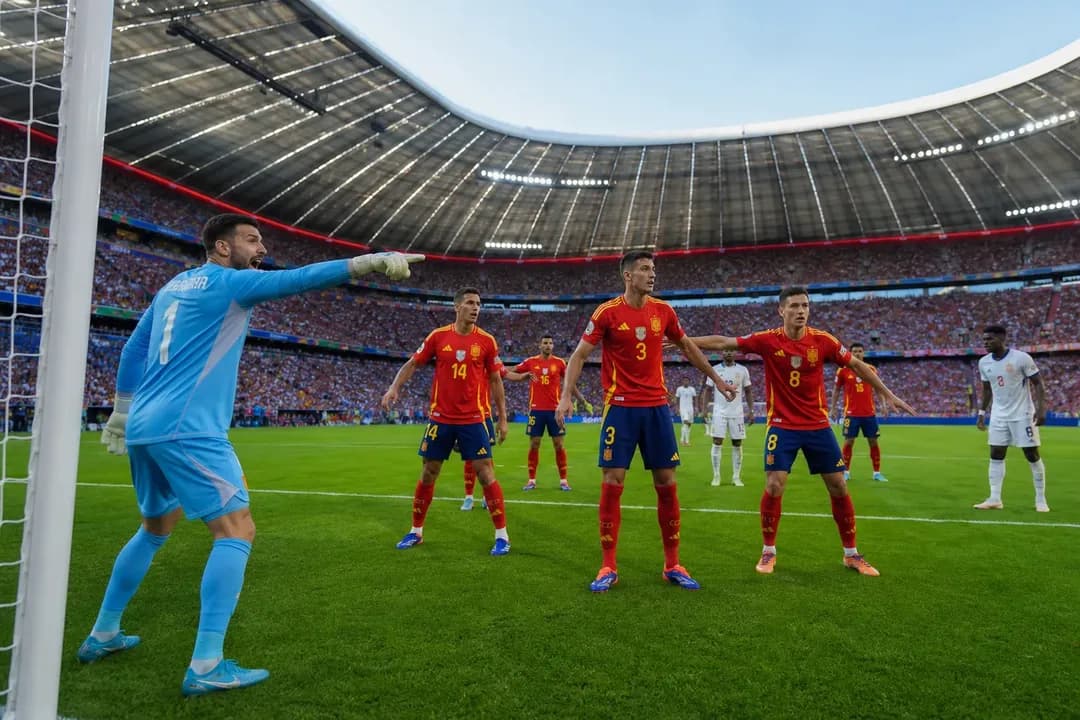
Spain’s Clean Sheet Blueprint Against France in the Semifinal
Spain’s 2-0 semifinal win was built as much on collective protection as on the two goals. A sixth clean sheet in seven tournament matches shows how spacing, pressure, and calm possession carried Spain into the final.
Spain’s 2-0 semifinal victory over France delivered another clean sheet and a place in the 2026 World Cup final. Associated Press reported that it was Spain’s sixth shutout in seven matches, a pattern too consistent to dismiss as luck. France had elite attacking talent, including Kylian Mbappé, but Spain repeatedly prevented the match from becoming a sequence of open-field sprints. The defensive blueprint began with the distances between players, continued with pressure on the next pass, and ended with composed decisions around the penalty area.
Want a tactical recap that skips the noise? Text Karpo the team or player you follow. Karpo can send a personal match brief and build your final-day viewing or stadium plan around the details you care about.
A clean sheet created by the whole team
A shutout is recorded beside the goalkeeper’s name, but it is rarely produced by the goalkeeper alone. Spain’s first defenders were the players closest to France’s buildup. Their job was not always to win the ball immediately. Often, the more useful action was to angle the next pass toward a predictable area, slow the receiver, and give the rest of the team time to recover its shape.
That collective approach matters against France because one poorly controlled transition can expose large spaces. Spain reduced those moments by keeping the team connected. When possession was lost, nearby players could pressure the ball while deeper teammates protected central routes. The result was fewer isolated races and fewer situations in which one defender had to solve the entire attack alone. Another useful detail is the direction of Spain’s clearances and recoveries. Sending the ball toward the touchline or a supported teammate reduced the chance of an immediate second attack, while central, uncontrolled clearances would have returned possession in the most dangerous zone.
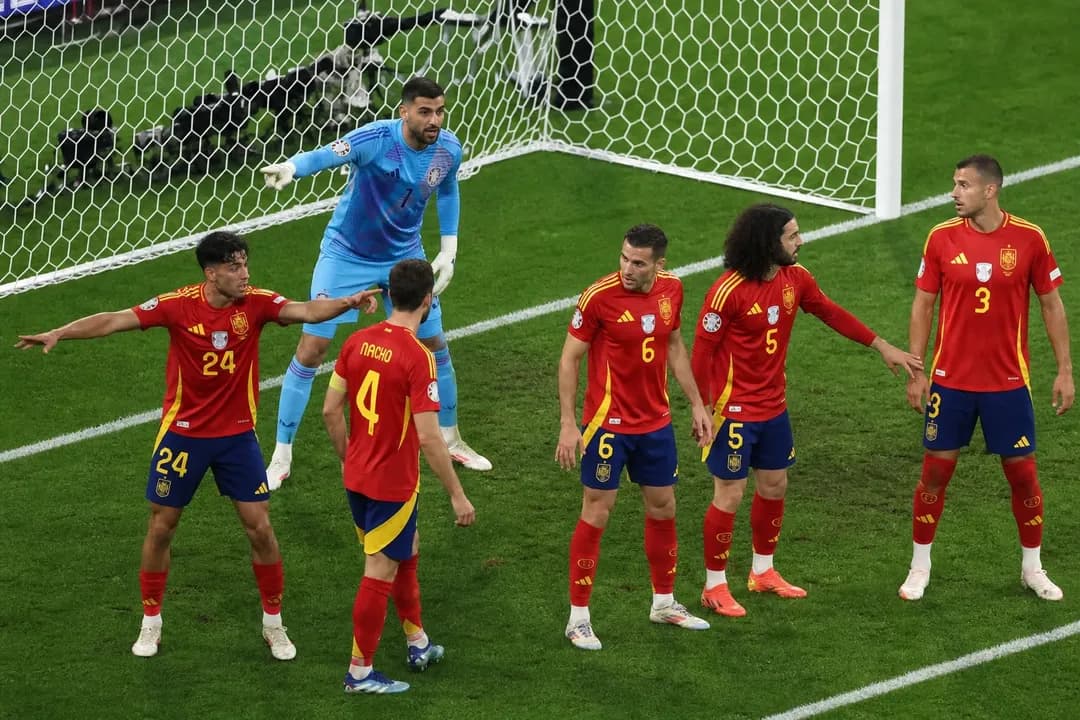
Compact distances protected the center
The most dangerous zone against a fast, technical attack is often the space between midfield and defense. If that gap grows, a forward can receive facing goal and choose between shooting, dribbling, or releasing a runner. Spain’s priority was to keep that pocket crowded. The back line and midfield moved as related units rather than two separate groups.
Compactness does not mean standing permanently near the penalty spot. It means adjusting together. When Spain pressed higher, defenders stepped closer to midfield. When France advanced, the midfield recovered close enough to block return passes and second balls. The structure made France work through several layers instead of attacking one exposed line. Set pieces also test collective concentration because normal marking references disappear during the restart. Spain needed clear assignments, strong first contact, and players ready for the second ball. Those details rarely dominate highlights, yet one loose rebound can undo eighty minutes of disciplined open-play defending.
Pressure without losing the escape route
Spain also needed an attacking outlet after regaining possession. Clearing every ball would have invited France to begin another attack immediately. A short pass into midfield, a switch toward the far side, or a controlled carry could move the contest away from Spain’s goal and force France to retreat. Defensive security and possession were therefore part of the same plan.
This became more important after Spain went ahead. With a lead, the temptation is to protect the box with more bodies and surrender territory. Spain instead tried to keep enough control to choose when the game accelerated. Each successful possession removed pressure, shortened the remaining time, and reminded France that committing extra players forward carried a cost. The final checkpoint is communication after substitutions. Fresh players enter with energy but without the rhythm of the match, so nearby teammates must quickly clarify who presses, who covers, and who tracks the runner. Maintaining the same distances after personnel changes is part of protecting a clean sheet.
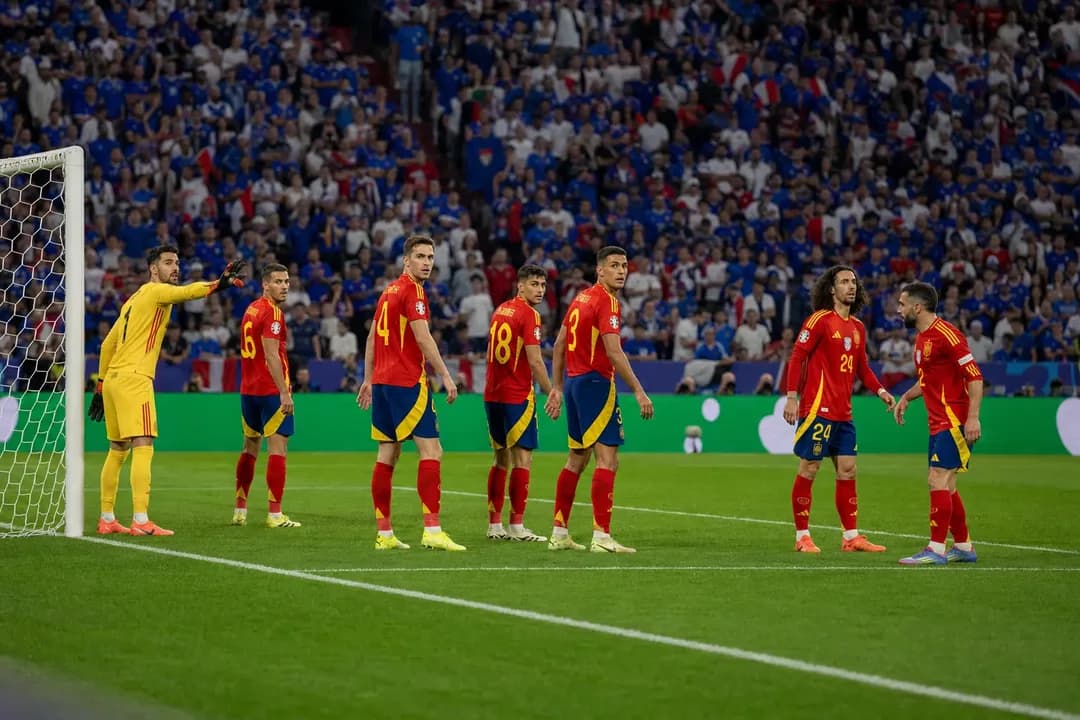
Fullbacks balanced width and recovery
Spain’s wide defenders had a difficult dual assignment. They needed to support possession and stop France from settling into comfortable pressure, but they also had to respect the space available to French attackers near the touchlines. Advancing at the wrong moment could leave a direct route behind them; staying too deep could disconnect Spain’s buildup.
The solution was coordination. A fullback could step forward when midfield cover was present and the ball was secure. If the attack broke down, the nearest players delayed France while the back line reorganized. This type of shared responsibility is why defensive analysis should look beyond individual tackles. The positioning before the duel often determines whether the duel is manageable.
Calm decisions around the penalty area
Late in a knockout match, defenders must manage crosses, rebounds, fouls, and emotional pressure. The leading team can create its own danger by diving into challenges or clearing the ball into central areas. Spain’s clean-sheet record suggests a group comfortable making ordinary decisions under extraordinary attention: hold the line, protect the inside lane, and choose safety without panic.
Unai Simón’s role extends beyond saves. Goalkeeper positioning helps defenders judge how aggressively they can cover a runner, while clear communication organizes the space behind the line. Exact event counts should come from official match data, but the outcome is unambiguous: Spain protected the 2-0 lead and completed another match without conceding.
What carries into the final
Spain will face England or Argentina on July 19 at New York New Jersey Stadium. The opponent will change the details, but the defensive principles remain useful. Spain need short distances after losing the ball, protection through the center, and enough possession to prevent the final from becoming a nonstop transition contest.
The semifinal is not a guarantee that the same structure will produce another clean sheet. A final introduces different movement, different set-piece threats, and different pressure. It does provide evidence that Spain can defend a lead without abandoning the ball. That balance may be the team’s most valuable asset in the championship match.
Tags: #WorldCup2026 #SpainDefense #CleanSheet #Semifinal #TacticalAnalysis
All trademarks are the property of their respective owners.
Ask Karpo First
Text Karpo with your final plans and the team you support. Karpo can combine a tactical briefing with a practical route, kickoff reminder, food stop, and backup viewing option.
Ask Karpo for more information.
Keep reading
- Haaland Has Seven Goals and Norway Runs Entirely Through Him
 World Cup Trophy Ceremony Timing Medals and Postmatch Celebrations
 Olise and France's Attack: The Semifinal Tactical Question