 Haaland Has Seven Goals and Norway Runs Entirely Through Him
⚽️2026 FIFA WORLD CUP
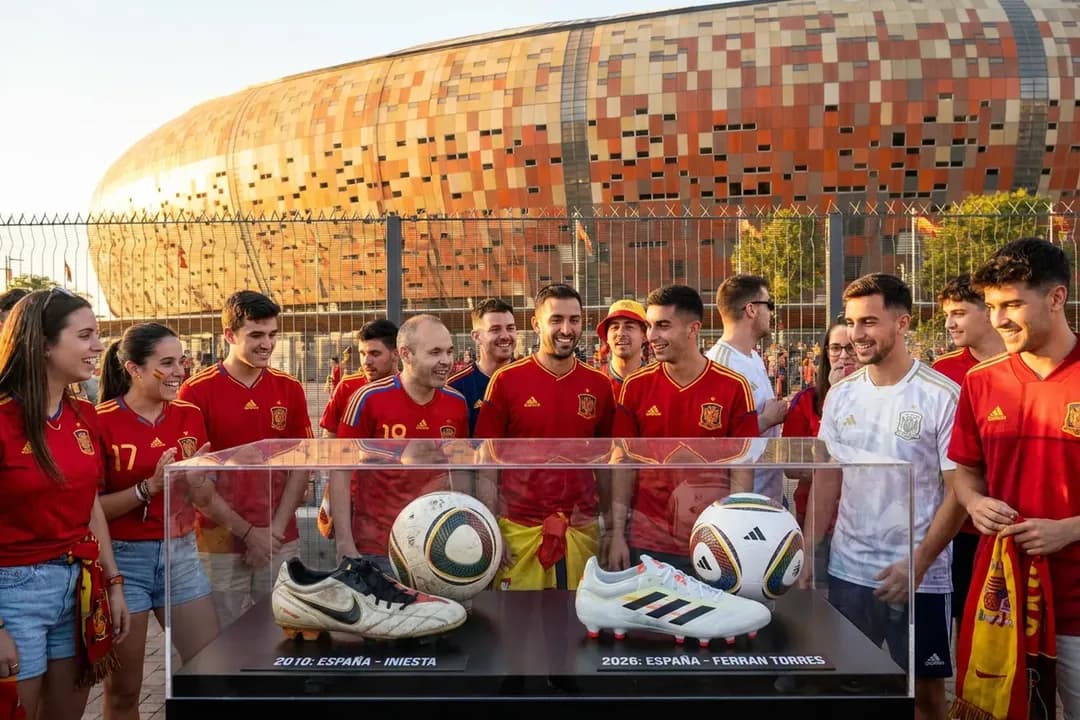
Spain’s Two World Cup Titles Came on Different Continents
Spain’s World Cup map now stretches from southern Africa to North America. The contrast between 2010 and 2026 shows how host geography can frame a champion’s story.
East Rutherford · New York City · North America — Spain’s second men’s World Cup title did more than add another star to the national team’s record. It placed the country’s two triumphs on separate continents, linking South Africa in 2010 with the New York-New Jersey area in 2026. That geography matters because World Cups are remembered not only by winners, but by the places that stage them. Spain’s first title came in Africa’s first men’s World Cup. Its second came in a North American tournament whose final was anchored just outside New York City.
Text Karpo with your city, group size, and match mood, and get a personalized final-recap plan for where to watch highlights, celebrate Spain’s win, find food nearby, or build a New York-New Jersey soccer day around the 2026 final.
Two Titles, Two Continental Backdrops
Spain’s men’s World Cup story now has a clear geographical split. The first title came in South Africa in 2010, while the second came in East Rutherford, New Jersey, in 2026. That makes the pair more than a simple championship list. It turns Spain’s record into a bridge between two very different host settings: one tournament remembered for bringing the men’s World Cup to Africa for the first time, and another final staged in the North American orbit of New York City.
The shared match detail is tidy but should not dominate the comparison: both finals ended 1-0 after extra time. The larger frame is where they happened. In 2010, Spain’s breakthrough was tied to a South African tournament that carried continental significance beyond one team. In 2026, Spain’s second title landed in East Rutherford, a New Jersey venue connected in global imagination to New York City and to a broader North American World Cup footprint.

Why South Africa 2010 Still Defines the First Star
South Africa 2010 remains central because it was not just Spain’s first men’s World Cup victory. It was also the first time the men’s tournament was hosted on the African continent. That context shaped the meaning of Spain’s breakthrough. The win belonged to Spain, but the stage belonged to a host country and continent carrying a historic role in the competition’s expansion. Any comparison with 2026 has to begin with that hosting milestone.
For Spain, the 2010 world cup final keyword often pulls searches toward the match result, but geography adds a deeper layer. The final placed Spain’s first title in a tournament remembered for broadening the World Cup’s host map. South Africa gave the championship a setting distinct from Europe and the Americas, and Spain’s name became attached to that moment. The country’s first star was therefore inseparable from a tournament that symbolized a new continental chapter.
East Rutherford and the New York-New Jersey Frame
Spain’s second title being won in East Rutherford gives the 2026 triumph a very different place identity. East Rutherford is in New Jersey, yet the final’s regional frame is strongly tied to the New York City area. That combination matters because global viewers often experience major finals through both the stadium location and the surrounding metropolitan name. Spain’s second World Cup title therefore sits in a cross-border regional story within the United States.
The New York-New Jersey setting also places Spain’s second title firmly in North America. Unlike the South African context of 2010, the 2026 final belongs to a host environment associated with one of the world’s most recognizable urban regions. Without needing to invent operational details or crowd scenes, the location alone is enough to mark a contrast. Spain’s two titles are now anchored by very different global references: South Africa and the New York metropolitan area.
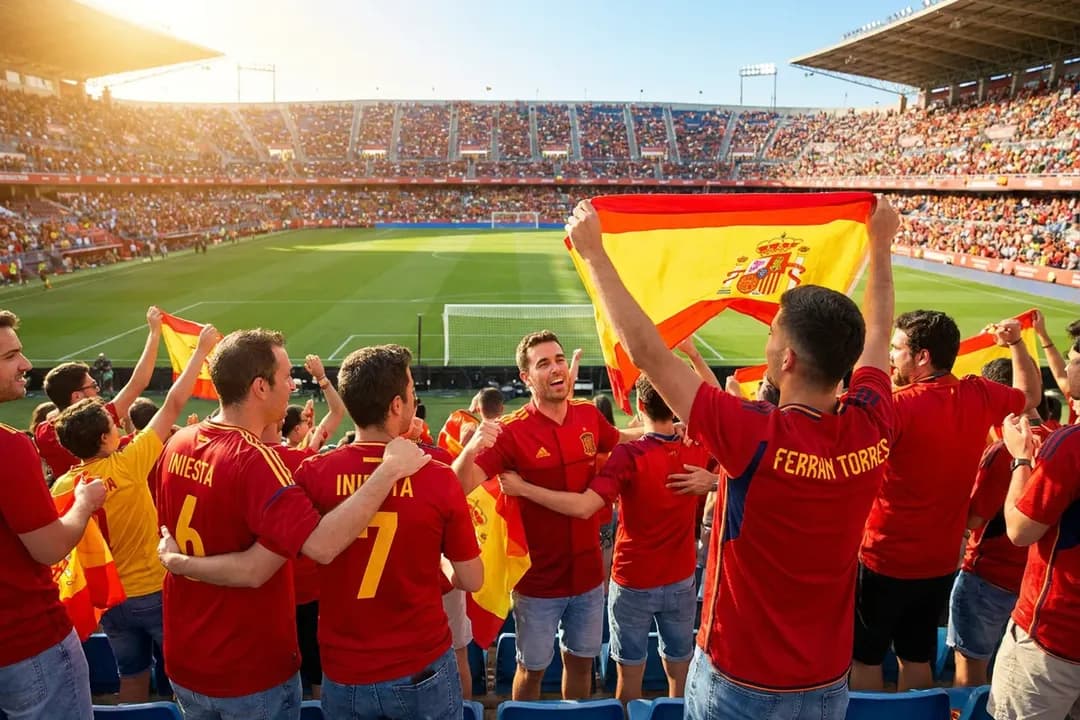
A Champion’s Record Written Across the Host Map
World Cup champions are usually listed by year, opponent, and score, but the host map can tell another story. Spain’s record is unusually clean for this kind of comparison because its first two men’s titles are separated by continent as well as by tournament. South Africa and East Rutherford are not interchangeable backdrops. They represent different phases in how the World Cup positions itself across the globe and how a champion becomes part of host-country memory.
That host-map reading avoids reducing Spain’s two wins to a waiting period or a single decisive moment. The titles can instead be viewed as landmarks in the tournament’s geography. The first belongs to the African staging of 2010. The second belongs to the North American staging of 2026, with the final in New Jersey beside New York City’s global profile. Spain’s achievement is sporting, but the locations give it an added historical outline.
From Africa’s First Men’s World Cup to a North American Final
The South Africa-to-New Jersey contrast shows how broad the World Cup’s modern geography has become. Spain’s first men’s title came during a tournament that carried African hosting significance. Its second came in a North American final environment centered on East Rutherford and the New York-New Jersey area. Those two points on the map tell a story of a competition that moves across continents while preserving a single prize, the World Cup trophy.
This is why the 2010 and 2026 titles can be compared without leaning on tactics, lineups, or invented match atmosphere. The confirmed facts already provide enough structure. Spain won in South Africa in 2010 and in East Rutherford, New Jersey, in 2026. Those host settings create a natural before-and-after in place terms. One title was tied to Africa’s first men’s World Cup; the other to a North American final beside New York City.
How Future Fans May Remember Spain’s Two Stars
Future references to Spain’s men’s World Cup titles may begin with years, but the locations will likely remain part of the shorthand. South Africa 2010 identifies the first star with a continental first for the tournament. East Rutherford 2026 identifies the second with a New York-New Jersey final in North America. Together, they give Spain a championship profile that is not confined to one region, one host tradition, or one familiar World Cup setting.
That makes Spain’s two-title story unusually geographic. The country’s men’s World Cup wins now sit on different continents and in different host-region narratives. The first is remembered through South Africa’s role in the tournament’s history. The second is attached to East Rutherford’s place in the 2026 final and the wider New York City regional frame. Spain’s record is now a map as much as a medal count, with both titles carrying a distinct sense of place.
Tags: #WorldCup2026
Sources consulted: FIFA World Cup champions history · Associated Press final report
All trademarks are the property of their respective owners.
Ask Karpo First
Ask Karpo for a custom Spain 2026 final recap, a New York-New Jersey celebration route, or a food-and-viewing plan built around where you are tonight.
Ask Karpo for more information.
Keep reading
- Haaland Has Seven Goals and Norway Runs Entirely Through Him
 World Cup Trophy Ceremony Timing Medals and Postmatch Celebrations
 Olise and France's Attack: The Semifinal Tactical Question