 Haaland Has Seven Goals and Norway Runs Entirely Through Him
⚽️2026 FIFA WORLD CUP
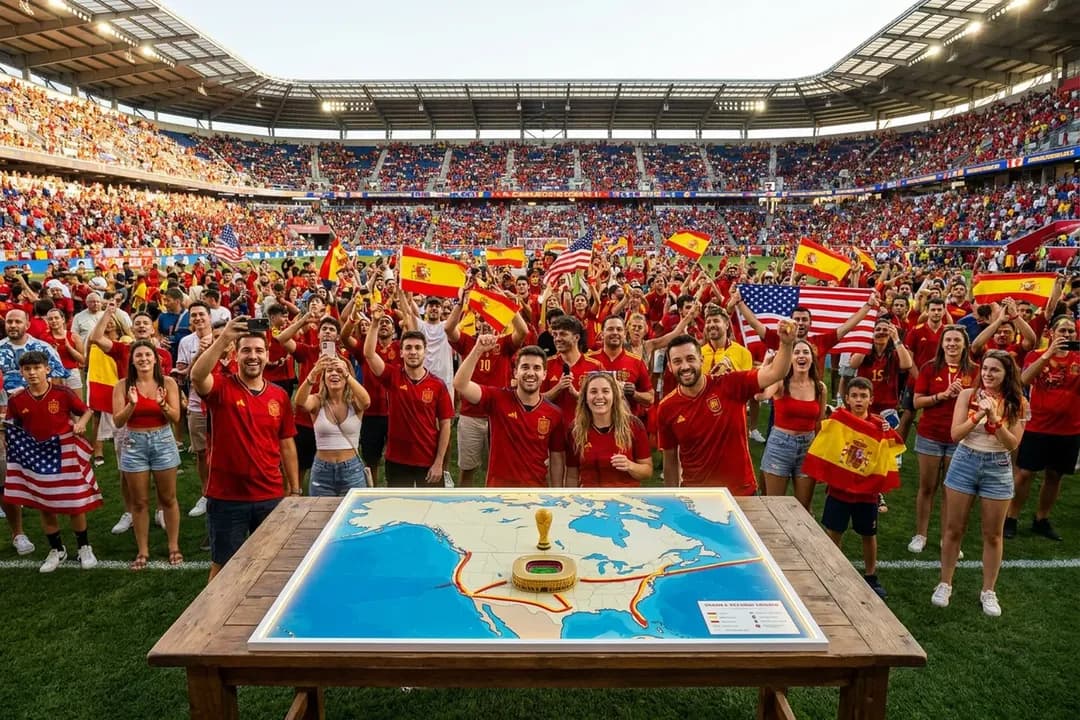
Spain Won Its Second Crown on North American Soil
Spain lifted its second men's World Cup title in East Rutherford, defeating Argentina 1-0 after extra time. The win connected a 2010 breakthrough in South Africa with a new championship chapter on North American soil.
Spain's second men's World Cup crown did not arrive in Madrid, Barcelona, or any of the country's old football strongholds. It came in East Rutherford, New Jersey, in the New York City region, where Spain beat Argentina 1-0 after extra time to add another title to the one it won in South Africa in 2010. That geography matters. A final staged on North American soil turned Spain's victory into more than a sporting result; it placed a European champion's next chapter inside a host region shaped by borders, migration, media, and global attention.
Text Karpo if you want a personalized final recap built around your city, your Spain or Argentina angle, and what to do next: where to watch highlights, how to plan a celebration meal, or how to turn the New York City region into a football-themed day.
A Spanish Title Written in the Meadowlands
East Rutherford is not New York City, yet it is inseparable from the metropolitan stage that helped define this final. The match belonged administratively to New Jersey, but culturally it sat inside the pull of the New York City region, a place accustomed to turning events into global reference points. Spain's 1-0 win over Argentina after extra time therefore carried a layered setting: a suburban stadium address, a world-city backdrop, and a championship moment absorbed far beyond either.
That geography gave Spain's second crown a distinctive frame. The first came in South Africa in 2010, a tournament remembered as a milestone on another continent. This one placed Spain at the center of North America's biggest football stage, in a region that often serves as an entry point for international stories. The country did not simply regain the summit; it did so in a location built on crossings, identities, and audiences that rarely belong to one place alone.

From South Africa 2010 to North America
Spain's men's World Cup history now has two championship coordinates. The first is South Africa, where the 2010 title established the national team as a world champion. The second is East Rutherford, where Spain added another star by beating Argentina 1-0 after extra time. Those two points create a map of achievement rather than a single era, linking a breakthrough in the Southern Hemisphere to a later triumph on the edge of the Hudson River corridor.
The distance between those titles is not only measured in years. It is also measured in settings, expectations, and the symbolism attached to a final's host region. South Africa offered Spain its first global coronation. North America gave the second crown a different scale, one tied to a tournament spread across a vast continent and watched through many cultural lenses. Spain's achievement now belongs to a broader geography of World Cup memory, with each title fixed to a distinct place.
Argentina as the Final Opponent
A title won against Argentina carries its own historical weight, even without adding details beyond the result itself. Argentina arrived as the final obstacle, and Spain overcame it by a 1-0 score after extra time. That narrow margin gives the championship a simple, hard edge: one goal separated the teams after the regular period could not decide the match. For Spain, the outcome was enough to turn a tense final into a second men's World Cup title.
The pairing also deepened the North American frame. Spain and Argentina brought Spanish-speaking football traditions to a final staged in the New York City region, one of the world's most multilingual public squares. The match did not need invented color to feel geographically rich. Its meaning was already present in the names involved, the host location, and the continental setting. Spain's win connected Europe, South America, and North America in one decisive championship line.
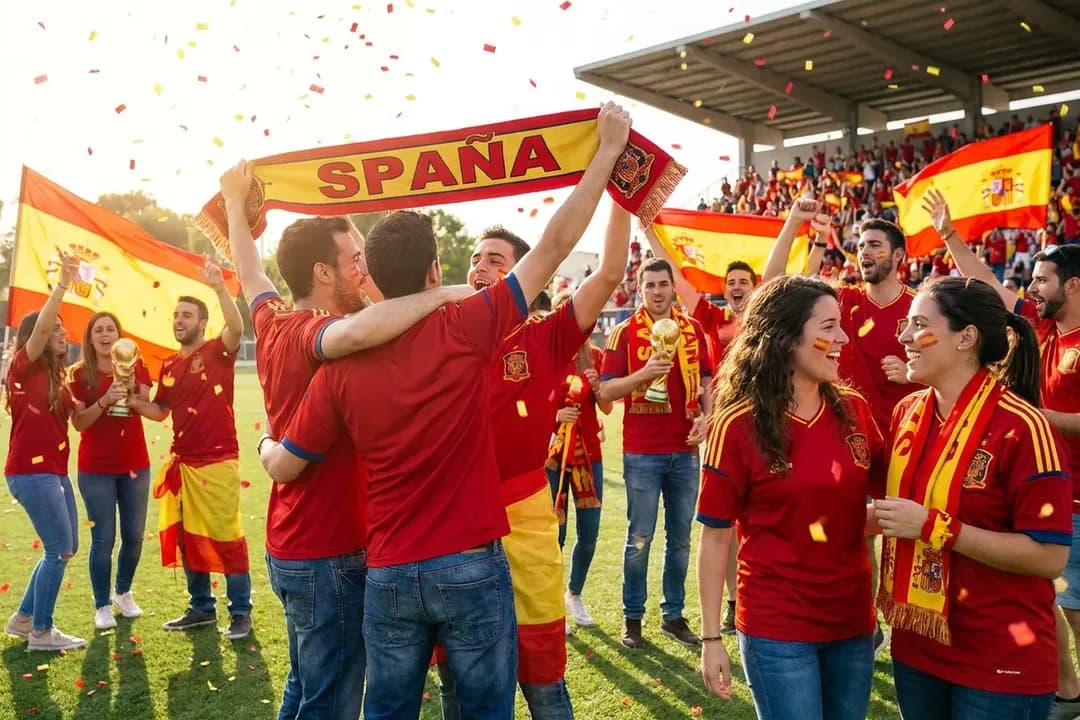
Why East Rutherford Matters
World Cup finals are remembered through teams and scores, but host geography becomes part of the archive. East Rutherford now joins the list of places where the men's world champion was crowned. For Spain, that matters because the second title will forever be attached to a New Jersey municipality positioned just outside one of the planet's most visible cities. The address is specific, and the regional meaning is expansive: a local host carrying a worldwide conclusion.
The New York City region has long served as a shorthand for international visibility, but this final's official setting keeps the geography more interesting than a simple city label. East Rutherford's role highlights how modern mega-events often depend on metropolitan regions rather than a single urban core. Spain's victory unfolded in that kind of space, where borders between city, state, suburb, and global stage blur. The result is clear, but the place gives it texture.
A Crown on North American Soil
Calling this Spain's second crown on North American soil is not just a flourish; it identifies the final's defining context. The championship was won in the United States, in New Jersey, within the wider New York City orbit, during a World Cup hosted across North America. That setting distinguishes the victory from Spain's 2010 triumph in South Africa. The national team now owns titles connected to two very different host geographies, each carrying its own World Cup resonance.
North America has often been described through scale: large distances, multiple borders, and cities linked by movement. A final in East Rutherford made that scale feel concentrated, placing the ultimate match in a region known for receiving and reframing global narratives. Spain's 1-0 extra-time win over Argentina became one of those narratives. It was a sporting result first, but it also became a marker of how the World Cup can turn a particular place into shared memory.
Spain's Second Title, Fixed to Place
The cleanest fact remains the most powerful one: Spain won its second men's World Cup title. The route of memory runs through East Rutherford, where Argentina was beaten 1-0 after extra time, and back to South Africa, where Spain's first title came in 2010. Together, those facts give the national team's championship story a balanced shape. One title announced Spain as a world champion; the other confirmed that the country's place in the winners' list now has depth.
For fans looking back, the location will help organize the memory. East Rutherford is where the second crown was sealed, the New York City region is the broader stage that framed it, and North America is the continental context that made it distinctive. Spain's victory can be told without exaggeration because the verified details already carry enough force. A 1-0 extra-time final against Argentina, a second world title, and a host region with global reach are the story.
Tags: #WorldCup2026
Sources consulted: FIFA final hub · FIFA World Cup champions history
All trademarks are the property of their respective owners.
Ask Karpo First
Ask Karpo for a custom Spain final recap, a New York City region football day plan, or a celebration-food guide tailored to where you are watching from.
Ask Karpo for more information.
Keep reading
- Haaland Has Seven Goals and Norway Runs Entirely Through Him
 World Cup Trophy Ceremony Timing Medals and Postmatch Celebrations
 Olise and France's Attack: The Semifinal Tactical Question