 Haaland Has Seven Goals and Norway Runs Entirely Through Him
⚽️2026 FIFA WORLD CUP
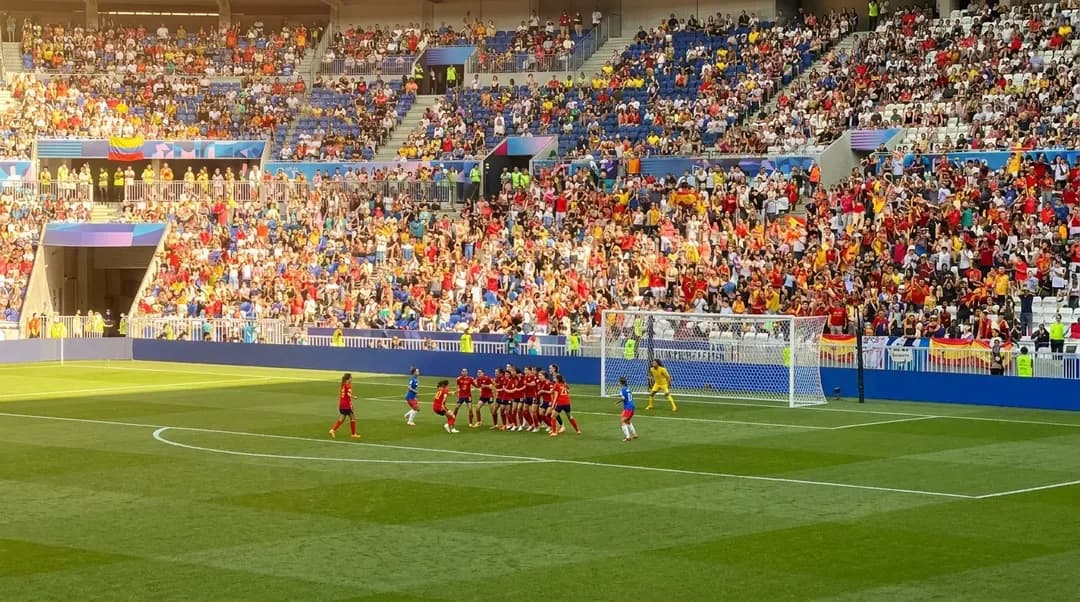
Spain Conceded One Goal and Set a World Cup Record
Spain's defensive masterclass at the 2026 FIFA World Cup culminated in a historic achievement. The champions conceded just one goal across the entire tournament, setting a new benchmark for defensive excellence.
Spain claimed the 2026 FIFA World Cup title with a 1-0 victory over Argentina after extra time on July 19, 2026, at MetLife Stadium in East Rutherford, capping a tournament run that rewrote the defensive record books. FIFA reported that Spain conceded just one goal during the entire competition, the lowest total ever recorded by a World Cup-winning team in a single edition. Goalkeeper Unai Simón earned the Golden Glove award, recognizing his pivotal role in Spain's historic defensive achievement that combined tactical discipline with technical superiority.
Text Karpo to explore how Spain's defensive tactics evolved throughout the tournament and discover which specific matches showcased their ability to neutralize the world's most dangerous attacking threats.
Fact-checked update
Fact-checked update (August 10, 2026): this article was rechecked against Source 1, Source 2. The refresh keeps the body focused on cited schedule, rules, result, and context claims; readers should use the linked official or primary sources for any late-breaking match changes.
Direct answer: Get the key Spain One Goal Conceded World Cup Champion facts, including dates, scores, rules, context, and what it means for the 2026 World Cup.
A Defensive Standard Unlike Any Other
The previous record for fewest goals conceded by a World Cup champion had stood as a benchmark of defensive excellence for decades. Spain's achievement of allowing just one goal across what would have been at least seven matches in the expanded tournament format represents a statistical anomaly that may never be replicated. The margin of defensive superiority was so profound that it forced analysts to reconsider what constitutes elite tournament defending in the modern era.
This record takes on additional significance given the expanded format of the 2026 tournament, which featured 48 teams competing across North America. The increased number of participating nations and matches theoretically created more opportunities for goals, yet Spain's defensive structure proved impenetrable. Their ability to maintain such a standard from the group stage through the knockout rounds, culminating in a clean sheet against Argentina in the final, demonstrated remarkable consistency under escalating pressure.
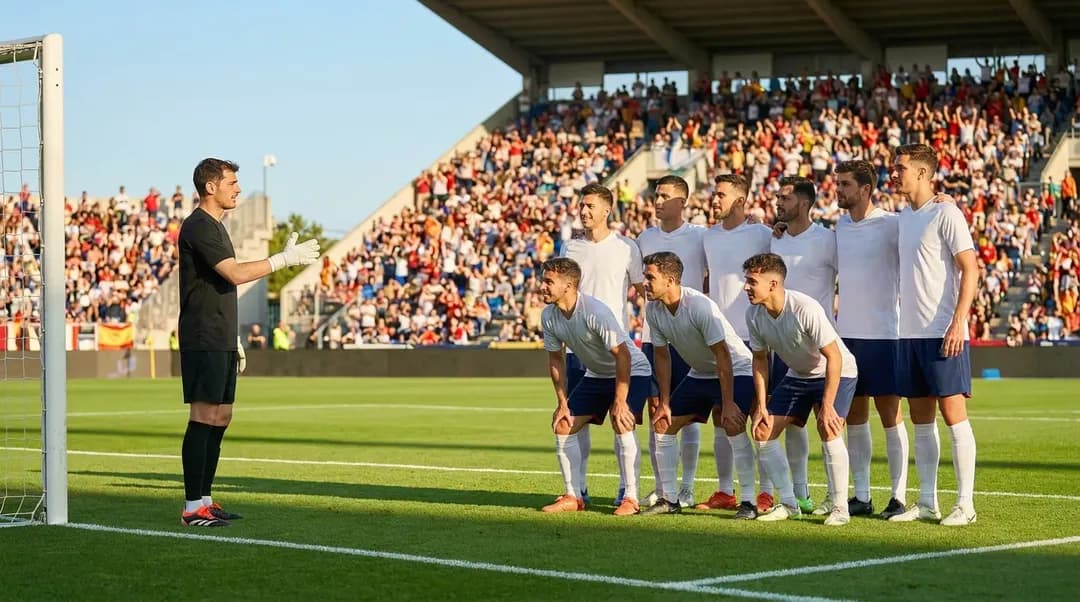
The Simón Wall Behind Spain's Success
Unai Simón's Golden Glove award represented the tangible recognition of a goalkeeper whose tournament performance will be studied for years. His ability to organize the defensive line, command his penalty area, and make critical saves in decisive moments formed the foundation upon which Spain built their defensive philosophy. The award reflected not just shot-stopping ability but the complete goalkeeper's contribution to a team's defensive structure, including distribution patterns that initiated possession sequences.
Beyond the individual accolades, Simón's presence between the posts provided Spain with a psychological advantage. Opposing attackers faced the dual challenge of breaking down a disciplined defensive unit while knowing that any opportunity created would still need to beat a goalkeeper performing at the peak of his abilities. This combination of collective organization and individual excellence created layers of defensive security that proved insurmountable for all but one attacking sequence throughout the entire tournament.
Possession as the First Line of Defense
Spain's defensive record cannot be separated from their possession philosophy, which has long defined their national team identity. By controlling the ball for extended periods, Spain limited the number of transitions and defensive actions required, essentially defending by attacking. This approach reduced the frequency with which opponents could mount sustained pressure, forcing them to expend significant energy in pursuit of possession rather than in dangerous attacking positions.
The possession-based approach also allowed Spain to dictate the tempo and location of play, pushing the battle into areas of the pitch where turnovers posed minimal threat. When Spain did lose possession, they typically did so in advanced positions where immediate counter-pressing could recover the ball or force opponents backward. This proactive defensive mentality meant that Spain's backline rarely faced isolated situations against organized attacks, as the midfield screen consistently provided protection through positioning and work rate.
Recovery Defense and Transition Management
Modern tournament football demands excellence in transition moments, and Spain's ability to manage the shift from attack to defense proved crucial to their record. Their defensive shape reorganized with remarkable speed when possession was lost, with midfielders dropping into protective positions and attackers applying immediate pressure to disrupt opponent counter-attacks. This collective responsibility for defensive transitions ensured that Spain rarely faced the chaotic scenarios that produce high-quality scoring chances.
The recovery speed of Spain's defenders, both in terms of physical pace and tactical awareness, allowed them to snuff out dangerous situations before they fully developed. Opponents who won the ball often found themselves immediately surrounded by Spanish players, limiting passing options and forcing hurried decisions. This aggressive recovery philosophy meant that even when Spain's possession was broken, the defensive phase began immediately in midfield rather than around their own penalty area, providing multiple opportunities to regain control before genuine danger materialized.
The Final Test Against Argentina
Spain's 1-0 victory over Argentina after extra time on July 19 at MetLife Stadium provided the ultimate validation of their defensive system. Facing an Argentine attack that had carried its team to the final, Spain maintained their clean sheet through 120 minutes of play, adding another shutout to a tournament collection that already bordered on the unprecedented. The fact that Spain could hold Argentina scoreless in the highest-pressure match of the tournament, when fatigue and tension typically create defensive errors, underscored the mental and physical resilience of their approach.
The final also demonstrated Spain's ability to adapt their defensive strategy to specific opponents. Argentina's attacking patterns and individual talents required bespoke solutions, and Spain's coaching staff evidently prepared their players to neutralize those threats without abandoning their core principles. The clean sheet in the final ensured that Spain's tournament would be remembered not just for lifting the trophy but for the manner in which they defended their path to glory, establishing a standard that future champions will struggle to approach.
Legacy of a Defensive Masterpiece
Spain's single-goal-conceded record will serve as a case study for international coaches seeking to build tournament-winning teams. The achievement demonstrates that in knockout football, where a single goal can determine elimination, defensive solidity provides the platform for success. While attacking flair captures attention, Spain proved that systematic defensive excellence, supported by possession control and tactical discipline, remains the most reliable path to championship glory.
The record also raises questions about the future of tournament football and whether any team will replicate or surpass this defensive standard. As attacking tactics evolve and individual players become increasingly skilled, the challenge of maintaining such defensive purity across an entire World Cup may become even more difficult. Spain's 2026 campaign may therefore represent not just a record but a peak defensive performance that stands alone in the tournament's history, a reference point against which all future champions will be measured but few will approach.
Tags: #SpainWorldCup #WorldCup2026 #UnaiSimon #GoldenGlove #DefensiveRecord #FIFAWorldCup #SpainVsArgentina #WorldCupFinal #SoccerDefense
All trademarks are the property of their respective owners.
Ask Karpo First
Before your next discussion about World Cup defensive records or Spain's tactical evolution, reach out to Karpo for detailed breakdowns of how championship teams balance attacking ambition with defensive discipline. Whether you're analyzing historical tournament performances or comparing different eras of international football, Karpo can help you understand the tactical principles that separate good teams from legendary ones.
Ask Karpo for more information.
Keep reading
- Haaland Has Seven Goals and Norway Runs Entirely Through Him
 World Cup Trophy Ceremony Timing Medals and Postmatch Celebrations
 Olise and France's Attack: The Semifinal Tactical Question