 Haaland Has Seven Goals and Norway Runs Entirely Through Him
⚽️2026 FIFA WORLD CUP
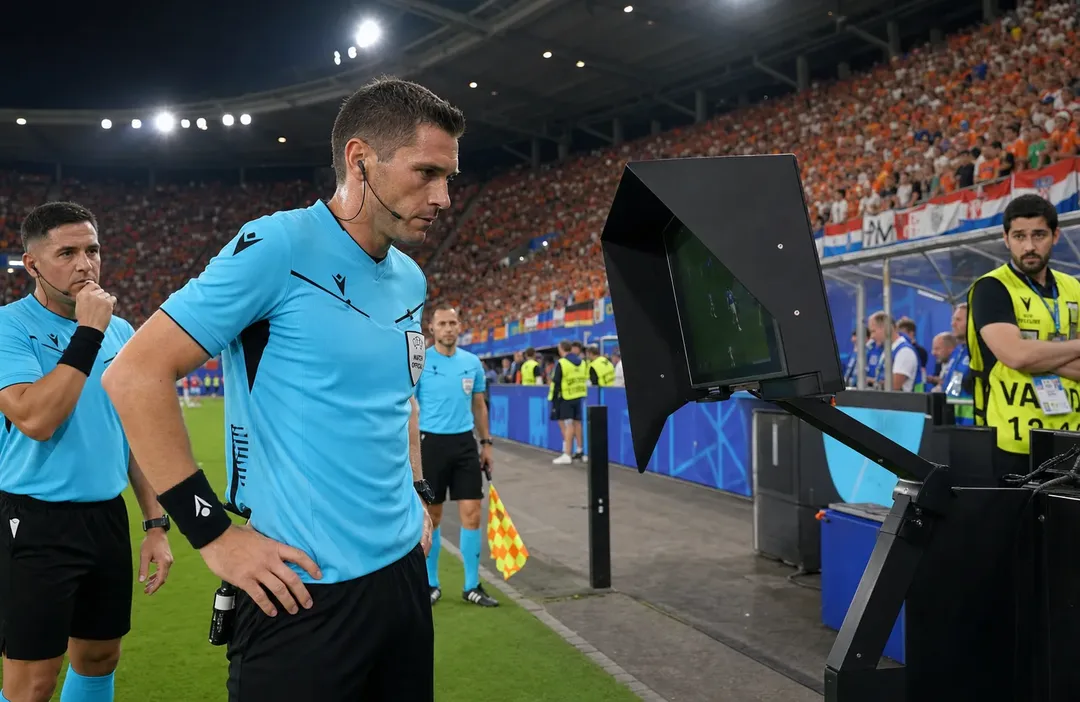
Spain France VAR Decisions Fouls Cards and Referee Calls
The Spain-France semifinal included a confirmed penalty and the usual high-stakes questions about fouls, cards, and VAR. Understanding the review process helps separate a referee decision from speculation about what technology did or did not change.
Spain beat France 2-0 after Mikel Oyarzabal converted a penalty in the 22nd minute, making officiating one of the natural postmatch search topics. A careful Spain France referee review should begin with confirmed events and avoid claiming that VAR intervened unless the official match record says so. The referee makes the on-field decision; the video team checks specific categories of possible clear errors. Not every foul, yellow card, or disputed contact is eligible for a full video review.
Want a clean explanation instead of a loop of argument clips? Text Karpo for a match briefing that separates confirmed calls, tactical consequences, and what still needs official verification.
Start with the on-field decision
The referee’s initial call is the foundation of any review. For the first goal, the confirmed event is a penalty scored by Oyarzabal in the 22nd minute. Whether the referee decided immediately, consulted an assistant, or received a video check should be described only from verified match reporting.
This distinction prevents a common error: treating every important call as a VAR decision. Video officials check eligible incidents, but many reviews occur silently and leave the original decision unchanged. A lack of pitchside review does not prove the play was ignored. Assistant referees and the fourth official contribute different information. Offside judgments, technical-area behavior, and incidents away from the ball may involve communication the broadcast cannot hear. Responsible reporting should avoid assigning a call to one official unless the competition or broadcast confirms the process.
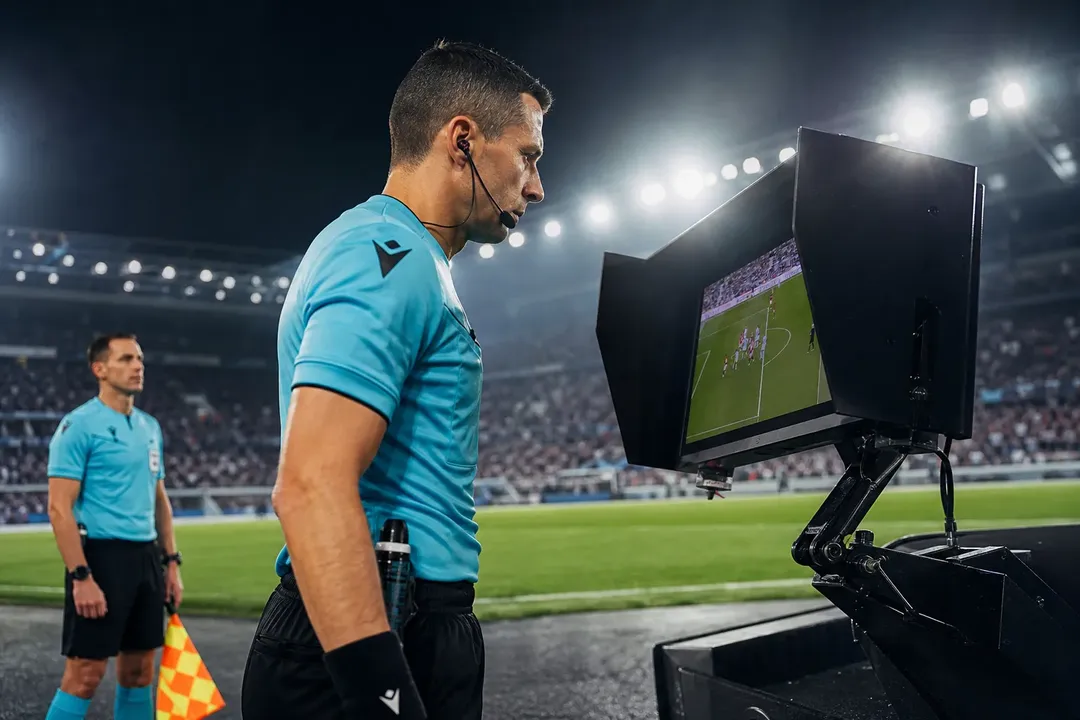
What VAR is allowed to review
VAR is generally limited to match-changing categories such as goals, penalty incidents, direct red cards, and mistaken identity. Routine fouls, most yellow cards, throw-ins, and ordinary restarts are not re-refereed through video simply because supporters disagree with them.
The threshold also matters. The system is designed to address clear errors, not replace the referee’s judgment on every contact. Two viewers can interpret a challenge differently without the original decision meeting the standard for intervention. That is why official explanations are more useful than slow-motion clips without protocol context. Advantage is another source of confusion. A referee may recognize a foul but allow play to continue because the fouled team retains a promising attack. If the advantage disappears quickly, the original offense may still shape the restart or disciplinary decision, depending on the laws and timing.
The penalty changed the tactical balance
Whatever the debate around the incident, the converted penalty changed the match state. Spain could manage possession with a lead, while France had to search for an equalizer without opening transition space. The officiating event therefore had a tactical consequence that extended well beyond the kick itself.
A good recap should separate those layers. First record the confirmed score and time. Then explain how the lead altered pressing, risk, and positioning. Mixing the rule judgment with tactical analysis often leads readers to assume that disagreement about the call invalidates everything that followed. Supporters should also distinguish a review from a replay shown by television. Broadcasters can replay an incident repeatedly even when no formal check is underway. The official signal, restart, and match-center update are better evidence than the number of times a clip appears on screen.
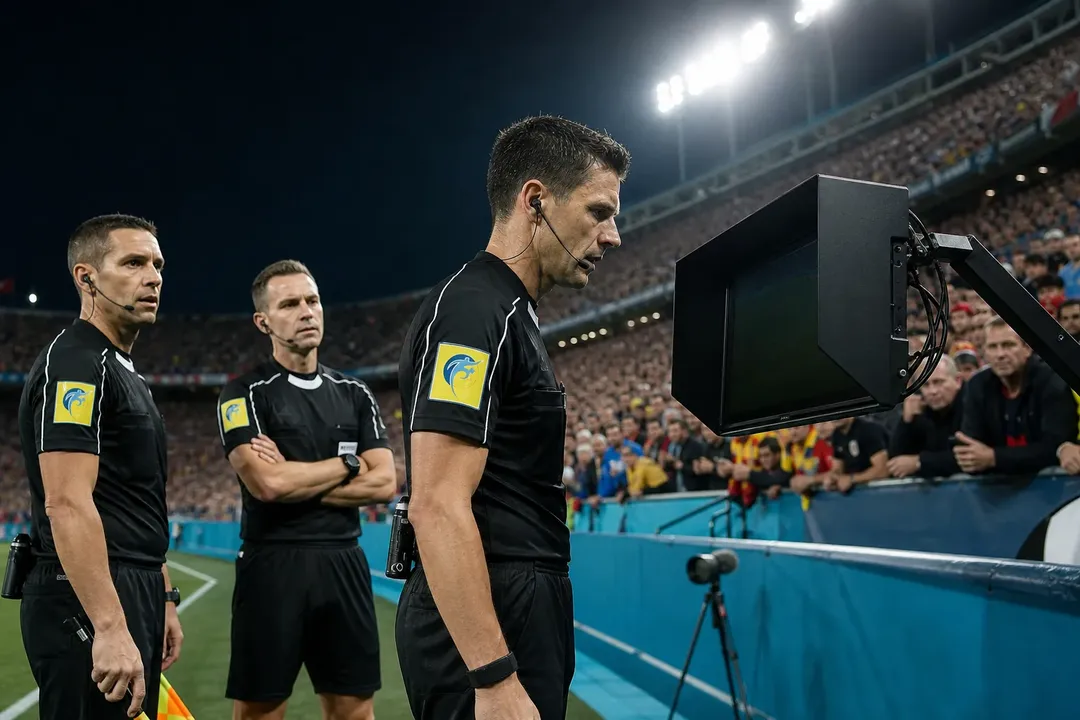
Fouls and cards need official counts
Knockout matches produce tactical fouls, late challenges, and emotional reactions, but exact totals should come from the official match center. Broadcast graphics can update during the game, and different data providers may classify contact differently. Publishing an unverified count creates a false sense of precision.
The more useful question is where fouls occurred and what they prevented. A foul near midfield may stop a transition; a foul near the box creates set-piece danger. Cards affect how aggressively a defender can challenge later. Those consequences matter even when the raw number is modest. For SEO updates after the match, accuracy improves when each disputed event has a compact record: minute, on-field call, final restart, score at the time, and official explanation if available. That structure is more useful than labeling the entire match controversial.
How to judge a controversial replay
Slow motion exaggerates some contact and hides the speed of the original action. View the incident at normal speed, identify the referee’s angle, and check whether another official had a clearer line. Then ask whether the play fits a reviewable category and whether an official explanation exists.
Avoid using a single frozen frame as proof of intent. Football decisions often depend on movement, force, timing, and consequence. A still image can be useful for position but weak for judging the complete action. Responsible coverage presents the evidence and labels interpretation as interpretation.
What to watch in the final
Spain’s final will bring a new referee team and a new set of matchup pressures. Supporters should check the official appointment, disciplinary status, and competition rules before kickoff. Previous semifinal decisions do not predict how every similar contact will be handled.
During the match, the best live tracker records the call, restart, score impact, and any official review without rushing to a verdict. Afterward, the article can add confirmed explanations. That update sequence keeps referee coverage accurate while still serving readers who want immediate context. A final editorial check should compare the headline, body, and metadata. If the evidence confirms only a penalty and routine review process, the page should not promise a scandal. Precise language usually earns more trust and remains searchable longer than an exaggerated verdict that later requires correction.
Tags: #WorldCup2026 #SpainFrance #VAR #Referee #FootballRules
All trademarks are the property of their respective owners.
Ask Karpo First
Text Karpo with the rule or incident you want explained. Karpo can turn the official information into a short answer and help plan how you will follow the final.
Ask Karpo for more information.
Keep reading
- Haaland Has Seven Goals and Norway Runs Entirely Through Him
 World Cup Trophy Ceremony Timing Medals and Postmatch Celebrations
 Olise and France's Attack: The Semifinal Tactical Question