 Haaland Has Seven Goals and Norway Runs Entirely Through Him
⚽️2026 FIFA WORLD CUP
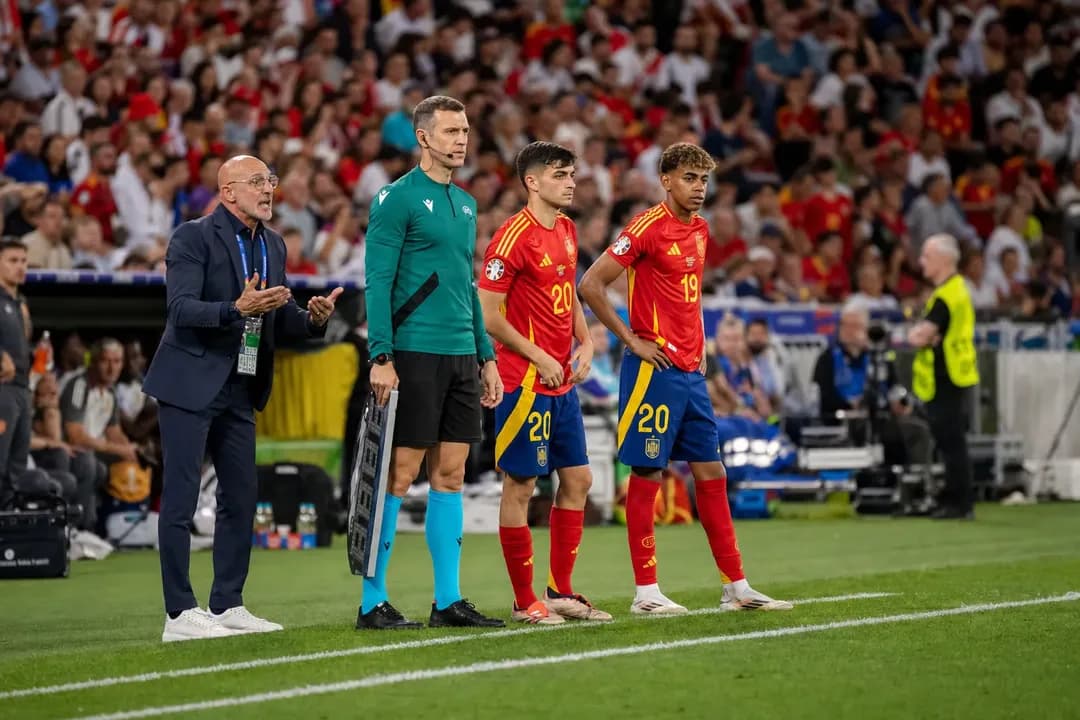
Spain France Semifinal Substitution Strategy After the Two-Goal Lead
Spain’s bench decisions after building a 2-0 lead were about protecting structure, refreshing pressure, and keeping an outlet. The substitution strategy shows how a team can manage a semifinal without turning the final minutes into a permanent retreat.
Spain’s 2-0 semifinal win over France changed character after Pedro Porro scored the second goal in the 58th minute. From that point, substitution strategy became part of protecting the route to the final. The staff needed fresh legs without breaking the distances that had limited France, and Spain still needed players capable of keeping the ball or carrying it away from pressure. A useful review focuses on the jobs the bench needed to solve rather than inventing motives from a single camera shot.
Want the bench logic without tracking every live blog? Text Karpo for a focused semifinal recap and a final-day plan built around your team, city, and schedule.
Why a two-goal lead changes substitutions
At 2-0, Spain did not need to chase the match with the same risk. The priority shifted toward preserving central protection, controlling transitions, and making France restart attacks from less dangerous positions. A substitute entering at that stage must understand the scoreboard immediately. Energy is useful only when it supports the shape instead of pulling the team into unnecessary duels.
The coaching staff also had to account for the final on July 19. Recovery matters, but removing too many controlling players at once can invite pressure and create a more exhausting finish. Good knockout management balances the current result with the next match without treating either one as secure. Bench communication starts before the player reaches the touchline. The substitute needs the pressing trigger, defensive reference, and first possession role in a few clear instructions. Too much information is difficult to apply immediately, while one missed assignment can open the exact route France are trying to attack.
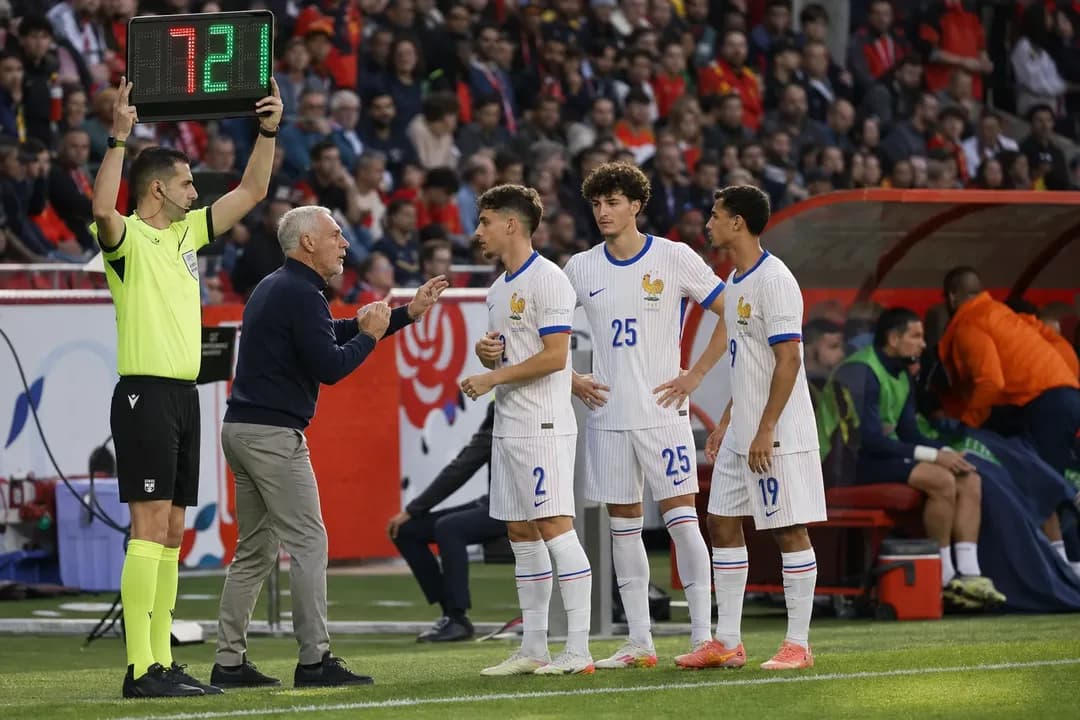
Fresh legs were needed in the pressure line
France had to advance more players after falling two goals behind. Spain’s forwards and midfielders therefore faced repeated decisions about when to press and when to recover. A fresh substitute could close the next pass, force play toward the sideline, and prevent France from building momentum through easy central circulation.
Pressing late in a match is not simply running harder. The first player sets the direction, while teammates close the options behind. If one substitute attacks the ball alone, France can pass around the pressure and expose the midfield. The bench instruction had to connect effort with the positions already occupied. The staff must also monitor players already carrying fatigue or a card. A change can protect a vulnerable zone without implying that the replaced player performed poorly. In knockout football, the best substitution often reflects the next fifteen minutes rather than a judgment on the previous seventy.
Spain still needed a route away from pressure
Protecting a lead does not mean clearing every recovery. Spain benefited from having an outlet who could receive, win a foul, carry toward the corner, or connect a short passing sequence. Those actions pushed France backward and reduced the number of attacks Spain had to defend during the closing phase.
A substitution that adds defensive work but removes every possession option can make the final minutes harder. The ideal profile offers both: willingness to recover and enough technical security to keep the next ball. This balance helped Spain avoid turning the match into a continuous attack-versus-defense exercise. Restart management belongs to the same strategy. Fresh players must know who marks at corners, who protects the edge of the box, and who becomes the outlet after a clearance. Changing personnel without updating those assignments can create confusion at the moment France are most likely to send numbers forward.
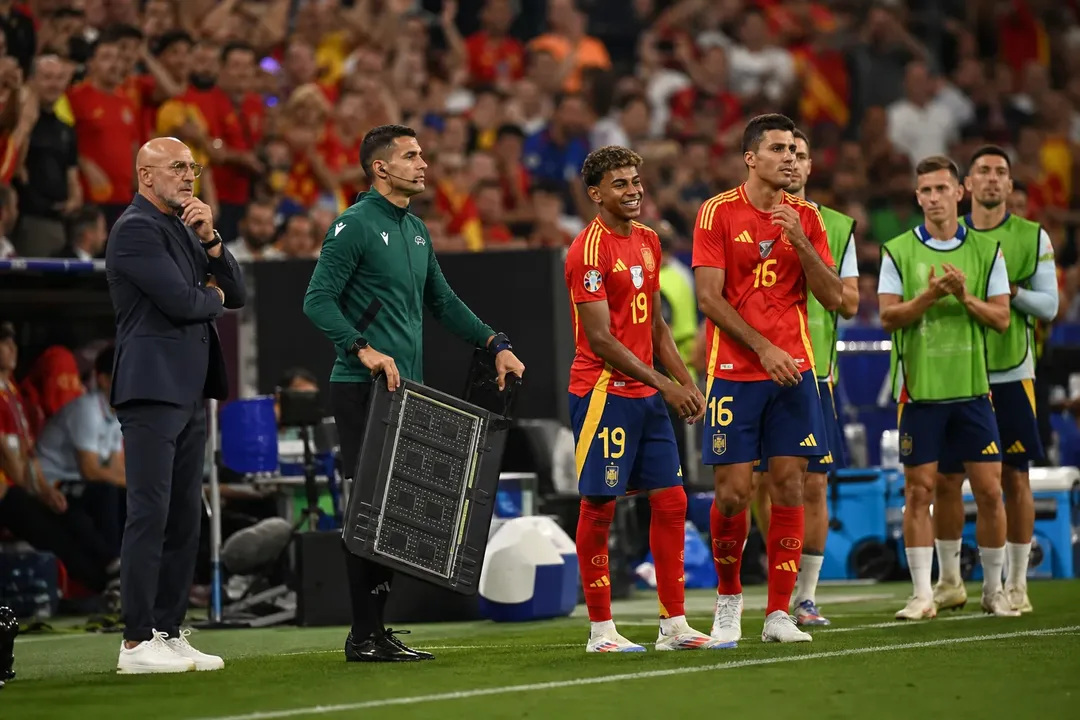
Wide areas demanded careful rotation
France could use width to stretch Spain and create crossing or cutback opportunities. Fresh players near the flanks helped fullbacks manage repeated runs and prevented one tired defender from being isolated. The wide substitute also needed to recover inside when the ball moved away, keeping Spain compact around the penalty area.
On the ball, width remained valuable because it forced France to cover the entire pitch. A substitute holding the touchline could create space for a midfielder and offer a switch after Spain escaped pressure. The role was defensive and attacking at the same time, even if the scoreboard encouraged caution. Supporters evaluating the bench should watch the team’s spacing five minutes after each change. If Spain continue to press together, keep a safe passing option, and deny central transitions, the substitution has likely supported the plan even without a goal or assist.
How to verify the actual substitution timeline
Substitution names, minutes, and tactical shapes should be checked against the official match report rather than reconstructed from social clips. Broadcast footage may show a player preparing long before the change occurs, and a planned substitution can be delayed by an injury, restart, or shift in game state.
The official sequence gives the reliable foundation. Analysis can then ask what role changed, which zone received fresh legs, and whether Spain became more compact or more direct. Keeping the event record separate from interpretation makes the article useful after the immediate reaction cycle.
What the final may require from Spain’s bench
England or Argentina will create a different substitution problem. Spain may need more speed, additional midfield control, aerial coverage, or a stronger counterattacking outlet depending on the opponent and score. The France match offers evidence that the staff can protect a lead, not a fixed recipe for every final scenario.
The most important continuity is structural. Whoever enters must know the pressing reference, the recovery lane, and the nearest safe pass. A final can turn on the first action of a substitute, so clarity matters as much as energy. Spain’s bench will again be part of the match plan rather than an afterthought.
Tags: #WorldCup2026 #SpainFrance #Substitutions #Semifinal #GameManagement
All trademarks are the property of their respective owners.
Ask Karpo First
Text Karpo with the final matchup and the kind of analysis you prefer. Karpo can send a concise bench-and-tactics briefing plus a practical viewing or stadium route.
Ask Karpo for more information.
Keep reading
- Haaland Has Seven Goals and Norway Runs Entirely Through Him
 World Cup Trophy Ceremony Timing Medals and Postmatch Celebrations
 Olise and France's Attack: The Semifinal Tactical Question