 Haaland Has Seven Goals and Norway Runs Entirely Through Him
⚽️2026 FIFA WORLD CUP
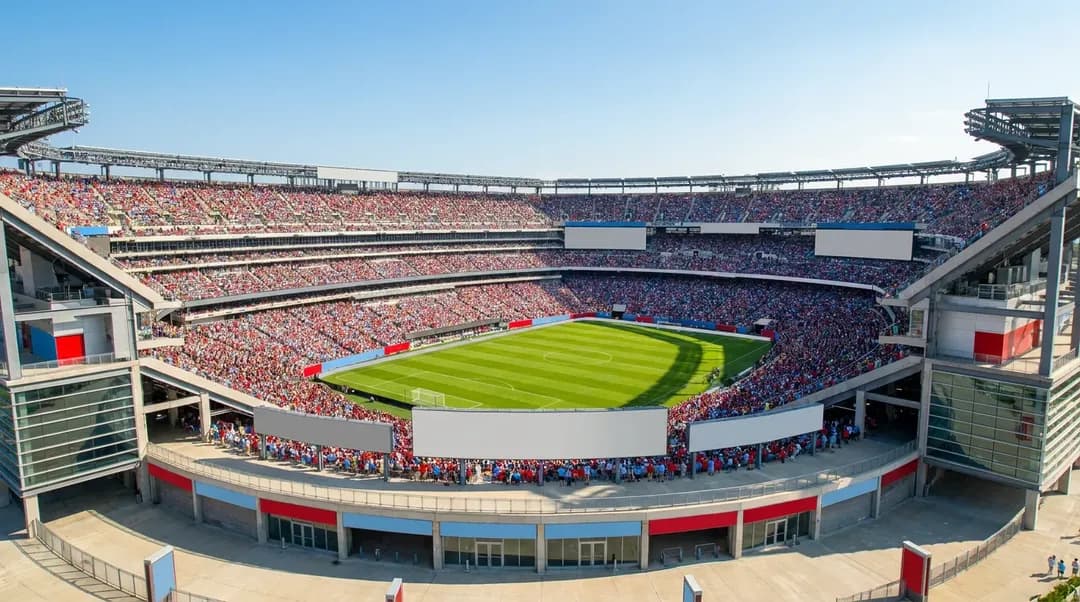
Spain vs Argentina: The Tactical Battle Behind the Trophy
Spain beat Argentina 1–0 after extra time, but the final was decided by more than one late finish. Here is how control, width, pressure and patience built the winning performance.
Spain won the 2026 FIFA World Cup by beating Argentina 1–0 after extra time at New York New Jersey Stadium in East Rutherford on July 19, 2026. Ferran Torres scored the decisive goal in the 106th minute, giving Spain its second men’s world title. The score sounds narrow, and the winner arrived late, but the shape of the match was clearer than the margin: Spain kept the ball, pushed Argentina backward, created the larger stream of chances and refused to turn a patient performance into a desperate one.
Want the final broken down around the moments you care about most? Text Karpo for a personalized highlight route, a watch-with-friends plan in New York City, and the best way to revisit Spain’s title without sitting through every stoppage.
The Result in One Clean Timeline
The match stayed scoreless through 90 minutes, so the final moved into two 15-minute periods of extra time. Spain did not need a penalty shootout. In the 106th minute, Torres turned the pressure into the only goal, and Spain protected the lead through the remaining minutes. That distinction matters when reading score pages: 0–0 at full time describes the end of regulation, while 1–0 after extra time is the final result. Spain became champion before penalties ever entered the equation.
The late goal can make the contest look like a coin flip, but Argentina spent long stretches surviving rather than trading chances. FIFA’s match report described Spain as dominant, while the Associated Press noted that Argentina failed to record a shot until extra time. That does not mean Argentina lacked effort. It means Spain consistently kept the defending champion far enough from goal that Lionel Messi and the runners around him had very little clean space to turn possession into danger.
Spain Made the Pitch Feel Wider
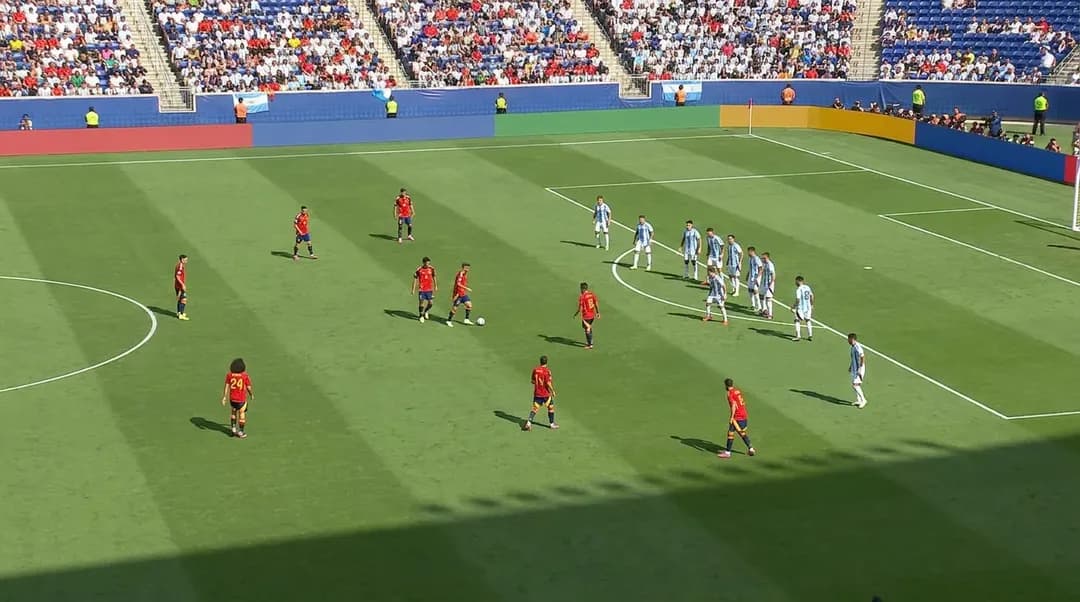
Spain’s first advantage was spatial. By keeping players available across the width of the pitch, it forced Argentina to choose between protecting the center and stepping toward the touchline. When Argentina stayed narrow, Spain could move the ball outside and reset the attack. When a midfielder or fullback jumped toward the ball, a new passing lane appeared inside. The purpose was not possession for its own sake. The purpose was to make Argentina move until a defender arrived a half-step late.
This is why the final could feel controlled even without an early goal. Spain repeatedly returned the ball to safe areas instead of forcing low-percentage crosses or hurried shots. A backward pass was often the beginning of another attack, not a retreat. For a casual viewer, that rhythm can look slow. For the defending team, it is exhausting: every switch demands another sprint, another handoff and another decision about whether to protect the box or confront the player receiving wide.
Argentina’s Compact Block Came With a Price
Argentina’s defensive plan kept the score level for a long time, which deserves credit. Emiliano Martínez produced a record-setting final in goal, and the players ahead of him crowded the central areas that Spain most wanted to enter. The problem was what happened after the first defensive action. A clearance or interception rarely became a sustained attack. Spain recovered its structure quickly, pressed the next pass and made Argentina defend another phase before Messi could receive the ball facing forward.
That left Argentina caught between two uncomfortable options. It could release more players on the counterattack and risk opening the midfield, or it could keep numbers behind the ball and ask Messi to solve the transition with limited support. The second choice helped Argentina reach extra time, but it also reduced the number of moments in which the team could threaten Spain’s goal. Surviving pressure is not the same thing as changing the direction of a final.
Patience Became Spain’s Most Important Attacking Skill
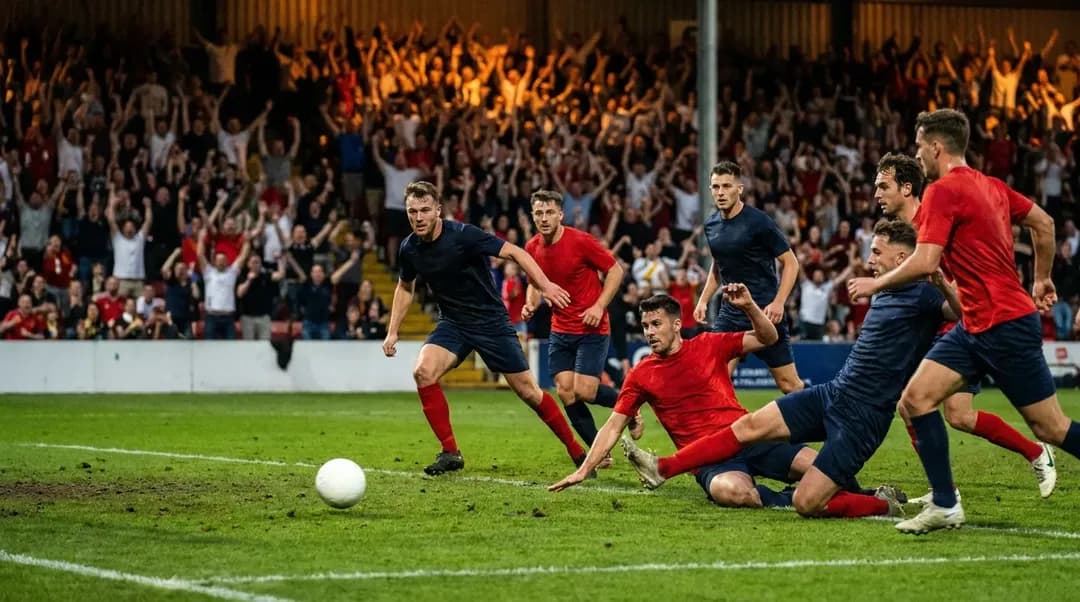
Finals create pressure to manufacture a heroic moment before the match has actually offered one. Spain resisted that urge. Its attacks kept returning to the same basic questions: Can the ball move faster than Argentina’s defensive line? Can the next receiver face forward? Can the team lose possession without losing control? Because the answers were usually favorable, Spain continued to build rather than abandoning its structure for hopeful deliveries into a crowded box.
The winning move arrived after more than 100 minutes of that cumulative work. Torres’ finish was the headline, but the chance belonged to the larger pattern: Spain still had enough organization and energy to attack a stretched defense in extra time. Argentina had spent the night sliding, blocking, tracking runners and relying on Martínez. One late opening was all Spain needed because it had designed the match to keep creating the possibility of another opening.
What to Watch in the Replay
Start by watching Spain without following the ball. Notice how the far-side players hold their width instead of drifting toward the action. Then watch Argentina’s first pass after a turnover. If the receiver is immediately facing pressure or forced backward, Spain has already won the next phase. Finally, compare the space around Messi early in a transition with the space around him once Spain’s midfield has recovered. The final becomes much easier to understand when the camera is treated as a map rather than a highlight machine.
Also watch the emotional tempo. Spain did not interpret every Martínez save as a reason to panic. The players reset, reopened the pitch and tried again. That calm was tactical, not merely psychological. It kept the distances between Spain’s attackers and defenders short enough to recover loose balls, while Argentina had to travel farther to escape. The final goal rewarded a team that stayed recognizable for 120 minutes instead of becoming a different, less coherent version of itself.
Why This Win Matters Beyond One Night
Spain’s second men’s World Cup title arrived 16 years after the country’s first. The two winning finals ended with the same 1–0 score after extra time, but this 2026 team wrote its own version of control. It combined a familiar faith in possession with direct running, aggressive recovery and enough depth to decide the match from the bench. That makes the title more than a nostalgic echo of 2010. It is evidence that Spain’s current generation can turn style into tournament survival.
For Argentina, the loss does not erase the resilience required to defend for so long or reach another final. It does clarify the challenge ahead: the team needs more ways to progress when Messi is crowded and the first counterattack is stopped. For Spain, the next question is whether this level of control can become a repeatable era. On July 19, 2026, the answer was enough for the trophy. Spain won because it made the final look like its match long before the scoreboard agreed.
Tags: #WorldCup2026 #Spain #Argentina #FIFAWorldCup #FerranTorres #FootballTactics #WorldCupFinal
All trademarks are the property of their respective owners.
Ask Karpo First
Ask Karpo to turn the World Cup final into a plan you can actually use, from the right highlights and tactical moments to a New York City watch spot, celebration stop or football-themed day with friends.
Ask Karpo for more information.
Keep reading
- Haaland Has Seven Goals and Norway Runs Entirely Through Him
 World Cup Trophy Ceremony Timing Medals and Postmatch Celebrations
 Olise and France's Attack: The Semifinal Tactical Question