 Haaland Has Seven Goals and Norway Runs Entirely Through Him
⚽️2026 FIFA WORLD CUP
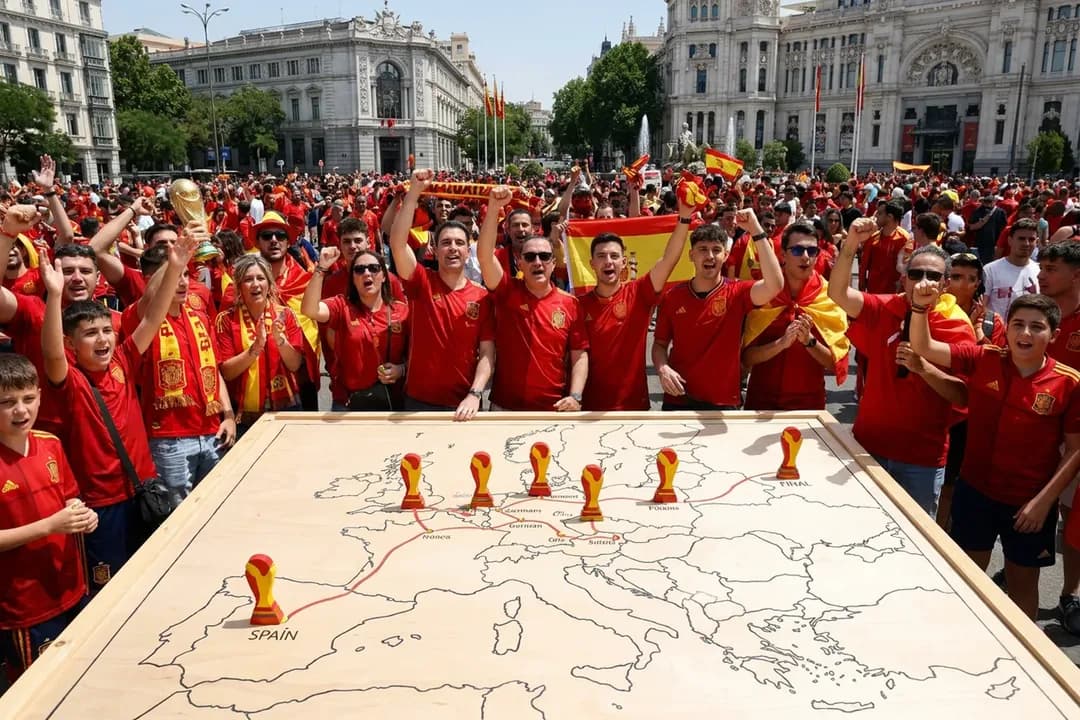
Spain Completed Seven Straight Wins for Its Second Crown
Spain closed the tournament with seven wins from seven matches and lifted its second crown. The final confirmation came in East Rutherford, where a 1-0 victory over Argentina completed an undefeated run.
East Rutherford delivered the closing image of a perfect Spanish campaign: seven matches, seven victories, and a second world crown secured with a 1-0 win over Argentina in the final. The tournament’s official award report confirmed the scale of the run, and the final hub placed the decisive night in the New York City area, giving Spain a result-led storyline that needs little decoration. Without relying on unverified scorelines or extra match details, the record itself tells the story. Spain did not merely survive the tournament path; it completed it without dropping a result.
Text Karpo if you want this final turned into your own plan: a personalized recap to share, a viewing-party rewind, a celebration route around New York City, or a food-and-drinks map built around Spain’s title night.
A Perfect Record Defined the Champions
Spain’s title path is easiest to understand through the one fact that carried from the opening stage to the final whistle of the tournament: the champions won every match they played. Seven consecutive victories created a clean competitive line, leaving no need for complicated explanations about tiebreakers, fortunate escapes, or recovery from defeat. In a World Cup built to test depth, temperament, and consistency, Spain’s undefeated championship run became the central result of the event.
The final against Argentina supplied the last piece of that sequence. Spain won 1-0, a score that confirmed the crown while fitting the broader theme of control through outcomes rather than excess detail. Because a full verified match-by-match score list is not available here, the fairest recap is also the strongest one: Spain kept winning until there was nobody left to beat. That is the result-led summary of a champion that finished the tournament with a perfect ledger.

East Rutherford Became the Closing Stage
The final was staged in East Rutherford, tying the last act of the tournament to the New York City area and the broader North American setting of the 2026 World Cup. For Spain, that location now belongs to a defining moment in its football history: the night the second crown was secured. The geography matters because finals become part of a city’s sporting memory, and this one placed Spain’s completed run at the center of a major metropolitan stage.
Yet the location did not overpower the result. The final hub identified the platform, but Spain’s seven-win sweep supplied the meaning. East Rutherford was not simply where a title was awarded; it was where an undefeated campaign reached its final proof. That distinction is important in a recap built on verified facts. The venue framed the moment, the opponent gave it weight, and the 1-0 scoreline against Argentina sealed the tournament’s clearest conclusion.
The Final Gave the Run Its Sharpest Edge
A championship run can include dominant swings, difficult passages, and moments that are remembered differently by different audiences, but the final is where the record becomes permanent. Spain’s 1-0 victory over Argentina did exactly that. It converted a six-match winning march into a seven-match championship sweep. The result also prevented the story from drifting into speculation about what might have happened under pressure, because the decisive match ended with Spain on top.
Argentina’s presence in the final sharpened the achievement without requiring invented details. A World Cup final against Argentina carries obvious competitive weight, and Spain’s ability to finish the job by the narrowest verified margin made the result feel exact rather than inflated. The scoreline stands as the only confirmed final score needed here. Spain won, Argentina fell short, and the tournament ended with the champions still untouched by defeat or draw in the results column.

Why Seven Straight Wins Matter
Seven straight victories are rare because tournament football punishes even small lapses. A team must manage different opponents, shifting pressure, and the emotional weight that grows as each round becomes less forgiving. Spain’s achievement sits in that context. The verified record says the champions answered every required question with a win. Whether the match demanded patience, precision, or resilience, the official outcome remained the same, and that is what made the campaign so clean in historical memory.
This is also why the recap should resist overfilling the story with unconfirmed numbers. The power of Spain’s run does not depend on a manufactured trail of scores, minutes, or statistics. It rests on the confirmed structure of the tournament: seven matches completed, seven victories recorded, no defeat or draw interrupting the path, and a 1-0 final triumph over Argentina. For readers who want the headline meaning, that sequence is the substance, not a shortcut.
A Second Crown Built on Outcomes
Spain’s second crown gives the campaign a legacy beyond one final night. Championships are often remembered through a single image, but their authority comes from accumulation. Spain accumulated the only thing every contender needed most: results. By the time the final ended, the unbeaten label was not a decorative phrase. It was the mathematical shape of the title run, backed by the confirmed seven-win path and completed against Argentina in the match that mattered most.
The phrase “second crown” also changes how the achievement is read. This was not merely a breakthrough moment; it added another title to Spain’s World Cup story. Still, the focus should remain on what can be safely stated. Spain finished the tournament as undefeated champion, won all seven matches, and claimed the final 1-0. Those facts are enough to show a team that did not rely on narrative momentum alone, but on a complete set of winning results.
The Cleanest Recap Is the Strongest One
Some tournament summaries become crowded with angles, turning points, and debates that require deeper statistical confirmation. Spain’s 2026 championship recap can be cleaner. The official award report confirmed the perfect seven-win run, while the final record confirmed the 1-0 victory over Argentina. That combination provides a sturdy foundation for the story. It avoids exaggeration and still captures the full force of what happened: Spain left the competition with every required result in its favor.
That is why the result-led version of the tournament is also the most publication-ready one. Spain traveled through the World Cup without a blemish in the results column, reached the final in East Rutherford, defeated Argentina 1-0, and lifted its second crown. Everything else can be explored later through official match data. For now, the verified headline is complete. Spain did not just win the World Cup; Spain won every step on the way there.
Tags: #WorldCup2026
Sources consulted: 2026 World Cup award winners · FIFA final hub
All trademarks are the property of their respective owners.
Ask Karpo First
Ask Karpo for a custom Spain final recap, celebration plan, or New York City food-and-viewing guide built around the title night.
Ask Karpo for more information.
Keep reading
- Haaland Has Seven Goals and Norway Runs Entirely Through Him
 World Cup Trophy Ceremony Timing Medals and Postmatch Celebrations
 Olise and France's Attack: The Semifinal Tactical Question