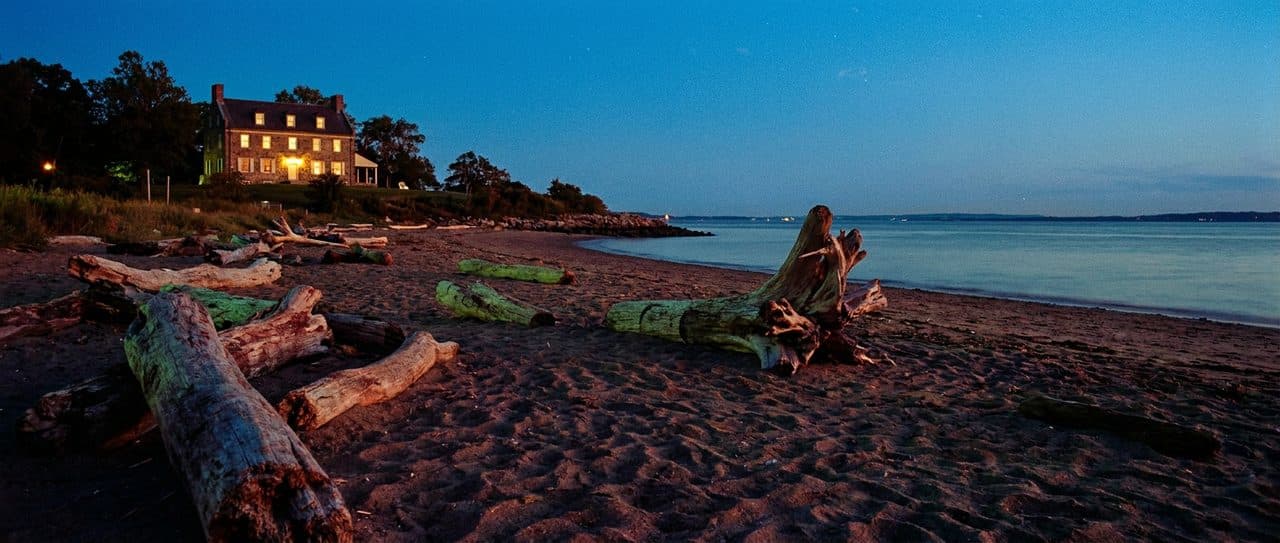
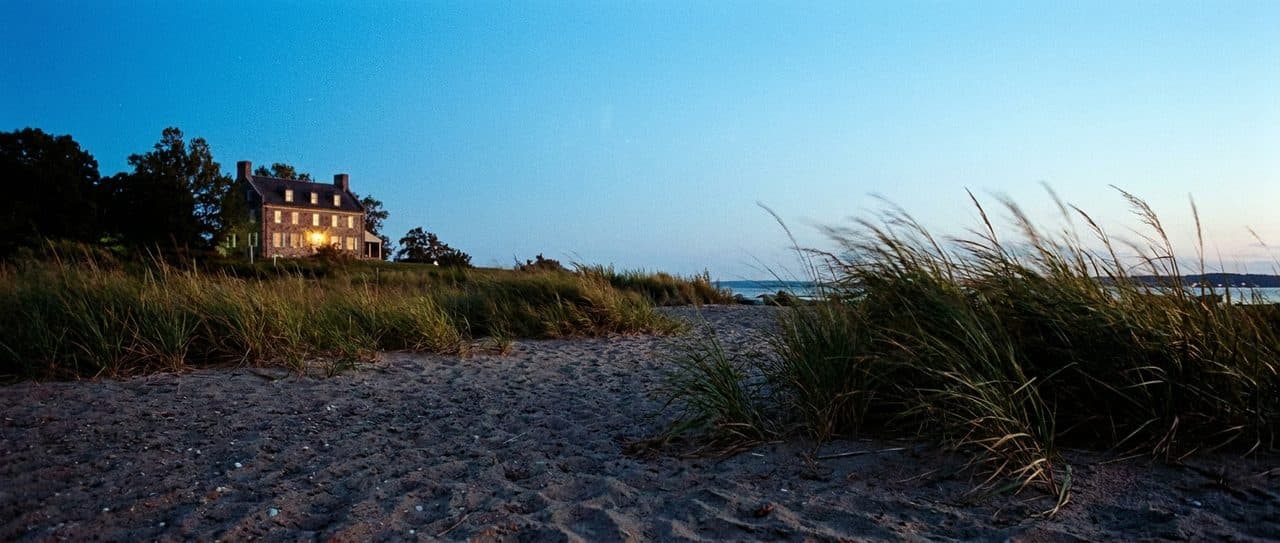
The ferry ride from Manhattan takes an hour, but the real distance becomes clear when the grid vanishes and the shoreline opens into something coastal towns recognize—salt marsh, empty beach, a colonial manor facing the water like it's still waiting for ships that matter. Conference House Park sits at the absolute southern tip of Staten Island, where the city's legal boundaries meet New Jersey across the Arthur Kill and the rhythms of the five boroughs dissolve into tidal patterns and migratory bird schedules.
The Geography That Erases Manhattan
Tottenville operates on a different clock than the rest of New York. The train from St. George takes forty minutes, passing through neighborhoods that thin out progressively until the final stop delivers passengers into what feels like a commuter suburb grafted onto marshland. Conference House Park sprawls along the waterfront south of that terminus, accessible by a ten-minute walk down residential streets where single-family homes with driveways replace the apartment density that defines the city's mental map. The park itself occupies a peninsula jutting into Raritan Bay, with the 1680 Billopp House—the conference house that gives the park its name—standing on a bluff overlooking a beach that stretches empty most weekday mornings. First-time visitors often pause at the entrance, recalibrating expectations, because nothing here signals urban park energy. No food carts, no weekend crowds jostling for bench space, no ambient city hum bleeding through the trees.
The Manor That Hosted One Failed Meeting

The Billopp House earned its historical footnote in September 1776 when British Admiral Lord Howe met Benjamin Franklin, John Adams, and Edward Rutledge in a last-ditch attempt to negotiate peace before the Revolution escalated further. The talks collapsed in hours. The house itself—stone construction, steep-pitched roof, narrow windows facing the water—predates that moment by nearly a century and now operates as a small museum open weekends spring through fall. Walking through requires joining a docent-led tour that runs roughly every hour, moving through low-ceilinged rooms where the floorboards creak and the fireplaces still smell faintly of old smoke. The real draw isn't the sparse period furniture but the building's position on the landscape: standing on the back porch, the view opens across the beach to the water, and the city's verticality feels like a rumor someone mentioned days ago. Weekday visits guarantee near-solitude. The house sees its steadiest traffic during elementary school field trips in May, when buses from across Staten Island unload students who spend twenty minutes inside before scattering to the beach.
The Beach That Belongs to Wading Birds
The shoreline below the manor stretches for half a mile, a narrow strip of sand and pebble that reveals itself fully at low tide and shrinks to a rocky margin when the water rises. No lifeguards, no concessions, no volleyball nets. The beach exists primarily as habitat—horseshoe crabs spawn here in late spring, and shorebirds work the tideline year-round, poking through wrack for invertebrates. Early mornings in fall bring the most committed visitors: birders with spotting scopes set up on tripods, tracking migrations that funnel through this coastal convergence point. The Arthur Kill's industrial shoreline across the water—New Jersey's refineries and shipping terminals—provides an oddly compelling backdrop, a reminder that this pocket of wildness sits within one of the planet's densest urban corridors. Locals who've lived in Tottenville for decades walk the beach in the hour before sunset, a ritual that operates on muscle memory more than destination logic. The sand itself holds a coarser texture than Rockaway or Coney Island, mixed with shell fragments and the occasional piece of sea glass worn smooth by decades of tidal action.
The Trails That Loop Through Forgettable Woods
Beyond the beach, the park's trail system winds through maritime forest and tidal wetlands—roughly two miles of packed dirt paths that rarely see maintenance attention. The trees lean with prevailing winds off the water, their canopies forming tunnels in summer that block sightlines beyond twenty feet. Nothing dramatic happens on these trails. No scenic overlooks, no interpretive signs explaining ecological processes, no benches positioned for contemplation. They function as connective tissue between the manor and the beach, used mainly by dog walkers from the surrounding neighborhood who've learned which sections turn muddy after rain and which stretches hold standing water into June. One insider detail rewards the observant: a short spur trail near the park's eastern edge leads to a small cemetery, barely marked, where Billopp family graves sit behind a low iron fence, the stones worn illegible by salt air and time. Most visitors miss it entirely, staying on the main loop that deposits them back at the parking lot within thirty minutes.
The Crowd That Isn't One
Conference House Park doesn't generate crowds in any recognizable sense. On a typical Saturday afternoon in summer, the beach might hold a dozen people scattered across its length—families with young children, a couple reading under an umbrella, someone fishing off the rocks at the western point. The manor draws a different subset: history enthusiasts, architecture students sketching the roofline, occasional tourists who've exhausted the more famous colonial sites in Lower Manhattan and want something off the standard circuit. These groups rarely overlap. The park's layout encourages dispersion, with enough space that even on the busiest weekend, the feeling of solitude persists. Weekday mornings belong almost exclusively to retirees and remote workers stealing a midday break, people who've figured out that this corner of the city offers something increasingly rare—the option to sit on a beach within city limits and hear nothing but waves and wind for minutes at a time.
The Timing That Makes It Work
The park operates sunrise to sunset year-round, though the manor's museum hours contract significantly in winter, opening only by appointment from November through March. Spring and fall offer the most compelling visits—mild temperatures, fewer bugs, and the migratory bird activity that gives the beach its ecological significance. Summer weekends bring the closest approximation to crowds, though even then the numbers pale compared to any other waterfront park in the five boroughs. Arriving early, before 10 AM, guarantees parking and first access to the beach before the handful of families claim their spots. Late afternoon in September hits a sweet spot: the manor tour ends around 4 PM, the beach empties as people head toward dinner, and the light angles across the water in a way that makes the New Jersey shoreline look almost picturesque. Winter visits require a specific mindset—the wind off the water cuts without mercy, and the park's exposure offers no shelter—but those willing to bundle up find a landscape stripped to its essentials, all the seasonal softness gone.
Practical Notes
The Staten Island Railway runs to Tottenville from the St. George Ferry Terminal, a journey that takes roughly forty-five minutes. From the Tottenville station, Conference House Park sits about a ten-minute walk south and east—follow Hylan Boulevard to Satterlee Street, then continue to the park entrance. Limited parking available in a small lot near the manor; street parking on surrounding residential blocks works as overflow. The park itself is free and open daily from dawn to dusk. The Billopp House charges a modest admission fee for tours, which run on weekends from April through October, roughly on the hour between noon and 4 PM. No food or drink available on-site; the nearest commercial strip with delis and pizza places sits back near the train station. Restrooms located in a small building near the parking lot, though they close in winter. The beach has no facilities, no lifeguards, no designated swimming area—it functions as a natural shoreline, not a recreational beach in the municipal sense.
Tags: #ConferenceHousePark #Tottenville #StatenIsland #NYCHistory #ColonialArchitecture #RaritanBay #HiddenNYC #OffTheBeatenPath #TidalBeach #TheOddEdit #SouthernmostNYC #BilloppHouse #MaritimeForest #UrbanWilderness #ForgottenNewYork
Sources consulted: atlasobscura.com · timeout.com · nytimes.com
All trademarks are the property of their respective owners.
Ask Karpo first
Want to know how to reach Tottenville and when the manor is open for tours?
Ask Karpo for transit directions and the Conference House tour schedule before you head out.