South Street Seaport Museum works best as a downtown weekend backup when the weather by the East River is uncertain and your group has limited stamina. As of July 22, 2026, the museum lists general admission Wednesday through Sunday, 11am to 5pm, with last entry at 4:30pm. A ticket can cover indoor galleries at 12 Fulton Street and 213 Water Street, plus historic vessels at Pier 16 when conditions allow. That makes it useful for an early afternoon with a visiting parent or out-of-town friend: start indoors, read the river, then choose whether the waterfront walk is still worth it.
Want a downtown plan that can shrink or stretch with weather and energy? Text Karpo before you leave, and ask for a Seaport Museum plus waterfront timing check.
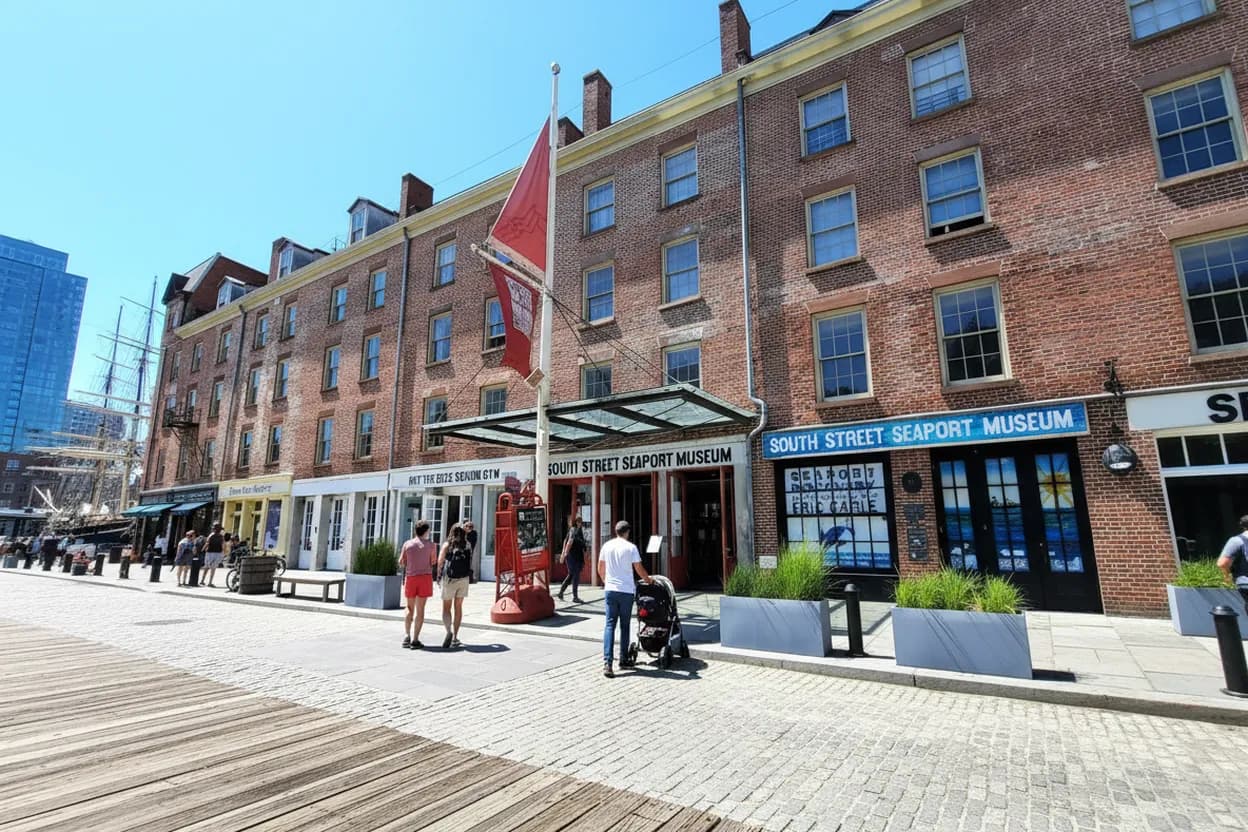
Start South Street Seaport Museum at 12 Fulton Street, Not the Pier
Make 12 Fulton Street your first stop if the day is humid, rainy, or windy. The first-floor Schermerhorn Row galleries are the easiest way to turn the visit into a short, controlled museum stop instead of a sprawling campus errand. General admission currently includes South Street and the Rise of New York and Millions: Migrants and Millionaires Aboard the Great Liners, 1900-1914, both useful for visitors who want context without committing to hours indoors.
This starting point also reduces the main failure mode: dragging a low-stamina companion straight to Pier 16 and discovering the river wind, wet gangway, or ship access is not a good match. Check in, use the indoor galleries as the anchor, and ask staff what is open that afternoon. If historic-vessel access is limited by weather, the plan still works because the indoor portion has already delivered the core Seaport story.
Use Maritime City at 213 Water Street as the Deeper Indoor Option
If the first galleries land well, walk a few minutes to A.A. Thomson & Co. at 213 Water Street for Maritime City. The museum describes it as a three-floor exhibition with 540 selected objects connecting New York’s identity to the harbor, regional waterways, shipping, labor, immigration, and commerce. This is the upgrade path for someone who becomes more curious once inside, but it is not mandatory for a light afternoon plan.
The tradeoff is vertical and mental load. Three floors can be rewarding, but they may be too much for a parent who mainly wants a pleasant downtown outing before coffee or a hotel break. Treat Maritime City as a decision point after 12 Fulton, not a required second act. If attention is fading, skip it and preserve energy for Bowne & Co. or a short look at the river.
Treat Wavertree and Ambrose as Weather-Dependent Bonuses
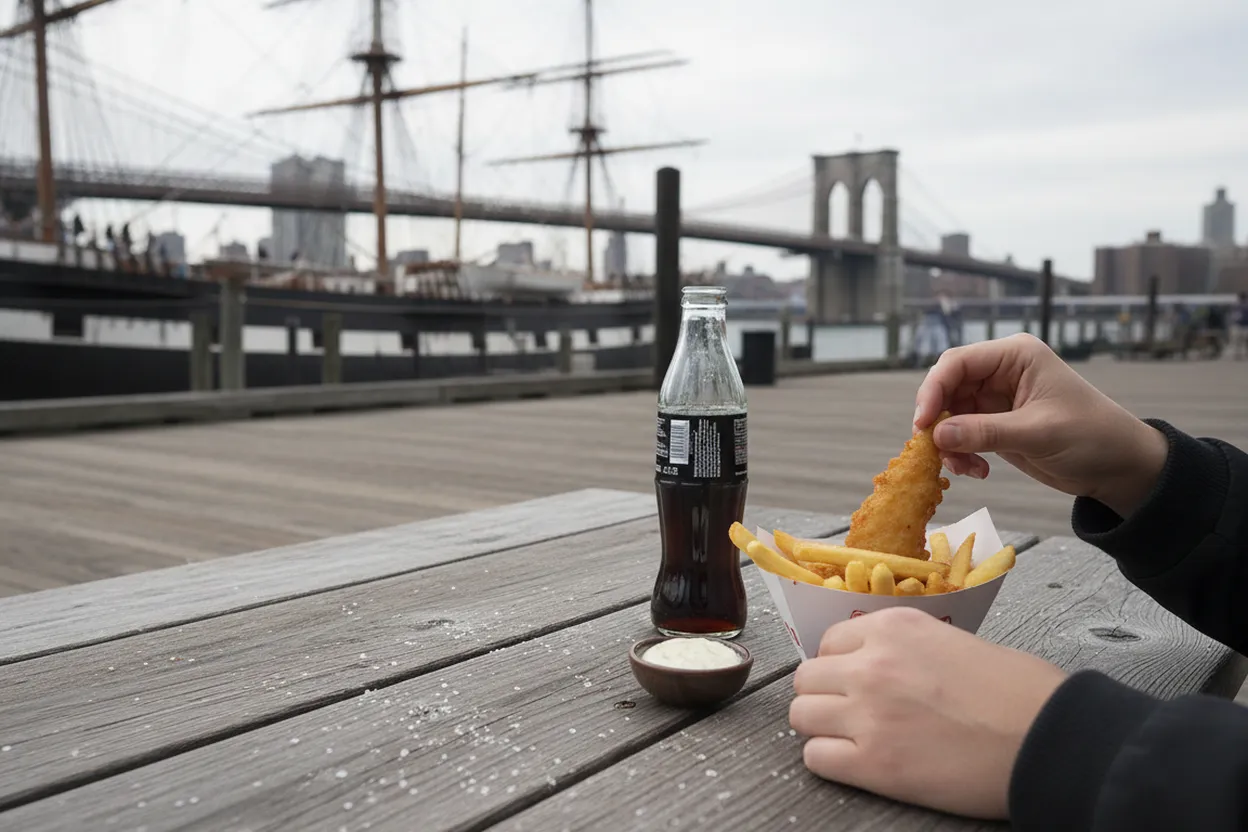
The museum’s general admission page includes the 1885 tall ship Wavertree and 1908 lightship Ambrose at Pier 16, with guided Ambrose tours offered during the day. But the visitor guide warns that historic ships and non-climate-controlled spaces may be limited during extreme or inclement weather. That matters here: the vessels are the most memorable part for many visitors, yet they are also the least forgiving part of a wet or windy plan.
Accessibility is the deciding factor, not just interest. Wavertree requires stairs, an angled gangway, and more stairs onto the deck; lower decks and upper areas involve stairs or steep ladder-like stairs. Ambrose also involves an angled mobile gangway, a step down, high sills, and steep ladder-like stairs inside. If anyone is uneasy with balance, knees, shoes, or weather, admire the ships from the pier and keep the visit indoor-led.
Add Bowne & Co. Stationers When the Group Needs a Softer Finish
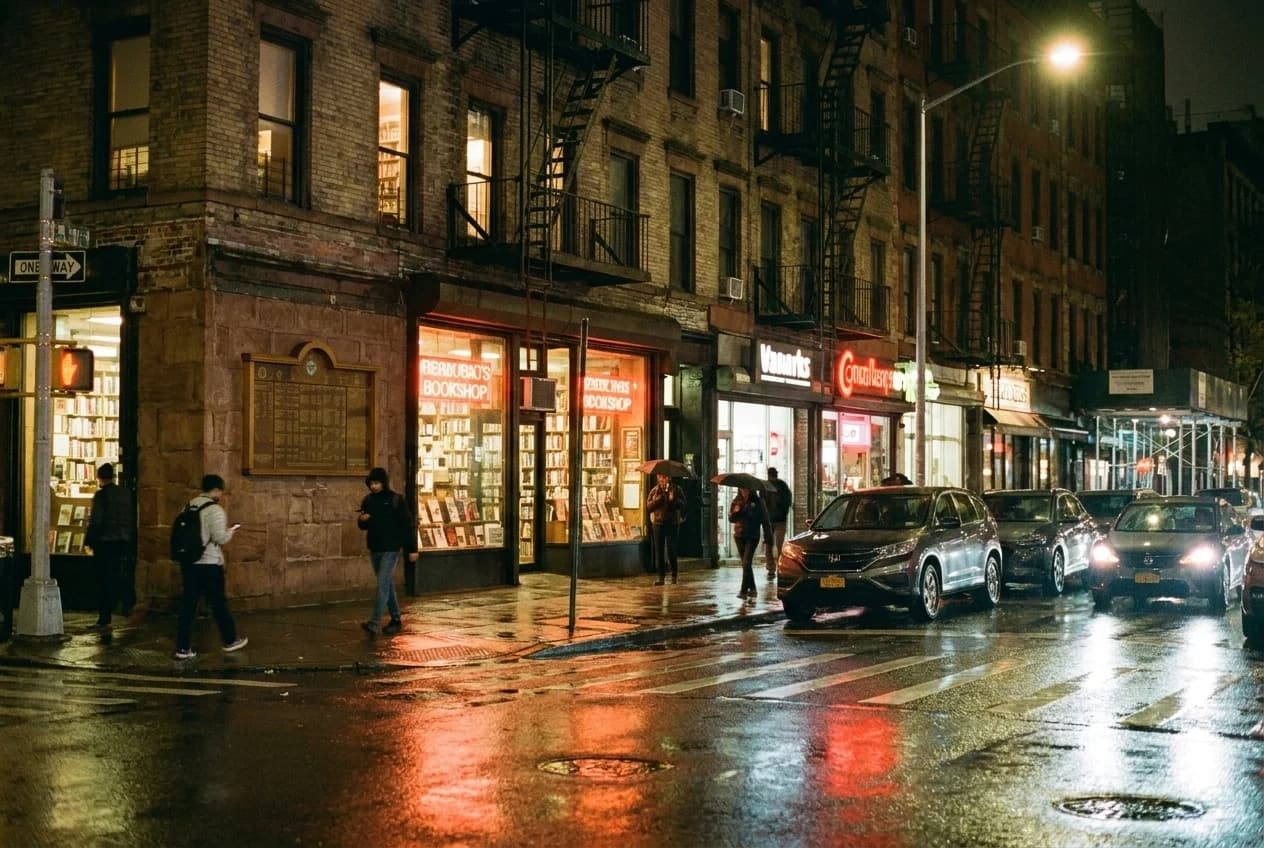
Bowne & Co., Stationers at 211 Water Street is the best small add-on when the museum has worked but the group does not want another exhibition. The museum lists it as a 19th-century-style gift emporium and letterpress print shop, open Wednesday through Sunday, 11am to 5pm, with no museum admission ticket required. It gives the outing a tactile finish: paper goods, presses, and a slower retail rhythm without forcing more interpretation.
This stop is especially useful with an out-of-town friend who wants something distinctly New York but not tourist-heavy. It also gives you a graceful exit if the waterfront is unpleasant. The limitation is that workshops and open houses vary, so do not promise a hands-on printing experience unless you confirm a specific program. For the basic plan, treat Bowne as a browse-and-reset stop before deciding on the river.
Keep the Waterfront Walk Short Between Pier 16 and Pier 11
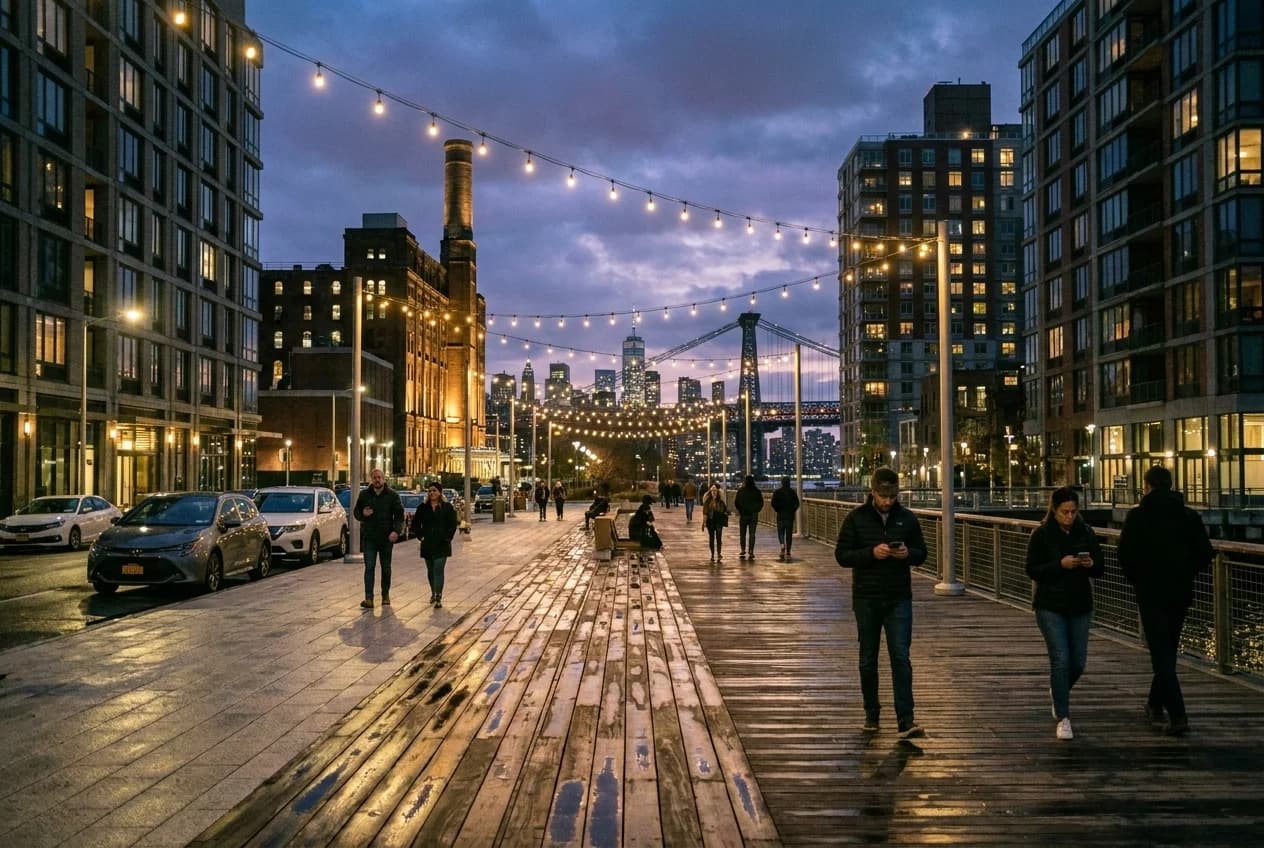
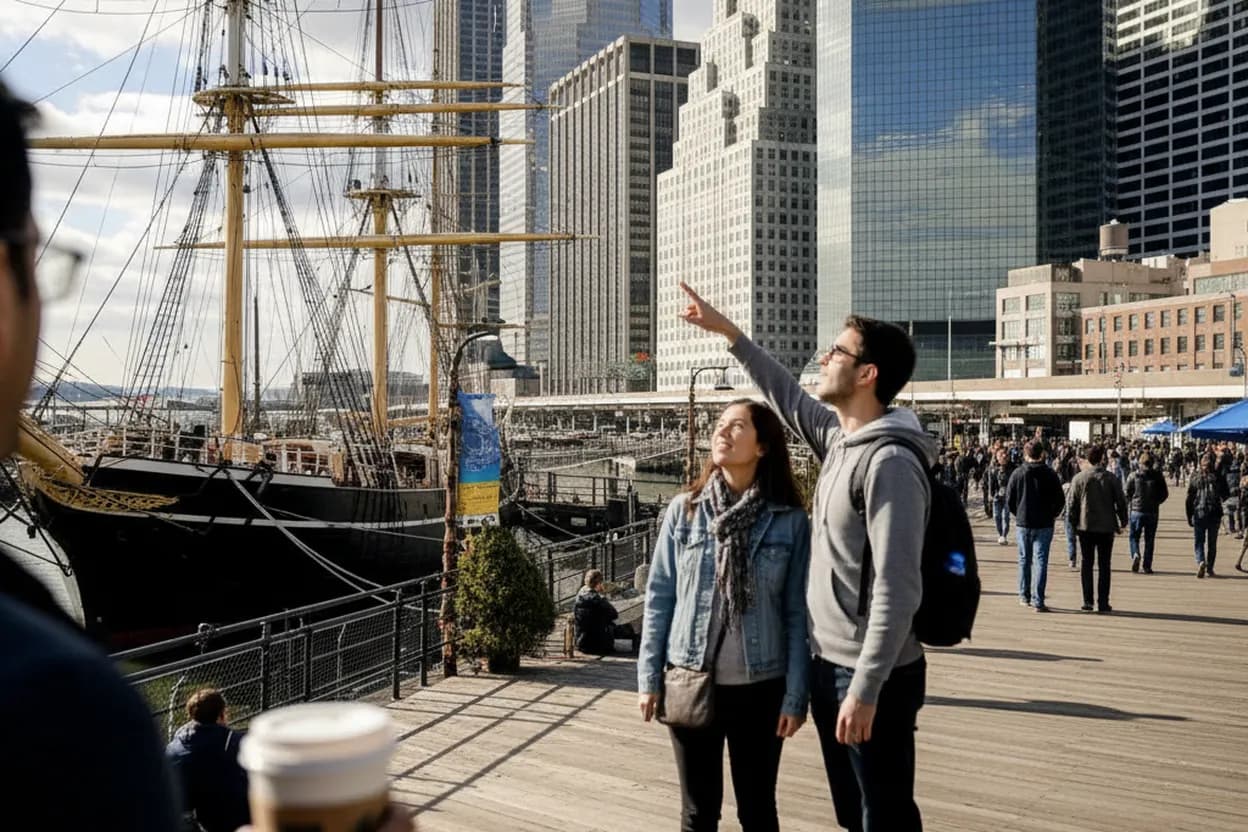
For the outdoor portion, think short and reversible. From the museum campus, Pier 16 gives close views of Wavertree and the East River; continuing south toward Pier 11 can connect the walk to ferries and nearby Lower Manhattan transit options. This is not the moment to design a long esplanade march. Cobblestones, construction pockets, crowds, and river wind can turn a theoretically easy walk into a slow negotiation.
The best pacing is 10 to 25 minutes outdoors, depending on weather and shoes. If the river feels good, pause for the Brooklyn Bridge view and continue a little farther. If rain starts, wind picks up, or the group gets tired, turn back toward Fulton and Water Streets. This backup logic is the point: the museum gives the afternoon a purpose, while the waterfront remains optional rather than a test of endurance.
Arrive by Subway or Ferry Only After Checking the Day’s Friction
The museum lists Fulton Street subway service via A, C, 2, 3, J, Z, 4, and 5 trains, plus M15 and M15 SBS bus service to Fulton Street. It also points water travelers to NYC Ferry and New York Waterway service at Pier 11, with Staten Island Ferry service at Whitehall Terminal. For most visitors, Fulton Street is the simplest default because it keeps the route land-based and avoids schedule dependence.
Ferry arrival can be scenic, but it adds variables: route timing, weather exposure, and the walk from Pier 11. NYC Ferry’s East River route information says Wall St./Pier 11 remains a stop while some peak and non-winter weekend service splits by branch, so schedule-checking matters. If your companion is already tired or rain is likely, take the subway in and save the ferry idea for departure only if conditions improve.
Confirm South Street Seaport Museum Details Before Leaving Home
Do one final verification before committing: open the museum’s general admission or visit page the morning of your trip and confirm hours, last entry, ticket prices, included spaces, and any special exhibition rules. On July 22, 2026, official pages show adult general admission at $18, seniors and students at $15, children at $5, and members free; they also note separate ticketing for The Promise of Liberty: Words That Shaped a Nation.
This is the right go-or-skip test: go if indoor galleries are open, your group can handle a few short walks, and you are content if ships become a look-from-outside bonus. Skip or postpone if the only reason for going is boarding vessels during rough weather, catching an unconfirmed program, or needing full step-free access across the whole campus. For accessibility questions or same-day availability, contact the museum directly before leaving.
Tags: #SouthStreetSeaportMuseum #LowerManhattan #SeaportNYC #Pier16 #WaterfrontWalk #NYCMuseum #WeekendPlans #RainyDayNYC #DowntownNYC #NYCWithParents #NYCTravel #AskKarpo #BeforeYouGo #KarpoNYC
Sources consulted: Source 1: southstreetseaportmuseum.org · Source 2: southstreetseaportmuseum.org · Source 3: southstreetseaportmuseum.org · Source 4: southstreetseaportmuseum.org · Source 5: ferry.nyc
All trademarks are the property of their respective owners.
Ask Karpo first
Tell Karpo your date, group size, budget, and starting neighborhood. We’ll check current access, timing, transit, and the cleanest plan for South Street Seaport Museum, Lower Manhattan before you head out.