Beyond the Haaland Show
The conventional wisdom about Norway at the 2026 World Cup was simple: give the ball to Haaland and hope for the best. This narrative, while flattering to the world's most prolific striker, was always a misrepresentation of what Stale Solbakken had built. The 53-year-old Norwegian coach, whose playing career was ended at 31 by a cardiac arrest on the pitch, has constructed a tactical system of remarkable sophistication — one that uses Haaland's gravitational pull as a decoy as much as a weapon, and that has turned Norway from a collection of talented individuals into the most tactically cohesive team at the tournament.
Into the tactics? Ask Karpo where to watch Norway's next match and see it live.
The 4-4-2 Diamond: The Foundation
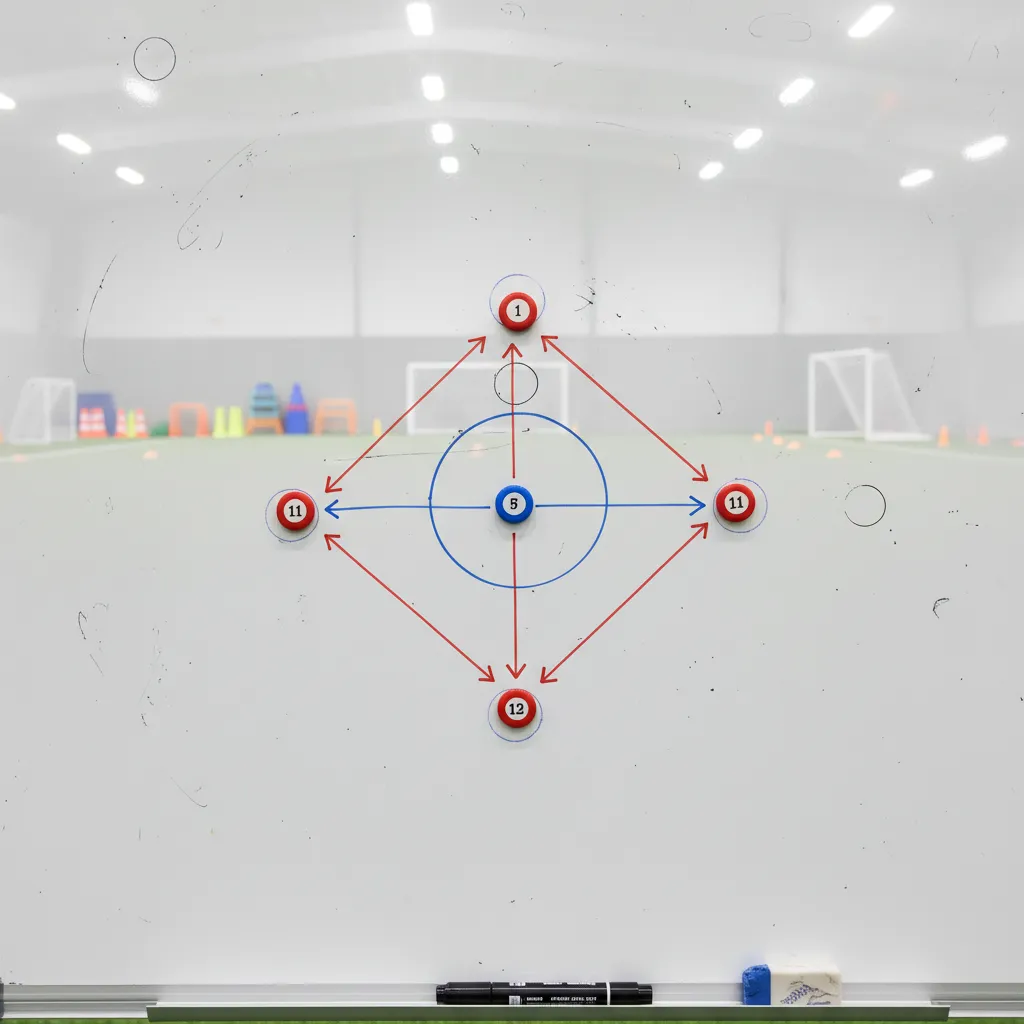
Solbakken's base formation is a 4-4-2 diamond — one of football's oldest shapes, rarely seen at the elite level in the past decade. The choice was deliberate. The diamond allows Solbakken to field both Haaland and Alexander Sorloth as twin strikers, with Martin Odegaard at the tip of the diamond as a creative fulcrum. The defensive midfielder, Sander Berge, provides structural balance. The two wide midfielders, Andreas Schjelderup and Antonio Nusa, provide width in attack but tuck inside in defense, creating a compact shape that is difficult to play through. The formation's strength is its numerical superiority in central areas — three central midfielders plus two strikers create a five-man block that overwhelms opponents in the most dangerous zone of the pitch.
The Press: 114 Kilometers Per Match
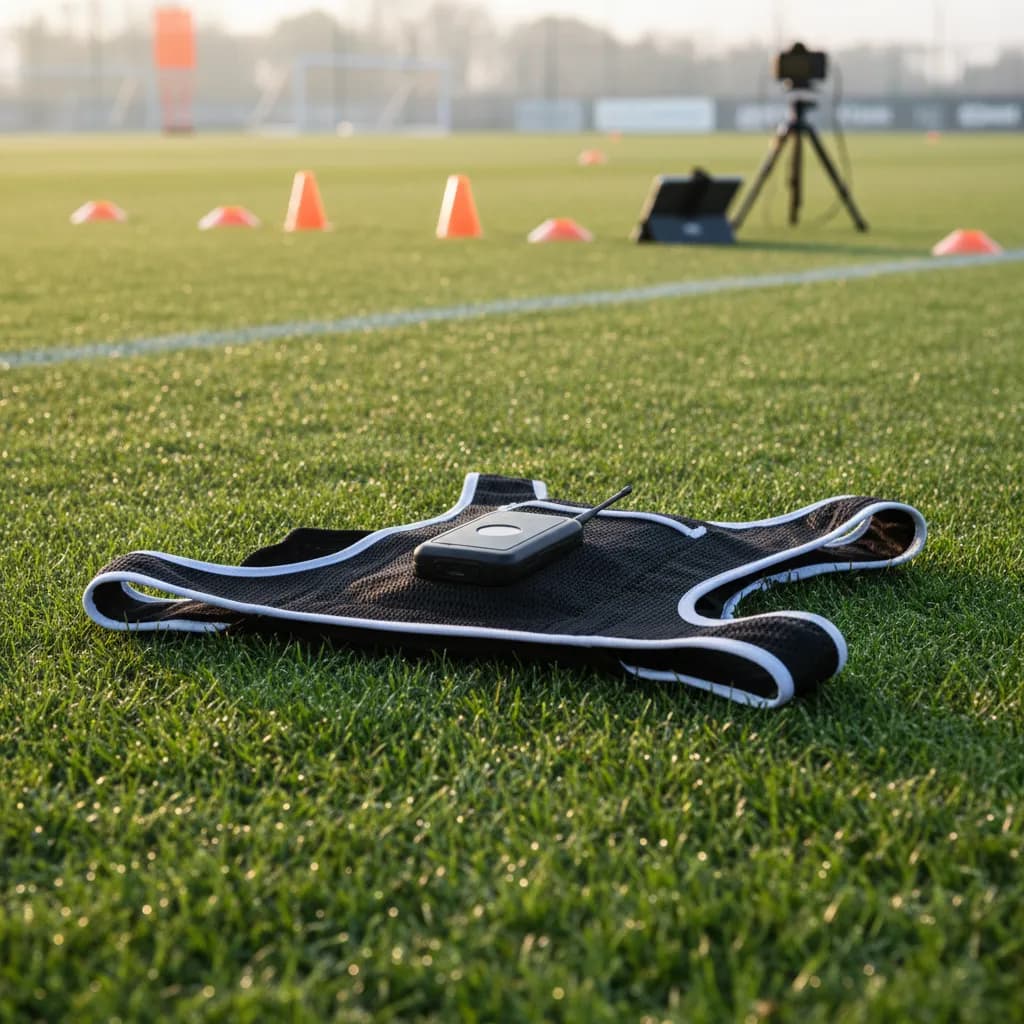
The raw physical data from Norway's World Cup matches is staggering. They average 114 kilometers of total distance per match — the highest of any team in the tournament and approximately 8 kilometers more than the tournament average. Their high-press success rate of 42% is the second-highest after Spain's 44%. They average 28 ball recoveries in the opposition half per match, compared to the tournament average of 16. The pressing is not chaotic — it is triggered by specific cues that Solbakken has drilled into the team during two years of preparation. When the opposing goalkeeper receives the ball, Norway's front two press the center-backs. When the ball goes to the opposing fullback, the near-side wide midfielder presses while the far-side midfielder tucks inside. The triggers are simple, but the execution requires extraordinary fitness and coordination.
Odegaard: The Brain
If Haaland is the body of Norway's system, Martin Odegaard is the brain. The Arsenal captain's role in the diamond is nominally the number 10 position, but his actual movements are far more complex. Data from tracking systems shows that Odegaard covers an average of 12.4 kilometers per match — the highest of any attacking midfielder in the tournament — and that he touches the ball in all four quadrants of the pitch with roughly equal frequency. His role is to connect: to receive the ball from Berge and find Haaland with through balls, to drift wide and combine with Schjelderup or Nusa, to drop deep and help the center-backs build from the back when opponents press high. His five assists in the tournament lead the team and are second only to his club teammate Bukayo Saka's total across all remaining teams.
The Set-Piece System
Norway's set-piece routine has been one of the tournament's most productive weapons. They have scored six goals from set pieces in six matches — the highest total in the tournament. Solbakken's set-piece coach, former Rosenborg defender Mikael Dorsin, has designed a system based on misdirection: every corner and free kick involves at least two decoy runs before the primary target attacks the ball. Haaland, the obvious aerial threat, is often the decoy — his movement toward the near post drags defenders away from the far post, where Sorloth or a late-arriving midfielder attacks the delivery. The approach requires precise rehearsal, which is why Norway's training sessions at Crandon Park in Key Biscayne reportedly devote 30 minutes per day to set-piece practice — double the tournament average.
The England Challenge
Norway's quarterfinal against England will be the ultimate test of Solbakken's system. England's 3-4-3 formation under interim manager Lee Carsley creates a natural mismatch against Norway's diamond — England's wing-backs will have space to exploit if Norway's wide midfielders push forward. The tactical battle will hinge on whether Solbakken can adjust his system to contain Jude Bellingham's runs from midfield while maintaining the pressing intensity that has been Norway's primary weapon. Historical precedent is in England's favor — no Scandinavian team has beaten England in a World Cup knockout match. But historical precedent has been Norway's enemy throughout this tournament, and they have defeated it at every turn.
Tags: Stale Solbakken, Norway, tactical revolution, World Cup 2026, 4-4-2 diamond, pressing, Martin Odegaard, Haaland, set pieces, quarterfinal
Sources consulted: ESPN · CBS Sports · FIFA · Yahoo Sports
All trademarks, team names, league names, and player likenesses mentioned in this article are the property of their respective owners and are used here for informational and editorial purposes only.
Ask Karpo First
Want to understand Norway's tactical system or preview the England quarterfinal? Ask Karpo for Solbakken's formation breakdown, Odegaard's heat maps, and a tactical comparison of Norway vs England.