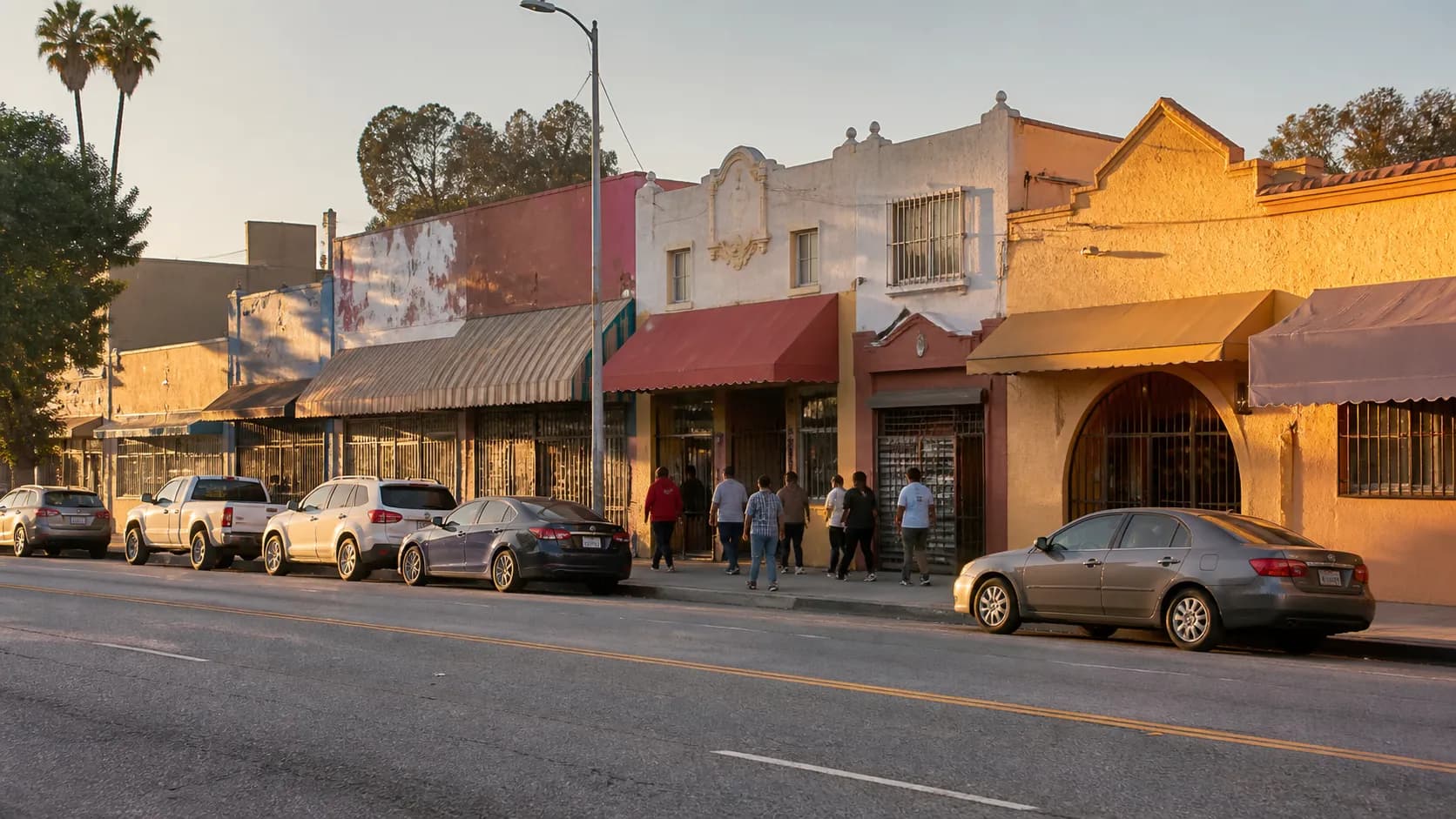
Interest in solar eclipses has recently surged, with a significant uptick in online searches. While the next total solar eclipse visible from the contiguous United States won't pass directly over Los Angeles, partial eclipses are still celestial events that draw widespread attention. Observing an eclipse safely requires specific knowledge and certified equipment, as direct viewing without proper protection can cause permanent eye damage. This guide outlines how Los Angeles residents can leverage local resources, particularly the Los Angeles Public Library system and the Griffith Observatory, to prepare for and understand these fascinating astronomical phenomena responsibly. The emphasis is on educational engagement and accessible viewing methods that prioritize safety above all else, ensuring everyone can participate in a meaningful way.
Explore how local institutions are preparing to help you experience solar eclipses safely. Learn about certified viewing gear and educational programs.

Understanding Eclipse Safety: A Non-Negotiable
The primary concern when observing any solar eclipse is eye safety. Looking directly at the sun, even during a partial eclipse, can cause severe and irreversible retinal damage. Ordinary sunglasses, no matter how dark, offer insufficient protection. Only specialized solar filters or eclipse glasses that meet the ISO 12312-2 international safety standard should ever be used for direct solar viewing. Verifying this certification is crucial; counterfeit products can be dangerous.
NASA provides comprehensive guidelines on safe eclipse viewing, emphasizing indirect methods such as pinhole projectors as a simple and effective alternative. These methods allow observers to project an image of the sun onto a surface without looking directly at it. This approach is particularly valuable for groups or for those who may have difficulty holding eclipse glasses steady for extended periods.
It's important to remember that even during a partial eclipse, the sun's visible portion remains intensely bright and harmful. There is no phase of a partial solar eclipse when it is safe to look at the sun without certified protection. Public awareness campaigns often highlight these dangers, underscoring that the rarity of an eclipse does not diminish the need for stringent safety protocols.
Los Angeles Public Library: Your Gateway to Eclipse Education
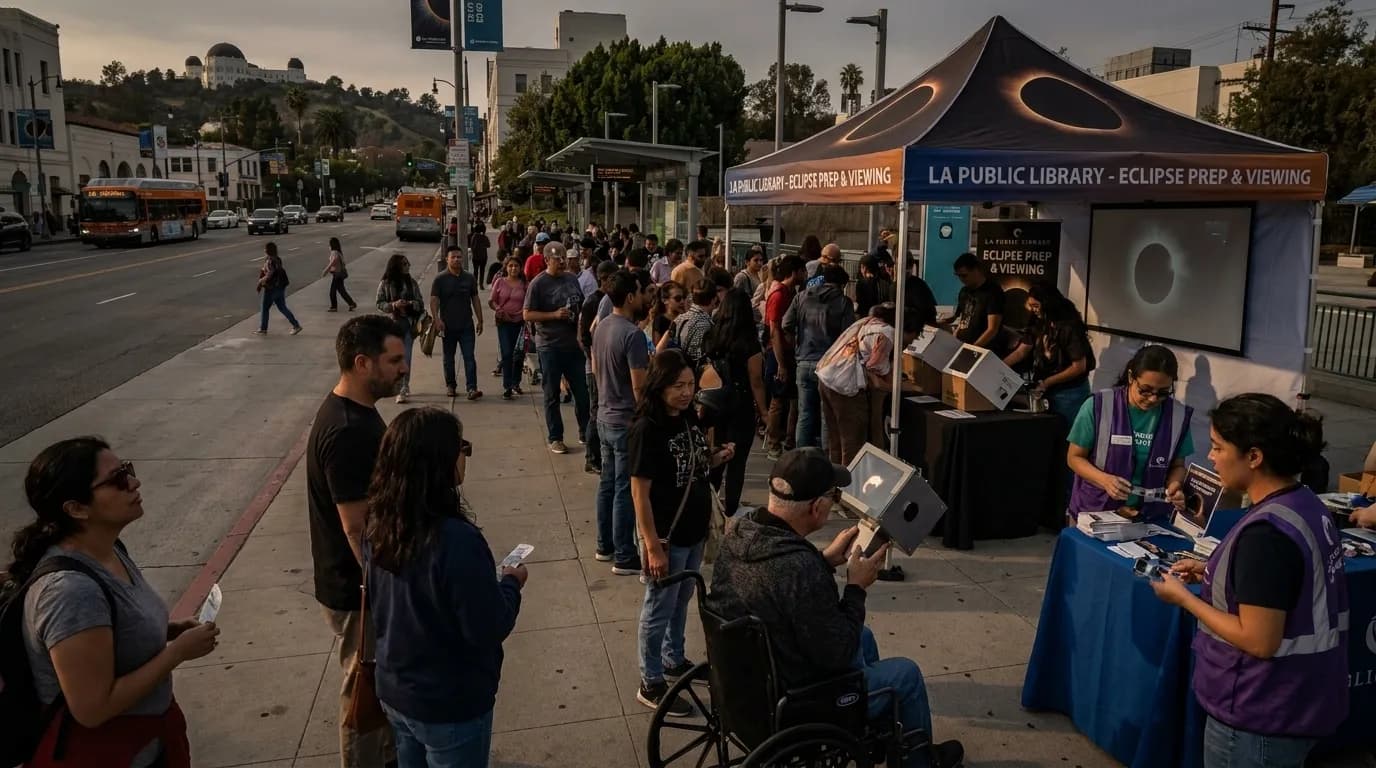
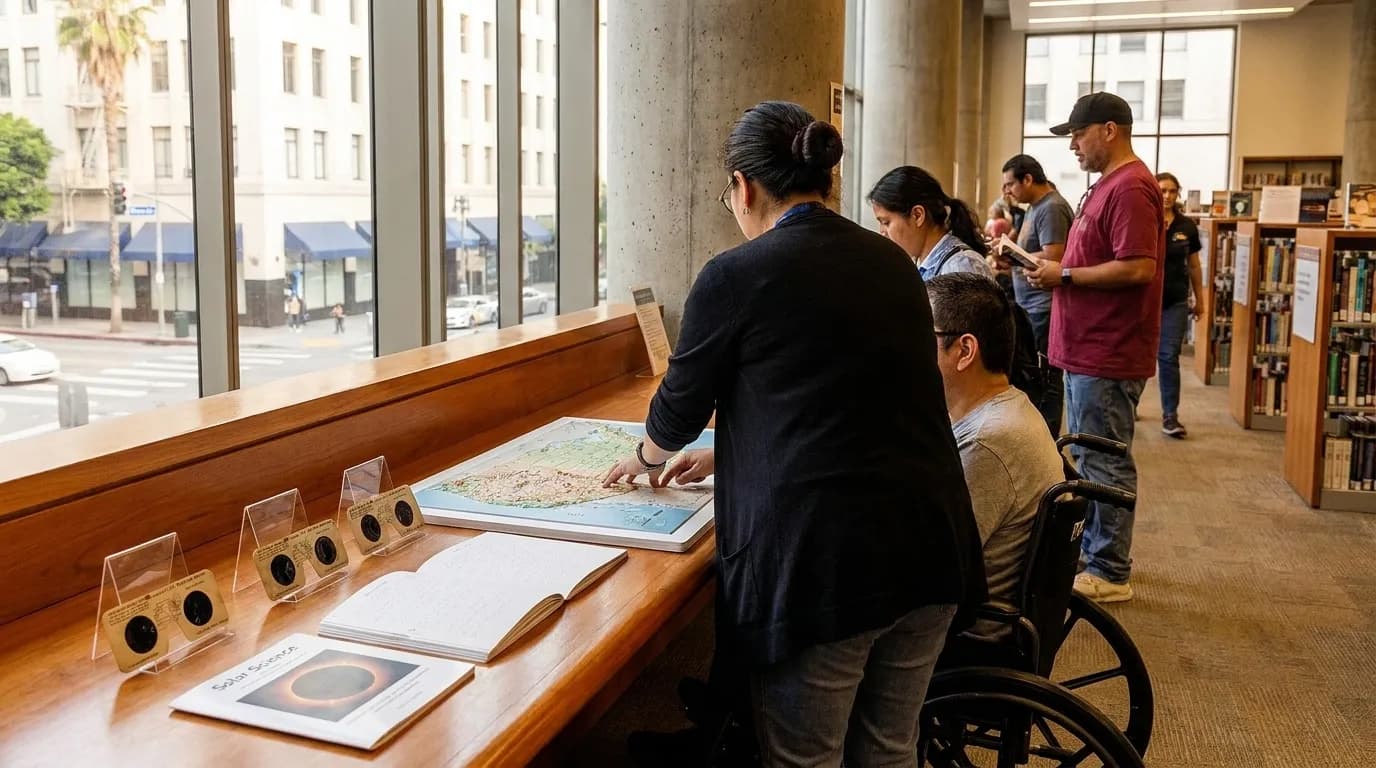
The Los Angeles Public Library (LAPL) system is a valuable community resource for learning about astronomical events, including solar eclipses. Many branches offer educational materials, books, and sometimes even host informational sessions or provide resources related to scientific literacy. These programs often aim to demystify complex topics and make them accessible to all age groups.
While the LAPL does not typically distribute eclipse glasses for every event, they are excellent places to find verified information about upcoming celestial phenomena. Library staff can often direct patrons to reliable scientific resources and educational programming. Checking the LAPL's official website or contacting your local branch directly can provide details on any specific eclipse-related initiatives.
Libraries also serve as community hubs where information on local viewing events or educational workshops might be shared. They can be a starting point for families and individuals looking to understand the science behind eclipses and how to prepare for them safely, fostering a deeper appreciation for astronomy without needing specialized equipment or direct observation.
Griffith Observatory: A Scientific Beacon for the Cosmos
The Griffith Observatory stands as a premier institution for public astronomy in Los Angeles. While it does not guarantee special events for every eclipse, its ongoing exhibits and educational programs consistently cover solar phenomena. The observatory's official website is an authoritative source for information regarding eclipse timings, safety protocols, and general astronomical knowledge.
Visiting the Griffith Observatory can provide an immersive learning experience. Their planetarium shows and displays often explain the mechanics of eclipses, the solar system, and celestial navigation. This foundational knowledge is crucial for understanding why safe viewing is paramount and how eclipses fit into the larger cosmic picture.
For significant astronomical events, the Griffith Observatory often provides expert guidance and may, on occasion, offer opportunities for indirect viewing through their telescopes equipped with proper solar filters, or host public discussions. Always consult their official website for the most current information regarding any specific eclipse-related activities or recommendations.
Accessible Viewing: Ensuring Everyone Can Participate
Accessibility in eclipse viewing extends beyond just safety; it includes ensuring that individuals with varying needs can also participate meaningfully. Indirect viewing methods, like pinhole projectors, are inherently accessible, as they do not require direct sight or the precise positioning of glasses. These methods can be easily adapted for different physical requirements.
Community centers and libraries, when hosting eclipse-related educational events, often consider accessibility in their planning. This might include providing information in multiple formats, ensuring physical accessibility of venues, and offering assistance to attendees. The goal is to create an inclusive environment where everyone can learn and engage with the scientific wonder of an eclipse.
For those who may not be able to attend public events, online resources from NASA and other reputable scientific organizations provide live streams and detailed explanations. These digital platforms ensure that geographical distance or physical limitations do not prevent anyone from experiencing the educational aspects of solar eclipses. Verifying the source of online content is important to ensure accuracy and safety information.
The Reality of Los Angeles Eclipse Viewing
It is important to manage expectations regarding solar eclipse visibility in Los Angeles. While partial solar eclipses are relatively common, a total solar eclipse is a rare event for any specific location. Los Angeles will experience partial eclipses, meaning only a portion of the sun will be obscured by the moon. The degree of coverage varies with each event.
During a partial eclipse, the sky does not darken significantly, and the environment remains much like a cloudy day. The dramatic effects associated with totality—such as the sudden darkness, drop in temperature, and visible solar corona—will not be observed from Los Angeles during a partial eclipse. Therefore, the focus should remain on safe, educational observation of the sun's crescent shape.
Crowd management and noise levels are typically not major concerns for partial eclipses in Los Angeles, unlike the intense gatherings that occur in paths of totality. However, if a significant partial eclipse coincides with a weekend or holiday, popular viewing spots, especially those with clear lines of sight, might see increased interest. Always check local advisories for any specific event.
Preparing for Future Celestial Events
Planning ahead is key for any significant astronomical event. Keeping an eye on the calendars of the Los Angeles Public Library and the Griffith Observatory is a good practice. Both institutions often announce special programs or recommended resources well in advance of celestial phenomena, allowing residents ample time to prepare.
Acquiring ISO-certified eclipse glasses or materials for building a pinhole projector should be done early, especially if a widely anticipated eclipse is approaching. Demand for certified viewing equipment can quickly outstrip supply as the event draws near, making early procurement a wise strategy. Always purchase from reputable vendors to avoid counterfeit products.
Beyond solar eclipses, Los Angeles offers numerous opportunities for stargazing and astronomical learning. Engaging with local astronomy clubs, participating in public star parties, or simply visiting the observatory regularly can foster a continuous connection to the cosmos. These activities provide ongoing educational value and a chance to observe the night sky safely and informatively.
Practical notes
Always prioritize eye safety during any solar eclipse. Use only ISO 12312-2 certified eclipse glasses or approved indirect viewing methods like pinhole projectors. Never look directly at the sun without proper protection. Ordinary sunglasses are not safe. Verify the authenticity of all viewing gear. Consult official sources like NASA, the Los Angeles Public Library, and the Griffith Observatory for the latest information and safety guidelines. Local weather conditions can affect visibility; plan for alternatives if skies are cloudy. Keep in mind that Los Angeles will experience partial eclipses, not total solar eclipses. The sky will not darken significantly.
Tags: #SolarEclipseSafety #LAEclipse #GriffithObservatory #LAPublicLibrary #EclipseEducation #SafeViewing #AstronomyForEveryone #LosAngelesScience #CelestialEvents #WeekendPlans #LACommunity #ScienceLearning #EyeSafety #PartialEclipse
Sources consulted: NASA Eclipse Safety · Griffith Observatory · Los Angeles Public Library
All trademarks are the property of their respective owners.
Ask Karpo first
<h2>Ask Karpo</h2><p>What other celestial events are you curious about? Share your questions about safe viewing practices or local astronomy resources in Los Angeles, and let Karpo help you find the answers.</p>