The Canopy That Changed Everything
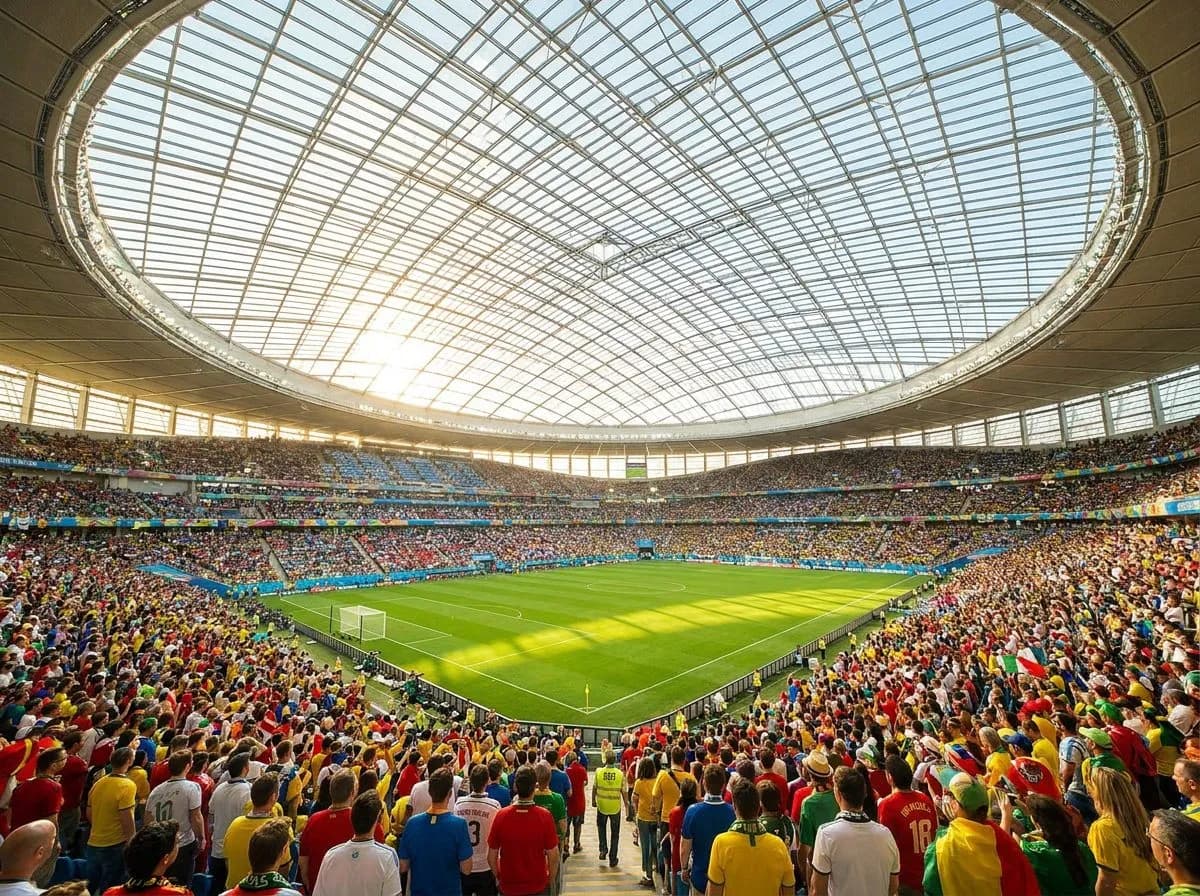
SoFi Stadium's defining feature isn't a roof in the traditional sense—it's a translucent ETFE canopy that hovers above the bowl, covering 70 acres without enclosing the sides. The material filters natural light into a soft, even glow, so even at midday the pitch stays bright but never harsh. On cooler evenings the open sides let Pacific breezes roll through, while the canopy shields fans from the occasional drizzle that drifts over Inglewood from the coast.
Text Karpo Now: for real-time transit tips, pre-match neighborhood guides, and how to make the most of Inglewood on match day.
This indoor-outdoor hybrid was engineered for Los Angeles weather, where rain is rare and summer sun is relentless. The canopy keeps the interior ten to fifteen degrees cooler than an open-air bowl, yet you still feel connected to the sky. During the World Cup, that balance will matter: players accustomed to European climates will appreciate the shade, while supporters from warmer regions will recognize the familiar warmth of an outdoor match. The design also means no artificial turf glare—a common complaint at fully enclosed domes—so broadcast cameras capture richer, more natural colors.
Architecturally, the canopy's curves echo the rolling hills of the Hollywood Park site, and its transparency ensures the venue doesn't loom over the neighborhood. Walk the perimeter and you'll see the structure shimmer, reflecting the sky and changing with the light. It's a piece of infrastructure that doubles as public sculpture, and it sets the tone for everything that happens inside.

Natural Grass Over Synthetic: The Conversion
SoFi was built with a synthetic surface for the NFL's Rams and Chargers, but FIFA's World Cup requires natural grass. In the months before the tournament, groundskeepers will install a modular grass system—trays of sod grown off-site, then slotted into place over the synthetic base. The process is meticulous: each tray must knit together seamlessly, and the pitch must drain quickly in case of unexpected rain. The canopy's filtered light will help the grass stay healthy without the intense UV exposure that can scorch turf in open stadiums.
This isn't the first time a venue has swapped surfaces for a major event, but SoFi's scale makes it notable. The pitch sits in a bowl that's partially below grade, so drainage and irrigation systems had to be designed with flexibility in mind. The natural grass will feel faster underfoot than synthetic, with a slight give that rewards precise passing and quick cuts. Players who've competed on both surfaces often say grass offers better traction and a truer roll, which could influence tactics during knockout rounds.
For fans, the visual difference is striking. Natural grass under SoFi's soft light looks lush and vivid, a contrast to the uniform green of synthetic fields. It's a reminder that even in a state-of-the-art venue, the game still comes down to earth, air, and skill.
How the Venue Plays
SoFi's open sides mean wind can be a factor, though Inglewood's inland location keeps gusts gentler than at coastal stadiums. The canopy channels airflow in predictable patterns, so corner kicks and long passes won't swirl unpredictably. Coaches will study wind data from NFL games, but the lighter soccer ball behaves differently than a football, so expect some adjustments during warm-ups.
The pitch dimensions meet FIFA standards, but the bowl's depth—sections of seating drop below street level—creates an amphitheater effect. Sound doesn't escape easily, so crowd noise builds and reverberates, giving home-continent teams a psychological edge. The translucent canopy amplifies that energy without the echo-chamber harshness of a fully enclosed dome. Players have described it as feeling both intimate and vast, a rare combination in a 70,000-seat venue.
Sightlines are steep and close, so even upper-deck seats feel engaged. The canopy's glow softens shadows, which means fewer blind spots for goalkeepers tracking high balls. Broadcast angles benefit too: the diffused light reduces glare on camera lenses, and the open sides frame shots with glimpses of palm trees and blue sky, a distinctly Southern California backdrop.
Hollywood Park and the Inglewood Context
SoFi anchors the Hollywood Park district, a 298-acre development that includes the YouTube Theater, a retail plaza, and future residential towers. The site was once a horse-racing track, and the neighborhood retains a mix of mid-century bungalows and new construction. Inglewood itself sits between LAX and downtown, a historically Black and Latino community that's seen rapid change in the past decade.
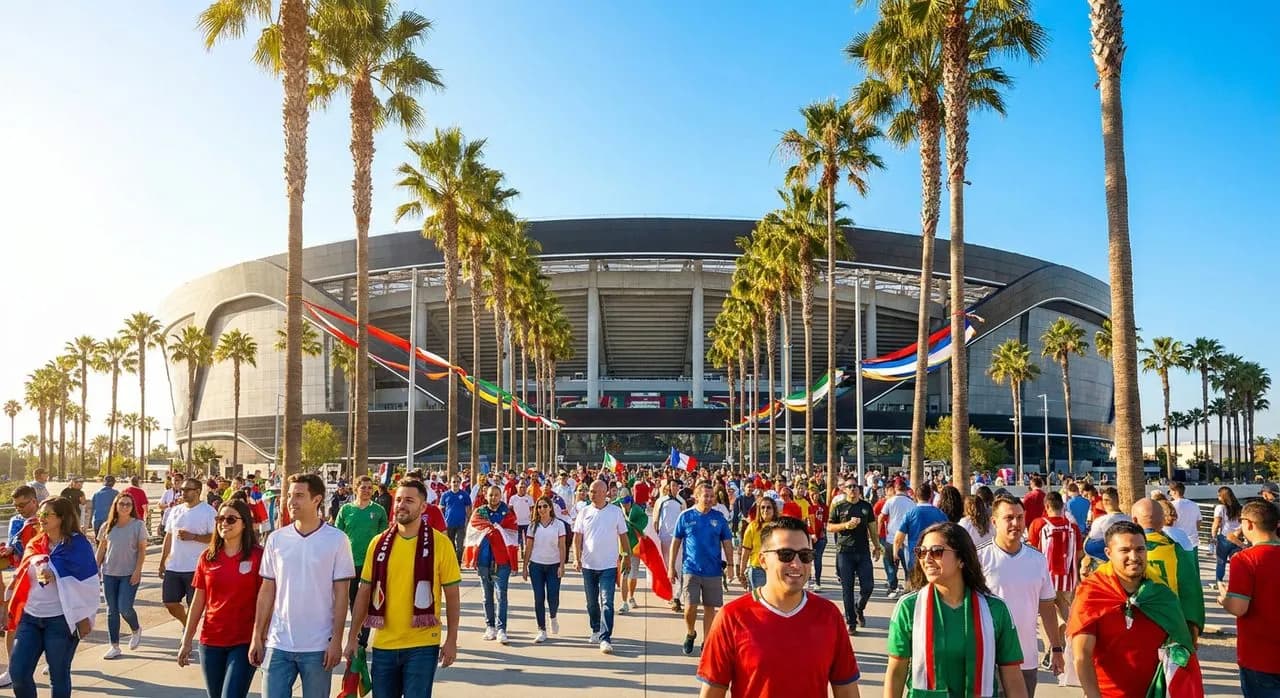
On match days, the district will pulse with activity. The plaza outside the stadium can host fan zones, food vendors, and viewing parties, turning the approach into a festival corridor. The Metro K Line—LA's newest rail extension—stops at Downtown Inglewood and connects to the broader transit network, though the final leg to the stadium still requires a shuttle or a twenty-minute walk. Ride-share drop-offs cluster near the north entrance, and parking lots sprawl across the former racetrack grounds.
Local businesses along Market Street and Manchester Boulevard will see a surge, especially spots serving Salvadoran pupusas, Oaxacan moles, and Korean barbecue. The neighborhood's food culture reflects its demographics, and visitors who venture a few blocks beyond the stadium complex will find family-run restaurants that have anchored the area for generations. It's a reminder that Inglewood isn't just a venue—it's a community with its own rhythms, now hosting a global stage.
What Sets SoFi Apart in the Tournament
Among the 2026 World Cup venues, SoFi is the only one with a translucent canopy and open sides, a design that feels more aligned with European soccer cathedrals than American football stadiums. The natural-grass conversion adds another layer of authenticity, bridging the gap between NFL infrastructure and FIFA tradition. The result is a venue that respects the sport's heritage while showcasing Los Angeles's architectural ambition.
The canopy also means SoFi can host matches at almost any hour without worrying about weather delays. Morning kickoffs will catch soft, diffused light; evening games will glow under the canopy's illumination, with the open sides framing twilight skies. The flexibility appeals to broadcasters juggling time zones across three host nations, and it gives fans a consistent experience regardless of when they arrive.
SoFi's newness—it opened in 2020—means every system is modern, from Wi-Fi bandwidth to concession logistics. There's no retrofitting or workarounds; the venue was designed for scale and spectacle. That polish extends to the pitch itself, where groundskeepers will have the latest drainage and irrigation tech at their disposal. It's a venue built for moments, and the World Cup will test whether its design lives up to the hype.
Making the Most of Match Day
Arrive early to explore the Hollywood Park plaza, where pre-match energy builds hours before kickoff. The YouTube Theater often hosts concerts or events, so the district hums with activity even on non-match days. Inside the stadium, concourses are wide and well-marked, with sightlines to the pitch from almost every concession stand. The canopy's glow makes navigation intuitive, and digital boards update in real time.
Seating tiers are steep, so mobility-accessible sections and elevators are clearly signed. The open sides mean you'll feel temperature shifts as the sun moves, so layering is smart even in summer. Hydration stations are plentiful, a nod to the Southern California heat that can surprise visitors from cooler climates. The venue's design encourages movement—walking the concourse offers different vantage points of the canopy and the pitch below.
After the final whistle, the Metro K Line and ride-share zones fill quickly, so patience pays off. If you have time, walk south toward the Forum, another Inglewood landmark, or grab a late meal on Market Street. The neighborhood's energy doesn't vanish when the stadium empties; it just shifts, blending global visitors with locals reclaiming their streets. That interplay—between spectacle and everyday life—is what makes Inglewood's World Cup chapter feel distinct.
Practical notes
- Metro K Line to Downtown Inglewood, then shuttle or 20-minute walk to the stadium
- Arrive 90+ minutes early for security and to explore the Hollywood Park plaza
- Canopy provides shade but open sides allow breezes—layer clothing for comfort
- Hydration stations throughout concourses; bring an empty reusable bottle
- Post-match, explore Market Street for Salvadoran, Oaxacan, and Korean dining
SoFi Stadium's translucent canopy and natural-grass pitch make it a venue that honors both innovation and tradition, a rare balance in modern sports architecture. The open-air sides invite Southern California's light and breeze, while the canopy ensures comfort and spectacle. As the 2026 World Cup unfolds, Inglewood will offer a stage that feels both intimate and grand, rooted in a neighborhood that's learning to share its streets with the world.
Tags: #SoFiStadium #Inglewood #WorldCup2026 #TranslucentCanopy #NaturalGrass #HollywoodPark #LosAngelesVenues #IndoorOutdoorDesign #SoccerArchitecture #MetroKLine #SouthernCaliforniaStadiums #FIFAVenues #InglewoodCommunity #StadiumInnovation #WorldCupUSA
All trademarks are the property of their respective owners.
Ask Karpo first
Whether you're planning your Inglewood match-day route or wondering how the canopy changes the game, Ask Karpo first. We'll help you navigate the Metro, find the best pre-match bites on Market Street, and understand what makes this venue unlike any other in the tournament—so you can focus on the football and the moment.