 Haaland Has Seven Goals and Norway Runs Entirely Through Him
⚽️2026 FIFA WORLD CUP
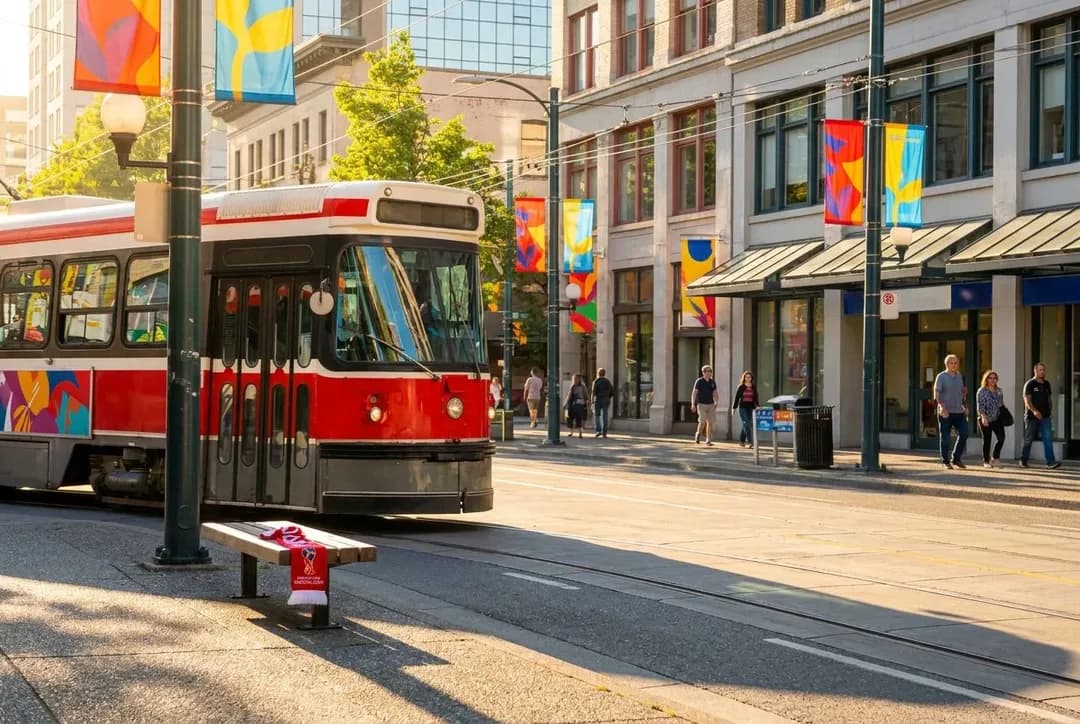
A Slow Summer Day in Vancouver During World Cup 2026
Vancouver's 2026 World Cup summer rewards the unhurried—seawall mornings, Granville Island afternoons, and Gastown evenings between matches.
The Seawall Before the City Wakes
The Vancouver seawall at seven in the morning during World Cup summer is a different species of public space. The cruise ships haven't disgorged their passengers yet, the rental bikes are still racked, and the light off the water has that clean, unfiltered quality that disappears by ten. You can cover the full Stanley Park loop—nine kilometers of paved path threading between forest and ocean—without once breaking stride to navigate a selfie stick or a stopped peloton. The mountains across the inlet sit sharp and snowcapped even in late June, and the air smells like cedar and salt rather than sunscreen and food trucks.
A slow day in Vancouver? Ask Karpo how to spend it during the World Cup.
This is the hour to claim before the tournament's daily rhythm takes over. BC Place will host seven matches between June 11 and July 19, 2026, as part of the 48-team expanded format spread across the USA, Canada, and Mexico. On match days the stadium precinct hums from mid-morning onward, but the seawall remains blessedly separate—a place where the city's natural geography reasserts itself over the event infrastructure. Locals know this. They've seen the Olympics, the Grey Cup, the fireworks crowds. They know that the best parts of a big summer in Vancouver are the parts that don't require a ticket.
If you're staying downtown or in the West End, you can walk to the seawall entrance near English Bay in under ten minutes. If you're farther east, the SkyTrain to Waterfront Station puts you a short walk from Coal Harbour and the start of the Stanley Park section. Bring a light layer—the marine air is cool until the sun clears the North Shore peaks—and plan to finish your loop before the tour buses arrive. By eight-thirty you'll be back at a café with an espresso and a pastry, watching the city gear up for the day, already ahead of the curve.
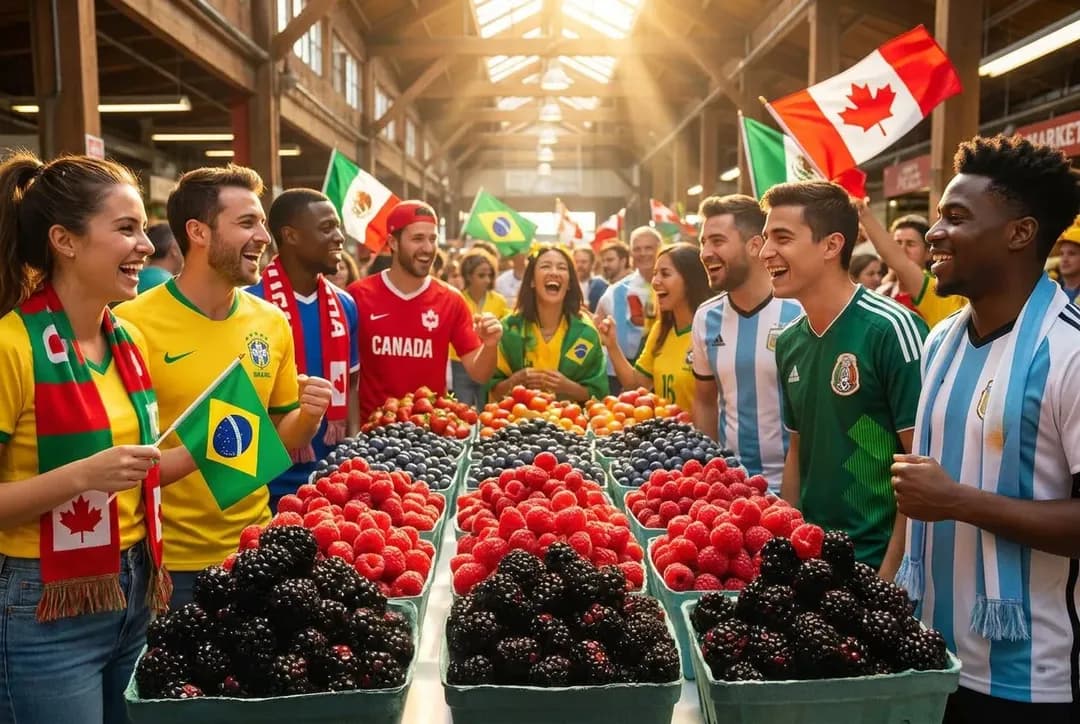
Granville Island When the Afternoon Stretches
Granville Island Public Market is a tourist magnet for good reason, but it's also one of the few places in the city where the tourist experience and the local errand overlap so completely that the distinction stops mattering. The produce stalls sell actual vegetables to actual residents. The fishmongers move volume. The bakeries run out of loaves by mid-afternoon. During World Cup summer, when the city's population swells with visitors and the weather cooperates more often than not, the market becomes a natural gathering point between match days—a place to assemble a picnic, restock your Airbnb, or simply wander through a space that smells like sourdough, smoked salmon, and ripe peaches all at once.
The island itself is small enough to cover on foot in an hour but dense enough to reward a slow afternoon. Beyond the market, the artisan studios and galleries along Railspur Alley offer a quieter counterpoint to the main pavilion's bustle. The waterfront boardwalk faces north toward the downtown skyline and the mountains beyond, and on a clear day the view alone justifies the detour. Small breweries and cideries have tasting rooms tucked into the industrial-chic corners of the island, and if you're inclined toward a mid-afternoon pint, the outdoor seating at most spots lets you watch the Aquabus ferries shuttle back and forth across False Creek like industrious water bugs.
Getting there is half the charm. The Aquabus or False Creek Ferries run frequently from multiple points along the seawall, and the ten-minute crossing feels like a miniature voyage. Alternatively, the #50 bus from downtown drops you at the island's entrance. If you're planning to stay for dinner, book ahead—the island's handful of sit-down restaurants fill up quickly during tournament weeks, and the casual spots can have queues that stretch into the parking lot. But if you're content with market provisions and a patch of grass, the island's green spaces and waterfront benches are first-come, first-served and entirely free.
Gastown's Golden Hour Without the Crowds
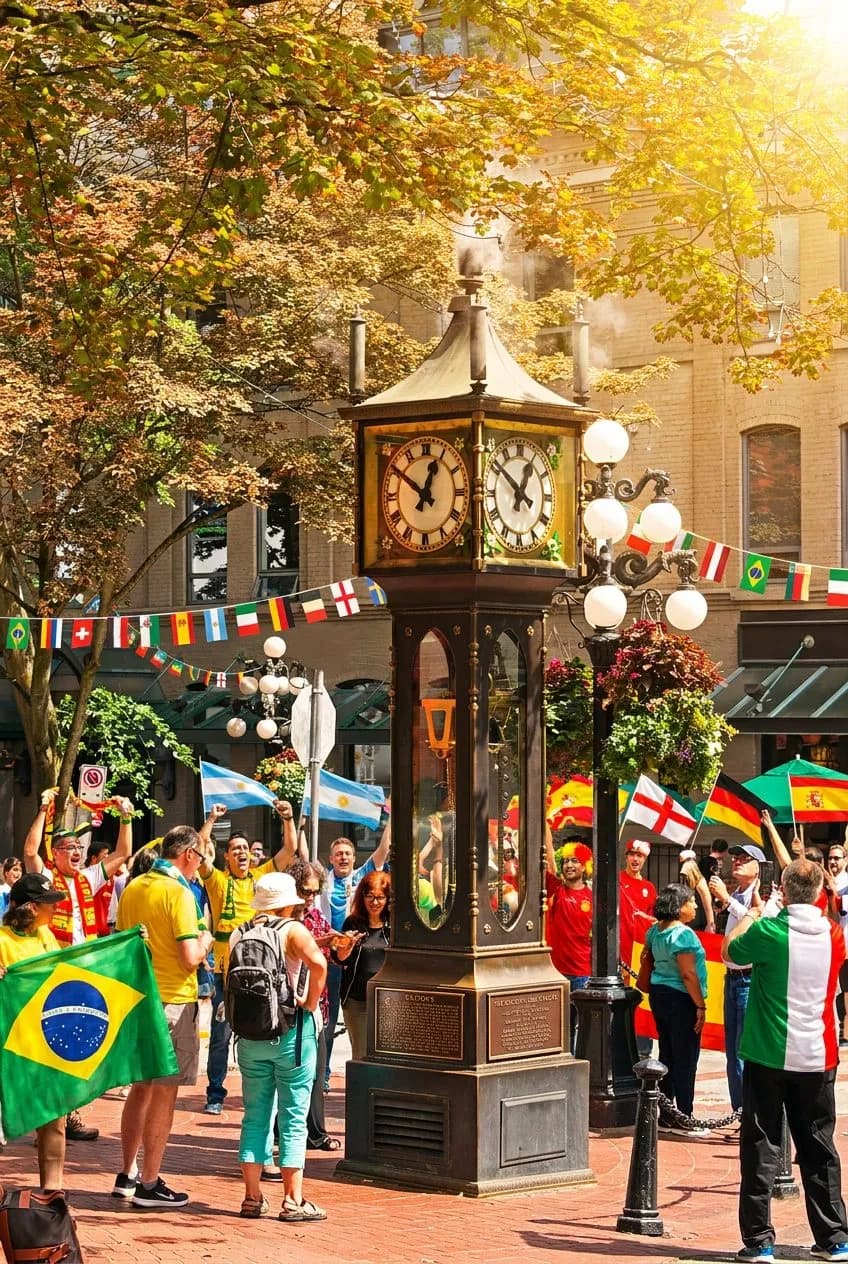
Gastown in the late afternoon, when the tour groups have moved on and the dinner reservations haven't yet started, occupies a sweet spot that's easy to miss if you're rushing. The cobblestone stretch of Water Street between Cambie and Carrall—anchored by the steam clock that whistles every fifteen minutes like clockwork—has been photographed into cliché, but the neighborhood's appeal isn't really about the clock. It's about the density of good coffee, small galleries, wine bars with natural lists, and restaurants that take their craft seriously without requiring a second mortgage.
During World Cup weeks, Gastown's bars and patios will screen matches on projectors and flatscreens, and the energy on game days will skew loud and convivial. But on the off days, the neighborhood reverts to its baseline: a walkable grid of heritage buildings, independent shops, and the kind of restaurants where the chef might be the one who seats you. The blocks east of Cambie are quieter and less polished, with vintage clothing stores, record shops, and the occasional art installation that hasn't been focus-grouped into submission. The western edge, closer to Waterfront Station, tilts more upscale, with cocktail bars and tasting-menu spots that require reservations.
If you're coming from downtown, it's a fifteen-minute walk or a single SkyTrain stop to Waterfront. If you're coming from Granville Island, the Aquabus to Yaletown and then a stroll north along the seawall will get you there in under thirty minutes. The neighborhood is compact enough that you can cover it on foot without a plan, but if you want to sit down for a drink or a meal, aim for the shoulder hours—between four and six in the afternoon, or after nine at night—when the tables turn over and the pace slows. Gastown rewards the aimless wander, but it rewards the well-timed reservation even more.
The Art of the Non-Match Day
The 2026 World Cup runs for 39 days, but Vancouver will host only seven matches at BC Place. That leaves a lot of summer to fill, and the temptation to treat every day like a match day—early start, late finish, maximum stimulation—is real. But the locals who survive big events intact know that the non-match days are the ones that matter. They're the days you sleep in, take the long route, sit on a patio for two hours with a book and a glass of something cold, and let the city's natural rhythms reassert themselves.
Vancouver's geography makes this easier than it should be. The city is small enough that you can cross it in thirty minutes on the SkyTrain, but varied enough that each neighborhood feels distinct. Kitsilano's beaches and yoga studios have a different energy than Commercial Drive's cafés and vintage shops. The North Shore's hiking trails and suspension bridges are a world away from the Granville Strip's neon and noise. On a non-match day, you can string together a seawall walk, a market visit, a museum stop, and a dinner reservation without ever feeling like you're checking boxes or racing a clock.
The trick is to build in margin. If you're planning to catch a match at BC Place, arrive early enough to walk the surrounding blocks—the stadium sits in a dense urban grid, not a suburban parking lot, and the pre-match atmosphere spills into the streets. If you're watching from a bar or fan zone, pick one close to where you're staying so you're not navigating transit in a post-match crush. And if you're taking a full day off from football, commit to it. Turn off the match alerts, leave your jersey in the hotel, and spend the day moving at the speed of a local who has nowhere to be and all summer to get there.
Where to Eat and Drink Between Whistles
Vancouver's food scene doesn't require a World Cup to justify itself, but the tournament will bring a concentration of visitors who care about eating well and a corresponding incentive for restaurants to bring their best effort. The city's strengths—Pacific seafood, Asian influences, farm-to-table produce, natural wine—are well documented, but the challenge during a busy summer is securing a table without planning three weeks ahead or settling for whatever's available at nine-thirty on a Tuesday.
The solution is to think in neighborhoods and categories rather than individual restaurants. Granville Island's market stalls and takeaway counters don't require reservations and offer some of the best casual eating in the city. Gastown's wine bars and small-plate spots often hold back a few walk-in seats at the bar, especially if you're dining solo or as a pair. The West End's Davie Street and Denman Street corridors are dense with mid-range restaurants—Japanese, Italian, Thai, Greek—that turn tables quickly and don't require a reservation for an early dinner. And if you're willing to venture east along the SkyTrain, Commercial Drive and Main Street have long-established cafés, bakeries, and casual spots where the prices are lower and the crowds are thinner.
For drinks, the city's craft beer and cocktail scenes are mature enough that you can find a good pint or a well-made Negroni in almost any neighborhood. On match days, the bars near BC Place—along Robson Street, Granville Street, and Yaletown—will be packed and loud, which is either a feature or a bug depending on your tolerance for crowds. On non-match days, the same bars are quieter and more hospitable, with bartenders who have time to talk and menus that extend beyond stadium-priced lagers. The key is to avoid the obvious spots during peak hours and to embrace the neighborhood joints that don't make the tourist guides but serve the people who live here year-round.
The Long Light and the Late Finish
One of Vancouver's underrated summer assets is the sheer length of the day. In late June, sunset doesn't arrive until after nine, and the twilight lingers until ten or later. This extended daylight changes the rhythm of a summer evening—it makes a seven o'clock dinner reservation feel early, a nine o'clock walk along the seawall feel reasonable, and a ten o'clock nightcap on a Gastown patio feel like the natural end to a day that started twelve hours earlier on the Stanley Park loop.
During World Cup summer, this long light will be a gift. Matches at BC Place will likely include early-evening kickoffs, and the walk back to your hotel or Airbnb after a six or seven o'clock finish will still be in full daylight. If you're watching from a bar or fan zone, the post-match energy can carry you through to midnight, but the option to step outside into a still-bright evening and reset your pace is always there. The seawall, the beaches, the parks—they're all accessible and safe well into the evening, and the city's transit system runs late enough that you're not stranded if you linger.
The best way to use this light is to resist the urge to cram. One good meal is better than two rushed ones. One long walk is better than three short errands. One properly made drink on a patio with a view is better than four quick pints in a basement bar. Vancouver in summer is not a city that rewards hustle. It rewards presence, patience, and the willingness to let a day unfold at its own speed. The World Cup will bring urgency and spectacle, but the city underneath—the seawall, the mountains, the water, the light—will still be there, unchanged and unhurried, waiting for you to slow down and notice.
Practical notes
- SkyTrain day passes cover unlimited travel across all zones; buy at station kiosks or use a contactless credit card to tap in and out.
- Granville Island Public Market opens daily at 9 a.m.; arrive before 11 a.m. on weekends to avoid peak crowds and secure the best produce.
- The seawall loop around Stanley Park is 9 km; budget 90 minutes on foot or 45 minutes by bike, and start early for clear mountain views.
- BC Place is a short walk from Stadium-Chinatown SkyTrain station; match-day crowds mean arriving 60–90 minutes early is standard practice.
- Gastown restaurants fill quickly during tournament weeks; book dinner reservations 3–5 days ahead or plan for early (before 6 p.m.) or late (after 9 p.m.) walk-ins.
A slow summer day in Vancouver during the World Cup isn't about opting out of the tournament—it's about choosing when and how to engage with it. The matches at BC Place will deliver their own drama, the fan zones and bars will provide their own energy, and the city's visitors will bring their own noise. But the seawall will still be there at dawn, Granville Island will still smell like bread and ocean, and Gastown's cobblestones will still catch the late light in that particular way that makes you want to sit down and stay a while. The trick is knowing when to join the crowd and when to step away from it, when to chase the spectacle and when to let the city's quieter rhythms carry you. That's not a compromise. That's the whole point of being here.
Tags: #VancouverWorldCup #BCPlace2026 #VancouverSeawall #GranvilleIsland #GastownVancouver #StanleyPark #SlowTravel #VancouverSummer #PacificNorthwest #TransitFriendly #WalkableCity #LocalRhythm #UrbanNature #NeighborhoodGuide #SummerInTheCity
Please drink responsibly. Must be of legal drinking age.
All trademarks are the property of their respective owners.
Ask Karpo first
Whether you're planning match days at BC Place or mapping out the quiet hours between kickoffs, the details matter—transit timing, reservation windows, the best light for that seawall walk. Ask Karpo first, and you'll spend less time second-guessing logistics and more time enjoying the kind of slow, well-paced summer day that makes a World Cup host city feel like home for a few weeks.
Ask Karpo for more information.
Keep reading
- Haaland Has Seven Goals and Norway Runs Entirely Through Him
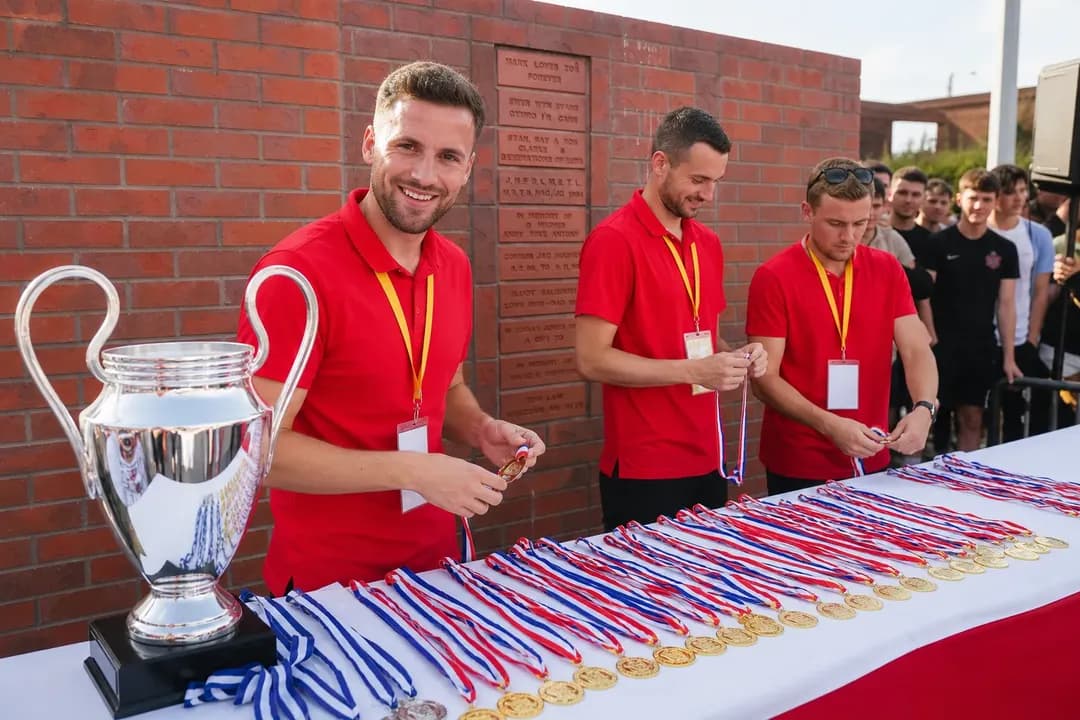 World Cup Trophy Ceremony Timing Medals and Postmatch Celebrations
 Olise and France's Attack: The Semifinal Tactical Question