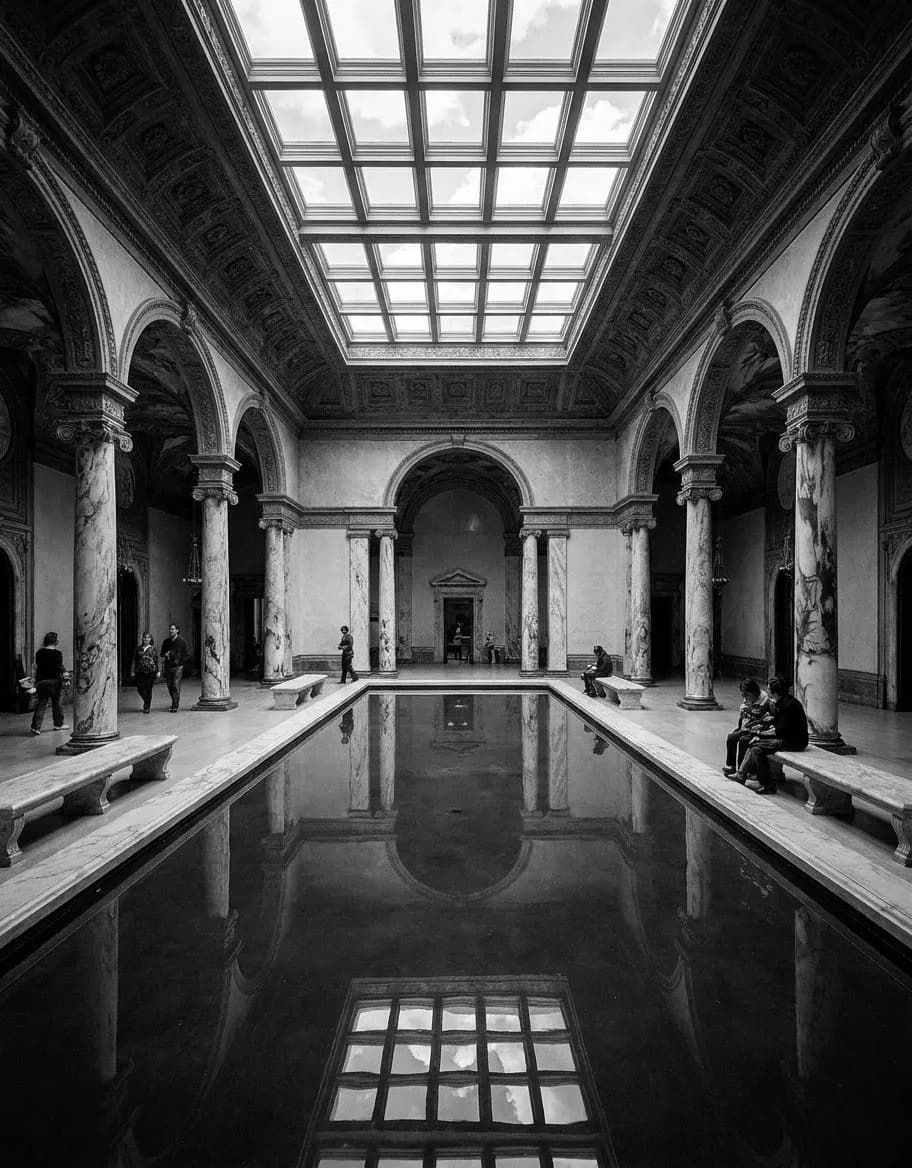
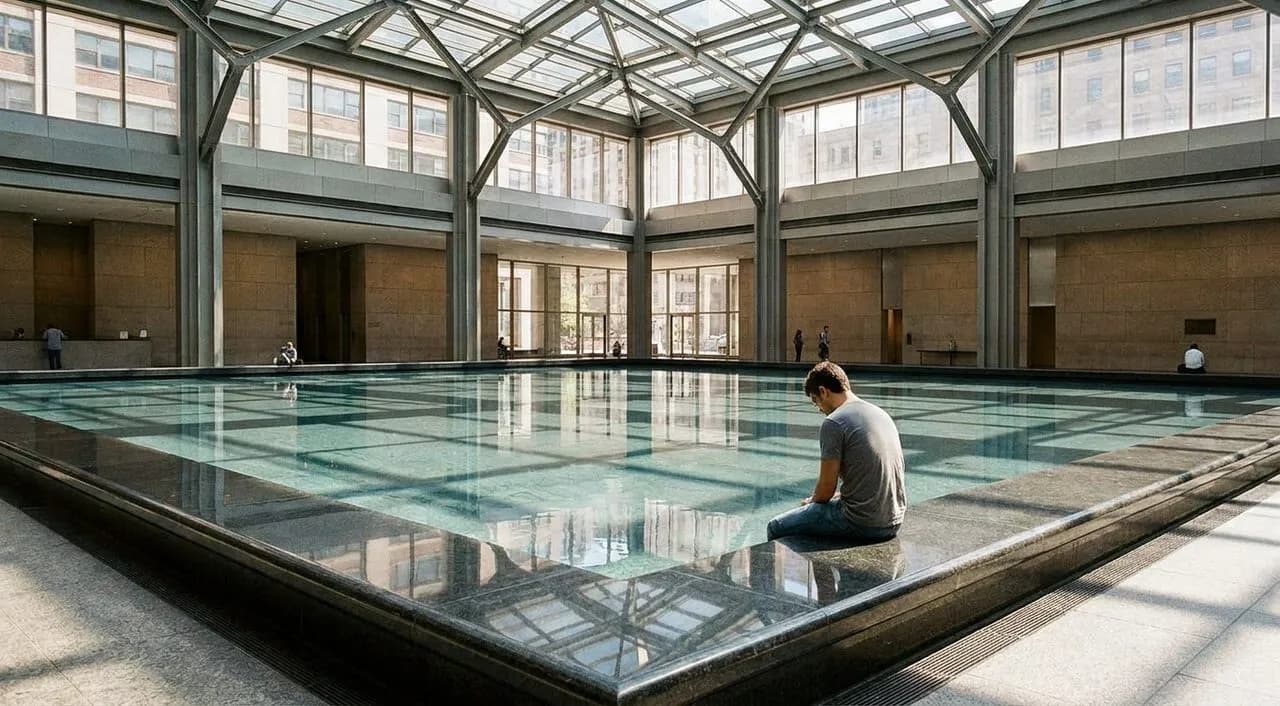
Most New Yorkers walk past 919 Third Avenue without a second glance. It's a beige tower, unremarkable in the way of midcentury office slabs, wedged between 54th and 55th Streets in Midtown East. But step through the ground-floor entrance during business hours and you'll find something that feels misplaced in time: a forty-foot square reflecting pool beneath a grid of coffered skylights, flanked by marble benches and almost no signage. The water is mirror-still. The acoustics are cathedral-like. And chances are, you'll have it nearly to yourself.
A Deal That Built a Room for Daylight
This atrium exists because of paperwork. In 1970, when the tower was completed, New York's zoning laws offered developers a trade: build a privately owned public space—a POPS, in planning jargon—and earn extra floors in return. Most builders paved a windswept plaza and called it a day. Here, the architects went inward, carving out a double-height lobby and installing a shallow pool that was never meant to gurgle or splash.
The pool is only six inches deep, designed as a reflecting device rather than a fountain, and that restraint gives the space its peculiar gravity. There's no cascade, no coins glinting at the bottom. Just a skin of recirculating water that mirrors the coffers above and doubles the light. It's an architectural anomaly tucked inside a tax incentive, and it feels more like a Kyoto courtyard than Midtown real estate.
Marble, Silence, and the Five-Minute Rule
The benches are travertine, cool even in summer, and positioned just far enough from the pool's edge that you won't see your own reflection unless you stand. There's a low hum from the HVAC, the occasional muffled ring of an elevator bell, and the faint white noise of water cycling through hidden pumps. It's not silent, exactly, but it's insulated—sound behaves differently here, absorbed by stone and the high ceiling.
Most visitors pause, take a photo, and leave. The average stay is under five minutes, which means the space rarely feels crowded even when the building is busy. There's no coffee cart, no reason to linger except the light and the odd luxury of sitting still in a part of town built for speed. In late 2026, as Midtown continues its post-pandemic reinvention, this civic atrium remains what it was designed to be: public, quiet, and slightly out of step.
When to Visit (and Why Evening Matters)
The atrium is open weekdays from eight in the morning until six in the evening, a schedule that aligns with the building's office tenants. Come midday and you'll share the benches with a rotating cast of suited lunch-breakers and the occasional lost tourist consulting a phone. But after five o'clock, the building empties. Desks go dark, elevator traffic thins, and the atrium becomes something else entirely—a private chapel of water and skylight, yours for the taking until the security guard locks up at six.
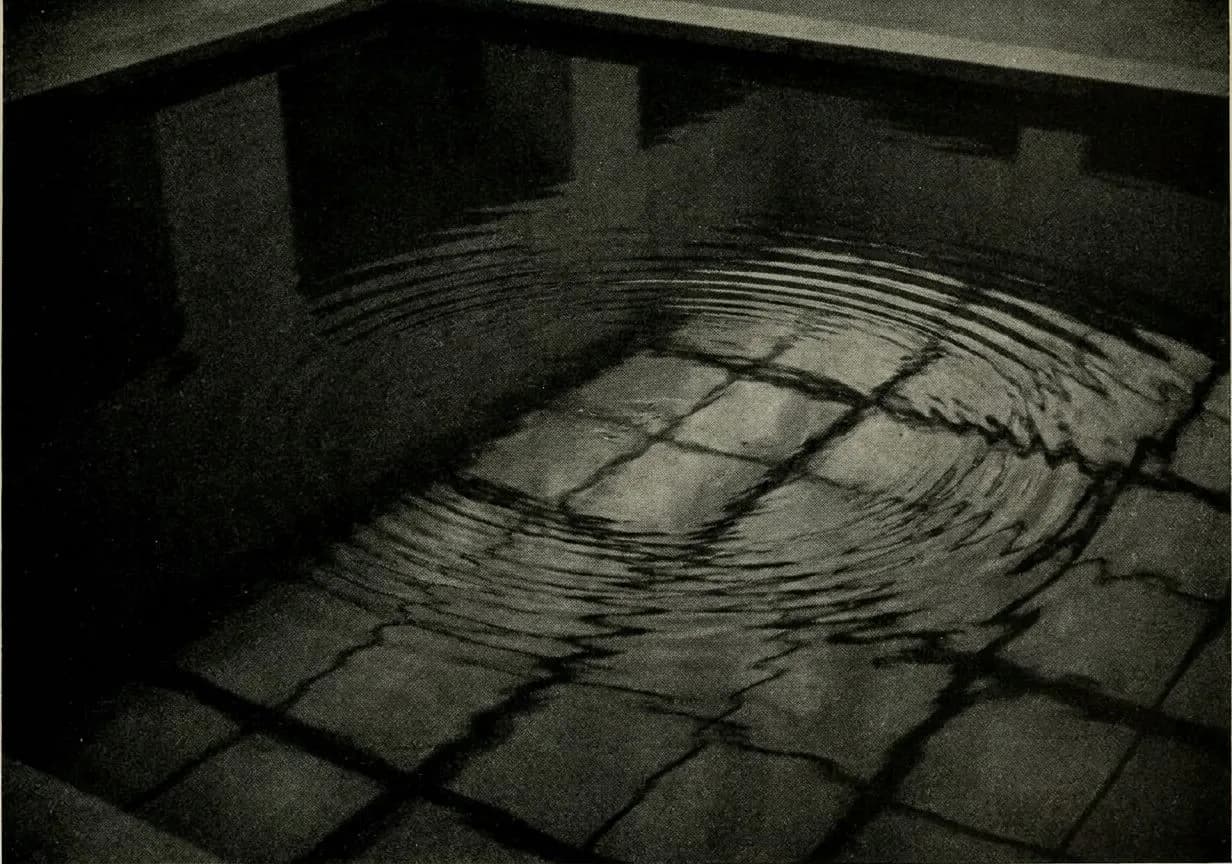
That final hour is when the space shows its best self. Late-afternoon sun slants through the coffers at a lower angle, catching the pool's surface and throwing rippled shadows onto the marble walls. The quality of light shifts from clinical to golden, and the silence deepens. If you're the type who lingers in empty museums after closing announcements, this hour will feel familiar.
The Bronze Plaque Nobody Reads
There are two ways out. Most people retrace their steps to Third Avenue, but if you exit through the east door onto 55th Street, you'll pass a small bronze plaque mounted beside the threshold. Dated 1971, it explains in dry legalese the plaza requirement that created this space—the zoning amendment, the square-footage trade, the public-access covenant. It's the kind of institutional marker that only urban-planning obsessives pause to read, but it's worth a glance. This atrium wasn't a gift; it was a negotiation, and the plaque is its receipt.
That east exit spills you onto a quieter stretch of 55th, away from the Third Avenue bus corridor. It's an easy walk south to the Sutton Place esplanades or west toward the boutiques and bistros clustered near Lexington. The atrium works best as a punctuation mark—a moment of unexpected stillness before you rejoin the city
What It's Not
This isn't Instagram bait. The pool photographs beautifully, but the space resists curation—there's no neon, no branded backdrop, no reason to return except the architecture itself. It's not a destination in the traditional sense, more a detour for the observant. If you're hunting for the city's hidden interiors, the ones that reward curiosity without demanding a reservation, this atrium earns a spot on the list.
It's also not consistent. Some weekdays the water level is lower, the surface slightly dimpled by a faulty pump. Occasionally a building event will close the space without warning. The city's POPS database lists it as compliant, but compliance doesn't mean charm, and charm here depends on timing, weather, and whether the janitorial staff remembered to skim the leaves that blow in through the revolving doors.
Why Summer Works
By summer 2026, when humidity turns the sidewalks into convection zones and every other ground-floor refuge is packed with tourists nursing iced lattes, this atrium offers something rarer: air-conditioning and solitude. The temperature inside hovers around sixty-eight degrees year-round, a function of the building's central systems, and the coolness feels earned rather than blasted. You're not paying for it with a purchase minimum, and you're not competing for a seat.
Practical notes
919 Third Avenue, between East 54th and 55th Streets. Nearest subway: 51st Street (6 train) or Lexington Avenue/53rd Street (E, M) Metered street parking is scarce; garages cluster along Second Avenue. The atrium is open weekdays, typically 8 a.m. to 6 p.m., but verify hours if you're coming from far. The space is wheelchair accessible via the Third Avenue entrance. Bring nothing—just a few minutes and low expectations. No food, no flash photography, no lingering past closing.
Tags: #SkyReflectingPool #KipsBay #919ThirdAvenue #CivicAtrium #ArchitecturalAnomaly #POPSNYC #HiddenMidtown #FreeAndFine #NYCInteriors #MidtownSecrets #ReflectingPool #QuietNYC #Summer2026 #NewYorkArchitecture #CityFinds
Sources consulted: Kips Bay, Manhattan · Privately Owned Public Spaces · NYC Planning - POPS · Free Things to Do in NYC
All trademarks are the property of their respective owners.