The US Open has become the stage where Jannik Sinner and Carlos Alcaraz are writing the most compelling chapter of their rivalry. Sinner claimed the 2024 title, then watched Alcaraz defeat him for the 2025 crown. Now, as the 2026 tournament approaches with main draw action beginning August 31, the Italian arrives as the reigning Wimbledon champion while questions linger about the Spaniard's wrist condition. Their contrasting approaches to the game have already defined what modern tennis can look like on hard courts, and understanding those differences makes watching either player a masterclass in tactical problem-solving.
Text Karpo Now: Tell us what you want from Sinner vs Alcaraz, and Karpo can track official updates, match timing, tickets, transit, and the easiest way to plan your US Open day.
Movement Patterns That Define Each Player
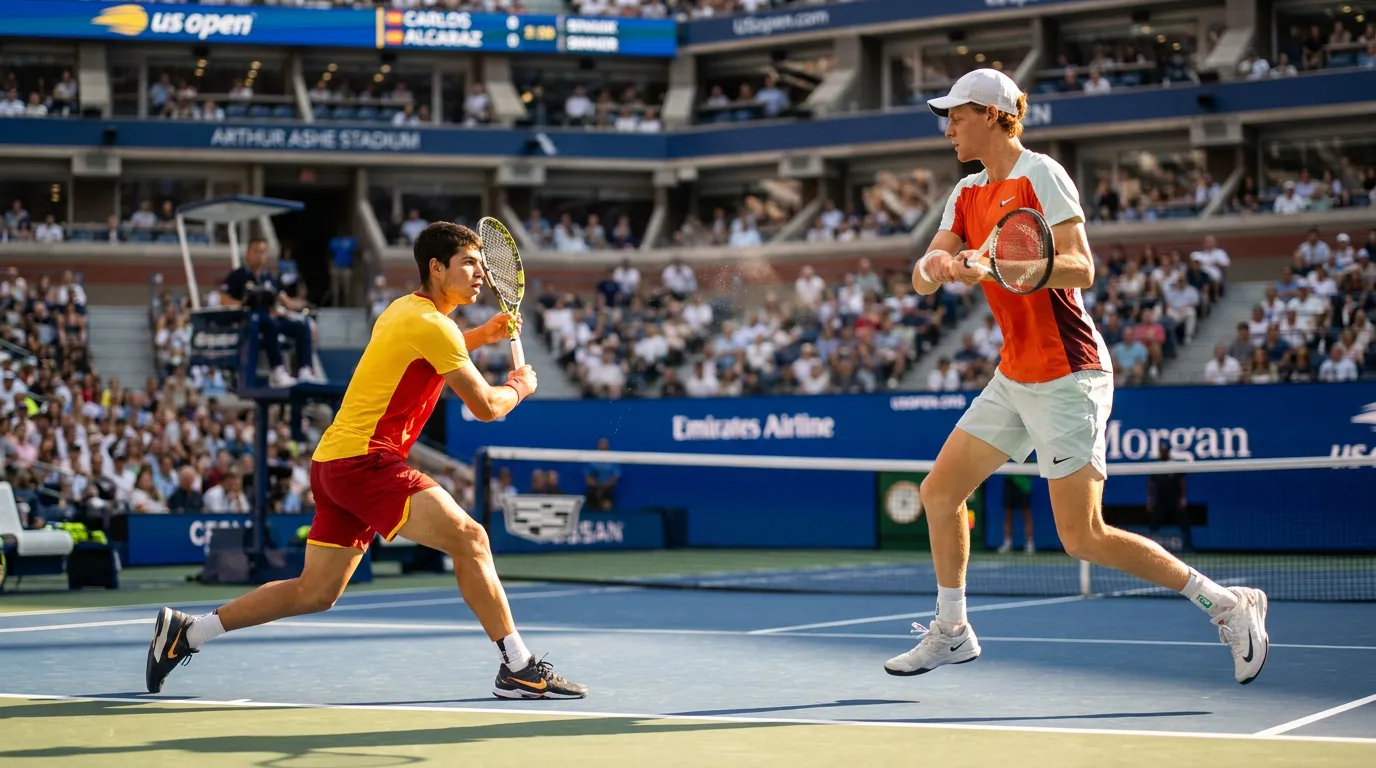
Sinner's movement is built on economy and positioning. He takes the ball early, often inside the baseline, which means he covers less total distance because he cuts off angles before they develop. His split-step timing is precise, and he favors small adjustment steps rather than explosive changes of direction. Watch his feet during rallies and you will notice how rarely he slides into extreme defensive positions. This is not because he lacks speed but because his court positioning prevents those emergencies. He sets up slightly closer to the center hash mark on many returns, trusting his reaction time and his ability to redirect pace rather than create it from a neutral position.
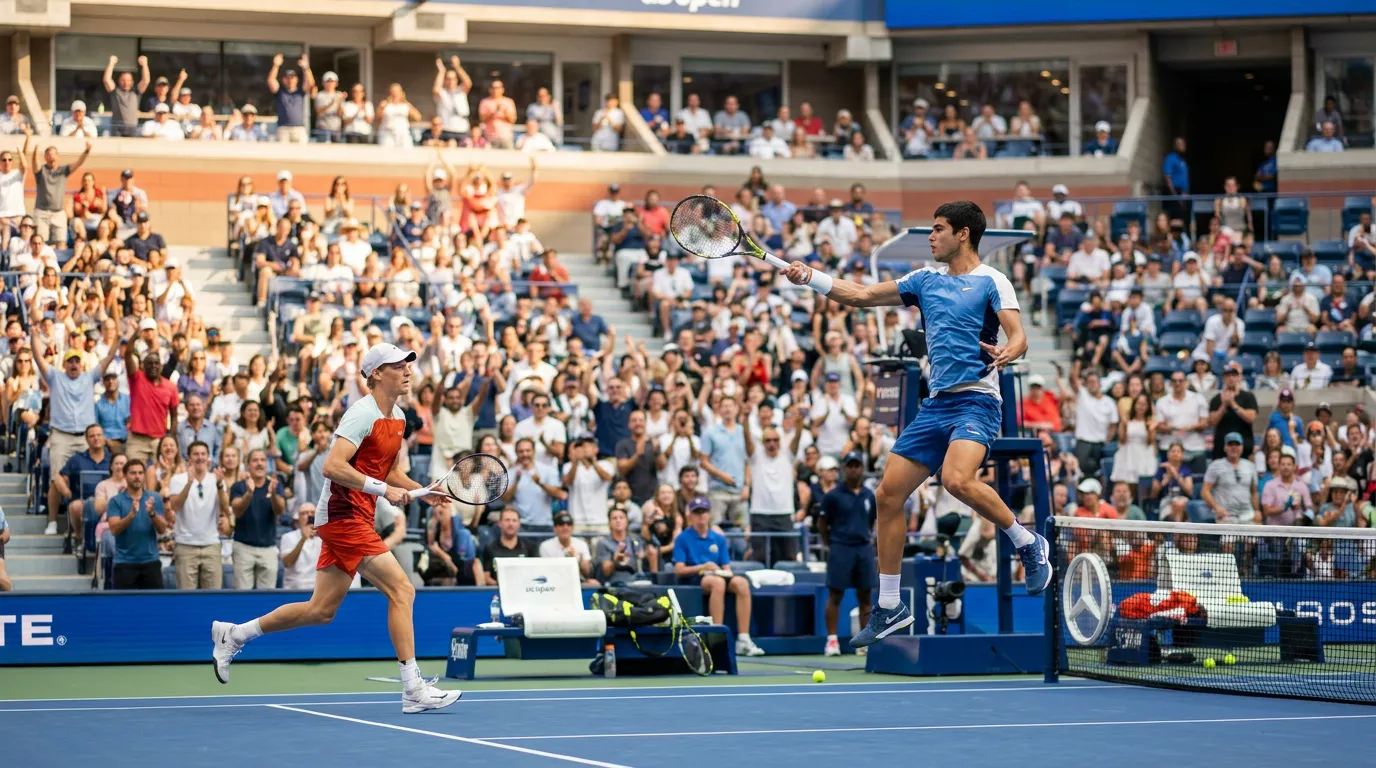
Alcaraz moves like someone who expects to retrieve everything and then counter-punch from impossible positions. His movement radius is wider, his slides more dramatic, and his willingness to sprint into corners more pronounced. He uses the full depth of the court, sometimes setting up five feet behind the baseline to load up on groundstrokes, then charging forward to take a short ball on the rise. His footwork includes more lateral explosion, which allows him to change direction mid-rally and turn defense into offense with a single shot. On the US Open's DecoTurf surface, which offers reliable traction, his sliding and recovery become weapons that extend rallies and frustrate opponents who thought they had hit winners.
Shot Shape and Spin Dynamics
The way each player shapes the ball reveals their strategic priorities. Sinner's forehand is flatter than most top players, with a contact point that stays consistently in front of his body. He generates pace through clean weight transfer and a compact swing path, which means his balls travel lower over the net and skid through the court rather than kicking up. His backhand, a two-hander, is even flatter and often his most reliable weapon for redirecting pace down the line or cross-court with minimal backswing. The result is a shot pattern that keeps opponents pinned to the baseline, unable to step in without risking getting jammed.
Alcaraz employs more spin variation, particularly on his forehand. His swing path is longer, with a pronounced low-to-high motion that generates heavy topspin when he wants to push opponents deep or create a high-bouncing ball that lands near the baseline. But he can also flatten out that same forehand when he steps inside the court, using the same preparation to disguise his intention. His backhand, also a two-hander, sits somewhere between Sinner's flat drive and a traditional topspin shot, giving him the flexibility to slice, drive, or loop depending on court position. This variety makes it harder to anticipate where the ball will land or how it will bounce, which disrupts rhythm and forces opponents to adjust their positioning constantly.
Tempo Control and Rally Construction
Tempo is where the rivalry becomes a chess match. Sinner prefers a faster, more relentless pace. He takes the ball on the rise, shortens the time between shots, and rarely gives opponents a chance to reset. His service games move quickly, and his return position is aggressive, designed to take time away rather than create it. This approach works especially well on faster hard courts, where the ball stays low and opponents have less time to set up for their preferred shots. When Sinner controls tempo, rallies become a test of reflexes and consistency rather than creativity.
Alcaraz is more willing to vary tempo within a single rally. He might absorb pace with a high, looping forehand, then explode with a flat drive on the next shot. He uses drop shots not just as outright winners but as tempo disruptors, forcing opponents to sprint forward and then defend against a passing shot or lob. His willingness to change speeds makes it difficult for opponents to settle into a rhythm, and it creates opportunities for him to dictate from positions where other players would still be defending. On the US Open's courts, where humidity and evening conditions can slow the ball slightly, this tempo variation becomes even more effective because opponents cannot rely on consistent bounce or pace.
- Sinner thrives on relentless, high-pace exchanges that test consistency and reflexes rather than variety.
- Alcaraz disrupts rhythm by mixing heavy topspin, flat drives, and drop shots within the same rally.
- Evening sessions often favor tempo variation as conditions slow slightly under lights.
Recent New York Success Stories
Sinner's 2024 US Open title run showcased his ability to maintain intensity across two weeks. He faced Taylor Fritz in the final and demonstrated the kind of baseline consistency that wears down opponents even when they are playing well. His ability to neutralize big serves by taking returns early and his willingness to go for lines on second-serve returns turned potential service holds into break opportunities. That title confirmed what many had suspected: his game is built for the conditions in New York, where the courts reward aggression and punish hesitation.
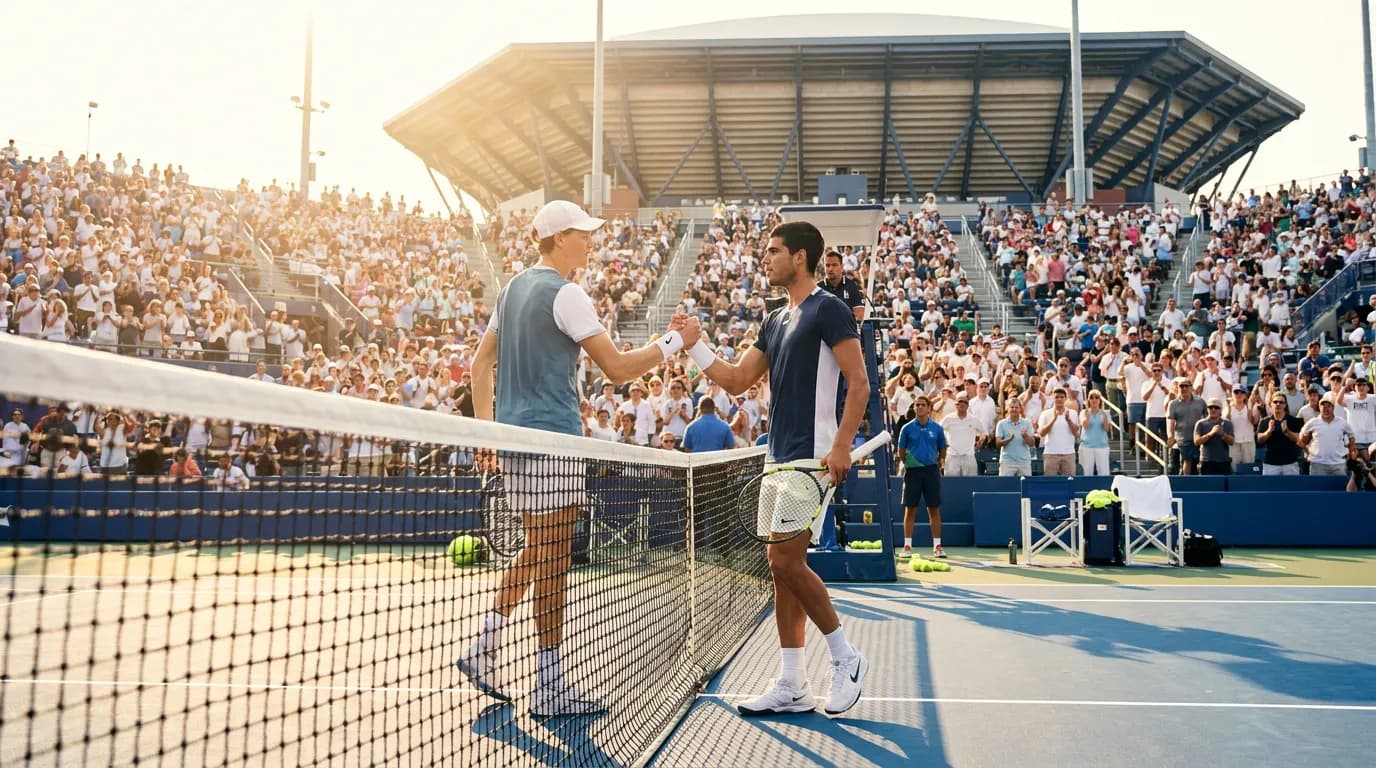
Alcaraz's 2025 victory over Sinner in the final was a different kind of statement. He showed that his movement and shot variety could overcome Sinner's relentless pace, and he proved that he could execute under the pressure of facing the defending champion. The match highlighted his ability to extend rallies when necessary and finish them quickly when opportunities appeared. His willingness to come forward and his confidence in his net game added another dimension that Sinner had to account for, and it paid off in crucial moments. That win reinforced the sense that this rivalry would define the sport for years.
Sinner's 2026 Wimbledon title adds another layer to the narrative heading into this year's US Open. Winning on grass requires different skills, but it also builds confidence and confirms that his game travels across surfaces. The possibility of another chapter in New York adds intrigue to the tournament, though the uncertainty around Alcaraz's wrist means the path forward remains unclear for both players.
Practical Notes
The US Open main draw begins on Monday, August 31, 2026, with matches scheduled across Arthur Ashe Stadium, Louis Armstrong Stadium, and the Grandstand, plus outer courts. Evening sessions under the lights in Ashe often feature the biggest names, and the atmosphere is electric. Tickets are available through the official US Open website, and grounds passes offer access to multiple courts. The USTA Billie Jean King National Tennis Center is accessible via the 7 train to Mets-Willets Point station. Arrive early to explore the grounds, and bring sun protection for day sessions. Check the daily schedule the night before, as match times shift based on earlier results.
Tags: #USOpen2026 #Tennis #GrandSlam #NewYorkTennis #ArthurAsheStadium #FlushingMeadows #USOpenGuide #TennisFans #SportsTravel #HardCourt #NewYork #KarpoFinds
Sources consulted: usopen.org — Official reference · usopen.org — Official reference · usopen.org — Official reference
All trademarks are the property of their respective owners.
Ask Karpo first
Before you lock in tickets or build a full day around an unconfirmed schedule, ask Karpo first. Share your dates, budget, and favorite players, and Karpo can help turn official US Open updates into a practical New York plan.