 Stonestown Winter Farmers Market Picker for Student Cooks
Weekend Plans
Sunset Golden Gate Woodblock Print Workshop Ocean Trail
Explore peaceful coastal relief carving and Japanese washi printing techniques in daylight printmaker studios near scenic Ocean Beach dunes today.
In San Francisco's Outer Sunset district, where residential avenues meet the rolling dunes of Ocean Beach and the western entrance to Golden Gate Park, artists discover an extraordinarily peaceful creative rhythm. The gentle coastal fog, scent of salt air, and soft ocean daylight filter into quiet neighborhood print studios. Taking a woodblock print workshop in this relaxed coastal quarter provides an ideal setting for deep artistic immersion, focused contemplation, and tactile craftsmanship. The soothing sound of distant ocean breakers and the smell of clean wood shavings create an idyllic coastal environment for exploring relief block arts.

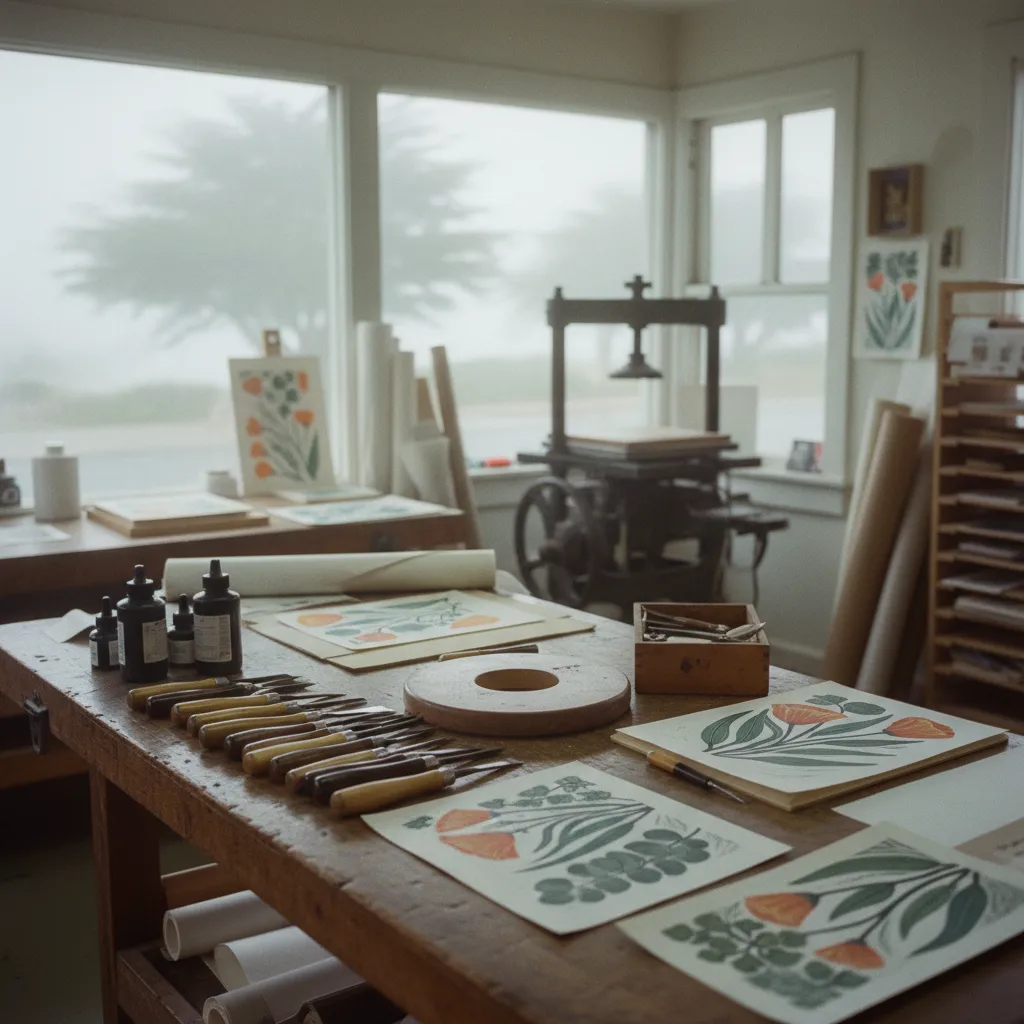
The studio atmosphere in the Sunset is grounded, unpretentious, and closely connected to the surrounding natural elements. Converted storefront spaces and backyard workshops feature heavy wooden workbenches, drying lines holding deckle-edged washi prints, and shelves filled with natural pigments and carving tools. Here, the distant sound of breaking surf provides a soothing soundtrack as carvers guide their blades through smooth wood blocks with steady hands.
Relief carving offers an inherently mindful creative practice that slows the mind and sharpens focus. In an era dominated by instantaneous digital screens, carving a physical block of wood requires intentional pacing, hand-eye coordination, and deep respect for the wood's organic grain. Each deliberate incision leaves a permanent mark, transforming a simple piece of timber into an expressive printing matrix that reflects the carver's personal artistic voice.
The coastal ecology of western San Francisco—from shifting beach dunes and sea oats to cypress groves and botanical park flora—supplies abundant visual inspiration for woodblock designs. Translating organic wave patterns, floral silhouettes, and coastal birdlife into high-contrast relief graphics teaches students to distill complex natural forms into pure, expressive line and shadow, evoking the wild beauty of the Pacific coast.
Wood Selection and Carving Knife Handling
Crafting a durable relief block begins with understanding the physical properties of carving wood. In Sunset studios, students work primarily with close-grained Japanese shina plywood, loved for its silky surface and splinter-free cutting qualities. Experienced carvers frequently experiment with dense mountain cherry or wild pear blocks that hold razor-sharp microscopic lines without flaking under repeated printing pressure. Working on knot-free wood panels gives carvers the freedom to execute sweeping wave crests and organic coastal forms with complete confidence.
Students master the core cutting actions of traditional Japanese woodcraft knives. The angled hanto knife scores deep boundary cuts along sketch lines, cleanly severing wood fibers to prevent tearing. Round maruto gouges scoop away negative background fields in smooth rhythmic strokes, while fine V-shaped tools cut crisp wave crests, coastal grasses, and fine sea spray textures across the plate.
Instructors emphasize disciplined body posture and knife safety to prevent fatigue and accidents. Carvers brace blocks firmly against heavy bench hooks, always maintaining both hands behind the cutting edge. Driving blades forward with gentle torso momentum rather than isolated wrist bending yields clean, uniform shavings and produces smooth, chatter-free relief channels across the block.
Understanding grain alignment allows carvers to maneuver through complex curved contours with ease. Cutting along the grain produces long ribbon shavings, while carving against the grain requires shallow, slicing strokes to avoid chipping wood fibers. Carvers rotate their blocks steadily on the bench hook, ensuring that every curve is approached from the most ergonomic angle.
Traditional Moku Hanga Pigments and Paper Science
Outer Sunset printmakers celebrate the natural purity of traditional Japanese moku hanga printing. Pure earth pigments and carbon sumi ink are blended with home-cooked rice starch paste directly on the moistened wood surface using broad horsehair brushes. This solvent-free technique produces soft, breathable color washes that soak deep into the paper fibers without synthetic sheen or chemical fumes.
For artists wanting crisp graphic contrast, modern oil-based relief inks rolled with synthetic rubber brayers provide velvety opacity. Printers charge ink smoothly across glass palettes until a fine, even film forms on the roller. Careful inking control prevents clogging fine carved lines while guaranteeing crisp image transfer on every paper pull.
Selecting the ideal printmaking sheet elevates the tactile beauty of hand-pulled woodcuts. Coastal studios supply fine Japanese washi crafted from pure kozo, mulberry, and Hosho fibers, renowned for their incredible tensile strength and absorbent receptivity. Humidifying papers slightly inside damp blotter packs softens the fibers, allowing them to draw ink cleanly from the carved block under manual pressure without tearing or wrinkling.
The Bamboo Baren and Multi-Plate Kento Registration
Applying ink impressions manually across the Pacific coast relies on the rhythmic friction of the handheld bamboo baren. Carved from woven bamboo strips enclosing pressed washi layers, this tactile disc distributes the carver's shoulder force across the reverse face of the print. Moving the baren in firm concentric circles embeds water-based pigments securely into the damp paper mesh.
Multi-color editions require cutting precise kento registration notches directly into the margins of each wooden block. An L-shaped corner guide on the bottom right and an aligned straight stop along the bottom edge ensure that the paper drops into the exact same position for every successive color pass, guaranteeing hairline alignment throughout complex multi-color runs.
Unveiling the freshly pulled print from the carved wood matrix marks the supreme highlight of coastal printmaking. Carefully lifting one corner of the damp sheet exposes crisp relief margins, atmospheric watercolor gradations, and the authentic fingerprint of the wood grain. Every pulled proof carries subtle individual markings that celebrate genuine artisan execution and slow creative dedication.
Ocean Beach Strolls and Studio Planning Advice
Taking a quiet walk across the wind-sculpted sand of Ocean Beach after workshop hours provides a deeply grounding conclusion to your creative day. Watching shorebirds race along the Pacific surf line allows your editioned prints to rest flat inside acid-free folders. The vast ocean horizon and fresh salt air clear the mind, inspiring new sketch ideas for upcoming relief editions.
Stepping into an intensive woodcut workshop requires little advance preparation beyond an open mind and a few preliminary line drawings. Wearing casual work clothes suited to washable ink work ensures you can focus entirely on tool handling and printing technique. The Karpo APP serves as a versatile guide for discovering neighborhood artisan courses, locating hidden printing collectives, and planning rewarding cultural weekends in western San Francisco.
Ask Karpo for more information.
Keep reading
- Stonestown Winter Farmers Market Picker for Student Cooks
 Clement St Winter Farmers Market Picker for Lunar New Year
 Fort Mason Winter Farmers Market Picker for Citrus Bakers