 Stonestown Winter Farmers Market Picker for Student Cooks
Weekend Plans
Alemany Winter Farmers Market Picker for New-Parent Soups
Shopping Alemany for a new mother's winter soups? Learn which greens, roots and ginger to look for, how to move through the rain, and what to cook first.
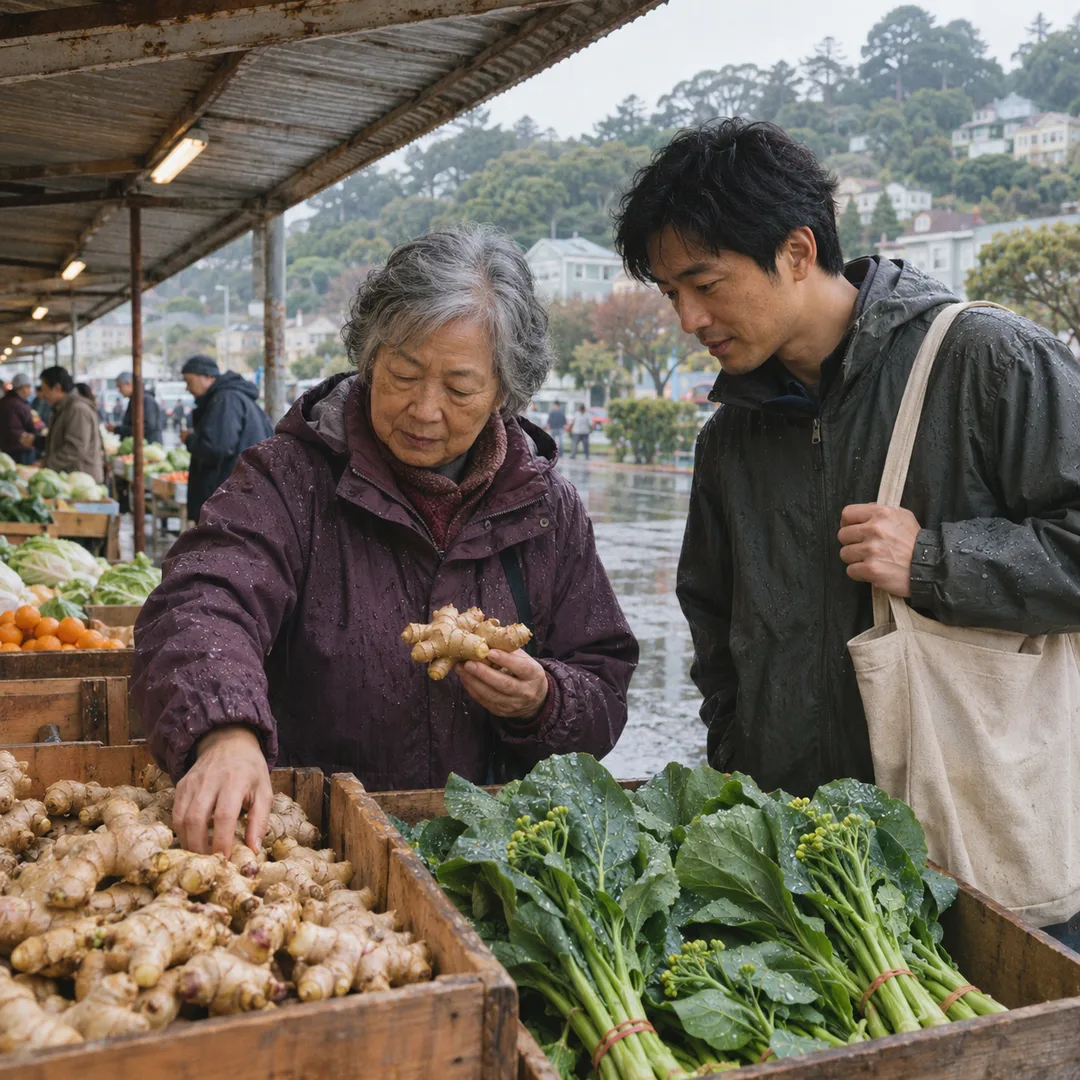
Alemany Farmers' Market sits under long rows of roofed stalls at the foot of Bernal Heights, and in winter that cover matters, because the San Francisco rain season is also the season of fat ginger, dark greens and sweet roots. This winter farmers market picker is written for one specific errand: a family stocking up to cook warming soups for a new mother in the weeks after a birth, when the shopper is tired, the list is long and the pot needs to be full by evening.
Why Alemany Suits a Soup Shopping Run
Alemany began as a wartime market, set up so that growers could sell straight to city households, and it still feels like a working place rather than a showcase. The stalls run in long covered rows, many held by family farms from the Central Valley and the coast, and a large share of the sellers grow the Chinese, Filipino and Southeast Asian vegetables that home cooks in Bernal, the Excelsior and Visitacion Valley expect to find. For a soup cook, that mix is the point.
The other reason is pace. Regulars here come with wheeled carts and handwritten lists, buy in quantity and leave. Nobody minds if you ask a grower which melon is ripe or how long a bunch of greens will keep in the fridge, and many stalls will happily weigh a large mixed bag in one go. It is a market for people who cook every day, which is exactly what a household with a newborn is about to start doing.
What a Winter Soup List Looks Like Here
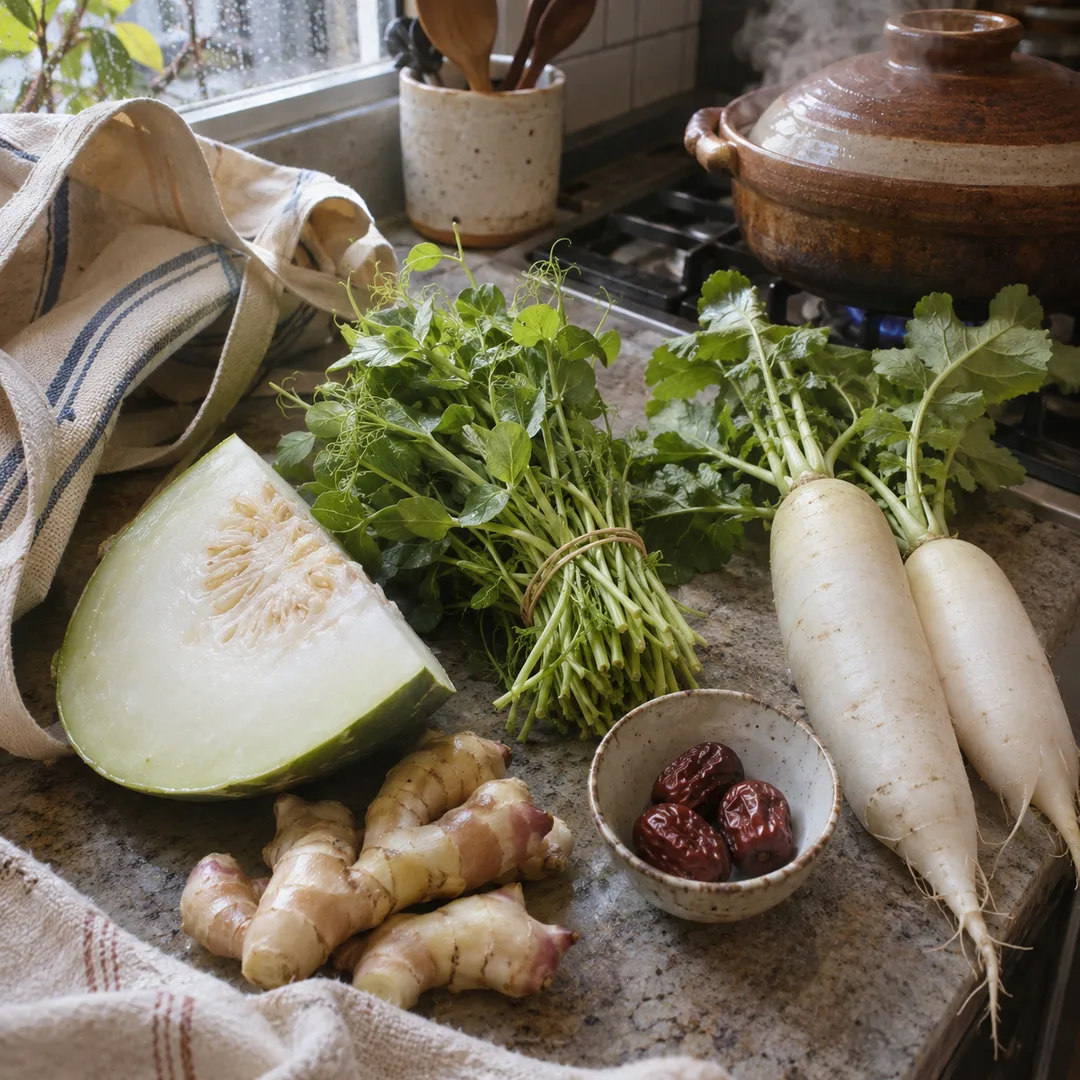
Start with ginger, because almost every traditional recovery soup leans on it. Winter stalls often carry both young pink-tipped ginger and older, fibrous knobs. The older ones are hotter and better for long simmering, the young ones gentler for a mother who finds strong spice hard. Add daikon and carrots for sweetness, a wedge of winter melon for clear broths, and a few bunches of pea shoots or gai lan to blanch and serve alongside.
Look out for the slower vegetables of the cold months too. Taro, lotus root and kabocha squash all thicken a soup without cream, and chrysanthemum greens, sold in loose bunches by some Asian growers, add a bitter, herbal note that older relatives often ask for. If a stall has fresh eggs from pastured hens, take a dozen. Rice wine, dried dates and goji usually come from Mission Street grocers instead, so plan that stop separately.
Moving Through the Rows When It Is Raining
The roofs keep the produce dry, but the aisles between them collect puddles, and the open parking area does not have much shelter at all. Wear shoes you can step into water with, put the list in a plastic sleeve, and bring a folding cart with a cover or a couple of sturdy bags with zips. A cheap umbrella is more trouble than it is worth when both hands are full, and a hooded jacket works far better.
Walk the full length of one row first without buying, then come back. Prices and quality vary more than people expect from stall to stall, and in winter some growers have far better greens than others after a week of rain. Buy heavy items like squash and melon last, so you are not dragging them past every crate. If someone is staying home with the baby, send photos of the greens before deciding.
Asking Growers the Right Questions
Many of the families selling here have farmed the same crops for decades, and a short question gets a useful answer. Ask which greens were picked yesterday, which roots will keep for a week and which variety of ginger is milder. A grower may suggest a vegetable you did not plan for, such as a bitter melon for a cooling broth or a bundle of sweet potato leaves for a quick stir-fry. Take the suggestion if it fits the week.
Be honest about quantities. Saying you are cooking for a new mother and two visiting grandparents for the next five days helps a grower tell you how much is sensible, and it stops you from buying a mountain of greens that will wilt before Thursday. Cash in small notes is still the smoothest way to pay at several stalls, though many now take cards, so carry both to avoid a detour.
Cooking the First Pot the Same Afternoon
The kindest way to use a market morning is to put one pot on as soon as you get home. A simple pork bone or chicken soup with ginger, daikon and carrot needs very little attention once it is simmering, and it fills the house with a warm smell that tells everyone food is handled. Wash and dry the greens straight away and wrap them in a towel so they last longer in the fridge.
Skip delicate salad leaves on this trip. They are lovely at Alemany in spring, but a household with a newborn rarely has time to eat raw greens before they go limp, and many families following postpartum food customs prefer everything warm for the first month anyway. Spend that part of the budget on another root vegetable or an extra bag of ginger, which keeps for weeks and turns into tea at any hour.
A Short Walk Up Bernal Hill Afterwards
If the rain stops, the person doing the shopping deserves twenty minutes of air before going home. The streets behind the market climb toward Bernal Heights Park, a bare, grassy hilltop where dog walkers loop the summit and the whole city spreads out beneath you on a clear winter day. The climb is steep but short, and on the way down you can drop into Cortland Avenue for a hot drink.
For a gentler option, Precita Park, at the north edge of the neighbourhood, has benches and a small playground under old trees, and it is a calm place for a grandparent who wants to sit for a while. Leave the cart in the car first. If you are going home by bus, the hill walk can wait for another week, but the soup cannot.
Planning the Next Market Run With Karpo
A month of recovery cooking usually means three or four market trips, and it helps to rotate who goes. Keep a shared list on the fridge, mark which soups were finished and which were not, and adjust the next order. When Alemany is not convenient, the Karpo APP can show other farmers' markets and Asian grocers near your home, so a tired parent can find the closest place for ginger and greens without driving across town.
Use Karpo to save the stalls and shops you liked, and to plan a quick route that includes Alemany, a Mission Street grocer for dried goods and a bakery for visitors. The market will look different by the end of winter, with the first spring onions arriving and citrus filling more crates, but the habit of a weekly pot, cooked with produce chosen together, is worth keeping well after the baby has grown.
Ask Karpo for more information.
Keep reading
- Stonestown Winter Farmers Market Picker for Student Cooks
 Clement St Winter Farmers Market Picker for Lunar New Year
 Fort Mason Winter Farmers Market Picker for Citrus Bakers