 Stonestown Winter Farmers Market Picker for Student Cooks
Weekend Plans
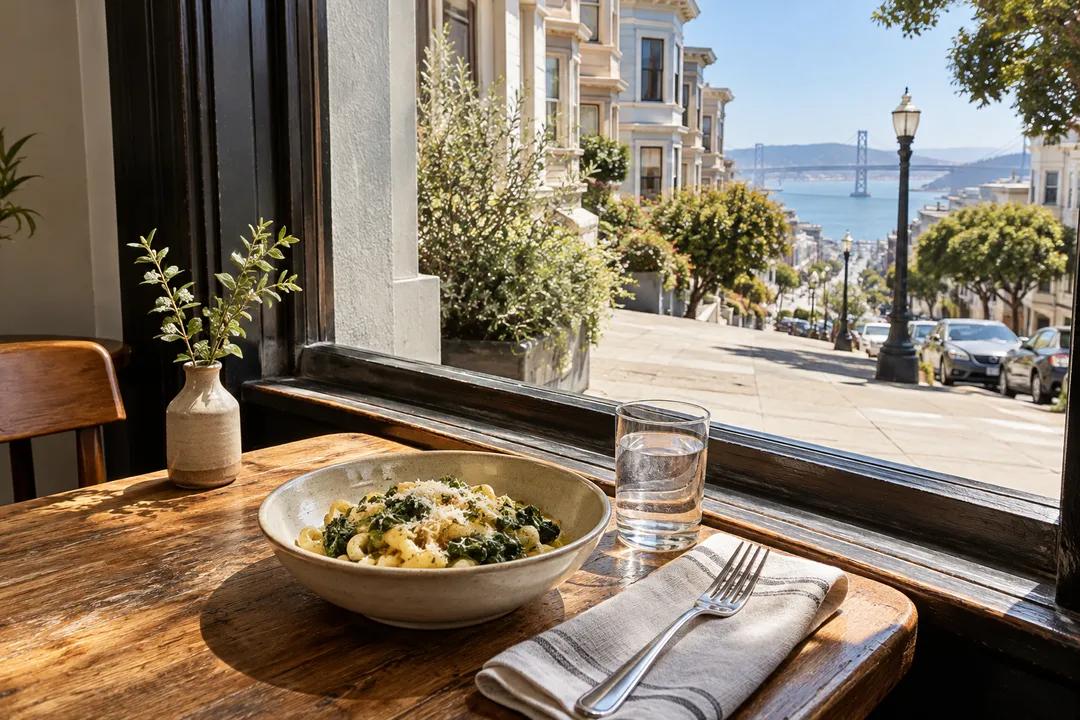
SF Weekend Plan Builder to Pair Lunch and Art
Connect an SF meal and a cultural visit with a walk that fits your appetite and pace. Decide which stop leads, then compare entrances and timing together.
Lunch and an art visit can make a satisfying SF Saturday, yet pairing them badly turns a simple outing into a series of transfers. A weekend plan builder is useful here when it helps you consider the connection as carefully as either destination. Begin by deciding whether the meal or the cultural visit is the main reason for going. Then ask Karpo APP about places to eat and things worth seeing around that choice. Build outward from the stronger preference instead of assembling two independent lists.
Should lunch lead or should the art visit?
Let the less flexible preference lead. If you are excited about a particular exhibition, its location and visit format shape the meal search. If trying a certain cuisine is the whole point of Saturday, look for a cultural addition within a comfortable connection from the meal. The lead stop is not necessarily the one that lasts longer. It is the one you would be most disappointed to replace. Establishing that priority makes later decisions much easier when two attractive suggestions do not fit together.
A fixed commitment also influences the order. A ticket with a timed entry is different from a browse you can begin when you arrive. A restaurant reservation creates a similar boundary around the meal. Once you have made one of those commitments, allow the other part of the outing to adapt. If you have made neither, compare both orders before purchasing anything. You are choosing how to spend the afternoon, and a plan can remain provisional while you decide which experience deserves the anchor position.
What does a walkable pairing actually require?
Look at doors rather than neighborhood labels. Two destinations can share a general area while their entrances sit farther apart than you expect. A large cultural site may have a visitor entrance away from the map's central pin, and a food destination may be approached from a different side of the block. Read the connection as an actual walk. Include crossings, access needs and how much walking you want after eating. “Nearby” becomes useful only when it describes a journey you would willingly take.
In San Francisco, the elevation of that journey can matter as much as its length. Describe whether you enjoy hills or want a route that avoids sustained climbing. If one person finds stairs difficult, include that requirement before choosing a pair of stops. A pleasant-looking street is not evidence of a suitable accessible connection. You can use map directions and the selected venues' access information to assess the route you intend to take. The important comparison is between complete outings, rather than two isolated destinations.
Can the connecting walk be part of the pleasure?
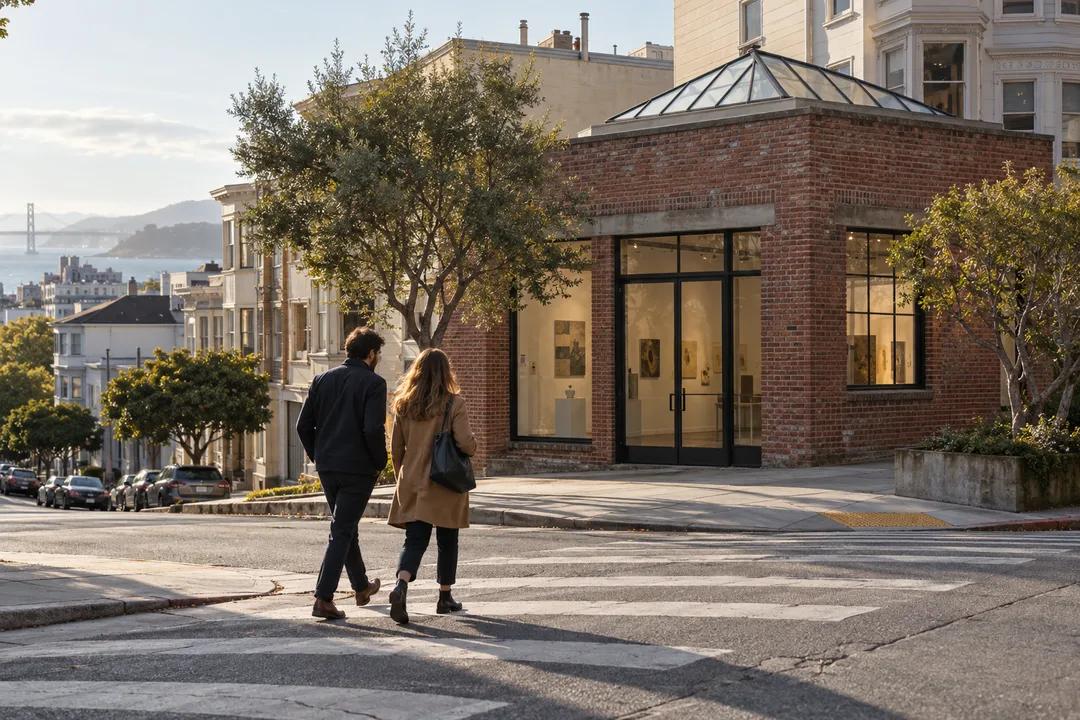
Yes, if you leave room for it to be a walk. Decide whether you want to notice architecture, look in windows or simply talk between visits. Those preferences affect whether a direct route or a gentle detour sounds appealing. Do not add a third attraction solely to justify the transfer. The connection can be worthwhile without requiring another admission, purchase or queue. When the day already contains a meal and an extended visit, the street between them may provide all the variety you need.
You might begin the search around the Mission, Hayes Valley or another area you already want to explore. Use one chosen area as the boundary for the request, rather than implying that every neighborhood provides the same cultural activities. If the suggestions require crossing town, ask whether changing the meal or changing the visit would preserve more of what you wanted. That is a useful tradeoff to discuss. Convenience should support the outing's purpose, and you can reject a compact pairing that does not actually interest you.
How much time belongs to the meal?
Decide what kind of eating experience you want. A quick lunch before a focused visit is a different plan from a long conversation over several courses. Neither needs to be treated as the default. Tell Karpo whether food is the centerpiece, a relaxed pause or something practical between activities. Include dietary requirements and the number of people attending. Then read suggestions with that intention in mind, rather than choosing a restaurant for its proximity and discovering that its format conflicts with the afternoon.
Do not allocate every remaining minute to the cultural stop. Meals can involve ordering, waiting, paying and finding the exit, as well as eating. You do not need invented estimates for a restaurant's service speed to recognize those stages. Give the outing some space around a fixed admission time. If leaving lunch promptly would make the meal stressful, put the visit first or choose a less time-sensitive cultural activity. Rearranging the order can solve a problem that a shorter walking route cannot.
What should the request to Karpo include?
An example might be: “Help me find ideas for a Saturday in SF with lunch and an art visit. I care most about the art, want enough time to look without rushing and would like food within a comfortable walk afterward. Start with one area and avoid steep connections.” Add the starting neighborhood, your available afternoon and any dietary or access needs. This is a hypothetical planning brief. It does not establish a specific venue's admission policy, food prices or opening times.
Ask the next question where uncertainty remains. You might be choosing between a substantial museum visit and a short gallery browse, or between lunch before the visit and food afterward. Request a comparison focused on that choice. More destinations will not necessarily help if the real problem is deciding how much attention you want to give the art. Once the preferred format is clear, narrow the location and meal search around it. The conversation should progressively make the outing easier to choose.
How do you know when the plan is ready?
Try describing it in one ordinary sentence. You should be able to name the main visit, explain the meal's role and describe the connection without relying on a string of unlikely timings. If the sentence includes repeated taxi rides, several purchases and a race to the next entrance, reconsider which parts are essential. A meal and a cultural stop are already enough to give an afternoon shape. Any extra wandering should remain a choice you make when you know how the day feels.
Practical notes belong beside the selected plan. Keep the correct entrance information, the journey home and any booking confirmation together. A suggestion in the APP is not an admission ticket or a reserved table. Complete those commitments through the relevant venue's process when your chosen outing needs them. Carry a layer and allow for your own walking pace. Then stop refining the itinerary long enough to enjoy it: food you wanted, something worth looking at and a connection that gives both experiences room to breathe.
Ask Karpo for more information.
Keep reading
- Stonestown Winter Farmers Market Picker for Student Cooks
 Clement St Winter Farmers Market Picker for Lunar New Year
 Fort Mason Winter Farmers Market Picker for Citrus Bakers