 Stonestown Winter Farmers Market Picker for Student Cooks
Weekend Plans

SF Weekend Plan Builder for Friends Arriving in Stages
Give SF friends a clear place to join without holding the whole day for late arrivals. Build a gathering around shared windows and simple meeting points.
Your friends want to spend Saturday together, but their Saturdays begin at different times. One person can arrive after lunch, another has an afternoon errand and someone else only wants to join for food. In SF, the useful job for a weekend plan builder is to make joining understandable. Treat the gathering as a sequence with clear entry points. Ask Karpo APP for ideas about where to eat or what to see, then organize those suggestions around the periods when people can actually overlap.
Collect availability without collecting everybody's day
Ask each person for an earliest arrival and a latest departure, together with the area they will travel from. You need those boundaries to understand the overlap. You do not need a detailed account of their errands or a promise to remain for every activity. Give people a way to say they are tentative. A gathering becomes harder to arrange when polite enthusiasm is mistaken for a firm commitment and the rest of the group plans around someone who may not come.
Write down the shared window before discussing attractions. Suppose two friends are available early, three overlap in the middle and a fourth can join near the end. These are planning assumptions, not a schedule established by any venue. Choose which window matters most to the group. If the middle period is the only chance for everyone to talk, avoid placing a silent or tightly structured activity there. The highest attendance does not automatically belong to the most impressive destination.
Give each stage a different job
An early stage should be enjoyable for the people already present and easy to end when the group grows. A short browse or a modest walk can work as a type of activity, provided those attending actually want it. Avoid spending the first part of the afternoon waiting beside an entrance while repeatedly asking for arrival updates. Decide when the early group will move, and identify the next agreed location where a later friend can catch up without searching the streets.
The shared stage is the gathering's center. Choose something that allows the kind of interaction you want, such as a meal with conversation or a visit everyone has actively selected. This is where group size matters most. More people can affect the choice of seating, admission and the ability to change direction. Ask about suitability for your expected party size when discussing suggestions in the APP. A recommendation for an appealing place is still separate from permission to arrive as a large group.
The final stage can absorb different departure times without restarting the whole afternoon. Choose an optional continuation for people who want more time together. Make leaving feel normal by stating the natural finish of the main gathering. Someone who only committed to the meal should not discover that a later activity has become socially compulsory. The plan succeeds when people can attend the parts they accepted, and those with longer availability still have a satisfying way to continue.
Choose a meeting point people can explain
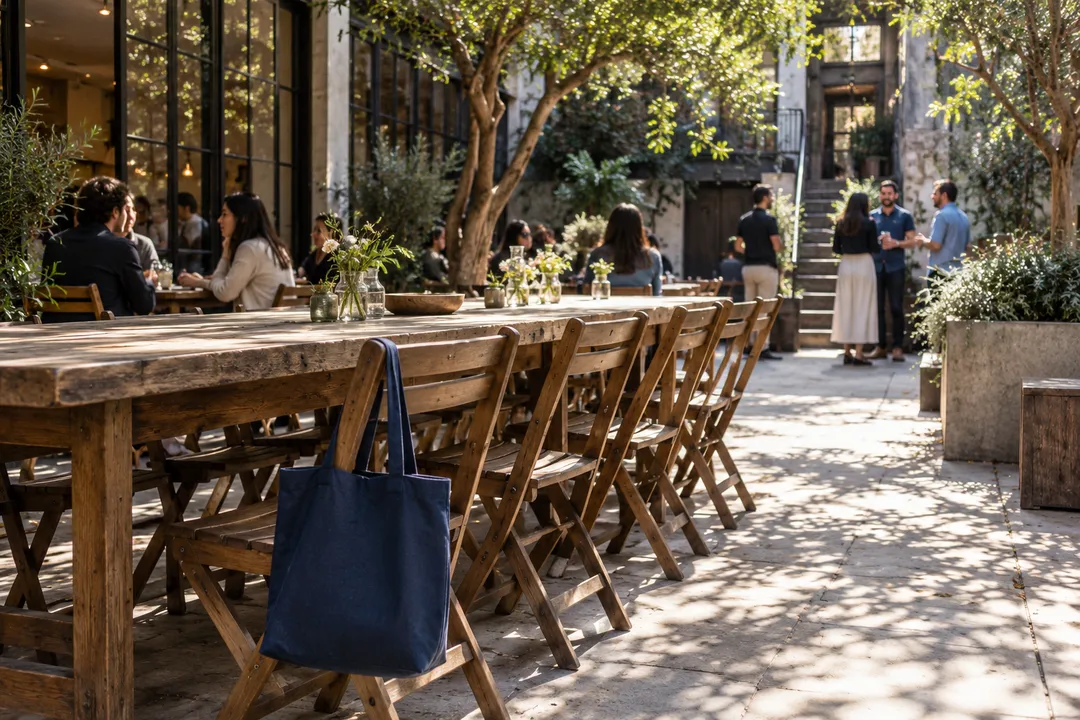
Define a specific place to meet once you have chosen a destination. A broad neighborhood name is useful for searching, but poor as an arrival instruction. For an actual gathering, name the public entrance or another unmistakable agreed point. Avoid assuming that everybody will recognize the same side of a large building. Send a clear description through your usual group communication channel. Karpo can be the place where you ask for outing ideas, while your group remains responsible for telling each other what was decided.
Use a stationary joining point when arrivals are uncertain. Chasing a moving walk creates extra work for the person arriving and the people already there. For example, you might agree that anyone missing the first segment joins at the lunch destination rather than trying to intercept the group halfway along the route. This is an arrangement for your friends to accept, not a claim that a restaurant will hold space. If the meal requires a reservation, its actual party size and arrival rules govern that stop.
Ask for places after you understand the windows
A sample request could be: “Four friends want a Saturday afternoon in San Francisco. Two can start early, one joins for the middle and one may arrive for the meal. We would like to stay around the Mission and avoid sending late arrivals after a moving group. Suggest activity ideas that let us gather in stages.” Add dietary needs, access requirements and a shared spending preference before selecting food. These details can make an appealing suggestion unsuitable even when its location works.
After reading suggestions, decide whether one area can carry the afternoon. Moving across town between every arrival point makes late joining increasingly complicated. Staying within a compact search area leaves fewer instructions to explain, but compact should also mean comfortable for the people attending. Discuss walking limits and any unwanted hills or stairs. If someone needs to minimize outdoor walking, give that constraint priority over a scenic connection. Convenience is measured by the whole group's ability to take part.
Establish a simple late-arrival agreement
Choose one person to maintain the agreed version of the plan. That person does not need to track everybody continuously or answer every message immediately. Their role is to prevent three contradictory instructions from circulating after a change. When the destination changes, send the complete replacement meeting instruction, including what earlier instruction it replaces. A message saying only “we moved” asks the arriving friend to reconstruct the afternoon. A clear location and a stated next decision time make the change easier to understand.
Decide in advance what happens when somebody is delayed. You might continue the first activity and meet them at the next stage, or hold the main meal within the provider's permitted arrival window. Avoid promising that the group will wait indefinitely. If a reservation has consequences for late arrival or reduced numbers, the people who accepted it need to understand those terms. Planning suggestions cannot override a venue's policy, and a group message does not amend the booking by itself.
Practical notes for the shared table
Food deserves particular care because staggered arrival affects ordering as well as seating. Ask friends whether they want to eat together from the start or whether some are content joining after others begin. Discuss dietary needs privately when appropriate and pass along only the information needed to choose. An estimated headcount should be labeled as such. Where you make a reservation, use the accepted party size and the venue's process for any adjustment rather than relying on an optimistic group poll.
For payment, settle the principle before the bill arrives: equal split, individual orders or another arrangement everybody understands. Keep optional activities outside the agreed core budget unless people choose them. On the day, the useful plan is short enough to read quickly: first gathering point, main shared window, later joining point and the end of the committed portion. Open Karpo for ideas that fit those boundaries, select your stops and send your friends one coherent invitation they can join without decoding the entire afternoon.
Ask Karpo for more information.
Keep reading
- Stonestown Winter Farmers Market Picker for Student Cooks
 Clement St Winter Farmers Market Picker for Lunar New Year
 Fort Mason Winter Farmers Market Picker for Citrus Bakers