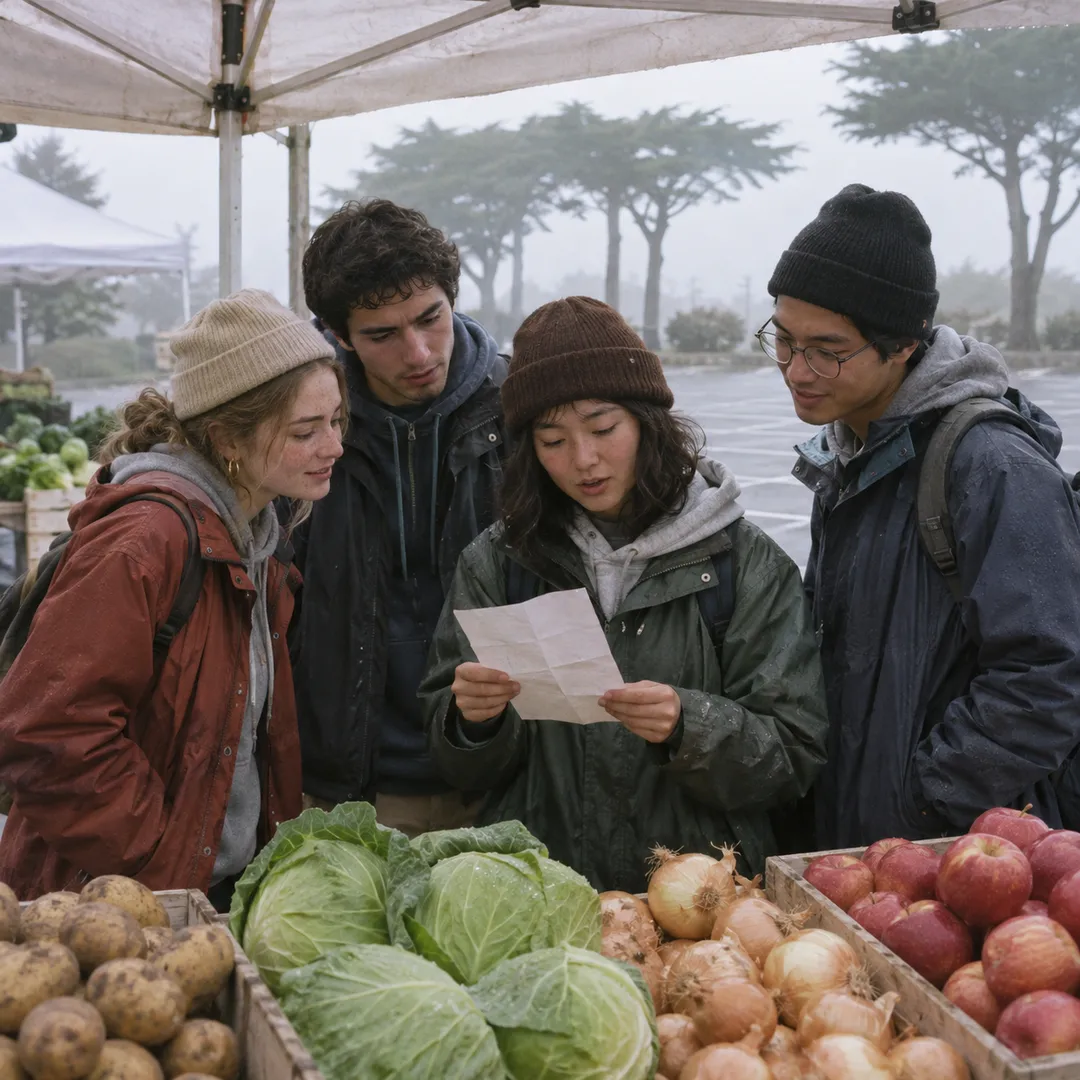
 Stonestown Winter Farmers Market Picker for Student Cooks
Weekend Plans

SF Weekend Plan Builder for a Rainy Saturday Backup
Keep the point of your SF Saturday when rain changes the route. Choose an indoor alternative by travel effort, commitment and the experience you wanted.
Rain can change the shape of a San Francisco Saturday without changing the reason you wanted to go out. Perhaps you hoped for conversation, a little discovery or an afternoon away from the apartment. A weekend plan builder should help you preserve that purpose while changing the conditions around it. Open the Karpo APP to ask about indoor things worth seeing or somewhere to eat, and describe which part of the original outing you still want. Begin with the experience, then rebuild the route around shelter.
Keep the pleasure and replace the exposure
Identify what the outdoor plan was meant to provide. A long walk might have been about movement, conversation, photography or simply reaching lunch by an interesting route. Each purpose suggests a different response to rain. If movement was essential, replacing the walk with an entire afternoon seated at a table may disappoint you. If talking was the point, the same substitution may be ideal. Name the intended pleasure so that an indoor alternative can be evaluated on something more useful than being dry.
Decide how much weather you are willing to tolerate. Some people are happy with a short damp transfer, while others need a route with very little outdoor exposure. Clothing, mobility and the company you are with can all influence that choice. State the practical limit rather than asking vaguely for a rainy-day recommendation. For example, you might accept a short walk between doors but reject an activity that involves waiting outside. That distinction matters even when both destinations themselves are indoors.
Build an alternative with its own appeal
An indoor fallback deserves to be something you would willingly choose. Consider the kinds of attention you want to give it: looking closely at an exhibition, lingering over a meal, browsing at your own pace or attending a scheduled performance. These categories are prompts for discovery, not claims about a specific venue's access or availability. Ask for suggestions in the area where you expect to be, and compare how each uses your time. Being indoors is a starting condition, not a reason to like the activity.
Avoid collecting a large set of distant replacements. A backup is easiest to use when its travel demands are understandable and it does not require another full planning session. Choose a principal alternative and identify its main commitment. Does it depend on a timed entry, a meal reservation or the willingness to browse for an uncertain length of time? The answer affects when you need to decide. A flexible activity and a prepaid event should not be treated as interchangeable merely because both offer shelter.

Set your own switch point
Choose a moment when you will decide between the outdoor and indoor versions. Tie it to your preparations or a booking deadline you actually accepted, rather than inventing a universal rule about how much rain is too much. You might make the choice before getting dressed or before leaving for the first stop. The purpose is to prevent the whole group from spending the afternoon reconsidering. Weather forecasts inform that personal decision, but a planning suggestion is not a weather alert service.
Make the decision understandable to companions. Explain who will send the final plan and which destination applies afterward. If the group is already traveling, give everybody one complete revised instruction, rather than a series of fragments about possible changes. A separate indoor plan can be easy to share when it has a clear meeting point and a realistic beginning. The people attending should know whether the original destination has been replaced or whether only the route to it has changed.
Count the distance between shelter and shelter
A rainy outing is shaped by its transfers. Look at the journey from home to the first entrance, between activities and back again. A pair of indoor stops can still produce an uncomfortable afternoon if the connection is long or exposed. In SF, discuss whether you want to avoid steep streets as well as extended outdoor stretches. Ask for ideas within one area first. Broadening the search is worthwhile only when a more distant option offers enough pleasure to justify the extra travel.
Think about the arrival sequence inside the building too. If the chosen activity has a cloakroom, bag policy or a particular admission process, those details belong to that provider's instructions. Do not assume every indoor destination can take wet belongings or let you linger before entry. Carry what you can comfortably manage. An umbrella, raincoat and large bag can make a short visit cumbersome even when the route is simple. The fallback should fit the way you will actually arrive.
Write the request around the lost experience
You could ask: “We planned a Saturday walk in San Francisco because we wanted an afternoon of looking at interesting things and talking. If we choose to stay indoors, suggest a cultural visit and a nearby food option around the same area. We want little outdoor walking and no long seated performance.” This hypothetical brief tells Karpo what to search around without asserting a forecast or promising admission. Add the neighborhood where you intend to start, along with the time available.
If the first suggestions feel wrong, explain the mismatch. You might want more conversation, a shorter visit or a quieter atmosphere. Adjust that aspect while retaining the useful constraints. Starting the entire search over can produce more options without resolving the underlying disappointment. A focused follow-up such as “the visit sounds too long for our afternoon” gives you a concrete decision to explore. The conversation should lead toward a choice, and you can stop once an option meets the purpose you identified.
Practical notes for tickets and changed plans
A fallback does not erase commitments made for the original outing. Look at the cancellation terms of anything you already purchased and decide whether switching is worthwhile. An outdoor activity continuing to operate is different from your group preferring to remain inside. Neither a forecast nor a recommendation establishes a refund. Keep the original booking details available, and use the provider's stated process for any change you choose to request. These are practical steps tied to an actual purchase, rather than general warnings about uncertain plans.
When you select the indoor activity, complete any required reservation through its normal channel. Keep the resulting confirmation with the meeting instruction. If you have not purchased anything, describe the destination as the group's chosen plan rather than guaranteed entry. Preserve enough flexibility to shorten the outing if travel becomes tiring. The most useful fallback is not the one that reproduces every minute of the original day. It is the one that retains the part everyone wanted and makes the rest manageable.
Pack for wet arrivals and comfortable time indoors: footwear you can walk in, an outer layer you can carry and a bag arrangement that keeps essentials dry. Decide whether a meal is part of the experience or simply something to fit around it. Then put the selected destination and departure time into your usual planning notes. Karpo can help you explore what is worth doing, while you choose which suggestion to act on. A rain-adjusted Saturday can be satisfying on its own terms, without feeling like an afternoon spent waiting for better weather.
Ask Karpo for more information.
Keep reading
- Stonestown Winter Farmers Market Picker for Student Cooks
 Clement St Winter Farmers Market Picker for Lunar New Year
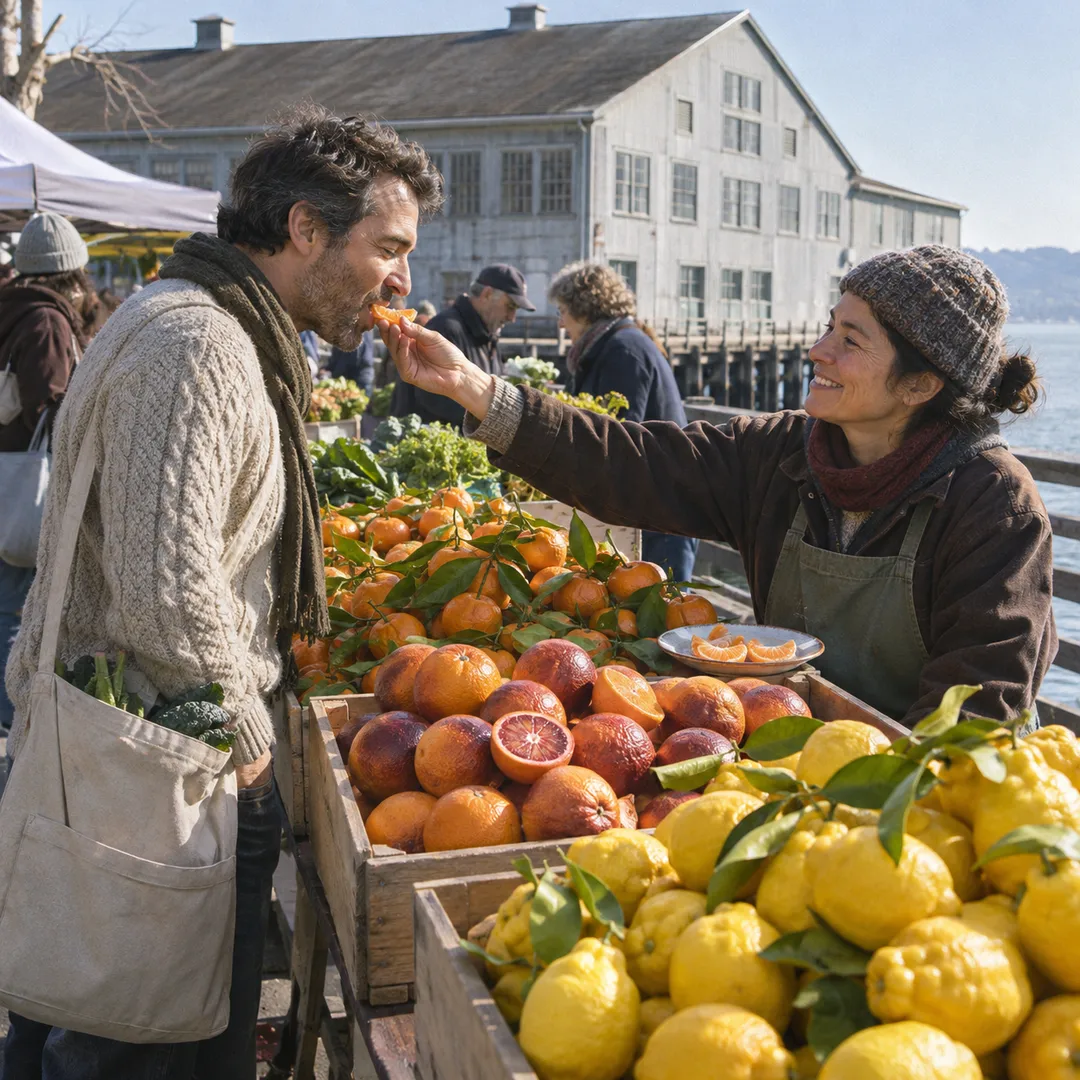 Fort Mason Winter Farmers Market Picker for Citrus Bakers