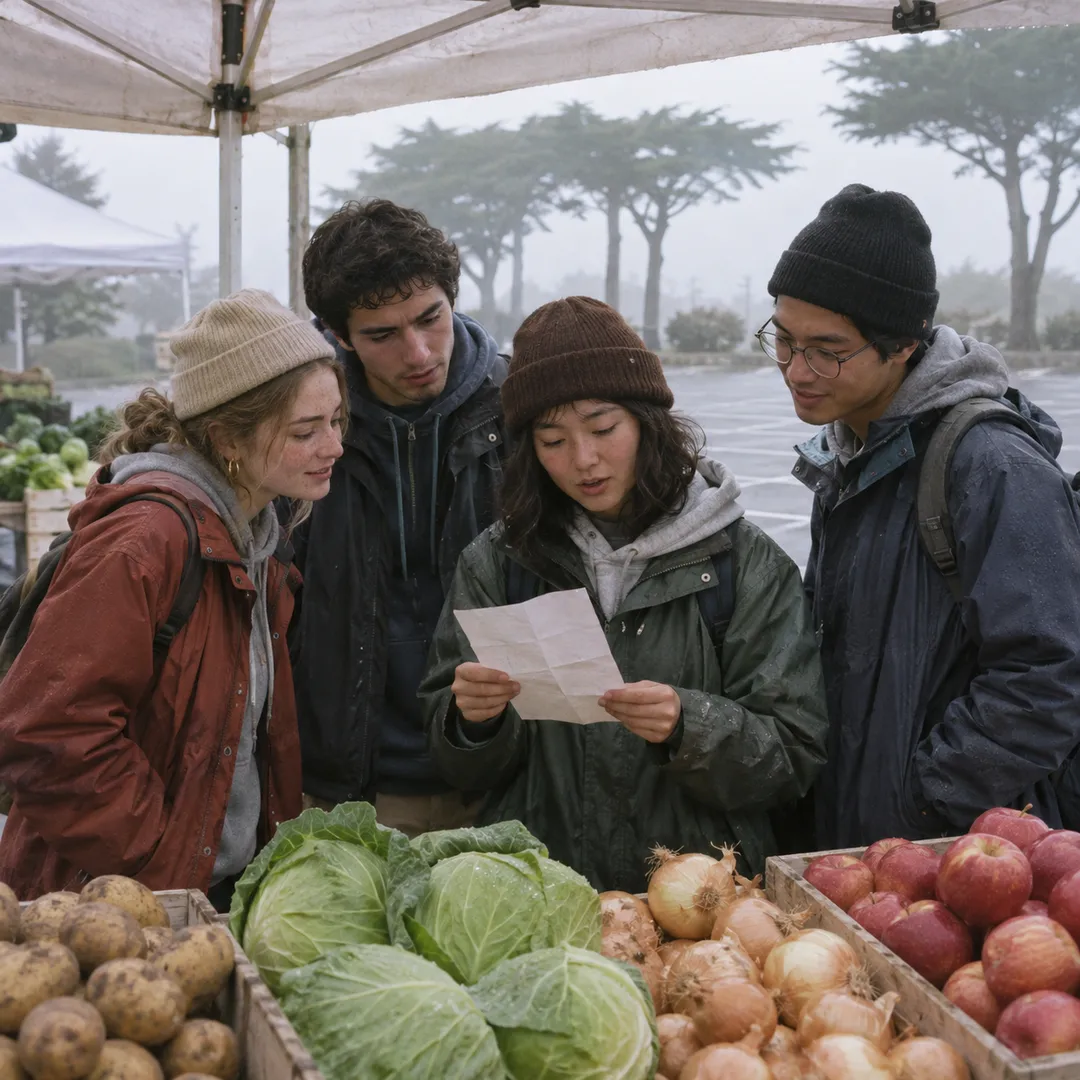
 Stonestown Winter Farmers Market Picker for Student Cooks
Weekend Plans

San Francisco Weekend Plan Builder: Different Energy Levels
Build a shared San Francisco day with a common anchor, optional branches, and an easy exit for friends whose energy does not match. Keep plans clear.
Friends can share a San Francisco weekend without sharing the same stamina. Begin your Karpo APP brief with the range: one person wants a full day, another needs frequent seats, and a third prefers a late start. Ask for a route with a common anchor, optional branches, and a graceful way to leave early. The planner can organize those decisions into a conversation. It does not know live capacity, current transit conditions, or who has actually booked a place, so keep those checks in your own hands.
Map everyone’s nonnegotiables
Write down each person’s hard limit before discussing attractions. One may need a step-free entrance, another may avoid steep hills, while someone else wants a lively room rather than a quiet one. Add food allergies, a nap window, or a train departure. Karpo can then identify a shared core and flag where preferences conflict. A plan is kinder when it names the tradeoff openly. Hiding a constraint until the day starts forces the most tired person to negotiate in public.
Build a trunk and branches
Think of the itinerary as a trunk that everyone can follow, with short branches for different energy levels. Ask for one shared meeting, one flexible meal, and a point where a high-energy pair can continue while another person rests. Give each branch a clear reunion time and neighborhood. The assistant can outline those structures, but the group should agree on who is responsible for directions and updates. A branch without a rendezvous is simply a second, disconnected outing.
Protect the first hour
The opening hour decides whether the rest of the day feels generous. Request a starting activity that tolerates late arrivals and does not demand immediate speed. If a friend has crossed the city, leave room for water, a restroom, and a calm hello before adding decisions. Tell the planner the earliest realistic start, not the aspirational one. A later but stable beginning is usually better than a timetable that punishes anyone who misses the first connection.
Make movement negotiable
Ask for two ways to cover every meaningful transfer: the shortest walk and the gentlest route. Include the option of transit or a rideshare when the group’s energy drops. Explain whether waiting, stairs, or a hill is the real problem. Distances in a plan are suggestions, not measurements of current accessibility. Read the proposed sequence on a live map, and give the group permission to choose comfort over a supposedly perfect loop.

Give the high-energy branch a purpose
An optional extension should add a distinct experience, not merely more distance. It might offer a longer browse, a second viewpoint, or time for a hobby that the whole group does not share. Ask Karpo to place it after the common anchor and to state when it can be skipped. That wording makes opting out feel normal. Keep the common plan satisfying on its own so nobody feels they are leaving before the “real” day begins.
Use a prompt that names the people
Try: “Plan a Saturday for four friends in San Francisco: one person uses a cane, one loves long walks, one arrives at 1, and one must leave by 6. Find a shared meal and cultural stop, then show a short branch and a longer branch that reunite.” Add a quiet-room preference or a budget. Follow up with only one correction at a time so you can see how each person’s needs changes the outline.
Keep booking responsibilities visible
Assign the practical jobs after the route is chosen. One friend can note the timed activity, another can check the restaurant’s current policy, and a third can share the meeting pin. Put those records beside the relevant part of the plan. Karpo can draft the questions to ask, but it does not send bookings or guarantee a response. If a provider’s answer changes the sequence, feed that fact back into the conversation rather than quietly editing the shared note.
Plan the split without drama
Decide in advance how the group can separate. State a maximum waiting period and a recognizable reunion spot, then tell Karpo to keep both branches within that area. A person who leaves early should have an easy route home and the information they need. The people continuing should not feel obligated to abandon their activity. Clear boundaries make flexibility feel like hospitality instead of a failure of coordination.
Practical Notes: end with the least demanding choice
Place the simplest departure at the end: a transit hub, a familiar block, or a meal that does not require another hill. Keep the final segment optional and protect a buffer for slower walkers. Share a one-screen summary with the trunk, branches, and responsibilities. When the group’s energy changes, ask the Karpo APP to revise the branch, not to invent an entirely new day. The best shared weekend lets everyone participate without pretending their bodies work the same way.
Give everyone a graceful exit
Energy differences are easier to manage when leaving is treated as a normal branch of the plan. Ask for the simplest route from the common anchor to a major transit line, then identify the moment when a tired friend can depart without losing the day’s purpose. Put that information in the group note before anyone needs it. The friends who continue can follow the longer branch, while the person leaving has a clear handoff and no pressure to justify the choice. This is practical planning, not a judgment about enthusiasm.
Ask the group to agree on a communication rhythm, too. One update at the common anchor and one at the reunion point is often enough; constant messages make a relaxed outing feel like project management. If a person cannot use the same channel, give them the meeting time and neighborhood in advance. The planner can help draft that note, but a friend still needs to send it and acknowledge the arrangement.
Write the kindness into the outline
Use plain language for the person who needs the gentlest pace: “We will not hurry this connection.” Pair that promise with a branch and a meeting time so nobody must apologize for using it. Ask Karpo to phrase the high-energy option as an invitation rather than a default. When the group sees both paths before the day starts, an early exit or slower route becomes ordinary. The shared anchor still gives everyone a reason to meet, while the branches make participation possible without pretending that stamina is identical.
Ask Karpo for more information.
Keep reading
- Stonestown Winter Farmers Market Picker for Student Cooks
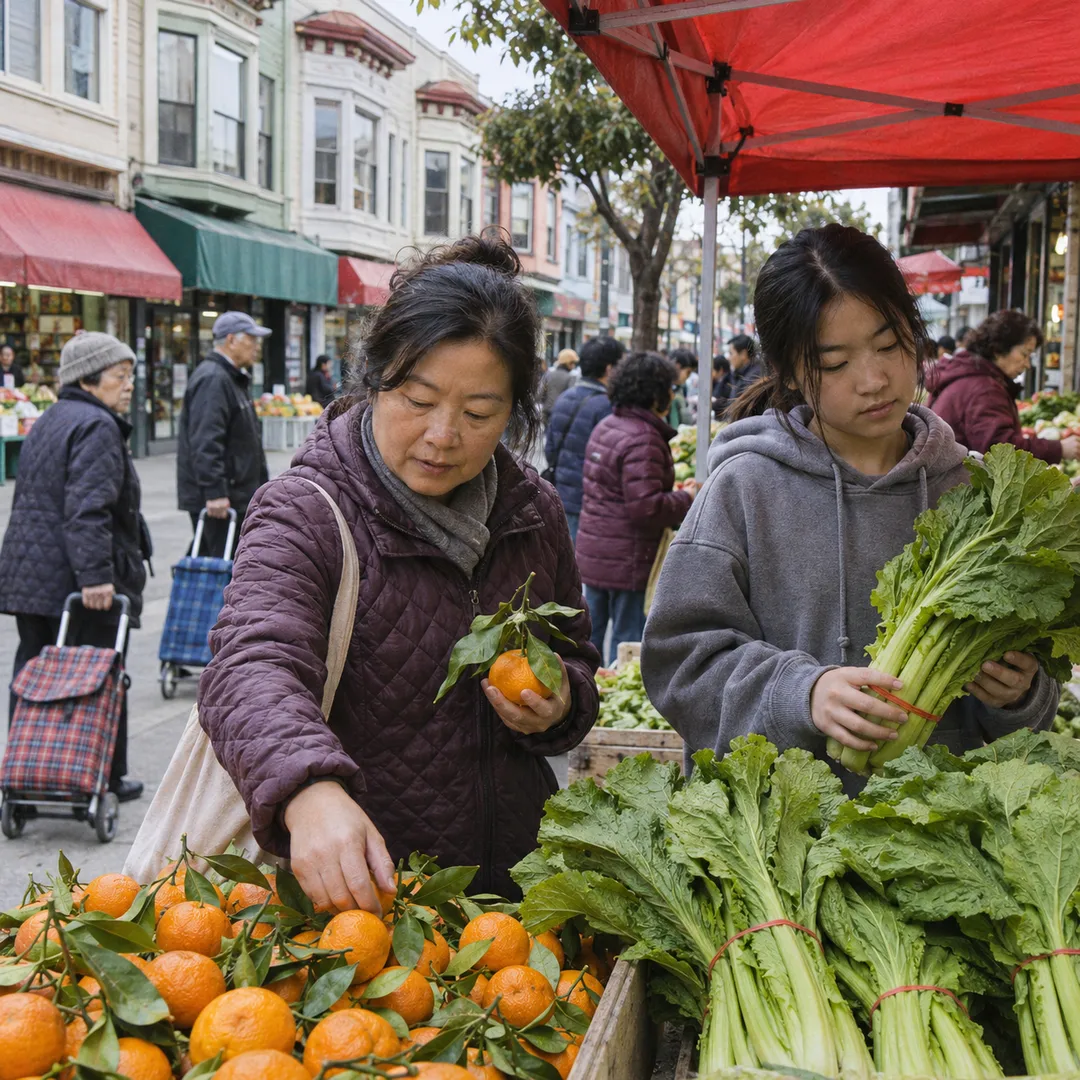 Clement St Winter Farmers Market Picker for Lunar New Year
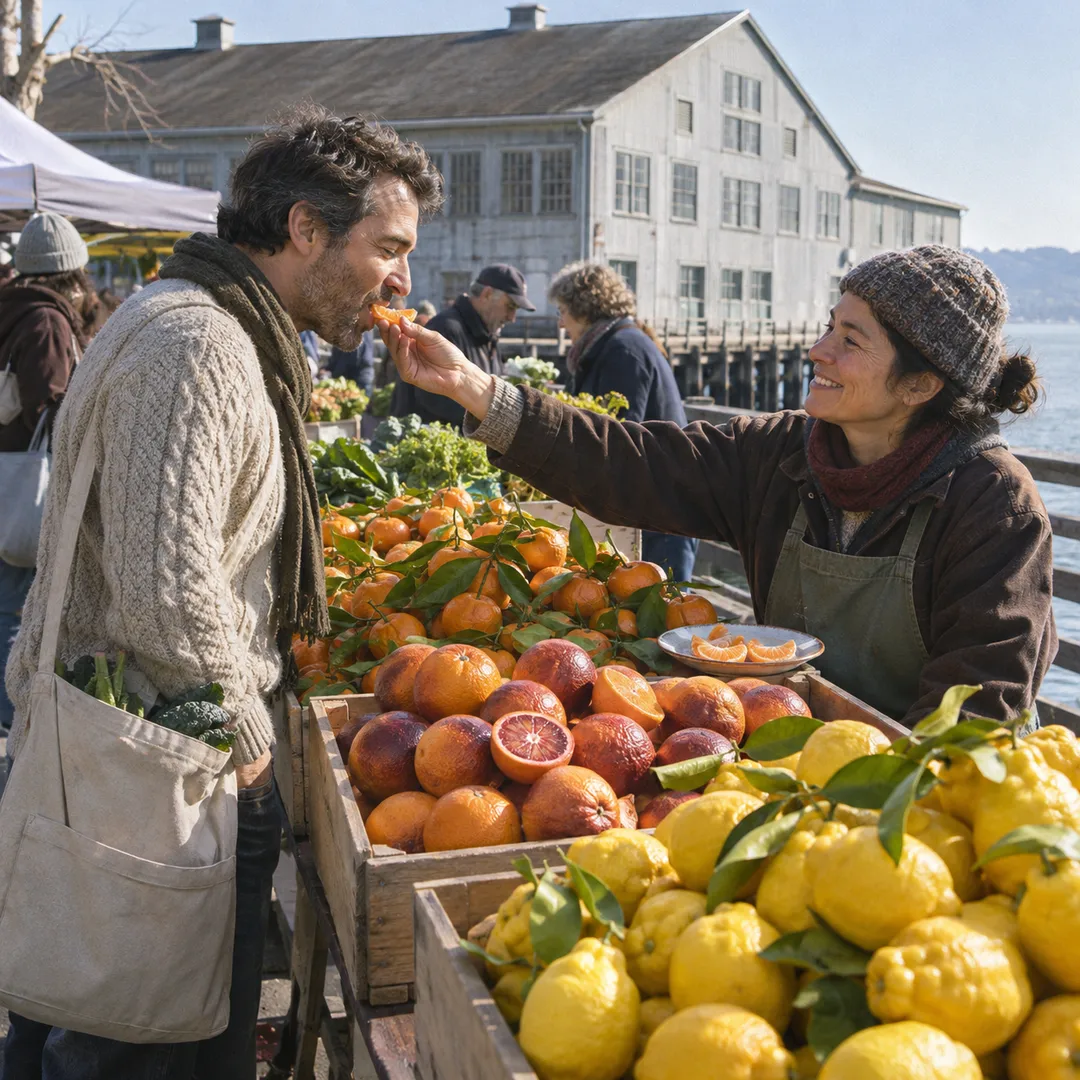 Fort Mason Winter Farmers Market Picker for Citrus Bakers