 Stonestown Winter Farmers Market Picker for Student Cooks
Weekend Plans

SF Weekend Plan Builder for Two Different Saturday Moods
Bring two interests into one SF outing without making either person tag along all day. Compare shared time, separate choices and a meal that connects them.
One of you wants a long lunch. The other wants to see something new before sitting down. A weekend together in San Francisco can accommodate both, but only if you decide what each person actually wants from the day. Use a weekend plan builder to explore the relationship between those wishes. In the Karpo APP, ask about food and things worth seeing, with both preferences in the same request. The useful result is a Saturday you both choose, rather than an outing one person merely accepts.
Compare the feeling behind each idea
Begin with a conversation before compiling destinations. “I want art” might mean a quiet room with time to look closely, a lively exhibition opening or an excuse to explore a different neighborhood. “I want lunch” might mean a particular cuisine, a generous stretch of conversation or simply eating before becoming tired. Ask each other which part matters most. Two apparently different interests can share a practical need, such as remaining indoors, having somewhere to sit or avoiding a tightly scheduled morning.
Separate a preference from a condition. Trying a new cuisine might be negotiable, while an allergy is not. Looking at art might be the central pleasure, while buying admission to a large exhibition is only one possible way to find it. If you mix these categories, every adjustment can feel like giving something up. Put the firm conditions into the planning request clearly and describe the desirable extras afterward. This gives you a better basis for comparing suggestions than two equally long wish lists.
Three ways to share the day
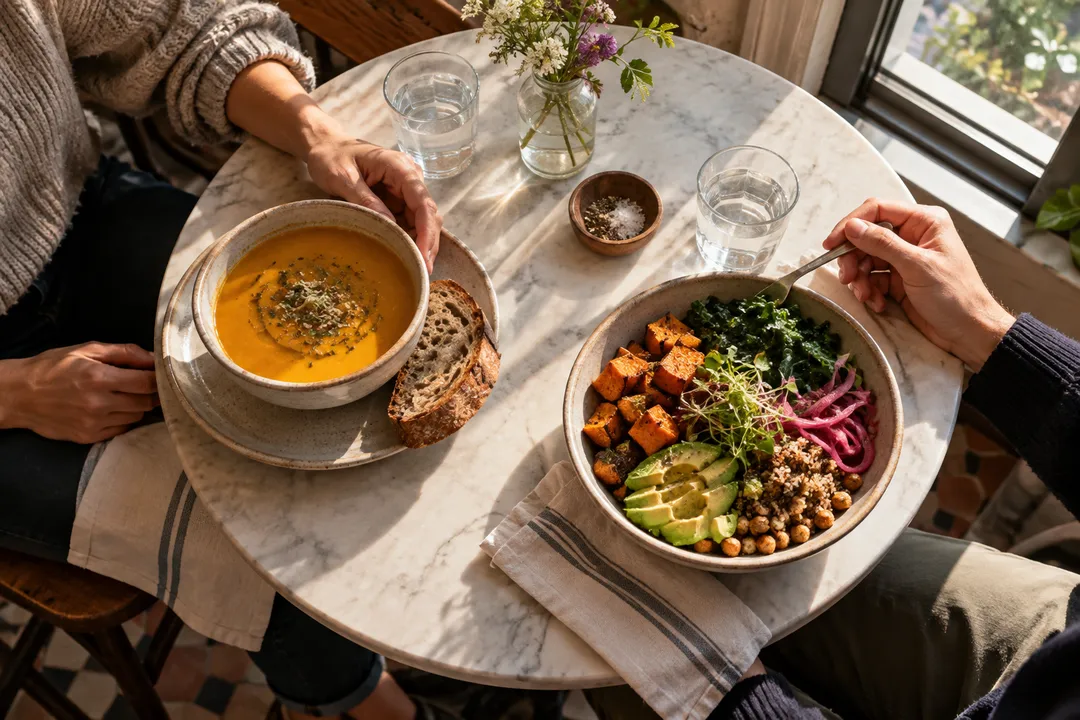
An alternating outing works when both people enjoy participating in the other's interest for a limited time. One person chooses the first activity, the other shapes the meal, and neither fills the gaps with more demands. The attraction is mutual participation. The tradeoff is that each person spends part of the afternoon outside their favorite activity. Agree on an approximate visit length before making a commitment. You are choosing to share attention, rather than quietly expecting the other person to become enthusiastic halfway through.
A blended outing puts the common ground first. For a couple interested in food and visual culture, that might mean exploring a compact neighborhood and selecting one cultural stop and one meal within it. The selection process should still consider the substance of each stop. A convenient place to eat is not automatically a satisfying meal, and proximity alone does not make an exhibition appealing. Ask for choices that explain both halves of the outing, then discuss which combination offers something meaningful to each of you.
Separate time followed by a reunion can also be a good shared plan. One person might browse while the other takes a longer walk, with lunch as the point where you come back together. This works only when both genuinely welcome the arrangement. Set an understandable meeting location and a reunion window before splitting up. Do not make one person wait indefinitely for the other's activity to finish. The afternoon can include independence without making the meal feel like a logistical rescue.
Put the disagreement into the prompt
A useful example request might read: “We are a couple planning Saturday in SF. One of us wants a focused art visit and the other wants a relaxed lunch with plenty of conversation. We would like to stay around Hayes Valley or choose one other compact area. Please suggest ways to combine those interests without making the whole afternoon feel scheduled.” Here the neighborhood is a proposed search boundary. It does not claim that a particular venue, exhibition or table is available.
Add what would make a suggestion unsuitable. You might dislike loud dining rooms, prefer a short seated visit or want to avoid purchasing tickets before deciding on lunch. State your total time together and whether the journey home belongs inside it. If a proposed combination favors one interest too heavily, name the imbalance in a follow-up request. “The food sounds right, but the other stop feels incidental” is more informative than asking for another list with no explanation of what disappointed you.
Judge the combinations as a pair
Read each candidate from both perspectives. Would the cultural visit still appeal without the restaurant attached? Would you choose the meal if it were the only reason to leave home? A combination that passes only one of these questions may still work, but recognize the compromise openly. You can choose it because the shared conversation matters most, or discard it because one person would be bored. Avoid describing a route as balanced merely because it gives each activity the same number of minutes.
Travel effort belongs in the comparison too. Two appealing stops can lose their charm when the connection between them involves a route neither person enjoys. In SF, look beyond straight-line distance and discuss hills, crossings and how far you both want to walk after eating. Use the actual entrances when assessing a connection. A map label for a large site may not be the door you will use. If reducing the transfer means changing a stop, decide together which preference has more flexibility.
Leave a place for a real conversation
Protect some time that belongs to neither itinerary item. You may want to talk after the visit, pause before lunch or take a gentle walk afterward. This space is especially useful when you experience cultural activities differently: one person might enjoy discussing every room, while the other wants to let an impression settle. Agree that neither response needs correcting. A couple's outing can create a shared memory without requiring identical reactions or continuous commentary throughout the day.
Discuss spending in the same practical way. A meal budget and an admission budget are separate choices, and a modest total can be spent in very different proportions. Use your own proposed limit in the conversation rather than assuming a suggestion establishes a final cost. If one person prefers spending more on food, decide whether that means choosing a different cultural activity or accepting a higher total. Making this tradeoff explicit is kinder than leaving one person to discover it at the payment stage.
Practical notes before choosing a commitment
Once you have selected a combination, distinguish the plan from its reservations. An APP conversation about suitable places is not a restaurant confirmation or an admission ticket. Where a chosen stop requires a booking, use its official process and keep the terms you accept. Work backward from any fixed entry time and leave room for the meal itself. A plan that allows conversation should not depend on eating quickly to make the next door on the schedule.
End the planning conversation with a simple agreement: the first destination, the meal, the connection and the part either of you can drop. Each person should be able to explain why the day appeals to the other. Open Karpo to explore a different combination if that answer is missing. The aim is not to remove every compromise. It is to make the compromises deliberate, preserve the pleasures that matter and reach Saturday with two people looking forward to the same afternoon.
Ask Karpo for more information.
Keep reading
- Stonestown Winter Farmers Market Picker for Student Cooks
 Clement St Winter Farmers Market Picker for Lunar New Year
 Fort Mason Winter Farmers Market Picker for Citrus Bakers