 Stonestown Winter Farmers Market Picker for Student Cooks
Weekend Plans
SF Weekend Plan Builder: Budget Sunday Choices
Plan a San Francisco Sunday around a real spending cap, a free backbone, one optional upgrade, and a fallback that protects your buffer. Keep plans clear.
A budget-conscious Sunday is easier when the spending limit shapes the route from the beginning. In the Karpo APP, state the total you can comfortably spend, how many people will split costs, and which moment deserves the one paid upgrade. Ask for a mostly free backbone, an optional treat, and a plan that still works if the paid idea is removed. Suggestions are planning material rather than prices or availability; read the provider’s current terms and make any purchase yourself.
Set a real ceiling and a comfort floor
Give two numbers: the maximum total and the amount you want to keep unspent for surprises. Tell the planner whether transit, food, or admission should receive priority. A strict ceiling is easier to follow when the plan also includes a comfort floor, such as a proper meal rather than snacks all day. Ask Karpo to show which choice consumes the upgrade and what remains afterward. That makes a tradeoff visible instead of hiding it in a long list of “free” ideas.
Choose the paid moment
A single splurge can give a low-cost day a sense of occasion. Decide whether it buys a class, a special meal, a ticket, or a small gift, then ask the assistant to place it where it has the most emotional value. Give a backup that costs nothing if the group changes its mind. The tool can compare the shape and timing of those options; only the provider can set the spending ceiling from the information you have, inventory, or cancellation rule.
Design a free backbone
Build the day around activities that do not depend on admission. A neighborhood walk, public space, window-shopping route, or self-guided photo challenge can create continuity between meals. Tell Karpo what kind of free experience feels meaningful to you so the answer does not become a generic park list. Ask for distances and a place to pause, then inspect the route yourself. “Free” does not remove the need to account for transit, weather, food, or energy.
Make food math explicit
Food is where a supposedly cheap outing often drifts. State whether the budget includes drinks, tax, a shared dessert, and a tip. Ask for one sit-down option and one flexible alternative, with the assumptions written beside them. If people have different appetites, let them choose portions rather than forcing an identical order. The planner can help frame those questions, but do not treat an example total as a quote from a provider.
Leave room for a no-spend pivot
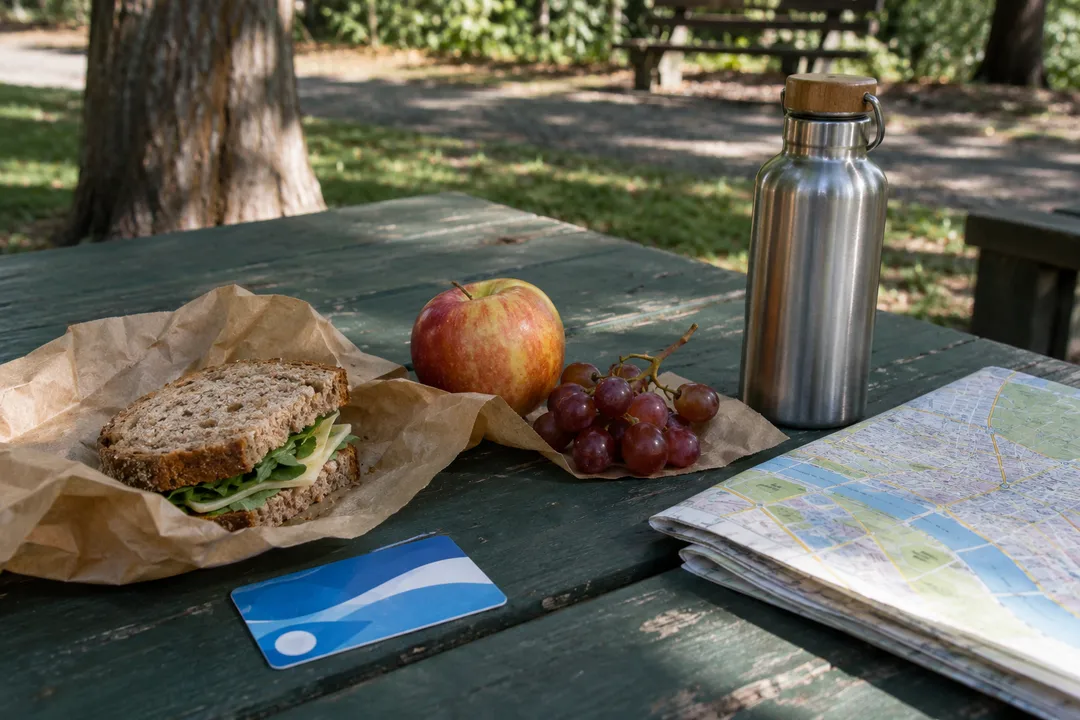
A budget plan needs a graceful response to a sold-out or unexpectedly expensive stop. Ask for a replacement that preserves the day’s purpose, not merely a cheaper version of the same purchase. You might switch from a ticketed experience to a public exhibit or from a destination meal to a picnic assembled nearby. Define the switch point before leaving home. That small rule prevents sunk-cost arguments when the group learns that the original option no longer fits.
Prompt for choices rather than a list
Use: “Plan a low-cost Sunday in San Francisco for two adults with a total cap of $80, including transit and food. Keep most activities free, reserve one optional splurge, and provide a no-spend fallback. We want a calm neighborhood loop and a finish near transit.” Add your starting district and dietary limits. If the result hides costs, ask it to label assumptions instead of inventing numbers.
Track shared and personal spending
Some costs belong to the group and others belong to one person. Ask the planner to separate a shared base from optional individual purchases. A friend may skip the upgrade while everyone still shares the meal and route. Put the split in the group note, and decide who pays a deposit before the day begins. Karpo can help you phrase the comparison; it does not collect money, settle a bill, or guarantee a refund.
Keep a record of the decision
Once the group agrees, write down why the paid moment won. “Closer to transit,” “works for a vegetarian,” or “leaves $20 buffer” is more useful than a bare venue name. If circumstances change, return to those reasons and ask for a substitute with the same qualities. This keeps the conversation focused on the goal rather than on defending a recommendation that has become impractical.
Practical Notes: stop before the budget gets tight
End the day with money and time still available. A final free pause near transit gives the group a way to absorb a delay or buy water without stress. Share the cap, the splurge, the fallback, and the recorded bookings in one compact message. If the budget changes, update only that variable in the Karpo APP and compare the new sequence. Financial clarity makes a Sunday feel relaxed, even when every dollar has a job.
Review the assumptions before paying
A low-cost outline can hide a paid transfer, a tip, or a deposit if you do not ask for the assumptions. Have Karpo restate what the ceiling includes and list every optional purchase separately. Then check the actual provider pages before you commit. If the cost is higher than expected, ask for a substitution that keeps the same neighborhood and pace. This process protects the buffer you set at the start and makes the final plan easy to explain to a friend who joins late.
A spending ceiling also benefits from a time ceiling. Tell the planner when you want to be home and ask it to show which free pause protects that departure. A cheap day that runs late can create an expensive ride or an unnecessary purchase. By pairing money with time, you make the practical tradeoff visible and keep the fallback useful instead of treating it as an afterthought.
Protect a little generosity
A strict budget does not have to make every decision feel transactional. Leave a small reserve for water, a spontaneous snack, or helping a friend who forgot a transit fare. Tell Karpo that the reserve is part of the plan and ask which free pause protects it. A low-cost Sunday feels better when the group can absorb a tiny surprise without reopening the entire calculation. Keep the reserve visible in the note, separate from the optional upgrade, so the money has a clear job and remains available when the day needs it.
Ask Karpo for more information.
Keep reading
- Stonestown Winter Farmers Market Picker for Student Cooks
 Clement St Winter Farmers Market Picker for Lunar New Year
 Fort Mason Winter Farmers Market Picker for Citrus Bakers